Who Has the Best Phone Service in 2026: 8 Carriers Compared

How we put this together: we compare official feature and pricing pages, app store listings, privacy policies and public user reviews. Prices change, so check the provider's site before you pay.
Key takeaways
- There is no single winner, because the best carrier depends on which network works well at your home, your workplace, and the places you travel.
- Visible at $25 per month and US Mobile from $10 per month show how much cheaper a prepaid brand on a major network can be than a big carrier plan.
- Verizon, T-Mobile, and AT&T still make sense when you want stores, family plan discounts, travel perks, or priority data on a busy network.
- Always check taxes and fees, because some advertised prices include them and others add them on top of the monthly rate.
- A short trial, a coverage check at your address, and a look at data priority will tell you more than any national coverage map.
Quick comparison
| Name | Who it suits | Starting price | Free option | |
|---|---|---|---|---|
 Verizon | Widest big carrier coverage | $65 per month | No | Visit |
 T-Mobile | Fast 5G and family value | $55 per month | No | Visit |
 AT&T | Big carrier service with stores | $50 per month | No | Visit |
 Visible | Simple cheap unlimited on Verizon | $25 per month | No | Visit |
 Mint Mobile | Low cost on T-Mobile with upfront payment | $15 per month | Free trial | Visit |
 US Mobile | Choice of network and low entry price | $10 per month | No | Visit |
 Google Fi | Flexible data and international travel | $20 per month | No | Visit |
 Cricket Wireless | Simple AT&T network plans with stores | $35 per month | No | Visit |
The best phone service carriers
We compared the three national carriers with five prepaid and flexible brands that run on their networks. The list below covers price, network, data priority, and the kind of customer each carrier suits best.
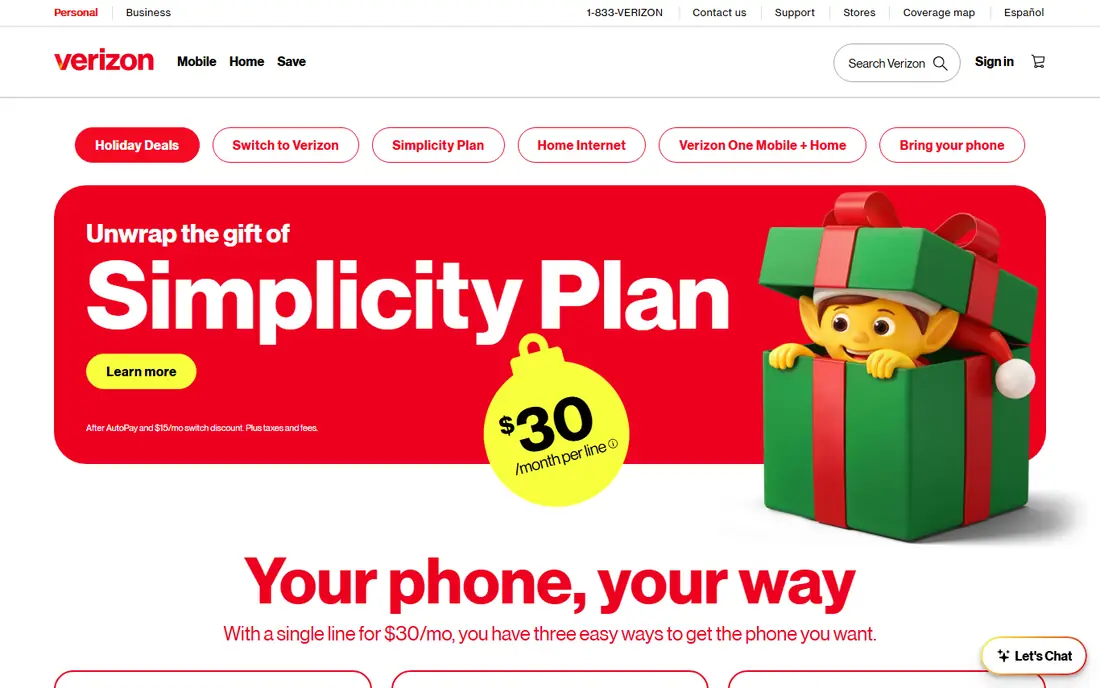
Verizon is our pick when coverage matters more than price and you spend time outside cities. Its network has a long record of reaching rural roads, small towns, and buildings where smaller brands can struggle, although no carrier wins everywhere, so an address check still matters. The Unlimited Welcome plan is the entry point for a single line, and higher plans add priority data, hotspot allowances, and travel or streaming perks.
The catch is cost. A single line on a major carrier plan costs far more than a prepaid plan on the same network, and the advertised price usually excludes taxes and fees. Verizon suits families who use multi line discounts, people who want in store help, and anyone who needs a network that holds up on work trips. If you mostly stay in a city and use modest data, a cheaper brand below will likely feel identical day to day.
- Large nationwide network
- Strong rural coverage in many areas
- Premium unlimited plans with priority data and perks
- Higher single line prices
- Taxes and fees are added on top
- Entry unlimited plan has no hotspot in some versions
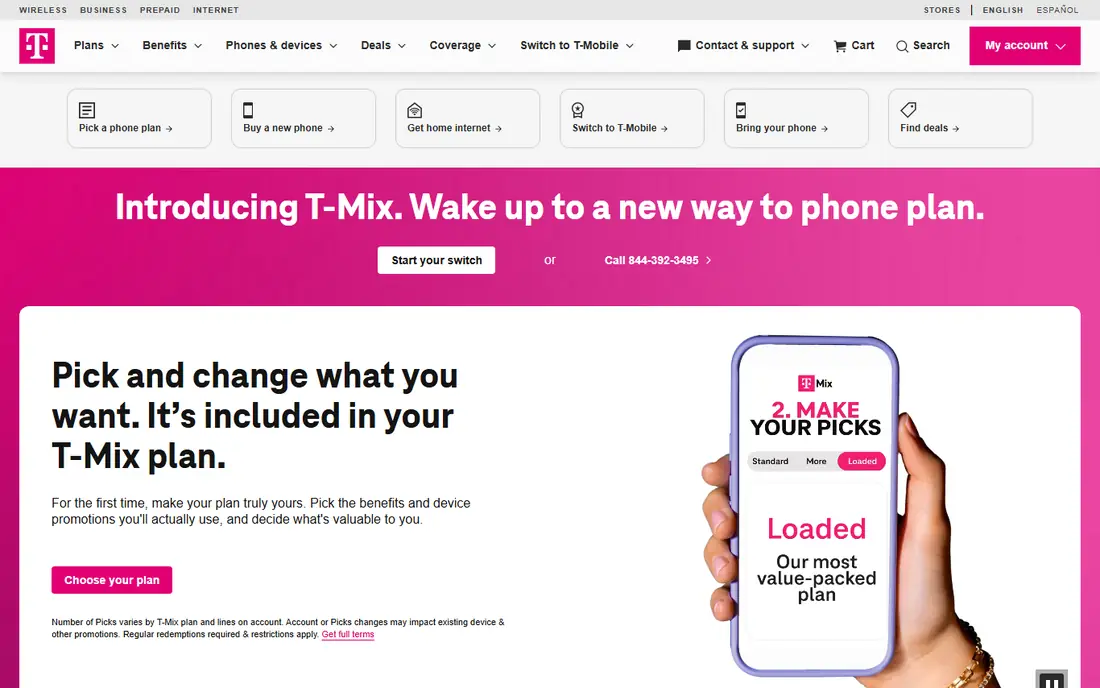
T-Mobile is the carrier we would point most city and suburban customers toward first among the big three. Its 5G network is fast in many metro areas, and its family pricing is often more generous than Verizon or AT&T when you add three or four lines. Higher plans add hotspot data, international data, and streaming benefits that can offset part of the monthly cost if you would pay for those services anyway.
The trade off is geography. T-Mobile has improved rural coverage a great deal, but there are still pockets where Verizon or AT&T reach further, especially indoors or on remote roads. Check coverage with friends, neighbours, or a short trial before you move a whole family. T-Mobile fits households that want one bill, decent perks, and strong city speeds without hunting for a prepaid deal.
- Fast 5G in many cities
- Family plans bring the per line price down
- Perks on higher plans
- Coverage can vary in rural areas
- Taxes and fees are added on top
- Entry plans slow data sooner than premium plans
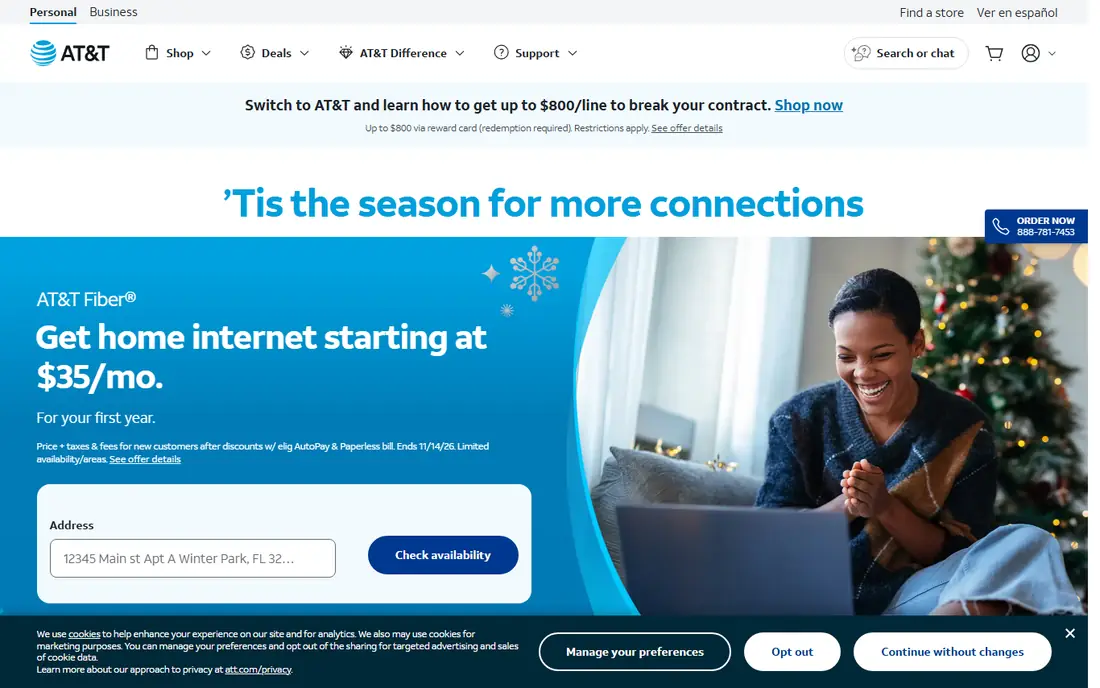
AT&T sits between Verizon on coverage and T-Mobile on city speed for many customers. Its Value plan gives a lower cost entry point than its premium unlimited plans, but it comes with a smaller high speed data allowance, so it suits lighter users rather than heavy streamers. Premium plans add more hotspot data, priority data, and international features for people who travel or work from a phone hotspot.
We like AT&T for customers who already bundle home internet or television, who want a physical store nearby, or who live in an area where AT&T coverage is clearly strongest. The downside is the same as with the other big carriers. You pay a premium for that store network and for priority on busy towers, and the final bill is higher than the advertised rate once taxes and fees are added.
- Large nationwide network
- Stores across the country
- Family and bundle options
- Single line prices are high
- Taxes and fees are added on top
- Entry plan data allowance is limited
Visible is our pick for most people who want cheap unlimited service without a yearly commitment. For $25 per month, taxes and fees included, you get unlimited data on the Verizon network, which removes the surprise fees that make big carrier bills hard to compare. Setup is done through an app, and you can bring your own phone if it is compatible.
The honest catch is priority and support. On the base plan, your data can wait behind Verizon customers when a tower is busy, and help comes through chat or the app rather than a store. A higher Visible plan adds priority data and more hotspot speed for customers who need it. If Verizon coverage is good where you live and you are comfortable with online support, Visible is hard to beat on value.
- Taxes and fees included
- Unlimited data on the Verizon network
- No annual contract or upfront yearly payment
- Support is online and app based only
- Data can slow on busy towers on the base plan
- No physical stores
Mint Mobile rewards customers who can pay ahead. Its smallest plan starts at $15 per month when paid for a longer term, and its unlimited plan is $30 per month on a 12 month plan. That structure makes Mint one of the cheapest ways to get T-Mobile network service, and new customers often get an introductory rate for the first term.
The catch is cash flow and commitment. You pay months in advance, and the low monthly figure only holds if you stay for the full term. Mint also slows data after its premium data allowance on unlimited plans, and hotspot use draws from that same allowance. Mint fits budget conscious customers with a compatible phone who know their data use and do not need a store.
- Very low prices on longer plans
- Runs on the T-Mobile network
- Simple plan sizes
- Best prices require paying for 3, 6, or 12 months upfront
- Data can slow after the premium allowance
- Support is mainly online
US Mobile stands out because it lets you choose which major network your line runs on, which is useful if one network is clearly better at your address. Its Light plan starts at $10 per month for a small data allowance, and its unlimited plans scale up to a premium plan at $44 per month. Taxes and fees are included on many plans, which makes the advertised price closer to the real bill.
The downside is choice itself. Picking a network, a plan, and a data amount takes more thought than buying a single unlimited plan from a big carrier, and the cheapest plans are not meant for heavy video streaming. US Mobile fits light users, second lines, and customers who want to test a network cheaply before committing to a larger plan.
- Choice of AT&T, T-Mobile, or Verizon networks
- Low entry price
- Taxes and fees included on many plans
- Network choice and plan details can confuse new customers
- Premium unlimited plan costs more
- Perks are limited
Google Fi is built for people whose data use changes month to month. The Flexible plan starts at $20 per month for unlimited calls and texts, plus $10 per gigabyte of data, so a light month stays cheap while a heavy month costs more. Unlimited plans start higher and suit steady heavy users better. International roaming features are a genuine strength for travellers who want one plan abroad without buying local SIM cards for short trips.
The catch is that heavy data use gets expensive on the Flexible plan, and the full network switching feature works best on phones designed for Fi. Google Fi fits travellers, light data users, and households that like managing everything in an app. If you stream video for hours each day on mobile data, a fixed unlimited plan from Visible, Mint, or US Mobile will usually cost less.
- Flexible plan charges for data used
- Good international features
- Easy family plan management
- Data costs add up for heavy users
- Phone choice matters for full network switching
- Taxes and fees are added on top
Cricket Wireless is the middle ground between a big carrier and an app only prepaid brand. You get AT&T network coverage, taxes included in the advertised price on many plans, and a store you can walk into when something goes wrong. Its 10GB plan starts at $35 per month, and unlimited plans scale up from there, including a family option that brings the per line cost down.
The trade off is speed and priority. Some Cricket plans cap data speeds or slow data sooner than AT&T plans, and the newest flagship phones may arrive later or cost more through Cricket. Cricket fits customers who want a store, a predictable bill, and AT&T coverage without paying AT&T prices. It is a strong choice for families and for anyone who values in person help over the lowest possible price.
- Runs on the AT&T network
- Taxes included on many plans
- Stores for in person help
- Data speeds can be capped on some plans
- Premium features cost more
- Phone selection is narrower than big carriers
How we picked these
We compared official carrier plan pages, pricing summaries checked in October 2026, and public coverage and plan details for the three national networks and the prepaid brands that run on them. We favoured carriers that are widely available in the United States, that publish clear starting prices, and that cover different needs, from the cheapest single line to family plans and travel friendly plans. We did not claim hands on network testing in every ZIP code, because coverage varies by address, and we say so plainly in the buying guide below.
What to check before you switch
Start with coverage at the addresses where you spend most time, not with a national map. Ask neighbours, check a carrier coverage tool for your street, and use a trial or a cheap prepaid month if you can. Next, look at data priority, which decides how fast your phone feels when a tower is busy. Big carrier premium plans usually get priority, while cheap prepaid plans may slow first, and that difference matters most at concerts, stadiums, and busy commuter routes.
Then compare the full bill. Add taxes and fees to big carrier prices, check whether a prepaid price requires upfront payment for months at a time, and confirm hotspot limits if you tether a laptop. Finally, check phone compatibility, number porting, and any device payment balance with your current carrier. A cheaper plan is only a saving if your phone works well on the new network and you can keep your number without a long gap in service.
Questions to ask yourself
Do you use more than 30GB of mobile data in a typical month, or do you mostly use Wi-Fi at home and work. Do you need hotspot data for a laptop, and if so, how much. Do you travel internationally, live in a rural area, or need a store for help. The answers point to different winners, which is why a single national ranking would mislead many readers.
Frequently asked questions
Who has the best phone service right now?
No carrier wins everywhere. Verizon often leads on rural reach, T-Mobile often leads on city 5G speed, and AT&T is strong in many regions, so the best carrier for you is the one with the best service at your home and workplace. A cheap brand on that same network, such as Visible on Verizon or Mint on T-Mobile, can give you similar coverage for less money.
What is the best cellphone service provider for a single line?
For a single line on a budget, Visible at $25 per month and Mint Mobile on a longer plan are strong starting points, because both offer unlimited data for far less than a big carrier single line. If you need priority data, store help, or family discounts, a big carrier premium plan may still be worth the higher price.
Is a prepaid carrier as good as Verizon, T-Mobile, or AT&T?
Prepaid brands run on the same towers, so coverage is often very similar, but data priority, roaming, and support can differ. On a busy tower, a prepaid line may slow before a premium postpaid line, and support is often online only. For many customers the saving is worth that trade, especially in areas where the network is not congested.
How much data do I really need?
Light users who use Wi-Fi at home and work often do fine with 5GB to 15GB per month. Heavy video streaming, hotspot use, and gaming push use much higher, and those customers should choose a true unlimited plan and check its premium data allowance and hotspot limit before buying.
Can I keep my number when I switch carriers?
In most cases yes, as long as your current account is active and you have the account number and transfer PIN your old carrier requires. Do not cancel the old line before the port completes, and expect the transfer to take minutes to a day in most cases.
Should I buy a phone from the carrier or bring my own?
Bringing a compatible phone usually gives you more freedom and a lower monthly cost, because you avoid a device payment plan tied to that carrier. Buying from a carrier can make sense when a promotion covers a large part of the phone cost, but read the bill credits, contract length, and early payoff rules first.
Sources we checked (10)
- https://www.verizon.com
- https://www.t-mobile.com
- https://www.att.com
- https://www.visible.com
- https://www.mintmobile.com
- https://www.usmobile.com
- https://fi.google.com
- https://www.cricketwireless.com
- https://www.usmobile.com/blog/best-cell-phone-plans/
- https://www.whistleout.com/CellPhones/Guides/Best-cell-phone-plans

Online Jobs is an independent blog about careers, online work, learning new skills and the tools that help people earn. More about us.
Keep reading
All posts
n8n Alternatives
n8n alternatives compared for 2026, with Zapier, Make, Activepieces, and more, covering visual builders, code steps, self-hosting, and pricing models.

ZoomInfo Alternatives
The best ZoomInfo alternatives in 2026, compared on price, free plans, data coverage, and which tool fits small teams or large sales teams best in detail.

Workday Alternatives
We compared the best workday alternatives for HR, payroll, and global hiring, from BambooHR and Gusto to Rippling, Deel, and HiBob for growing teams in 2026.