ZoomInfo Alternatives in 2026: 8 Tools Compared


all-in-one prospecting and outreach · Starting price: $49 per user per month
How we put this together: we compare official feature and pricing pages, app store listings, privacy policies and public user reviews. Prices change, so check the provider's site before you pay.
Key takeaways
- Apollo.io is the closest all-in-one alternative, with a contact database, sequences, and a free plan.
- Lusha and Hunter suit smaller teams that need quick lookups without an enterprise contract.
- Clay suits teams that want waterfall enrichment across many data sources in one workflow.
- Cognism suits European prospecting, while UpLead and RocketReach suit teams that value transparent pricing.
Quick comparison
| Name | Who it suits | Starting price | Free option | |
|---|---|---|---|---|
| Apollo.io | all-in-one prospecting and outreach | $49 per user per month | Yes | Visit |
 Lusha | quick contact lookups | See website | Yes | Visit |
 Cognism | European data and verified mobiles | See website | No | Visit |
 Clay | waterfall enrichment workflows | See website | Yes | Visit |
 UpLead | transparent pricing and accuracy | $99 per month | No | Visit |
 Hunter | email finding and verification | $34 per month | Yes | Visit |
 RocketReach | large database search | $39 per month | No | Visit |
 Snov.io | email finding and outreach | See website | Yes | Visit |
The best zoominfo alternatives
ZoomInfo is powerful, but its enterprise pricing and contracts put it out of reach for many small and mid-sized teams. The tools below cover the same core jobs, finding contacts, enriching records, and building prospect lists, at lower entry prices and with clearer free or trial options.
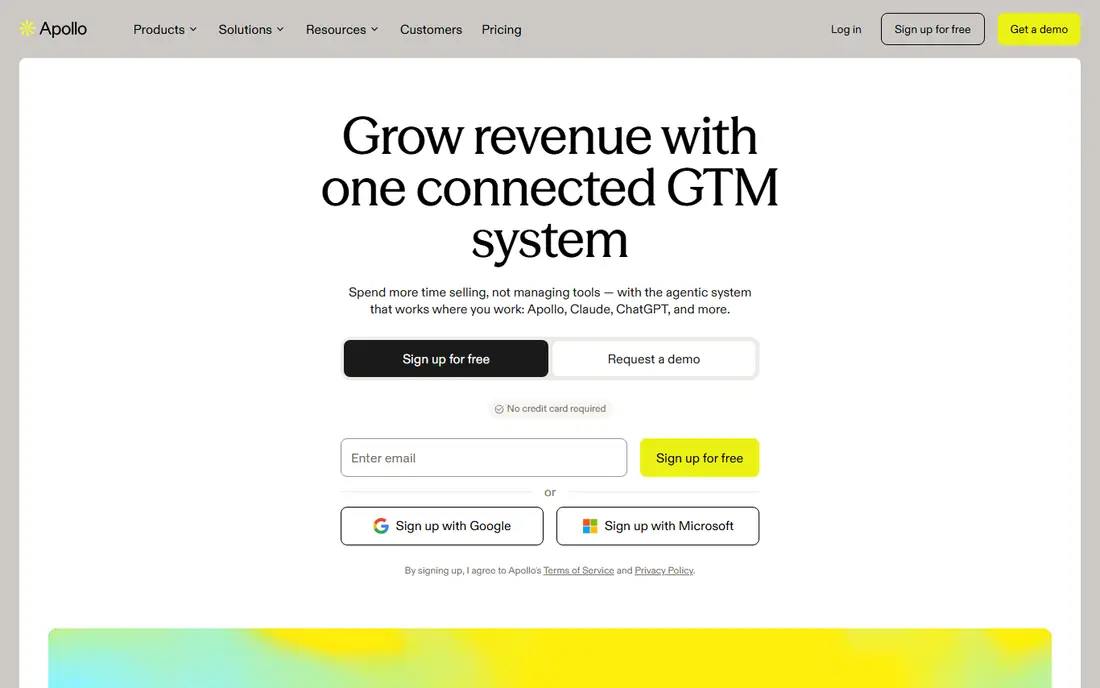
Apollo is the alternative most teams try first, because it combines a contact database with outreach in one product. You can search for people by role, industry, and company, enrich records, then run email sequences and calls without exporting lists to a separate tool. Its own site describes a database of more than 240 million contacts, which gives small teams a wide starting pool.
The free plan lets you test search and basic outreach before paying, and paid plans start at about $49 per user per month on annual billing in recent pricing summaries. The honest catch is data depth: phone numbers, especially mobiles for some roles and regions, can be thinner than ZoomInfo. If cold calling is your main channel, test phone coverage for your exact target roles during a trial.
- Large contact database plus sequences and dialer
- Published pricing
- CRM integrations
- Phone coverage can lag ZoomInfo for some roles
- Credit limits need watching on larger campaigns
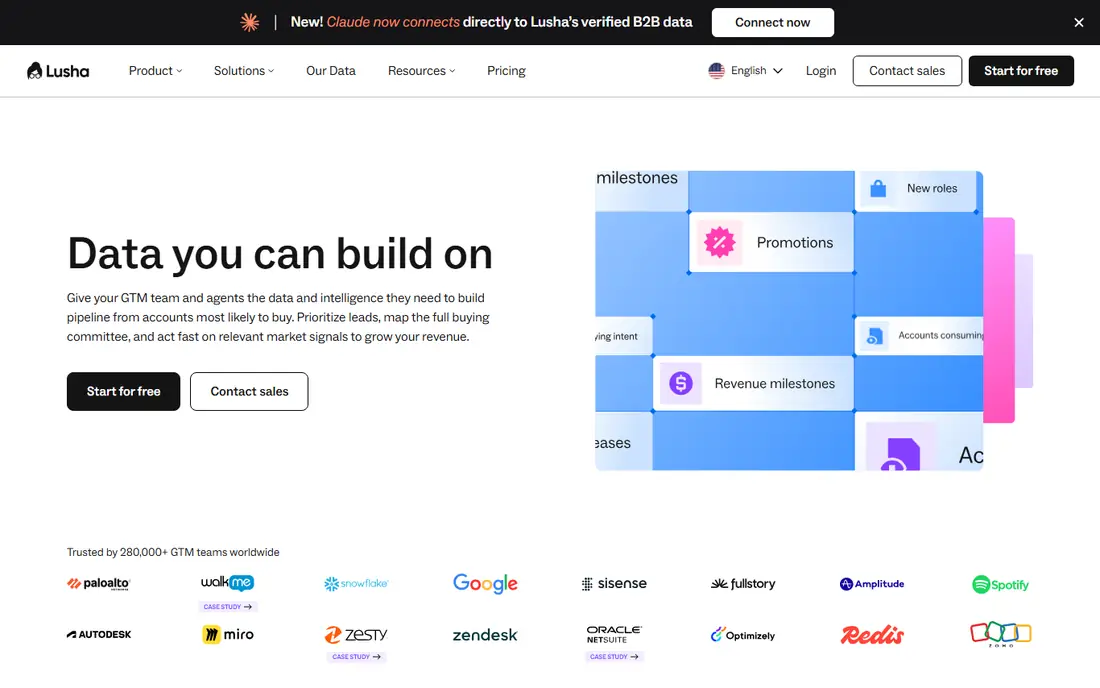
Lusha suits sales reps who want a contact detail fast, not a full platform to learn. Its browser extension shows emails and phone numbers while you browse LinkedIn or a company site, which fits a workflow of researching one prospect at a time. The free plan offers a small monthly credit allowance, so you can test accuracy on your own target accounts.
Lusha is not a replacement for a full sales engagement platform, because it lacks deep sequencing and CRM features. Heavy users can also burn through credits quickly, so check the current paid price and credit allowance before you commit. For small teams that need lookups plus a separate CRM, Lusha is a clean, low-friction pick.
- Fast browser extension for LinkedIn and company sites
- Simple credit system
- Strong direct dials for many roles
- No built-in sequences or CRM depth
- Credit costs rise with heavy use
- Pricing varies by billing term
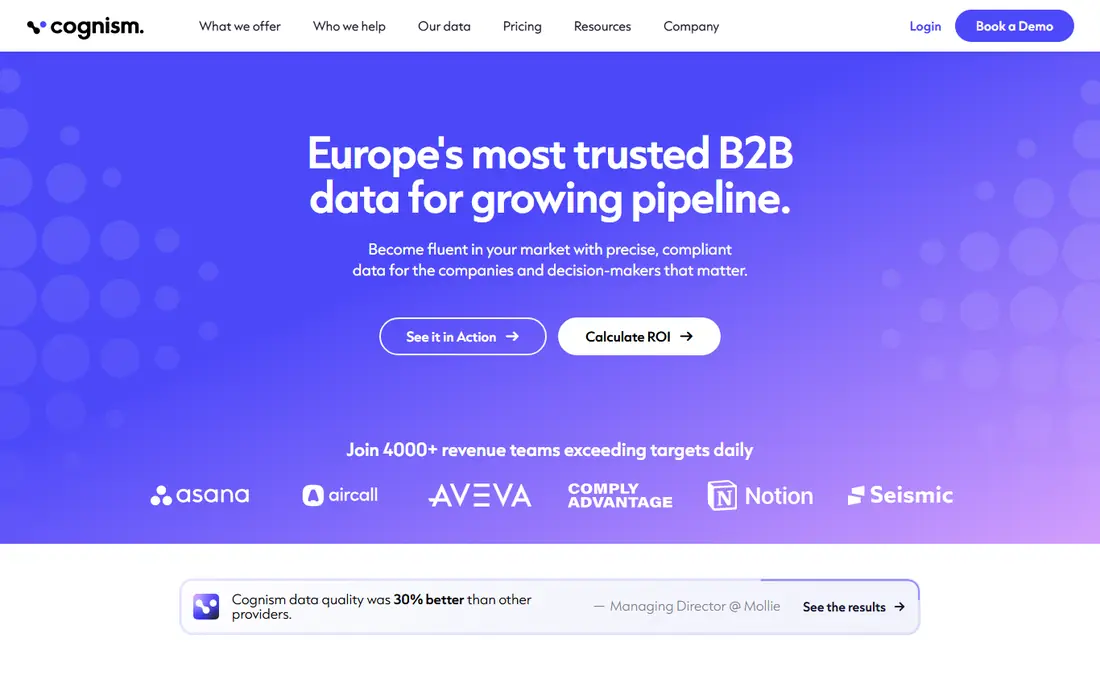
Cognism is the pick for teams that sell into Europe and need mobile numbers they can trust. It describes phone-verified mobile data, often called Diamond Data, and puts weight on compliance with European data rules, including screening against do-not-call lists. That focus matters, because European prospecting carries stricter consent and data rules than many US teams expect.
Pricing is quote-based, and recent summaries put team plans well above small-team tools, so Cognism is not a budget pick. If your market is mainly the US and you need only emails, Apollo or Hunter will cost far less. If your market is Europe and mobile outreach matters, Cognism's coverage and compliance approach justify a sales conversation.
- Phone-verified mobile data for Europe
- Compliance-focused approach
- Strong company and contact coverage in EMEA
- Quote-based pricing
- Premium cost
- Overkill for small US-only prospecting
Clay takes a different approach: instead of relying on one database, it runs waterfall enrichment, querying multiple providers in sequence until it finds a match. That method can lift match rates for emails and other fields well above a single-source tool, especially for hard-to-find contacts. It also lets teams build research workflows that combine enrichment, scoring, and list building in one place.
The trade-off is complexity. Clay rewards teams with someone who enjoys building workflows, and it can feel like overkill for a rep who just wants a phone number. Pricing has varied in recent summaries, so check the current plan and credit terms on Clay's site. If your team enriches large lists and cares about match rate, Clay is worth the learning time.
- Pulls from many data providers in sequence
- Flexible workflows for lists and research
- Good for ops-minded teams
- Learning curve is steep
- Pricing varies by credits and plan
- Needs a clear use case to justify cost
UpLead appeals to buyers who are tired of quote-only pricing. Its site publishes plans starting at about $99 per month, and it describes a high accuracy guarantee with real-time email verification, which reduces wasted sends to bad addresses. For a small team that wants a database plus enrichment without a sales negotiation, that clarity is valuable.
UpLead does not match Apollo on built-in sequences and dialer depth, so teams that want outreach in the same tool may still need a separate sequencer. Trial terms have also varied, so confirm what you can test before paying. If data quality and clear pricing matter more than an all-in-one platform, UpLead is a strong shortlist pick.
- Published pricing
- Accuracy guarantee described on its site
- Real-time email verification
- No free plan, trial terms vary
- Smaller feature set than Apollo for outreach
- Credits need management
Hunter does one job well: find and verify professional email addresses for a company domain. Enter a domain, get a list of public email patterns and contacts, then verify an address before you send. That focus makes it fast, cheap, and easy to learn, and the free plan includes a small monthly credit allowance.
Hunter will not replace ZoomInfo for phone numbers, org charts, or intent data, and it is not built for large list building alone. Pair it with a database tool if you need phones, or use it alone if email is your main channel and your lists are domain-based. For its price, Hunter is one of the best value tools in this list for email-only teams.
- Fast domain search for emails
- Email verifier reduces bounces
- Simple pricing and free credits
- Email only, no phone database depth
- Limited prospecting beyond domains
- Not a full CRM
RocketReach offers a large database that recent summaries put in the hundreds of millions of profiles, with search by job title, skill, location, and company. Its browser extension helps reps pull contact details while browsing LinkedIn, which suits teams that build lists prospect by prospect rather than in bulk.
The main limits are trial access and outreach depth. Recent listings show paid plans from about $39 per month with no free plan, so test accuracy carefully during any trial period. Accuracy also varies by region and role, as with every database here. RocketReach suits teams that want database breadth at a modest price and already have a separate outreach tool.
- Large contact and company database
- Search by role, skill, and company
- Browser extension
- No free plan in recent listings
- Data accuracy varies by region
- Outreach features are limited
Snov.io works as an email finder and outreach tool: it searches for contact details by domain and profile, verifies emails, and helps you run small campaigns. A free credit allowance lets you test it on your own target roles before paying, and its extension fits a LinkedIn-first workflow.
Paid pricing varies by plan, so budget buyers should confirm costs early rather than assuming the free tier scales cheaply. Like all tools here, accuracy varies, so verify a sample of contacts against your CRM before a large campaign. Snov.io suits teams that want email finding plus light outreach alongside a main database, rather than as a sole source.
- Email finder and verifier
- Browser extension
- Free credit allowance to test
- Paid pricing varies by plan
- Accuracy varies
- Outreach is lighter than Apollo
How we picked these
We compared official product pages, pricing pages, and help documentation for B2B contact tools that offer prospecting, enrichment, or both, and are still sold in 2026. We kept a mix of all-in-one platforms, lookup tools, waterfall enrichment, and regional specialists, and we marked quote-based pricing as See website rather than guessing a figure. We did not claim hands-on testing, and we noted that database accuracy varies by role and region.
What to check before you switch from ZoomInfo
Start with your actual channel. Email-only teams need a different tool from phone-heavy teams, and a team that nurtures passive candidates needs CRM features that a lookup tool will not provide. List your top three jobs, such as finding emails, finding mobiles, and running sequences, then shortlist only tools that cover all three well.
Test accuracy on your own accounts
Never buy on database size alone. Take 50 real target accounts from your CRM, run them through each shortlisted tool, and count how many return a correct email and a correct phone number. That small test tells you more than any vendor claim. Also check bounce rates on a small first campaign, because bad data costs deliverability as well as money.
Watch credits, seats, and contracts
Credits, seat minimums, and annual contracts change the real price fast. A low monthly headline can hide credit overages, add-on fees, or a multi-seat minimum. Ask each vendor for the total annual cost for your team size and expected monthly enrichment volume, in writing, before you sign. If a vendor will not give that figure, treat it as a warning sign.
Frequently asked questions
What is the best ZoomInfo alternative for small teams?
Apollo.io is a strong first pick for small teams, because it combines a database with outreach and a free plan. Lusha and Hunter are cheaper if you only need lookups or emails, and UpLead suits teams that want published pricing.
Are there free alternatives to ZoomInfo?
Yes, Apollo.io, Lusha, Clay, Hunter, and Snov.io all offer free plans or free credits, though limits are small. Free plans suit testing and light use, but most active prospecting teams will need a paid plan for enough credits.
Which ZoomInfo alternative is best for European data?
Cognism is the specialist here, with phone-verified European mobile data and a compliance-focused approach. Apollo and Lusha also cover Europe, but Cognism's verified mobiles and screening features suit teams that sell mainly into EMEA.
Is Apollo.io better than ZoomInfo?
Apollo is better on price transparency and all-in-one value for small and mid-sized teams, while ZoomInfo still leads on enterprise depth and some phone coverage. The right answer depends on your team size, channel, and budget, so test both on your own target accounts if you can.
What does waterfall enrichment mean?
Waterfall enrichment queries several data providers in sequence until it finds a match, rather than relying on one database. Clay is the main example here, and the method can improve match rates, though it adds complexity and credit costs.
Sources we checked (8)

Online Jobs is an independent blog about careers, online work, learning new skills and the tools that help people earn. More about us.
Keep reading
All posts
Workday Alternatives
We compared the best workday alternatives for HR, payroll, and global hiring, from BambooHR and Gusto to Rippling, Deel, and HiBob for growing teams in 2026.
Which SaaS Tools Have the Best Customer Support
Which SaaS tools have the best customer support? Compare eight popular tools on help centres, live help, response options and overall support quality.

Top AI Helpdesk Software
Searching for top AI helpdesk software in 2026? We compared 8 AI helpdesks on automation, pricing, channels and ease of setup for small and growing teams.