What Is the Best Cell Phone Service in 2026: 9 Services Compared

How we put this together: we compare official feature and pricing pages, app store listings, privacy policies and public user reviews. Prices change, so check the provider's site before you pay.
Key takeaways
- Verizon and AT&T suit rural coverage and reliability, while T-Mobile often leads on 5G speed in cities.
- Visible, Mint Mobile, and US Mobile offer much lower prices on the same major networks, with less priority during congestion.
- Family plans and internet bundles can cut the per-line price sharply, so compare the total bill, not one line alone.
- Coverage at your home, workplace, and commute matters more than any national ranking.
Quick comparison
| Name | Who it suits | Starting price | Free option | |
|---|---|---|---|---|
 Verizon | Widest reliable coverage | See website | Free trial | Visit |
 T-Mobile | Fast 5G and perks | See website | Free trial | Visit |
 AT&T | Strong nationwide coverage | See website | Free trial | Visit |
 Visible | Low-cost Verizon network | $25 per month | Free trial | Visit |
 Mint Mobile | Low-cost T-Mobile network | See website | Free trial | Visit |
 US Mobile | Choice of three networks | $25 per month | Free trial | Visit |
 Google Fi | Flexible data and hotspot | See website | Free trial | Visit |
 Cricket Wireless | Simple AT&T network plans | $40 per month | Free trial | Visit |
 Xfinity Mobile | Internet bundle savings | See website | Free trial | Visit |
The best cell phone service
We compared official plan pages and coverage guidance for major carriers and low-cost carriers that use those networks. Our focus was coverage where people actually live and travel, data priority, hotspot allowances, and the total monthly cost for one line and for families.
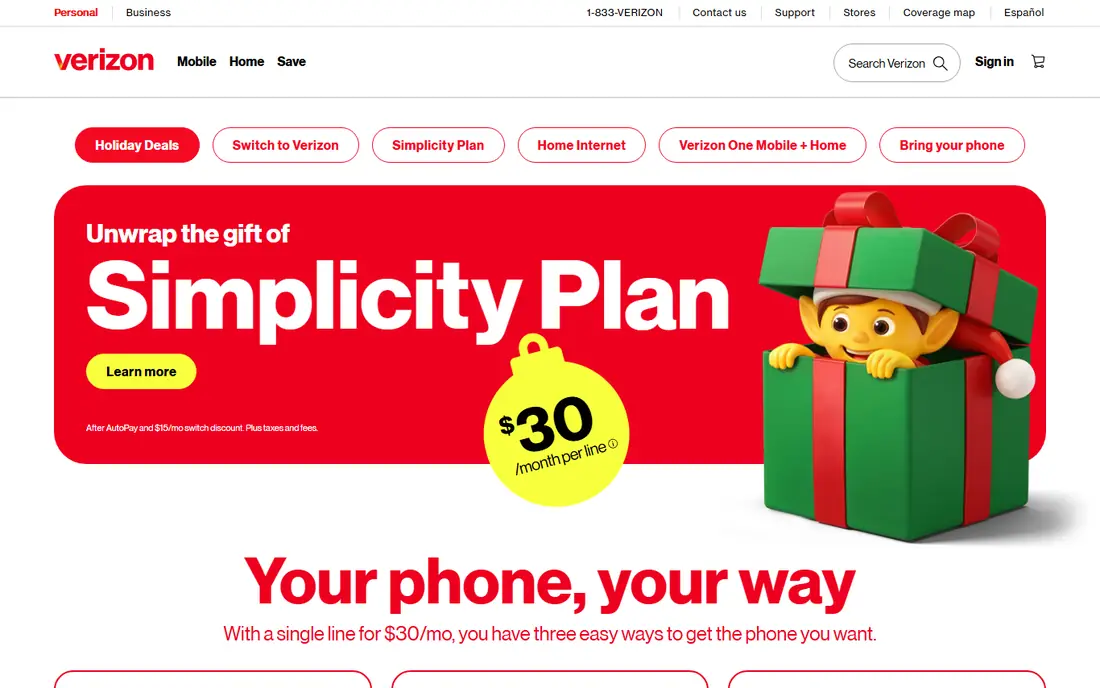
Verizon is the safe pick when coverage cannot fail, especially outside cities and in buildings where low-band signal matters. Its network is often cited for reliability, and its premium plans add generous hotspot data, international options, and perks. For travelers, rural workers, and families that need steady service, that reliability justifies a higher bill.
The cost is the clear drawback. A single premium line can cost far more than a low-cost carrier on the same network, and budget plans cut perks. Check the current plan page for price-lock terms, because offers change. Verizon suits people who put coverage first and can pay for it.
- Strong rural and indoor coverage
- Wide plan range
- Long price-lock options on some plans
- Premium plans are costly
- Cheapest plans have fewer perks and hotspot limits
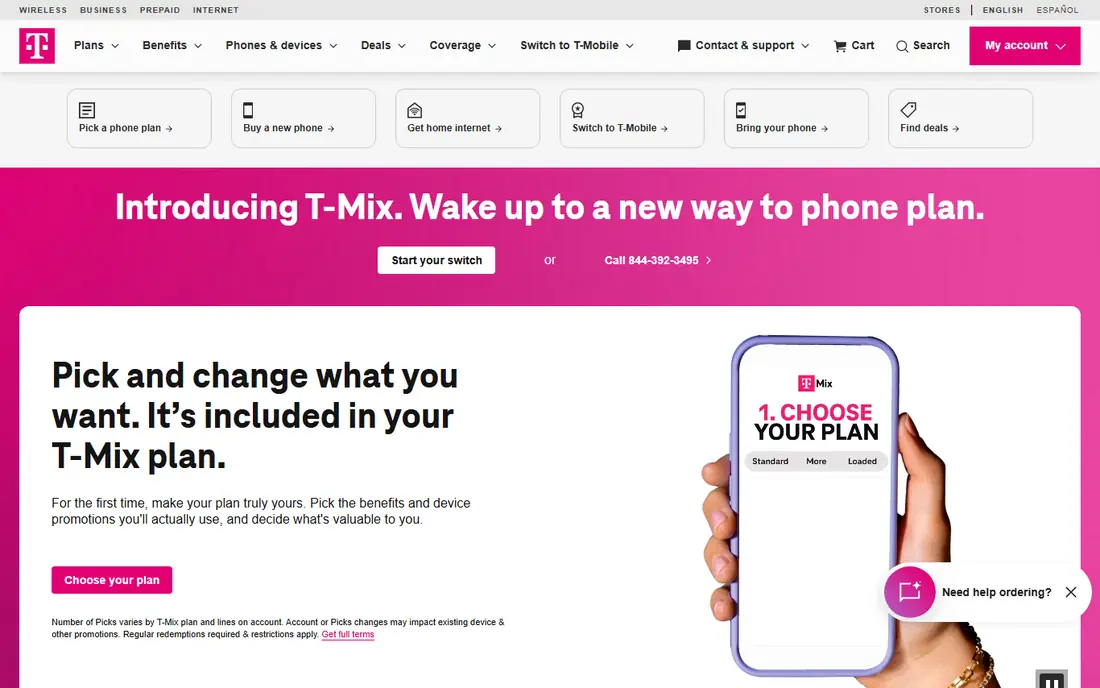
T-Mobile often leads on 5G speed in urban areas, and its premium plans include large hotspot allowances and travel perks. Families also benefit from multi-line discounts, which bring the per-line price down. For city dwellers and heavy data users, T-Mobile offers a strong mix of speed and value at the premium level.
Rural coverage has improved, but in some remote areas Verizon or AT&T still feel more consistent, so check coverage at the places you visit most. T-Mobile is our pick for most city-based users who want speed, perks, and a modern plan structure.
- Fast 5G in many cities
- Generous premium data
- Perks on higher plans
- Rural coverage can lag Verizon and AT&T in some areas
- Premium plans are pricey
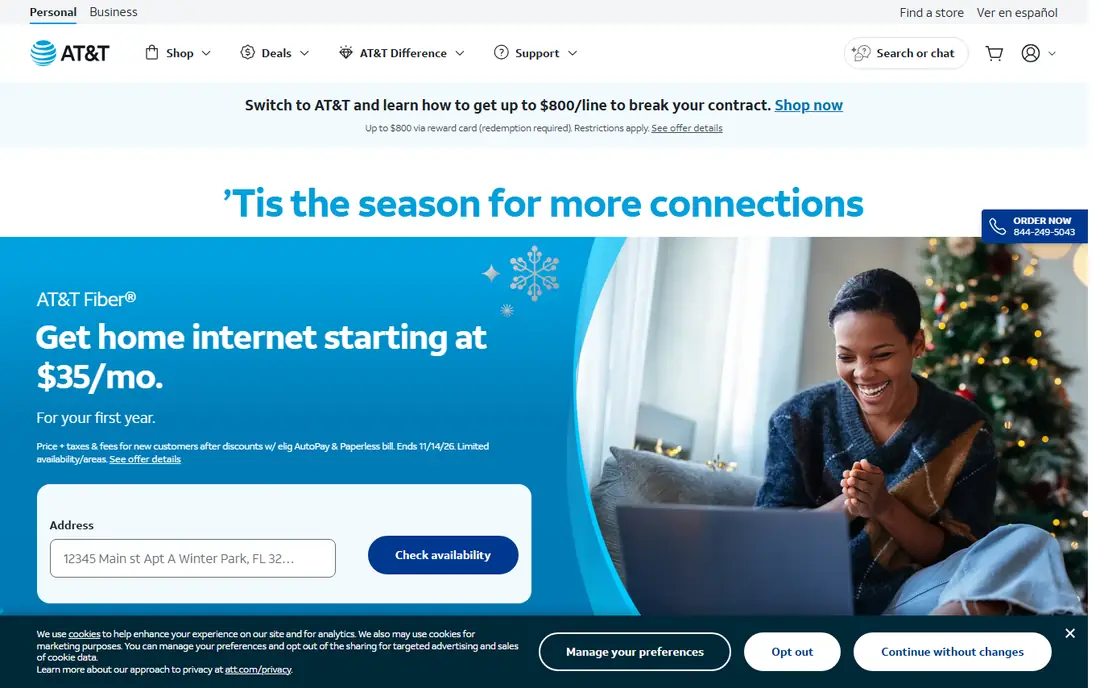
AT&T sits close to Verizon for national coverage and rural reach, with family plans that let each line pick a different tier. That mix-and-match approach helps families where one person needs premium data and another needs a basic plan. AT&T also suits users who want a major carrier with stores and support nearby.
Single-line premium pricing is high, and plan details change often, so read the current terms for hotspot, video quality, and data priority. For families and for users who travel across the country, AT&T is a dependable middle path between Verizon reliability and T-Mobile speed.
- Strong national coverage
- Mix-and-match family plans
- Good rural reach
- Premium single lines are costly
- Plan names and perks change often
Visible is owned by Verizon and offers unlimited data on the Verizon network at a much lower price than Verizon premium plans. The price includes taxes and fees, which makes the bill easy to predict, and hotspot data is included on its plans. For a single line, Visible is one of the simplest ways to cut a phone bill.
The trade is priority. During congestion, Verizon postpaid customers may get faster speeds than Visible users, and support is mainly online. If you live in a busy area and need top speed at peak times, test Visible first. For most everyday use, it is excellent value.
- Unlimited data on Verizon network
- Taxes and fees included
- Simple plans
- Data can be deprioritized in congestion
- Fewer stores and perks than Verizon
Mint Mobile runs on the T-Mobile network and keeps prices low by selling plans in multi-month blocks. That model suits users who can pay upfront and do not want a monthly surprise. Unlimited plans include 5G access, and the setup is simple with eSIM support on compatible phones.
The catch is payment timing. The lowest monthly equivalent usually needs a longer upfront term, and data can be slowed during congestion compared with T-Mobile postpaid. Mint suits budget users who know their data needs and are happy to pay ahead for a lower rate.
- Low prices on T-Mobile network
- Multi-month plans cut cost
- Simple unlimited option
- Best prices need upfront multi-month payment
- Data priority is lower than T-Mobile postpaid
US Mobile stands out because it lets many customers pick which major network their line uses, and in some cases switch networks without changing carrier. That flexibility helps if you move, travel, or find one network weak at home. Its unlimited starter plan is priced to compete with Visible and Mint, with hotspot included.
Perks are thinner than premium major carrier plans, and the range of plan options can feel complex at first. For users who want network choice at a low price, US Mobile is a strong and unusual option. Check the current plan page for network options in your area.
- Choice of Verizon, T-Mobile, or AT&T networks
- Low unlimited starter price
- Flexible plans
- Network switching rules need care
- Perks are thinner than major carriers
Google Fi suits travelers and users who want flexible data. Its plans include hotspot use, and international roaming is a clear strength for people who travel abroad. Fi also works well for users who want a simple bill and easy switching between data levels.
The network experience can vary by phone, because some phones use only the T-Mobile network while others can use more than one network. Fi also costs more than the cheapest unlimited MVNO plans. For frequent travelers and Pixel users, it remains a thoughtful choice.
- Flexible and unlimited plans
- Strong international use
- Hotspot on unlimited plans
- Best network mix depends on phone model
- Price is higher than cheapest MVNOs
Cricket Wireless, owned by AT&T, offers simple no-contract plans on the AT&T network with taxes included on many plans. Stores give users a place to get help in person, which matters for people who prefer not to manage everything online. Unlimited plans suit families and users who want a predictable bill.
Some plans cap data speeds or limit hotspot use, so read the plan details before choosing. Cricket suits users who want AT&T coverage at a lower price, with a store nearby, and without a contract. It is a practical middle option between a major carrier and an online-only MVNO.
- AT&T network coverage
- Taxes included on many plans
- Stores for in-person help
- Data speeds can be capped on some plans
- Fewer premium perks than AT&T
Xfinity Mobile runs on the Verizon network and offers some of the lowest per-line prices for households that already pay for Xfinity internet. A by-the-gig plan suits light users, while unlimited plans suit families that want a low multi-line bill. The link to home internet is the key to its value.
Households without Xfinity internet will pay more and may find better value elsewhere. Also check hotspot and data priority terms on the current plan page. For Xfinity homes, it is often the cheapest way to get Verizon network coverage.
- Low per-line prices for Xfinity internet customers
- Verizon network
- By-the-gig option
- Needs Xfinity internet for best prices
- Non-customers pay more
How we picked these
We compared official plan pages for major carriers and low-cost carriers that use their networks in 2026. We favored services that are widely available in the United States, publish clear plan terms, and cover a real use case, from premium coverage to budget unlimited data. We did not rank on a single national speed test alone, because local coverage varies too much for one winner to fit everyone.
How to choose a phone service
Start with coverage where you live, work, and travel. Ask friends on different networks how service holds up at your home and office, and check each carrier coverage map for your address. A fast national network means little if your home sits in a weak spot for that carrier.
Next, compare the total bill. Add lines, taxes, device payments, and any bundle discount, then compare that total across carriers. Also check data priority, hotspot limits, and video quality, because those details shape daily use more than a headline speed number. Finally, test with a trial or a prepaid month before porting a number you rely on.
Money note
Phone plans are a recurring bill, and a lower price can save hundreds of dollars a year for a family. This article is general information only and is not financial advice. Read the full plan terms, including taxes, fees, and price-lock limits, before you switch, and keep a backup plan for number porting.
Frequently asked questions
Which service provider has the best coverage?
Verizon and AT&T often lead for nationwide and rural coverage, while T-Mobile leads for 5G speed in many cities. The best coverage for you depends on your location, so check maps and local experience for your home and commute before you choose.
What phone carrier has the best service for families?
T-Mobile, Verizon, and AT&T all offer multi-line discounts that cut the per-line price, and Xfinity Mobile can be cheaper for Xfinity internet homes. Compare the total family bill, including hotspot and perks, rather than one line alone.
What is the best service for cell phones on a budget?
Visible, Mint Mobile, and US Mobile offer unlimited data from 25 dollars per month on major networks, with fewer perks and lower data priority during congestion. For light users, a by-the-gig plan from Xfinity Mobile or a small plan from another MVNO can cost even less.
Is a low-cost carrier as good as a major carrier?
Low-cost carriers use the same towers as major carriers, so coverage maps are often similar. The main difference is data priority during congestion, plus fewer stores, perks, and support channels. For most everyday use, the difference is small.
Can I keep my phone number when I switch?
Yes, in most cases you can port your number to a new carrier. Do not cancel the old line before the port completes, and keep your account number and transfer PIN ready. Porting usually takes minutes to a day, depending on the carriers involved.
Do I need an unlimited plan?
Unlimited suits heavy video, hotspot, and travel use, while a capped or by-the-gig plan suits light users who mostly use Wi-Fi. Check your past data use in your phone settings before paying for unlimited data you may not need.
Sources we checked (9)

Online Jobs is an independent blog about careers, online work, learning new skills and the tools that help people earn. More about us.
Keep reading
All posts
n8n Alternatives
n8n alternatives compared for 2026, with Zapier, Make, Activepieces, and more, covering visual builders, code steps, self-hosting, and pricing models.

ZoomInfo Alternatives
The best ZoomInfo alternatives in 2026, compared on price, free plans, data coverage, and which tool fits small teams or large sales teams best in detail.
Workday Alternatives
We compared the best workday alternatives for HR, payroll, and global hiring, from BambooHR and Gusto to Rippling, Deel, and HiBob for growing teams in 2026.