Best Top Software Release News Websites in 2026: 9 Sites Compared

How we put this together: we compare official feature and pricing pages, app store listings, privacy policies and public user reviews. Prices change, so check the provider's site before you pay.
Key takeaways
- Hacker News and GitHub Blog are the fastest routes to new releases, launch notes, and developer discussion.
- Product Hunt suits new tools and app launches, while InfoQ suits deeper coverage of frameworks and platforms.
- TechCrunch and The Verge cover company launches and product news, with more focus on business context than code detail.
- Ars Technica and SD Times suit readers who want analysis after the headline, not just a release announcement.
- Follow official vendor blogs for the exact release notes, and use news sites to learn why a release matters.
Quick comparison
| Name | Who it suits | Starting price | Free option | |
|---|---|---|---|---|
 Hacker News | Community release news | Free | Yes | Visit |
 GitHub Blog | GitHub and open source releases | Free | Yes | Visit |
 Product Hunt | New product launches | Free | Yes | Visit |
 InfoQ | Software architecture news | Free | Yes | Visit |
 TechCrunch | Startup and product launches | Free | Yes | Visit |
 The Verge | Consumer tech and software news | Free | Yes | Visit |
 Ars Technica | In-depth tech analysis | See website | Yes | Visit |
 SD Times | Software development news | Free | Yes | Visit |
 Dev.to | Developer community posts | Free | Yes | Visit |
The best top software release news websites
Software releases move fast, and no single site covers every framework, cloud service, and app launch. The sites below serve different jobs: some surface releases within minutes, some explain the technical change, and some place a launch in a wider business story. Together, they form a reading mix that keeps you current without drowning in headlines.
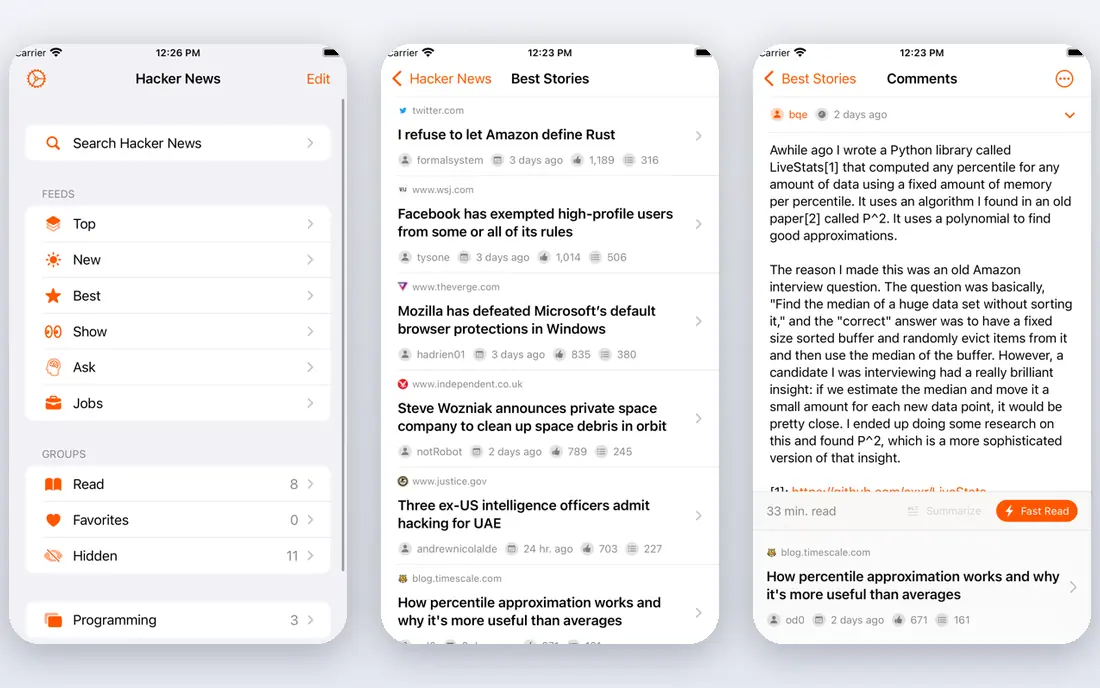
Hacker News, run by Y Combinator, is a community link board where developers post release notes, launch announcements, and technical essays. A new database version, a language release, or an open source tool often appears here within hours, and the comments add context from people who have tried it. That mix of speed and discussion is why many developers check it daily. The catch is curation by community vote, not by an editorial team. Some releases get strong discussion while others pass quietly, and comment quality varies. Use Hacker News as a discovery feed, then follow the link to the official release notes for the exact changes, version numbers, and upgrade guidance.
- Fast links to releases and launch posts
- Active technical discussion in comments
- Simple, text-first reading experience
- Quality varies by submission
- Discussion can drift from the release itself
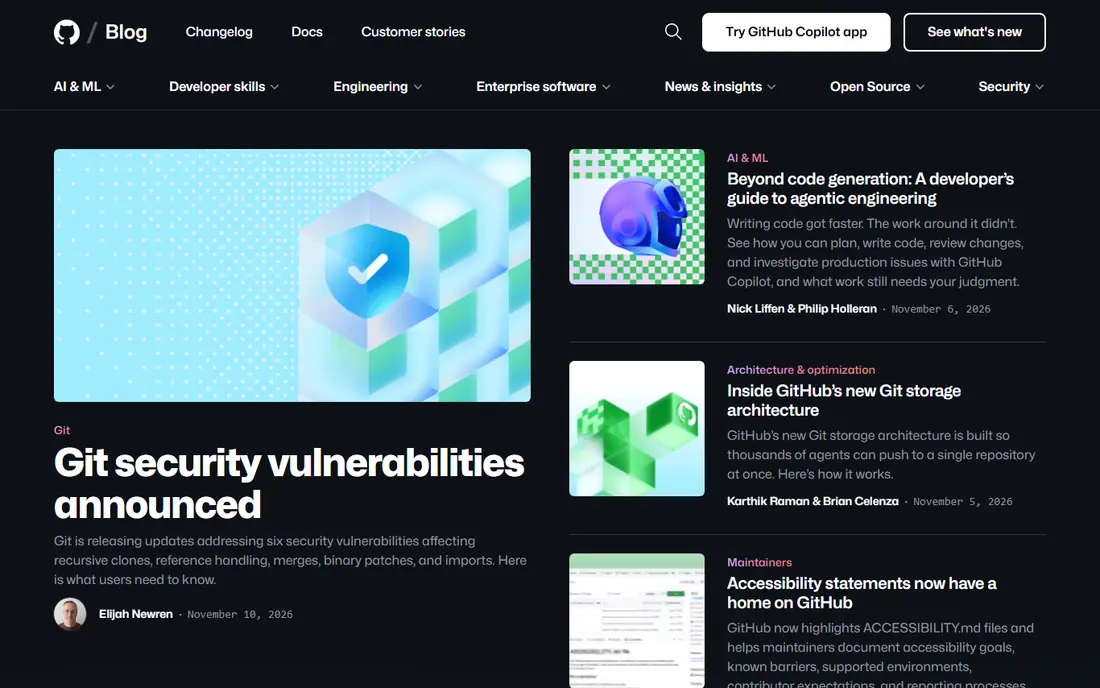
GitHub Blog is the official source for GitHub releases, from Copilot updates to Actions, security features, and platform changes. It also covers open source highlights and engineering work behind GitHub features, which helps developers understand a change, not just read a headline. For teams that build on GitHub daily, it is essential reading. The limit is scope. GitHub Blog does not try to cover every vendor release, so it works best alongside a broader news site. Pair it with Hacker News or InfoQ for outside releases, and use the GitHub Changelog for short, dated updates when you need to track a specific feature rollout.
- Official GitHub product news
- Changelog and engineering posts
- Open source project highlights
- Focused on GitHub and its ecosystem
- Not a general tech news site

Product Hunt is a daily launch board where makers post new apps, tools, and services, and the community votes on them. It is one of the best places to spot a new developer tool, AI app, or software release on launch day, with screenshots, descriptions, and comments from the team behind it. Browsing by category helps you filter for developer tools, productivity apps, or design products. The honest catch is promotion. Launch pages are written to sell the product, so upvotes and praise are not a quality test. Use Product Hunt for discovery, then check the official docs, pricing, and independent reviews before you adopt a tool. That two-step habit keeps launch excitement from turning into a rushed purchase.
- Daily list of new products and tools
- Maker comments and launch context
- Easy browsing by category
- Launch pages are promotional by nature
- Popularity does not prove product quality
InfoQ covers software development with a practitioner focus, from architecture and cloud platforms to languages, data, and AI engineering. Its news articles often explain what a release changes for teams in production, not just what the vendor announced. Conference talks and case studies add real-world context that a short release note cannot. The trade-off is pace and depth. InfoQ articles take longer to read than a headline feed, and some assume you already know the stack. Use it as a weekly deep-read source, while Hacker News and vendor blogs handle daily release alerts. That split gives you both speed and understanding.
- Deep coverage of software trends
- Practitioner articles and conference talks
- Strong on architecture and platforms
- Longer reads than headline news
- Some content assumes technical background
TechCrunch is a major tech news site that covers startups, funding, product launches, and company strategy. When a software company launches a new product or raises money to build one, TechCrunch often reports it early, with quotes from founders and investors. That business context helps readers judge whether a new tool is likely to survive and grow. The catch is technical depth. TechCrunch articles explain the market story well, but they rarely walk through code changes, migration steps, or performance trade-offs. Read it for launch news and industry direction, then turn to the vendor blog or InfoQ for the technical detail that affects your own stack.
- Fast startup and funding news
- Product launch coverage
- Wide tech industry reach
- Business angle can outweigh technical detail
- Some articles sit behind a paywall in places
The Verge covers technology for a broad audience, with software launches, app updates, and platform changes explained in plain language. It suits readers who want to know what a new operating system, browser, or app release means for everyday use, with reviews and hands-on pieces that test the product in practice. The limit for developers is focus. Backend releases, framework updates, and infrastructure changes get less space here than consumer launches. Use The Verge for app and platform news that affects users, and keep a developer source such as InfoQ or SD Times for the releases that affect your code and servers.
- Clear software and app launch news
- Reviews and hands-on coverage
- Broad consumer tech scope
- Less focused on backend and developer releases
- Coverage leans to consumer products
Ars Technica is known for long, careful tech reporting, from operating system releases to security flaws and platform policy changes. Its articles often explain the mechanism behind a release, such as a kernel change or a browser security fix, in a way that helps technical readers make decisions. That depth makes it a strong second read after a headline alert. The trade-off is speed. Ars Technica publishes fewer, longer pieces than a news feed, so it will not be your first alert for every minor release. Use it weekly for the releases that matter most to your work, and check its Technology Lab and Security sections for coverage that goes beyond a vendor announcement.
- Detailed technical reporting
- Strong security and policy coverage
- Clear explanation of complex changes
- Slower pace than headline feeds
- Some features are subscription-supported
SD Times, short for Software Development Times, is a trade publication for developers, with news on tools, platforms, DevOps, testing, and AI coding assistants. It reports new releases, version updates, and industry surveys in a format that suits working developers who need a quick, professional summary. Its regular coverage helps teams track tooling trends without following dozens of vendor blogs. The catch is tone. Trade coverage can lean on vendor announcements, so a release article may read more like a product update than a critical review. Treat SD Times as a reliable alert feed, then check official release notes and community discussion for independent views on stability, breaking changes, and upgrade risk.
- Developer-focused release news
- Covers tools, DevOps, and AI coding
- Regular industry reporting
- Trade-press tone can feel vendor-heavy
- Less community discussion than Hacker News
Dev.to is a community platform where developers write about new releases, share tutorials, and post first impressions of tools they have tried. It is useful for learning how a release works in practice, because authors often show code, setup steps, and problems they hit. Following tags for a language or framework turns it into a personalised release feed. The limit is editorial control. Posts are community-written, so accuracy and depth vary, and some posts are promotional. Use Dev.to for practical takes and tutorials, and verify version details, breaking changes, and security notes against the official release page before you upgrade a production system.
- Community posts on new releases
- Tutorials and first impressions
- Easy to follow tags and authors
- Quality varies by author
- Not an editorial newsroom
How we picked these
We reviewed official site pages, about pages, and recent coverage for each site, and we checked whether each one is free to read, updated regularly, and useful for software release news in 2026. We compared speed of coverage, technical depth, scope, and community or editorial quality. Public reader guides and developer news roundups helped us spot sites that developers actually use, but we did not treat popularity alone as proof of accuracy. We kept sites that cover releases in a distinct way, from community discovery to official vendor news to in-depth analysis. Where a site offers a paid subscription for ad-free reading or extra features, we wrote See website for starting price, because free reading access and subscription terms vary by region. Check the current site page for paywall rules before you rely on it for daily reading.
How to build a release news routine that works
Start with one fast feed, one official source, and one deep read. A fast feed such as Hacker News catches releases early, an official blog such as GitHub Blog gives exact changes for tools you use, and a deep source such as InfoQ or Ars Technica explains why a change matters. That three-part mix beats following twenty sites badly.
Use RSS, alerts, and vendor changelogs
Set up RSS feeds or email alerts for the vendor blogs and changelogs of tools you run in production, because a general news site may miss a patch release that affects you. Keep a short list of must-track projects, and check their release notes before upgrades, especially for major version changes. For everything else, a daily skim of Hacker News and a weekly deep read is usually enough.
Separate launch hype from upgrade decisions
A launch post tells you what is new, not whether it is stable for your system. Before you upgrade, check breaking changes, migration guides, security fixes, and community reports of problems. Test major releases in staging first, and keep a rollback plan. News sites help you discover releases, but your own testing decides whether a release belongs in production.
Frequently asked questions
What are the top websites for software releases?
Hacker News, GitHub Blog, Product Hunt, InfoQ, TechCrunch, The Verge, Ars Technica, SD Times, and Dev.to are strong starting points. Hacker News and GitHub Blog suit fast discovery, InfoQ and Ars Technica suit deeper analysis, and Product Hunt suits new product launches. The best mix depends on whether you build software, manage products, or follow consumer tech.
Where can I find official software release notes?
Official vendor blogs, product changelogs, and GitHub release pages are the best sources for exact release notes. News sites summarise releases, but they can miss details or simplify breaking changes. Always check the official page for version numbers, supported platforms, and upgrade steps before you change a production system.
Is Hacker News good for software release news?
Yes, Hacker News is fast and community-driven, with technical discussion that often adds useful context. It is not an editorial newsroom, so quality varies, and some releases receive little attention. Use it for discovery, then verify details on the official release page.
What is the best website for developer tool releases?
InfoQ and SD Times suit developer tool releases, with Hacker News for fast discovery and GitHub Blog for GitHub ecosystem news. Dev.to adds community tutorials and first impressions. Choose based on whether you need news speed, technical depth, or practical setup guidance.
Are software release news websites free?
Most sites on this list are free to read, with ads or optional subscriptions for ad-free access or extra features. Ars Technica offers free reading with a subscription option for supporters. Check each site for current paywall rules, because free access can vary by article type and region.
How often should I check software release news?
A daily skim of a fast feed and a weekly deep read works for most developers. Check vendor changelogs directly before upgrades, and set alerts for tools you run in production. Checking every site every day adds noise without improving decisions, so keep the routine short and focused on tools you actually use.
Sources we checked (9)

Online Jobs is an independent blog about careers, online work, learning new skills and the tools that help people earn. More about us.
Keep reading
All posts
n8n Alternatives
n8n alternatives compared for 2026, with Zapier, Make, Activepieces, and more, covering visual builders, code steps, self-hosting, and pricing models.

ZoomInfo Alternatives
The best ZoomInfo alternatives in 2026, compared on price, free plans, data coverage, and which tool fits small teams or large sales teams best in detail.

Workday Alternatives
We compared the best workday alternatives for HR, payroll, and global hiring, from BambooHR and Gusto to Rippling, Deel, and HiBob for growing teams in 2026.