Best Rental Property Management Software in 2026: 10 Tools Compared


Growing managers needing full accounting · Starting price: $62 per month
How we put this together: we compare official feature and pricing pages, app store listings, privacy policies and public user reviews. Prices change, so check the provider's site before you pay.
Key takeaways
- Small landlords can start free with TurboTenant, Innago, or Avail, while growing portfolios usually need paid accounting and owner portals.
- Flat-rate tools such as RentRedi keep costs predictable, while per-unit tools such as AppFolio and DoorLoop scale with your unit count.
- Buildium is our pick for managers moving from spreadsheets to a full system, because it covers listings, leasing, accounting, and maintenance in one place.
- Check minimum monthly fees before you sign up, since a low per-unit rate can still mean a high monthly floor.
- Rent collection, screening, and maintenance are the features to test first, because they affect tenants and cash flow every month.
Quick comparison
| Name | Who it suits | Starting price | Free option | |
|---|---|---|---|---|
| Buildium | Growing managers needing full accounting | $62 per month | Free trial | Visit |
 AppFolio | Large portfolios and management firms | See website | No | Visit |
 DoorLoop | Modern interface with strong accounting | $69 per month | Free trial | Visit |
 RentRedi | Self-managing landlords on a flat rate | $12 per month | Free trial | Visit |
 TurboTenant | DIY landlords starting out | Free | Yes | Visit |
 Innago | Landlords who want capable free tools | Free | Yes | Visit |
 Avail | Finding and placing tenants | Free | Yes | Visit |
 Yardi Breeze | Small portfolios wanting Yardi accounting | $1 per unit per month | No | Visit |
 TenantCloud | Budget landlords wanting accounting depth | $15 per month | Free trial | Visit |
 Stessa | Investors tracking income and tax reports | Free | Yes | Visit |
The best rental property management software
The right tool depends on how many units you manage and whether you manage for yourself or for owners. A landlord with three units needs rent collection and simple books. A firm with 200 units needs owner statements, staff roles, and maintenance workflows. The tools below cover that range, and each one is still offered in October 2026.
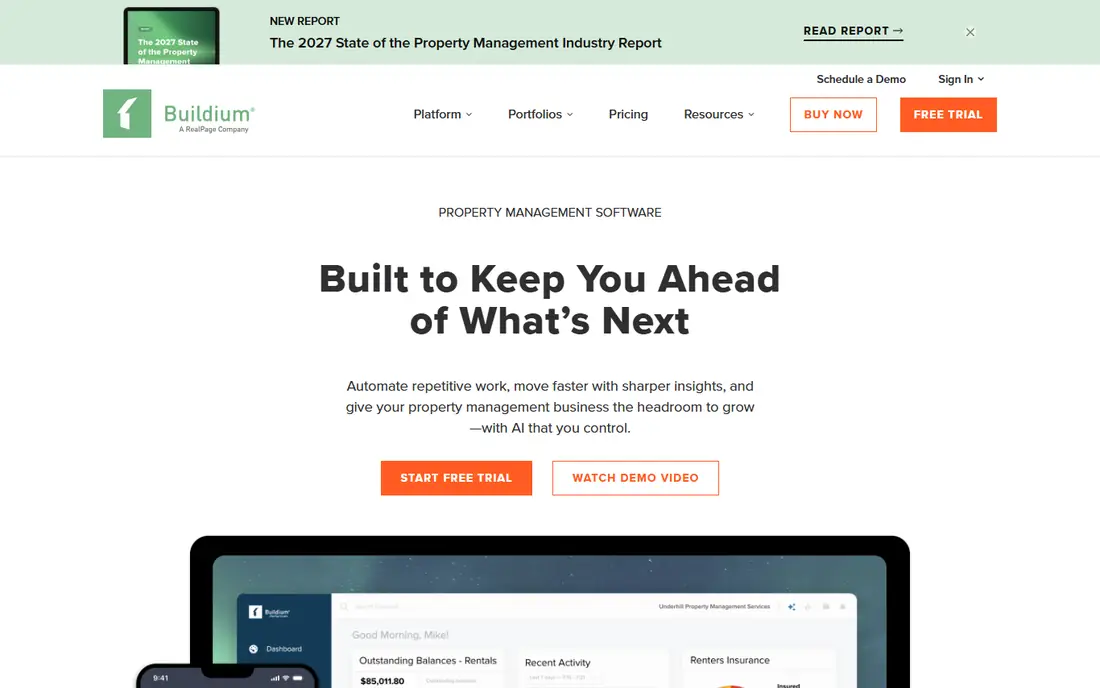
Buildium is a complete platform for residential managers. It handles listings, online applications, leases, rent collection, accounting, and maintenance requests in one system. Owner statements update as rent comes in, which cuts the month-end scramble for reports.
The platform suits teams moving from spreadsheets or from a rent-only tool. Staff roles let you control who sees financial data, and the resident portal gives tenants one place to pay and request repairs. The catch is cost and setup. The starting plan covers the basics, but larger portfolios move to higher tiers. Still, if you need real accounting plus leasing in one login, Buildium is our pick.
- Full general ledger
- Owner and resident portals
- Maintenance tracking
- Price rises with growth
- Setup takes time for larger portfolios
AppFolio is the platform many professional managers graduate to. Its accounting core includes a full ledger, bank reconciliation, and automated owner statements. Marketing, leasing, and resident management sit in the same system, so staff spend less time moving data between tools.
Pricing is quote-based, with a minimum unit count that puts it out of reach for most DIY landlords. There is no free trial, only demos, so you need a sales conversation to get exact costs. If you run a firm with staff, owner clients, and hundreds of units, that depth can justify the price. If you manage your own dozen doors, a cheaper tool below will serve you better.
- Deep accounting and automation
- Strong mobile apps
- AI-assisted leasing tools
- Quote-based pricing
- Overkill for small landlords
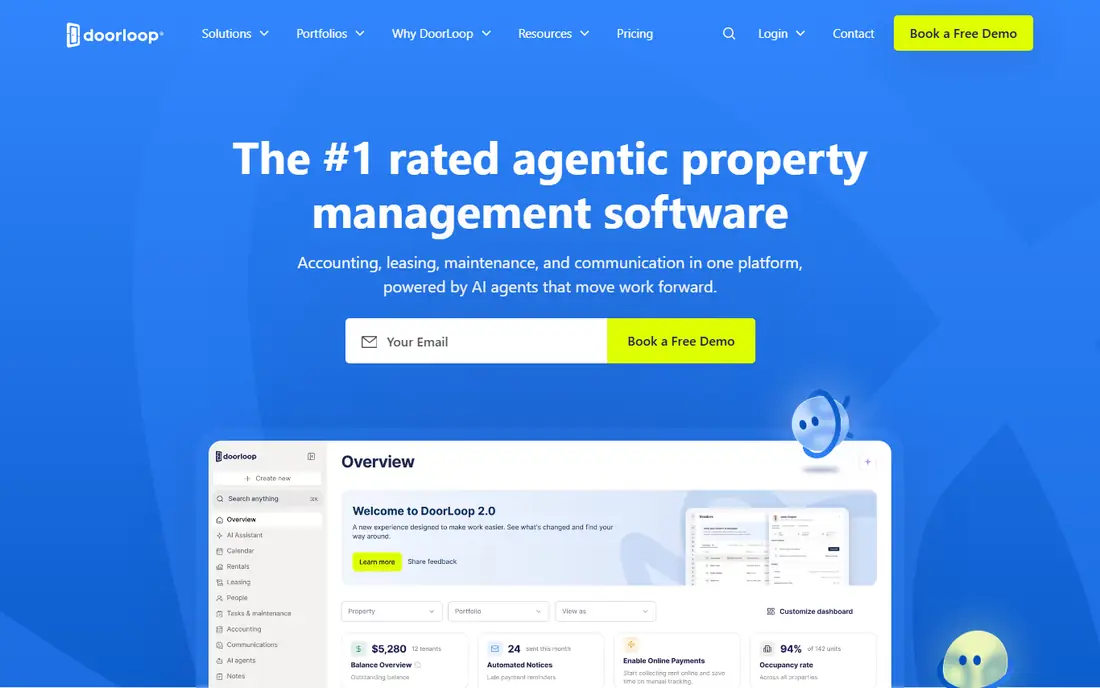
DoorLoop pairs a modern interface with full accounting, which is a rare mix in this category. Listings, applications, leases, payments, and maintenance live in one dashboard, and the accounting tools track income and expenses by property. That makes tax time and owner reporting simpler than stitching separate tools together.
New users often praise the onboarding, because guided setup helps you import properties and tenants without a long project. The catch is the monthly minimum on some plans, which can feel steep if you only manage a few units. DoorLoop fits growing landlords and small firms that want a polished system and are ready to pay for accounting depth.
- Clean modern design
- Accounting on every plan
- Good onboarding
- Monthly minimum can be high for tiny portfolios
- Some features need higher tiers
RentRedi charges one flat rate no matter how many units you add, which makes budgeting simple. That model stands out in a market where most rivals charge per unit. You get listings, applications, tenant screening, rent collection, maintenance tracking, and accounting in a single mobile-friendly app.
For a self-managing landlord, that breadth matters. You can list a vacancy, screen an applicant, collect rent, and log a repair without switching tools. RentRedi does not offer the deep owner reporting that a management firm needs, and there is no free tier. If you manage your own rentals and you hate per-unit pricing, RentRedi is a strong value pick.
- Flat rate for unlimited units
- Rent collection and accounting included
- Mobile-first design
- No free tier
- Fewer owner-portal features than enterprise tools
TurboTenant is a friendly starting point for a first-time landlord. The free plan covers listings, rental applications, and rent collection, which are the three jobs most new landlords need first. Paid plans add screening bundles, lease tools, and other upgrades as your portfolio grows.
The interface is simple, and tenants can apply and pay online without a steep learning curve. Accounting is lighter than in Buildium or DoorLoop, so owners with complex books may need a separate tool. If you manage a few units yourself and want to stop chasing checks, TurboTenant lets you start free and upgrade only when you need more.
- Free core tools
- Rental applications and screening
- Easy listings
- Paid upgrades needed for some features
- Accounting is lighter than Buildium
Innago offers a capable free platform for landlords, with listings, applications, leases, rent collection, and maintenance tracking. That free core is generous, and it suits landlords who want one place to run a small portfolio without a monthly subscription.
Setup is quick, and tenants get a portal for payments and repair requests. Some optional services, such as screening or payment processing, may carry fees, so read the terms for each service you turn on. Innago will not match enterprise accounting depth, but for a small landlord, free and functional beats powerful and unused.
- Free core platform
- Rent collection and maintenance included
- Simple setup
- Some services carry fees
- Fewer advanced accounting features
Avail focuses on the leasing side of landlording, which is where many DIY owners struggle. You can list a vacancy across rental sites, collect applications, screen tenants, and create a state-specific lease. Rent collection and maintenance tracking round out the core tools.
The free plan covers the basics, while the paid Unlimited Plus plan charges per unit per month. That per-unit cost can add up as you grow, so compare it with flat-rate rivals before you commit. If your main pain is finding good tenants and getting a solid lease signed, Avail is a practical first choice.
- Free starting plan
- Strong listing and application tools
- State-specific leases
- Paid plan is per unit
- Accounting is basic
Yardi Breeze brings Yardi accounting to smaller portfolios without the complexity of full Yardi Voyager. It covers marketing, leasing, rent collection, maintenance, and accounting, with owner statements and property-level reports. Commercial units are also supported, which helps landlords who mix property types.
Pricing starts per unit per month, with a monthly minimum that small landlords should check before signing. The interface is functional rather than flashy, and it may feel dated next to DoorLoop. If you want a trusted accounting name and a path to larger Yardi products later, Breeze is a sensible choice.
- Trusted Yardi accounting
- Residential and commercial options
- Owner reporting
- Monthly minimum applies
- Interface feels less modern than DoorLoop
TenantCloud gives DIY landlords accounting depth at a low starting price. You can track income and expenses, send invoices, collect rent online, and generate reports by property. Landlord and tenant portals keep payments and maintenance requests in one place.
The starting plan is billed annually, so check the monthly equivalent before you compare it with monthly-billed rivals. There is no free plan, only a trial, and some advanced features sit on higher tiers. For a landlord who wants books that are ready for tax season without paying enterprise prices, TenantCloud is worth a trial.
- Low starting price
- Accounting and reporting tools
- Landlord and tenant portals
- No free plan in 2026
- Some features need higher tiers
Stessa is built for rental investors rather than full-service managers. It tracks income and expenses by property, connects bank accounts, and produces reports that help at tax time. That focus makes it ideal if you already have tenants placed and your main need is clean books.
It does not offer the same leasing depth as TurboTenant or Avail, and maintenance workflows are lighter than in Buildium. Paid plans add more management tools, but the free essentials plan already covers the core tracking job. If you own rentals as investments and you want simple, tax-ready books, Stessa is a strong free start.
- Free essentials plan
- Clean income and expense tracking
- Tax-ready reports
- Not a full leasing platform
- Management features are lighter
How we picked these
We compared official feature pages, pricing pages, app store listings, privacy policies, and public reviews for tools still offered in October 2026. We kept tools that cover rent collection plus at least one other core job, such as leasing, accounting, or maintenance, and we dropped tools that only handled listings or only handled payments. Prices are starting prices from vendor pages where published, and "See website" means the vendor uses quote-based pricing. We did not set up live portfolios, so test your own unit count, payment methods, and state lease needs during a trial.
Picking software for your portfolio size
Start by counting units and naming your role. A self-managing landlord with under 10 units should start free or flat-rate, because per-unit fees add little value at that scale. A landlord with 10 to 50 units should compare flat-rate tools with mid-tier accounting platforms, and weigh whether owner reporting matters yet. A firm with over 50 units should shortlist Buildium, AppFolio, and DoorLoop, then test staff roles and owner statements with real data.
Test rent collection and maintenance first
These two workflows touch tenants every month, so they reveal problems fast. Send a test payment, check how long funds take to arrive, and see what fees tenants or landlords pay for cards versus bank transfers. Log a test repair, assign it, and check how the tenant sees updates. If either workflow feels clunky in the trial, it will feel worse with real tenants and real deadlines.
Check fees beyond the subscription
Subscription price is only part of the cost. Payment processing fees, screening fees, lease fees, and optional services can add up, especially on free platforms. Ask for a written list of fees before you commit, and compare total monthly cost at your unit count, not just the headline rate. Also check contract length, cancellation terms, and whether your data can be exported if you leave.
Frequently asked questions
Which property management software is best for small landlords?
TurboTenant, Innago, and RentRedi are strong starting points for small landlords. TurboTenant and Innago offer free core tools, while RentRedi offers a flat rate that stays predictable as you add units. Pick based on whether you value free entry or flat-rate growth. Test rent collection and listings first, since those jobs matter most at small scale.
What is the best app for rental property management?
There is no single best app, because landlords and firms need different tools. Self-managing landlords often do best with RentRedi or TurboTenant, while firms often do best with Buildium or AppFolio. Match the tool to your unit count and whether you manage for owners. A tool that fits a firm will feel heavy for three units, and a free tool will feel thin for 200 units.
Is free property management software good enough?
Free tools can be enough under 10 units, especially if you mainly need listings, applications, and rent collection. Limits appear in accounting depth, owner reporting, and support. If you need tax-ready books by property or owner statements, a paid plan usually pays for itself in time saved. Start free, then upgrade when a limit actually blocks your work.
How much does property management software cost?
Costs range from free for basic landlord tools to quote-based pricing for enterprise platforms. Mid-tier tools often start around $12 to $69 per month, while per-unit platforms add a monthly minimum. Always add payment and screening fees to the subscription price. Get a quote at your exact unit count before you compare totals.
Does property management software handle tenant screening?
Most tools in this list offer screening, either built in or through a partner, with credit and background checks where allowed. Screening rules and fees vary by state and provider, so check what is included and what the applicant pays. Never use screening as a shortcut for a proper lease, move-in inspection, and clear house rules.
Can I switch software later without losing data?
Most platforms let you export tenant, lease, and transaction data, but the ease of export varies. Before you sign up, ask how to export your full history and whether leases and documents transfer. Keep your own copies of leases, inspections, and payment records outside any single platform. That habit protects you if a vendor changes pricing or closes.
Sources we checked (10)
- https://www.buildium.com/pricing
- https://www.appfolio.com/pricing
- https://www.doorloop.com/pricing
- https://www.rentredi.com/pricing
- https://www.turbotenant.com/pricing
- https://www.innago.com/pricing
- https://www.avail.co/pricing
- https://www.yardibreeze.com/pricing
- https://www.tenantcloud.com/pricing
- https://www.stessa.com/pricing

Online Jobs is an independent blog about careers, online work, learning new skills and the tools that help people earn. More about us.
Keep reading
All posts
ZoomInfo Alternatives
The best ZoomInfo alternatives in 2026, compared on price, free plans, data coverage, and which tool fits small teams or large sales teams best in detail.

Workday Alternatives
We compared the best workday alternatives for HR, payroll, and global hiring, from BambooHR and Gusto to Rippling, Deel, and HiBob for growing teams in 2026.
Which SaaS Tools Have the Best Customer Support
Which SaaS tools have the best customer support? Compare eight popular tools on help centres, live help, response options and overall support quality.