Texting Alternatives in 2026: 9 Messaging Apps Compared

How we put this together: we compare official feature and pricing pages, app store listings, privacy policies and public user reviews. Prices change, so check the provider's site before you pay.
Key takeaways
- The best texting alternative is usually the app your contacts already use, because a messaging app is only useful if the people you text are on it.
- WhatsApp is the most practical SMS replacement for most people, while Signal is the best choice when privacy matters most.
- Google Messages is the closest drop-in replacement for SMS on Android, because it upgrades to RCS chats when the other person supports it.
- Telegram suits large groups and channels, but its regular chats are not end-to-end encrypted by default, so use Secret Chats for private conversations.
- Most of these apps are free, so cost is rarely the deciding factor; reach, encryption, and group features matter far more.
Quick comparison
| Name | Who it suits | Starting price | Free option | |
|---|---|---|---|---|
 WhatsApp | Replacing SMS for most people | Free | Yes | Visit |
 Signal | Private messaging | Free | Yes | Visit |
 Telegram | Large groups and channels | Free | Yes | Visit |
 Google Messages | Android SMS and RCS | Free | Yes | Visit |
 Apple Messages | iPhone to iPhone texting | Free | Yes | Visit |
 Facebook Messenger | Reaching US contacts | Free | Yes | Visit |
 Viber | International calls and chats | Free | Yes | Visit |
 Discord | Community and group chat | Free | Yes | Visit |
 Snapchat | Photo-first casual chat | Free | Yes | Visit |
The best texting alternatives
Plain SMS has real limits: short messages, compressed photos, no read receipts in many cases, and no encryption. The apps below replace SMS with internet messaging, which adds photos, voice notes, group chats, and, in most cases, encryption. The right one depends on your phone, your contacts, and how much you care about privacy.
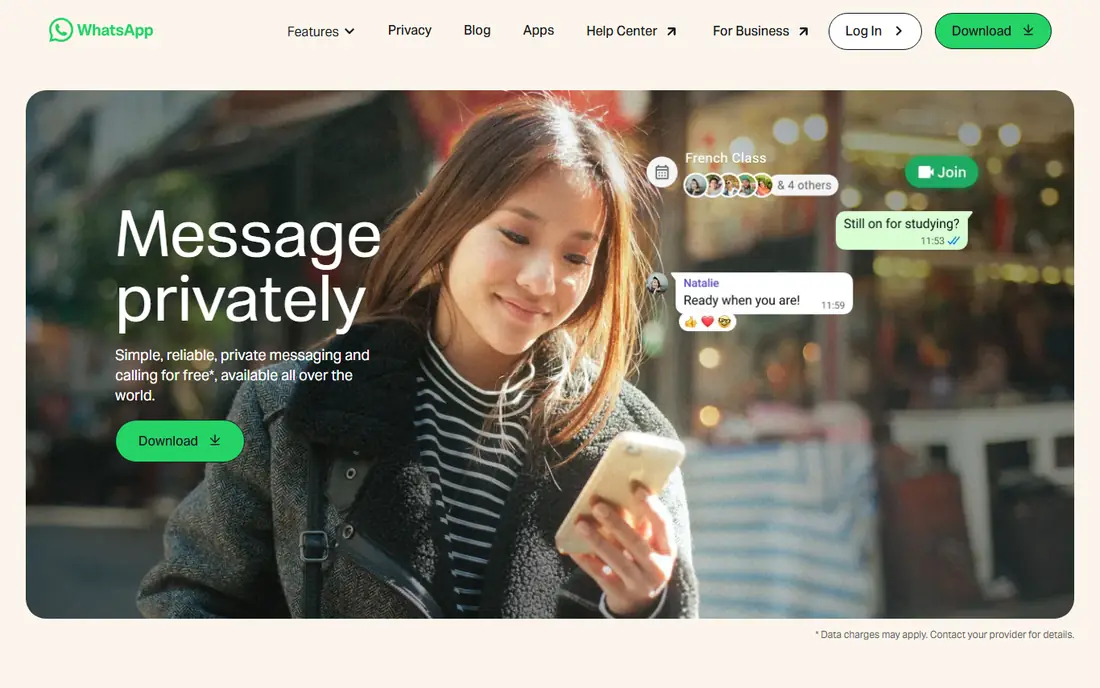
WhatsApp is our pick for most people looking for a texting alternative. It works on iPhone, Android, web, and desktop, messages are end-to-end encrypted by default, and the chances are high that your family, friends, and colleagues already have it. Groups, voice notes, photo sharing, and voice and video calls all sit in the same app, so you rarely need a second tool for everyday contact.
The trade-offs are worth knowing. WhatsApp needs a phone number, and as a Meta product it collects metadata about who you contact and when, even though message contents are encrypted. Business messages and channels can also clutter the inbox if you follow many brands. For a straight SMS replacement that just works with the people you already know, though, WhatsApp is the easiest switch.
- End-to-end encryption by default
- Huge global reach
- Groups, voice notes, calls, and status in one app
- Needs a phone number
- Owned by Meta, so metadata concerns remain
- Business messaging can feel spammy
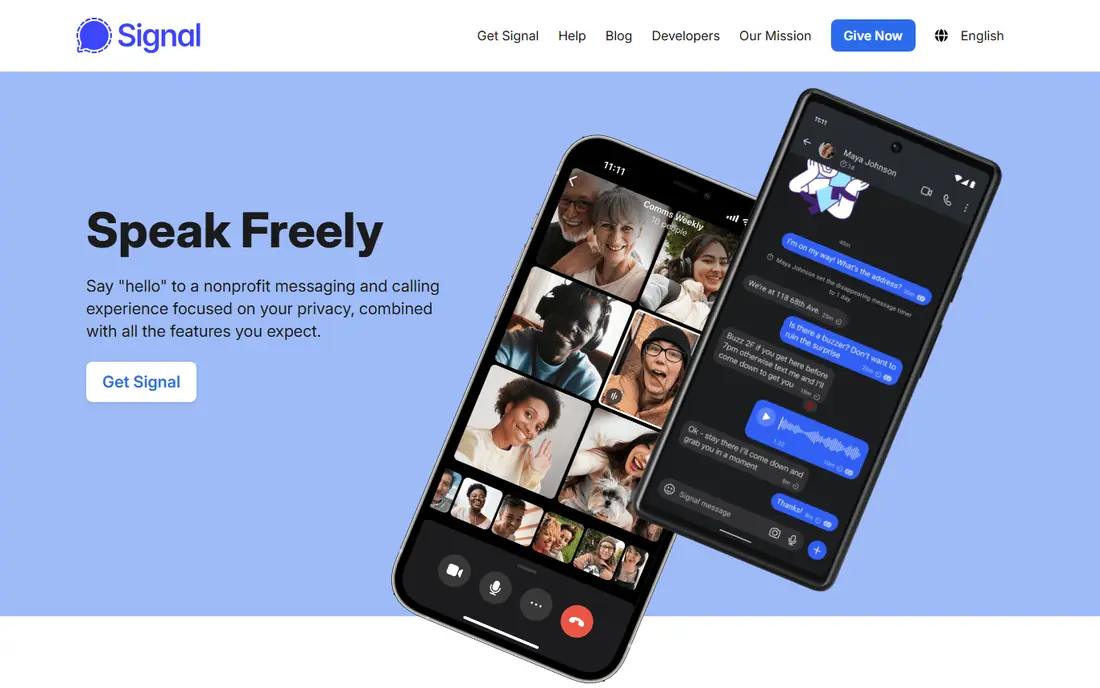
Signal is the best texting alternative if privacy is your top priority. It is run by a non-profit, its code is open source, and it collects minimal metadata compared with commercial rivals. Messages, calls, and group chats are end-to-end encrypted by default, with no ads and no tracking-based business model, which makes its privacy claims easier to trust.
The catch is reach. Fewer of your contacts will already use Signal, so you may need to persuade family or a close group to install it for it to replace SMS for you. It still needs a phone number to register, although usernames added in recent years let you hide that number from new contacts. For a private circle, Signal is excellent; for messaging everyone you know, pair it with WhatsApp.
- End-to-end encryption by default
- Open source and non-profit
- No ads and minimal metadata collection
- Smaller contact pool than WhatsApp
- Needs a phone number, though usernames can hide it
- Fewer fun extras
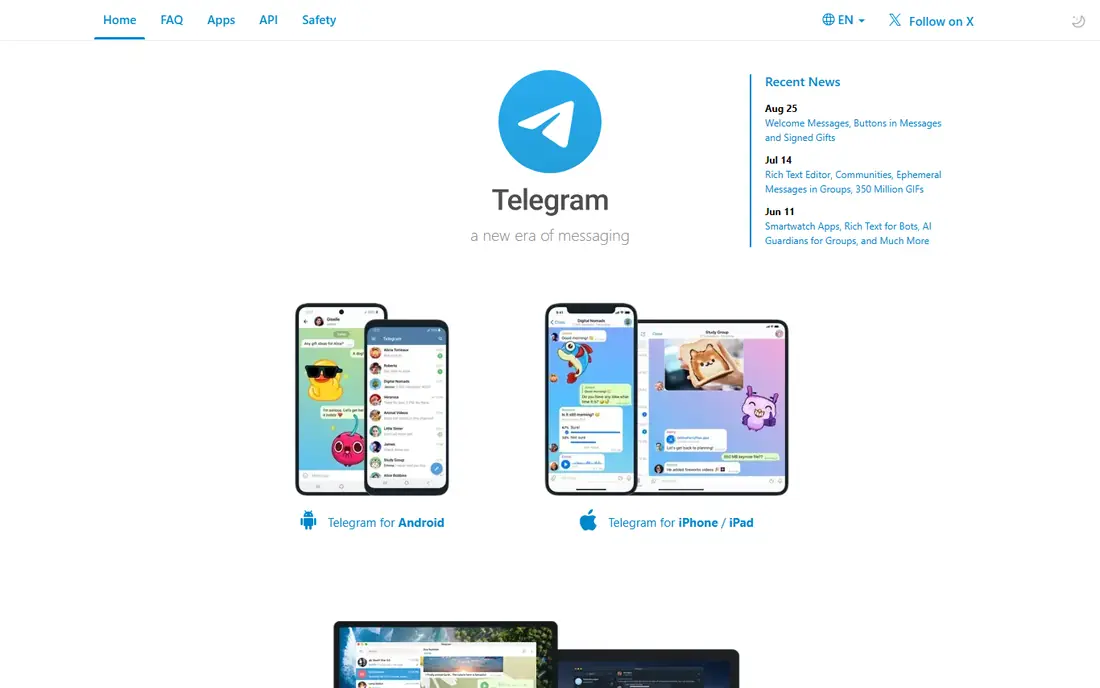
Telegram is the best SMS replacement for large groups, communities, and channels. Groups can hold very large numbers of members, channels let creators broadcast to followers, and cloud sync means your chats appear instantly on phone, tablet, and desktop. File sharing is generous, and bots add polls, reminders, and games to group chats.
The privacy warning matters. Regular Telegram chats use cloud encryption, not end-to-end encryption, so only Secret Chats give you the same protection as Signal or WhatsApp by default. Secret Chats also do not sync across devices in the same way. Telegram Premium, at around $4.99 per month, adds larger uploads and faster downloads, but the free tier covers most everyday texting well.
- Huge groups and channels
- Fast cloud sync across devices
- Large file sharing and bots
- Regular chats are not end-to-end encrypted by default
- Only Secret Chats offer that protection
- Premium adds features for about $4.99 per month
Google Messages is the closest thing to a drop-in SMS replacement on Android, because it is already the default texting app on most Android phones. When both sides support RCS, messages gain read receipts, typing indicators, high-quality photos, and group chat features that plain SMS cannot offer. When RCS is not available, it falls back to SMS or MMS, so you can still reach anyone with a phone number.
The limit is the other end of the conversation. RCS benefits depend on the recipient's phone, app, and carrier, and the experience with iPhones has improved but still varies. Google Messages is free, with no subscription, though SMS messages use your carrier plan where they apply. For Android users who want better texting without asking contacts to install anything, it is the simplest upgrade.
- Default on most Android phones
- RCS adds read receipts, typing indicators, and better photos
- Falls back to SMS when needed
- RCS depends on the other person's phone and carrier
- IPhone RCS support varies
- Features differ by device and region
Apple Messages is the default texting alternative for iPhone users, and for Apple-to-Apple conversations it is excellent. iMessage chats are end-to-end encrypted, support high-quality photos, reactions, voice notes, and group chats, and sync across iPhone, iPad, and Mac with no extra account. Most iPhone users already text this way without thinking of it as an alternative at all.
The weakness appears when you text Android users. Those conversations fall back to SMS or RCS, depending on device and carrier, with fewer features and no end-to-end encryption in the same way. There is no Apple Messages app for Android, so a mixed-device family will still need WhatsApp, Signal, or Google Messages for a consistent experience across phones.
- Built into every iPhone, iPad, and Mac
- IMessage chats are end-to-end encrypted
- No app to install or account to create
- Only works fully between Apple devices
- Messages to Android phones fall back to SMS or RCS with fewer features
- No Android app
Facebook Messenger is a practical SMS alternative in the US, where many people already have a Facebook account even if they do not use WhatsApp. You can message without sharing a phone number, group chats and calls work well, and personal chats have used end-to-end encryption by default since 2023. That reach makes it useful for contacting people you know only through Facebook.
The privacy trade-off is real. Meta's data collection is extensive, and the app's inbox mixes personal chats with business messages, games, and AI features that some users find cluttered. If you already use Facebook daily, Messenger is a convenient texting alternative. If you want to reduce Meta's footprint, Signal or Apple Messages will suit you better.
- Huge US reach
- Works with a Facebook account, no phone number needed
- Personal chats are end-to-end encrypted by default in recent versions
- Owned by Meta with extensive data collection
- Inbox can feel cluttered
- Some features vary by region and account type
Viber is a strong texting alternative for international contact. Chats and calls between Viber users are free and end-to-end encrypted by default, and Viber Out lets you call landlines and mobiles that do not use Viber at low per-minute rates. That combination suits families and friends spread across countries, where SMS charges and call costs add up.
In the US, Viber's user base is smaller than WhatsApp or Messenger, so it works best as a second app for specific contacts rather than a full SMS replacement. The app contains ads, and Viber Out minutes are paid, though chats themselves remain free. If your most important contacts use Viber, it is an excellent choice; if they do not, start with WhatsApp.
- End-to-end encryption by default
- Strong international calling with Viber Out
- Popular in parts of Europe and Asia
- Smaller US user base
- Contains ads
- Paid Viber Out minutes add cost for calls to non-Viber numbers
Discord is a texting alternative for groups and communities rather than for replacing one-to-one SMS. Servers organise conversation into channels, so a study group, gaming group, or club can keep separate topics tidy, with voice rooms alongside text. Signup needs only an email, and the core service is free, with Nitro at around $9.99 per month adding perks for users who want them.
It is not a private messaging tool in the Signal sense, because text chats are not end-to-end encrypted, and the interface can feel busy to someone who only wants simple texting. For a community that already lives on Discord, though, it replaces a messy group SMS thread far better than any single chat app. Use it for groups, and keep Signal or WhatsApp for private one-to-one messages.
- Free servers with channels for different topics
- Voice rooms beside text
- No phone number needed
- Text chats are not end-to-end encrypted
- Built for communities rather than one-to-one texting
- Interface can overwhelm new users
Snapchat is a texting alternative for casual, photo-first conversation. Snaps and chats feel quick and informal, messages can disappear by design, and the app is widely used by younger adults, which makes it a natural place for everyday social chat. Voice and video calls, stories, and group chats round out a service that is free for core use, with Snapchat Plus at around $3.99 per month for early features.
It is not the best choice for private or serious conversation, because text chats do not carry the same end-to-end encryption as Signal or WhatsApp, and disappearing messages can make it hard to refer back to plans or addresses. For light social texting with friends who already use it, Snapchat works well. For anything sensitive, move the conversation to Signal.
- Fast photo and video messaging
- Disappearing messages suit casual chat
- Widely used by younger adults
- Text chats are not end-to-end encrypted in the same way as Signal
- Contains ads
- Less suited to long, serious conversations
How we picked these
We compared official feature pages, privacy policies, and app store listings, favouring apps that are free for core messaging, actively maintained, and genuinely used as SMS replacements in 2026. We checked whether encryption is on by default, whether a phone number is required, and whether the app works across iPhone and Android, because those details decide whether an app can actually replace SMS for you. We did not claim hands-on testing, and we used See website nowhere here because all nine core services are free, though optional paid tiers vary.
Choosing a texting alternative
Start with your contacts, not with features. Ask which app your family, your closest friends, and your work group already use, because the best encryption in the world is useless if nobody replies there. If your circle is split, use two apps: one for most people, such as WhatsApp, and one for private conversations, such as Signal. That split is common, and it works better than forcing everyone onto a single app they dislike.
Privacy, groups, and switching costs
Check encryption before you share anything sensitive. WhatsApp, Signal, Apple Messages between Apple devices, Viber, and Messenger personal chats offer end-to-end encryption by default, while Telegram needs Secret Chats and Discord and Snapchat text chats do not offer the same protection. For groups, check member limits, admin controls, and whether old messages stay searchable, because a group SMS thread that moves to an app with poor search will frustrate everyone. Switching is free on all these apps, so try a new app with one group for a week before you move your main conversations.
Keeping SMS as a fallback
Keep SMS in mind as a fallback, not a failure. Not everyone will install a new app, and some contacts, such as older relatives or businesses, may only reply by SMS. Google Messages on Android and Apple Messages on iPhone both handle that fallback gracefully, sending an internet message when possible and SMS when not. A good texting setup is therefore a main app plus SMS fallback, rather than a single app that cuts you off from anyone who does not use it.
Frequently asked questions
What is the best alternative to texting?
WhatsApp is the best general alternative to SMS for most people, because of its reach and default encryption. Signal is best for privacy, Google Messages is best for Android users who want an SMS upgrade without a new app, and Apple Messages is best for iPhone-only circles. The best choice is the app your contacts already use.
Can I text without SMS?
Yes, if both sides use an internet messaging app such as WhatsApp, Signal, or Telegram, messages travel over Wi-Fi or mobile data rather than SMS. You still need a data connection, and you may need a phone number to register, depending on the app. If the other person only has SMS, your message will need to fall back to SMS through an app such as Google Messages or Apple Messages.
Is WhatsApp better than SMS?
Yes, for most everyday messaging. WhatsApp adds end-to-end encryption, high-quality photos, voice notes, group chats, and calls, none of which plain SMS offers reliably. SMS remains useful as a fallback for contacts who do not use any messaging app, and for short codes and alerts from banks and services.
Is Telegram safer than WhatsApp?
Not by default. WhatsApp chats are end-to-end encrypted by default, while Telegram regular chats are not, and only Secret Chats offer end-to-end encryption. Telegram is better for large groups and channels, but for private one-to-one conversation, WhatsApp or Signal offer stronger default protection.
Do texting alternatives work on both iPhone and Android?
WhatsApp, Signal, Telegram, Messenger, Viber, Discord, and Snapchat all work on both platforms. Apple Messages works fully only between Apple devices, and Google Messages is primarily an Android app, though its RCS messages can reach iPhones with varying features. For a mixed-device family, choose a cross-platform app from the first group.
Are texting alternatives really free?
Core messaging is free on all nine apps here, though optional paid tiers exist, such as Telegram Premium and Snapchat Plus, and calls to non-app numbers through Viber Out are paid. You still need a mobile data or Wi-Fi connection, and SMS fallback messages may use your carrier plan. Check the paid tier inside the app before you subscribe, because free messaging covers most people's needs.
Sources we checked (9)

Online Jobs is an independent blog about careers, online work, learning new skills and the tools that help people earn. More about us.
Keep reading
All posts
Zoom Alternatives
Zoom alternatives compared for 2026: Google Meet, Microsoft Teams, Webex, Jitsi and more for free calls, large meetings and webinars for teams and classrooms.
Which Software Is Best for Data Entry
Compare the best data entry software for forms, OCR scanning, and spreadsheets, with free plans, pricing, and honest limits for each tool before you commit.
What's the Best App to Read PDFs
Find what's the best app to read PDFs in 2026, from Adobe Acrobat Reader and Foxit to PDF Expert and Xodo, with free options and honest limits for every device.