Best Stripe Alternatives in 2026: 9 Services Compared


Buyer trust at checkout · Starting price: 3.49% + $0.49 per transaction
How we put this together: we compare official feature and pricing pages, app store listings, privacy policies and public user reviews. Prices change, so check the provider's site before you pay.
Key takeaways
- PayPal and Square are the easiest Stripe alternatives to start with, with no monthly fee and familiar checkouts for buyers and sellers.
- Helcim suits growing businesses who want interchange-plus pricing without negotiating, with volume discounts that apply automatically in its published tiers.
- Adyen and Checkout.com fit high-volume, multi-country businesses, but both need a sales conversation and volume to justify the setup.
- The cheapest processor depends on your average order value, card mix and international share, not only on the headline card rate.
Quick comparison
| Name | Who it suits | Starting price | Free option | |
|---|---|---|---|---|
| PayPal | Buyer trust at checkout | 3.49% + $0.49 per transaction | No | Visit |
 Square | In-person plus online selling | 2.9% + $0.30 per online transaction | No | Visit |
 Adyen | Enterprise global payments | See website | No | Visit |
 Braintree | PayPal and Venmo in one integration | 2.89% + $0.29 per transaction | No | Visit |
 Helcim | Interchange-plus without haggling | See website | No | Visit |
 Checkout.com | Global online performance | See website | No | Visit |
 Authorize.net | Classic gateway for established businesses | $25 per month | No | Visit |
 Paddle | SaaS tax and compliance handled | 5% + $0.50 per transaction | No | Visit |
 Shopify Payments | Shopify stores only | See website | No | Visit |
The best stripe alternatives
Stripe is a strong default for online payments, with developer-friendly APIs and a published United States rate of 2.9% plus 30 cents for domestic cards. Businesses still look for alternatives to Stripe and PayPal for lower costs at volume, in-person selling, buyer trust, global tax handling or a different pricing model. The options below cover each of those reasons, with fees from vendor pricing pages and public comparisons checked in October 2026. This is not financial advice, and final fees depend on your country, card mix and contract.
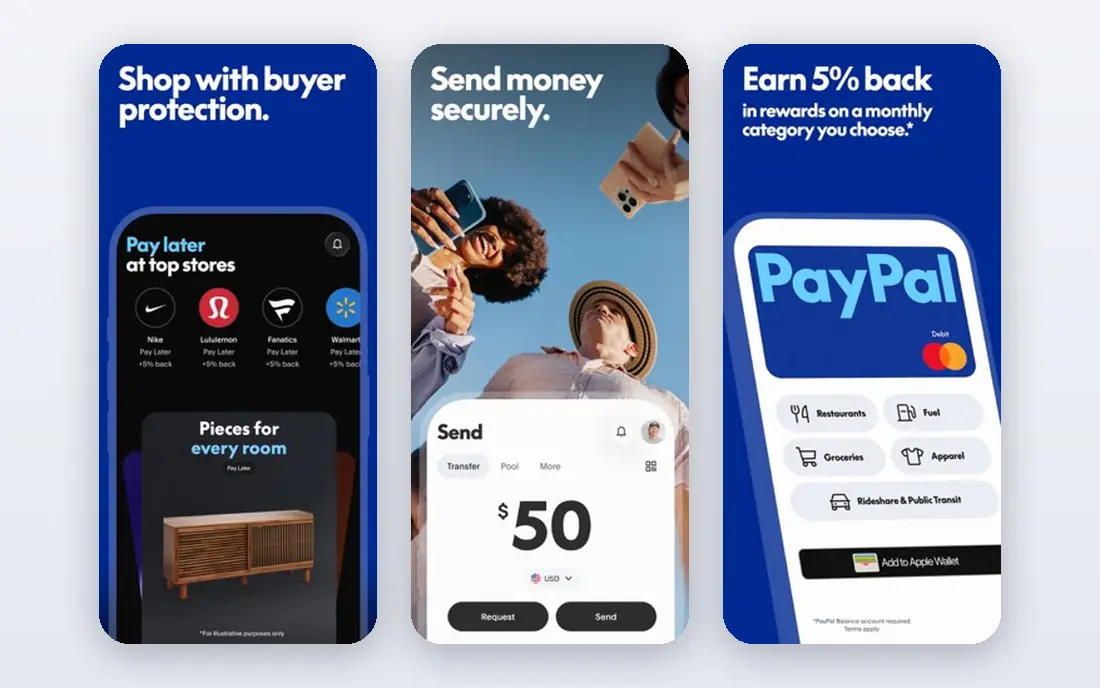
PayPal converts well because buyers recognise it. Many shoppers already have an account, saved cards and addresses, so checkout takes fewer steps than typing card details into a new form. PayPal Checkout in the United States is listed at 3.49% plus 49 cents for standard online payments, with international payments adding a further fee, and there is no monthly fee for the standard product.
That convenience costs more per order than Stripe for many sellers, especially on low average order values where the fixed 49 cent fee matters. Dispute handling and account holds are also common complaints. PayPal fits best as an extra checkout option beside cards, or as the main processor for small stores where buyer trust matters more than shaving a few cents per order.
- Buyers already trust and use PayPal
- Wallet, Venmo and card options
- No monthly fee for standard checkout
- Higher card and wallet fees than Stripe for many orders
- Dispute fees and holds can frustrate sellers
Square is the clearest alternative for businesses that sell in person and online. Its free plan covers point of sale, online store basics, invoices and payments, with in-person rates at 2.6% plus 15 cents and online rates at 2.9% plus 30 cents for standard online transactions in United States listings, and no monthly fee. Hardware, inventory and staff tools can grow with a shop without switching processors.
Square does not beat Stripe on online card fees alone, since the standard online rate is the same. Its advantage is the combined system and the lack of a chargeback fee in many listings, which helps sellers who face disputes. Choose Square when your business has a counter, a market stall or appointments as well as a website.
- One system for shop, online and invoices
- No monthly fee on the free plan
- No chargeback fee in listings
- Online API rate matches Stripe, so no saving online alone
- Some features need paid plans
Adyen serves large, multi-country businesses that need one processor for online, mobile and in-store payments. Its pricing uses Interchange++, with United States Visa and Mastercard listings around 0.60% plus 13 cents on top of interchange and scheme fees, though other listings put the margin near 0.80%, so confirm the current rate in a quote. It supports many currencies and local payment methods, with unified reporting across channels.
Onboarding is sales-led, and minimum invoice terms mean small businesses may not qualify or may pay more than expected at low volume. Adyen fits companies with high volume, international customers and engineering capacity to use its data and routing tools. Smaller sellers should shortlist Helcim or Square first.
- Unified acquiring across online, mobile and in-store
- Wide currency and payment method coverage
- Detailed data and routing
- Sales-led onboarding
- Minimum invoice terms can exclude small businesses
Braintree, owned by PayPal, gives developers a single integration for cards plus PayPal, Venmo, Apple Pay and Google Pay. Standard United States card pricing is listed at 2.89% plus 29 cents, slightly below Stripe on paper, with no monthly fee for the standard plan. That mix suits apps and subscription businesses that want wallet payments without building separate integrations.
Because Braintree is part of PayPal, it does not fully diversify you away from PayPal policies and risk decisions. It also suits online and in-app payments better than in-person retail. Choose Braintree when wallet reach matters, when you already plan to offer PayPal, and when a developer-led checkout is part of the product.
- Cards, PayPal, Venmo, Apple Pay and Google Pay in one integration
- Developer tools
- No monthly fee in standard listings
- Owned by PayPal, so it is not a fully independent alternative
- Support experience varies
Helcim publishes interchange-plus pricing with no monthly fee, which appeals to growing businesses tired of flat-rate markups. Published tiers start around interchange plus 0.50% plus 25 cents online, with lower margins as volume grows, and in-person tiers start lower. Statements show interchange, scheme fees and Helcim margin separately, so you can see what you actually pay.
Interchange-plus takes more work to compare than a flat rate, since your effective rate moves with card mix. Helcim also focuses on the United States and Canada, so global sellers may need Adyen or Checkout.com instead. Helcim fits growing sellers who process enough volume for interchange-plus to beat flat rates, and who want transparent pricing without a negotiated contract.
- Interchange-plus pricing with no monthly fee
- Automatic volume discounts
- Clear statements
- Limited to United States and Canada in core listings
- Interchange-plus is harder to compare at a glance
Checkout.com targets digital-native and global online businesses that care about authorisation rates and payment performance. It supports many currencies and local payment methods, with routing, fraud tools and reporting designed for high-volume checkout. That focus suits SaaS, marketplaces and e-commerce brands selling across borders.
Pricing is quoted per merchant, so small stores cannot judge cost from a public rate card alone. Onboarding and integration also assume more technical capacity than Square or PayPal. Checkout.com fits online businesses with meaningful international volume who will use performance data to improve approval rates, not sellers looking for a quick flat-rate signup.
- Wide currency and local payment method coverage
- Performance and routing tools
- Strong for digital businesses
- Quote-only pricing
- Onboarding suits larger online businesses better than tiny stores
Authorize.net is a classic payment gateway that many established businesses already use through their merchant account or website platform. Its all-in-one plan is listed at $25 per month plus 2.9% plus 30 cents per transaction in United States listings, with a gateway-only option for businesses that already have a merchant account. Recurring billing, fraud tools and broad shopping cart support are included.
The monthly fee means very low-volume sellers pay more than with Square or PayPal, even if the per-transaction rate looks similar. The dashboard also feels older than Stripe or Square. Authorize.net fits businesses with steady volume, an existing merchant account, or a platform that integrates with it already, especially once monthly volume passes a few thousand dollars.
- Long-running gateway with broad platform support
- Recurring billing
- All-in-one option available
- Monthly fee plus per-transaction fees
- Interface feels older than newer rivals
Paddle is a merchant of record, not just a card processor. It sells your software on your behalf, handles sales tax and VAT in many countries, and manages subscriptions, checkout and compliance, for a headline fee of 5% plus 50 cents in listings, with tax included in that structure. That single fee can replace separate tax, invoicing and payment tools for small SaaS teams.
The headline fee looks high next to Stripe, but the comparison is not like-for-like, since Paddle absorbs tax handling that Stripe leaves to you or to another tool. You also give up some control over the payment stack and customer relationship. Paddle fits small and mid-size SaaS sellers who want global tax handled without building it themselves.
- Merchant of record handling for global tax
- Subscriptions and checkout in one system
- Fraud and compliance support
- Higher headline fee than card processors
- Less control over the full payment stack
Shopify Payments is the built-in processor for Shopify stores, and it removes the extra transaction fee Shopify charges when you use an outside processor. Card rates vary by Shopify plan, with Basic listings around 2.9% plus 30 cents online in the United States, and lower rates on higher plans. Setup is inside Shopify, payouts and refunds sit in the same dashboard, and multi-currency selling is included in supported plans.
It only works on Shopify, so it is not a general Stripe alternative for other platforms. If you leave Shopify, you leave Shopify Payments too. For stores already on Shopify, it is usually the simplest and cheapest integrated option, and it pairs well with PayPal as an extra wallet checkout.
- Built into Shopify checkout with no extra transaction fee on Shopify plans
- Fast setup
- Multi-currency options
- Only works on Shopify
- Plan level changes the card rate
How we picked these
We compared official pricing pages, product documentation and public reviews for processors and merchant-of-record services still available in October 2026. We favoured services with published or clearly quoted pricing, support for online cards plus at least one extra method such as wallets, in-person or local payments, and a clear audience, from small shops to global enterprises. We did not rank by headline rate alone, since interchange-plus, flat-rate and merchant-of-record fees are not directly comparable. Check your country pricing, international fees, dispute fees and payout timing on the vendor page before you switch, and plan how saved cards will move, since migration rules vary.
How to switch without losing sales
Run your last month card mix first
Pull last month orders by card type, country and average value. A processor that looks cheap on domestic debit may be expensive on premium international cards, and fixed fees matter far more on small orders than on large ones.
Test one checkout path before you move everything
Run the new processor on a small share of traffic or on one product first. Check approval rates, payout timing, refund flow and dispute handling before you migrate saved cards or subscriptions.
Keep PayPal or a wallet option beside cards
Many buyers abandon a checkout that only offers cards. Keeping PayPal, Apple Pay or Google Pay beside your main processor usually protects conversion while you test a cheaper card rate.
Frequently asked questions
What are the best alternatives to Stripe?
PayPal, Square, Adyen, Braintree and Helcim are strong alternatives to Stripe, with different strengths for buyer trust, in-person selling, global scale, wallet reach and interchange-plus pricing. The best alternative depends on your sales channels and volume.
What are cheaper alternatives to Stripe?
Helcim can be cheaper than Stripe at growing volume through interchange-plus pricing with no monthly fee, and Adyen can be cheaper at high volume through Interchange++ pricing. For low volume, Square and PayPal cost a similar amount per order to Stripe, so the saving comes from features, not rate alone.
What is a credit card processing alternative to Stripe for shops?
Square is the best pick for shops that sell in person and online, with point of sale hardware, inventory and online payments in one system. Helcim also suits growing shops that want interchange-plus pricing without a monthly fee.
Can I use PayPal instead of Stripe?
Yes, PayPal works as a full checkout processor for many small businesses, and Braintree lets you offer PayPal and Venmo beside cards in one integration. Compare PayPal Checkout fees with Stripe on your average order value, since PayPal fees are higher on many standard online payments.
What is the best Stripe alternative for SaaS?
Paddle suits small SaaS teams who want global tax handled as merchant of record, while Braintree and Checkout.com suit larger SaaS businesses with developer-led checkouts. Stripe itself remains strong for SaaS billing, so switch only when tax, wallet reach or global pricing gives a clear gain.
Sources we checked (9)

Online Jobs is an independent blog about careers, online work, learning new skills and the tools that help people earn. More about us.
Keep reading
All posts
Best White Label SEO Companies
We compare the best white label SEO companies and tools in 2026 for agencies, from fulfilment services to branded reporting platforms, margins and prices.

Best Webinar Software
We compared the best webinar software for 2026 on price, attendee limits, automation and ease of use, to help you host better live sessions with confidence.
Best Web Scraping Tools
Compare the best web scraping tools in 2026, from no-code Octoparse and Browse AI to Apify, Firecrawl, Bright Data, Zyte, ScraperAPI and free Scrapy, with prices.