Skyvia Alternatives in 2026: 9 Tools Compared

How we put this together: we compare official feature and pricing pages, app store listings, privacy policies and public user reviews. Prices change, so check the provider's site before you pay.
Key takeaways
- Fivetran is the most managed Skyvia alternative, with a large connector catalog and automated schema handling, but its usage pricing needs careful forecasting.
- Airbyte is the best pick for engineering teams that want open-source control and a low-cost cloud starting point.
- Hevo Data and Stitch suit smaller teams that want simple, no-code pipelines without enterprise overhead.
- Integrate.io and Matillion add in-pipeline transformation for teams that want to shape data before it lands in the warehouse.
- Our pick for most teams leaving Skyvia is Hevo for simplicity, Airbyte for control, and Fivetran for hands-off scale.
Quick comparison
| Name | Who it suits | Starting price | Free option | |
|---|---|---|---|---|
 Fivetran | Fully managed ELT at scale | See website | Yes | Visit |
 Airbyte | Open-source control and low cost | See website | Yes | Visit |
 Hevo Data | No-code pipelines for small teams | See website | Yes | Visit |
 Stitch | Simple scheduled replication | $100 per month | Free trial | Visit |
 Integrate.io | Fixed-fee ETL with transformation | $1,999 per month | Free trial | Visit |
 Matillion | Warehouse-native ELT | See website | No | Visit |
 Qlik Talend Cloud | Enterprise integration and governance | See website | No | Visit |
 Estuary Flow | Streaming change data capture | See website | Yes | Visit |
 Keboola | All-in-one data operations | See website | No | Visit |
The best Skyvia alternatives
Skyvia covers backup, replication, and integration for Salesforce and other cloud apps, but teams often leave it for broader connector catalogs, faster sync, or deeper transformation. We compared official feature and pricing pages to find tools that truly replace Skyvia pipelines rather than merely overlapping with it.
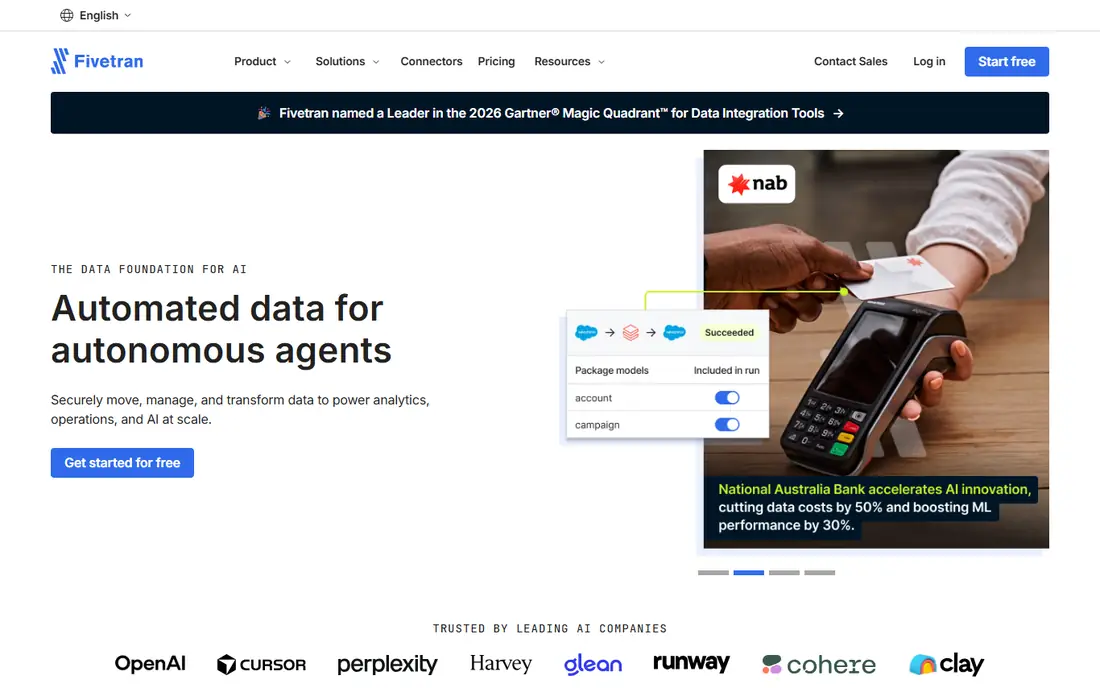
Fivetran is the safest managed replacement for Skyvia. It moves data from hundreds of sources into a warehouse or lake, handles schema changes automatically, and keeps pipelines running with little daily care. Teams that want to stop babysitting connectors and focus on analysis will feel the difference quickly.
Pricing is the main question. Fivetran offers a free tier up to a monthly row limit, then charges by usage, so a growing data volume can raise the bill in ways a flat fee would not. If your sources and volumes are stable, forecast that usage before you migrate. If your team wants the least operational work and the widest catalog, Fivetran is worth that forecasting effort.
- Very large connector catalog
- Automated schema evolution
- Managed, hands-off operation
- Usage-based pricing can grow fast
- Transformation happens in the warehouse, not in the pipeline
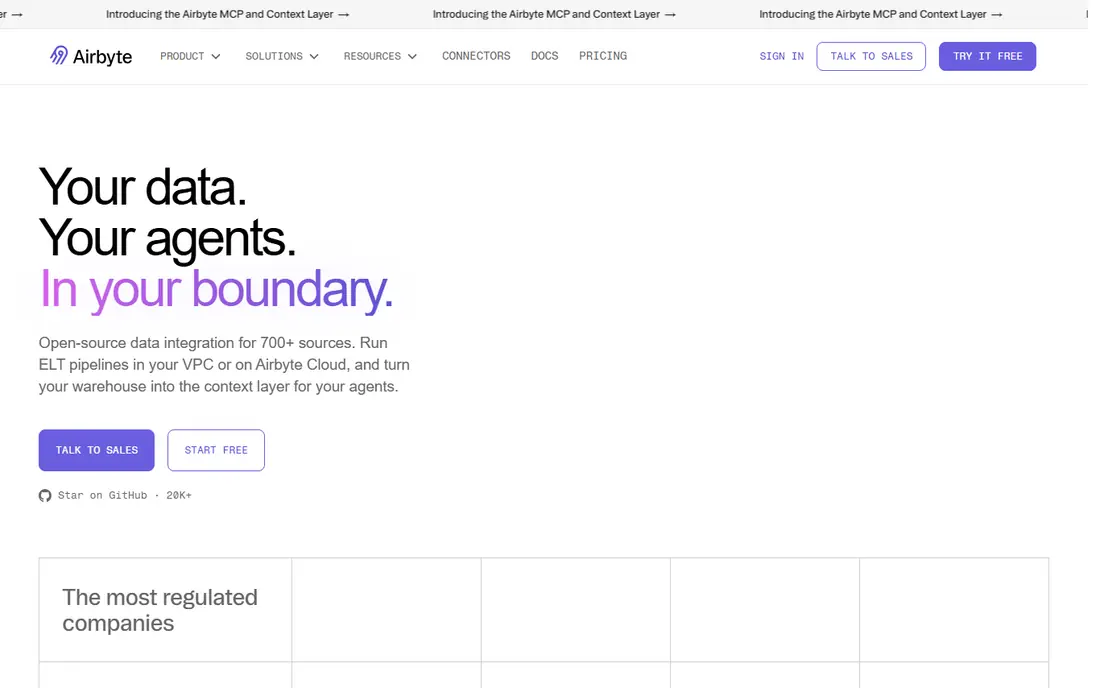
Airbyte gives engineering teams a choice Skyvia does not. Run the open-source core in your own infrastructure for free software cost, or use Airbyte Cloud for a managed service with a low starting price. Its connector catalog is large, and its community builds connectors that smaller vendors may never prioritize.
Self-hosting trades a bill for on-call work, including upgrades, monitoring, and scaling, so teams without data engineers should prefer Cloud. Cloud pricing uses credits, which can be harder to forecast than a flat monthly fee, but the entry cost is low. For teams that value control and a path away from vendor lock-in, Airbyte is a strong pick.
- Open-source core you can self-host
- Large connector catalog
- Low-cost cloud starting plans
- Self-hosting needs engineering time
- Cloud pricing is credit-based and needs tracking
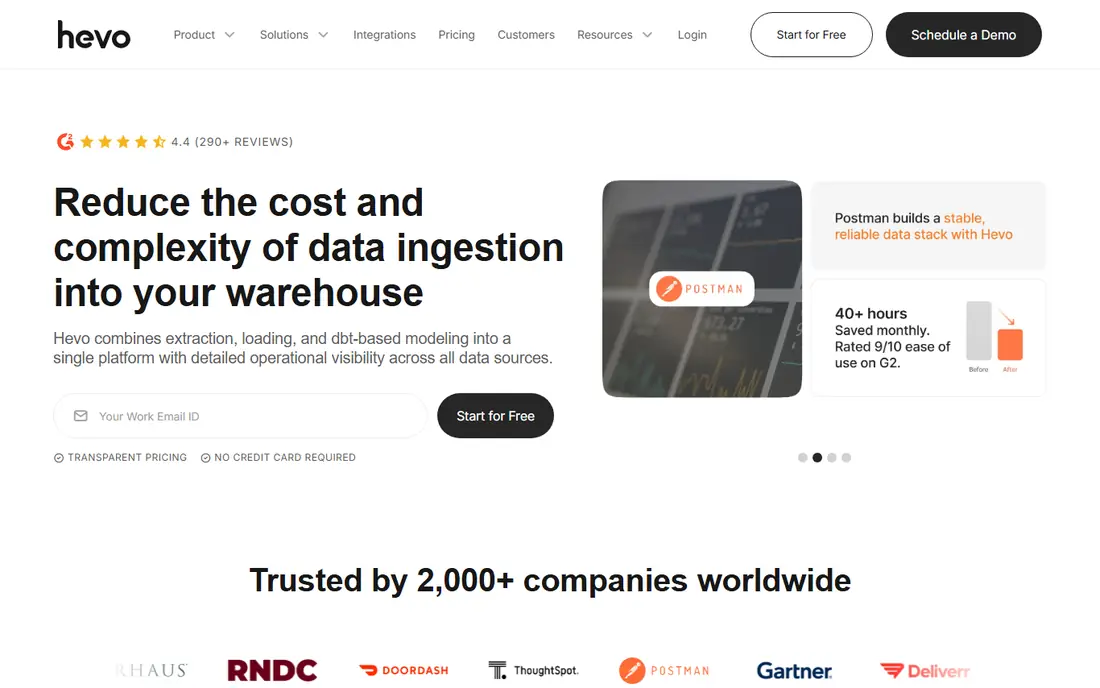
Hevo Data is the simplest Skyvia alternative for non-technical teams. Pipelines are built without code, schemas map automatically, and data can flow near real time rather than on an hourly schedule. That freshness matters for dashboards and operational reports that go stale on slow syncs.
Hevo offers a free tier up to a monthly event limit, with paid Starter plans above it, so small teams can test real pipelines before paying. Its connector list is narrower than the largest rivals, so check that your key sources are covered before you commit. If they are, Hevo is one of the fastest ways to replace Skyvia without hiring data engineers.
- No-code setup
- Near-real-time pipelines
- Automatic schema mapping
- Connector catalog is smaller than Fivetran or Airbyte
- Paid tiers rise with event volume
Stitch, now part of Qlik, does one job well. It replicates data from sources into a warehouse on a schedule, with a simple interface and a clear starting price. Teams with a short, stable source list and no need for complex transformation will find Stitch refreshingly plain after a heavier platform.
Stitch does not transform data in the pipeline, so shaping and modeling must happen in the warehouse with tools like dbt. Change data capture is also limited compared with streaming tools. If your need is straightforward replication at low volume, Stitch is a good low-cost pick. If you need transformation or real-time sync, look at Integrate.io, Matillion, or Estuary instead.
- Simple setup and pricing
- Built on the Singer standard
- Reliable scheduled loads
- Replication only, with no in-pipeline transformation
- Limited change data capture
Integrate.io suits mid-market teams that hate usage surprises. Its flat monthly fee covers ETL, ELT, change data capture, and reverse ETL, with visual transformation steps and support from a solution engineer. Teams that move large volumes can find the flat fee cheaper than row-based pricing once volume grows.
The entry price is high for a startup, so small teams should start with Hevo, Stitch, or Airbyte Cloud instead. Integrate.io also rewards teams that will use its transformation features, since a team that only replicates data pays for power it never uses. For volume-heavy teams that want predictable billing, Integrate.io is a strong Skyvia alternative.
- Flat monthly fee with no volume meter
- In-pipeline transformation
- Change data capture and reverse ETL
- High entry price for small teams
- Best value only at meaningful volume
Matillion builds pipelines that run inside your cloud warehouse, pushing transformation down to the warehouse engine rather than a separate server. That design suits teams already committed to Snowflake, BigQuery, Databricks, or Redshift, since it uses warehouse power and keeps data movement simple. Visual design plus dbt support helps both analysts and engineers build pipelines.
Pricing is by quote and based on credits, so budgeting needs a sales conversation and a realistic workload estimate. Matillion is also less of a pure replication tool than Fivetran, since its strength is transformation. Teams that want warehouse-native ELT with strong transformation should shortlist Matillion, while pure replication teams may prefer Fivetran or Stitch.
- Runs transformation inside the warehouse
- Visual pipeline design
- Dbt integration
- Quote-based pricing
- Warehouse-native design ties value to your warehouse choice
Qlik Talend Cloud is the enterprise pick in this list. It combines data integration with data quality, governance, and catalog features, which matters when many teams share one data platform and need rules about trust and lineage. It also fits firms already using Qlik analytics or Stitch replication.
Talend is heavier to set up than Hevo or Stitch, and pricing is quoted rather than published, so small teams will find it more platform than they need. Large firms with governance, quality, and compliance requirements, though, may find Talend cheaper in total than patching several tools together. If Skyvia felt too light for enterprise rules, Talend is the step up.
- Broad integration, quality, and governance features
- Enterprise scale
- Qlik data platform fit
- Quote-based pricing
- Heavier setup than simpler ELT tools
Estuary Flow is built for teams that need fresh data, not hourly batches. It captures changes from sources and streams them to a warehouse with low latency, and it supports SQL derivations for shaping data along the way. A free tier covers small volumes, which makes testing a streaming pipeline low risk.
Pricing combines a per-gigabyte charge with a per-connector fee, so a team with many sources should model total cost before migrating. Estuary is also younger than Fivetran, so its connector catalog and community are smaller. For real-time dashboards and operational use cases, Estuary is one of the most direct Skyvia upgrades.
- Streaming change data capture with low latency
- Free tier for small volumes
- SQL derivations
- Per-gigabyte plus per-connector pricing needs forecasting
- Newer ecosystem than Fivetran
Keboola is a data operations platform rather than a single-purpose loader. It covers extraction, transformation, orchestration, and data apps in one place, with modular components that teams can assemble for their own workflows. That breadth suits data teams that want one platform for the whole pipeline, not just the load step.
Keboola prices per user, so large teams should model seat costs alongside platform fees. Teams that only need simple replication will find Keboola more than they need, and should prefer Stitch or Hevo. Teams that want a shared workspace for building and running data products, though, will value Keboola's all-in-one approach.
- Combines extraction, transformation, and orchestration
- Modular components
- Team collaboration features
- Per-user pricing can add up
- Learning curve for teams that only need replication
How we picked these
We compared official feature pages, pricing pages, and connector documentation for each tool, and we favored tools that are actively maintained, support common warehouses, and offer a clear migration path from Skyvia-style replication. We mixed managed ELT, open-source, streaming, and enterprise platforms, so readers can match a tool to their team size and latency needs. Where a vendor does not publish a price, we wrote See website rather than guessing a figure.
How to choose a Skyvia alternative
Start with latency and transformation, because those two questions split this list. If hourly batches are fine and transformation happens in the warehouse, Fivetran, Stitch, or Hevo will serve you well. If you need fresh data or in-pipeline shaping, shortlist Estuary, Integrate.io, or Matillion instead.
Next, list every source and destination, then check connector coverage before you test anything else. A tool with a lower price is no bargain if your key source needs custom work. Run one real pipeline end to end, measure sync time and cost at your actual volume, and check how schema changes are handled. A week-long pilot on real data will tell you more than a feature table.
Frequently asked questions
What are the best alternatives to Skyvia?
Fivetran, Airbyte, and Hevo Data are the strongest general alternatives to Skyvia. Fivetran suits hands-off scale, Airbyte suits engineering teams that want control, and Hevo suits small teams that want no-code pipelines. Stitch, Integrate.io, and Estuary are strong picks for simpler, flat-fee, or streaming needs.
Is Airbyte a good Skyvia alternative?
Yes, Airbyte is a good Skyvia alternative for teams with engineering capacity. Its open-source core can be self-hosted, its cloud service has a low entry price, and its connector catalog is large. Teams without data engineers should use Airbyte Cloud rather than self-hosting, since upgrades and monitoring need ongoing care.
Which Skyvia alternative is cheapest for small teams?
Stitch and Hevo Data are among the cheapest managed options for small teams, with Stitch starting at a published monthly price and Hevo offering a free tier up to an event limit. Airbyte Cloud can be cheaper still for very small volumes, while self-hosted Airbyte removes software cost but adds engineering time.
Does Fivetran replace Skyvia backup features?
Fivetran replaces Skyvia replication and ELT well, but it is not a backup tool in the same sense as Skyvia backup for Salesforce. Teams that relied on Skyvia mainly for backups should keep a dedicated backup product alongside Fivetran, or check whether their warehouse retention covers the recovery need.
How hard is it to migrate from Skyvia to another tool?
Migration difficulty depends on source count and transformation logic. Simple replication pipelines often move in days, while custom Skyvia transformations or Salesforce-specific logic may need rebuilding in the new tool or in dbt. Map every pipeline, test one source end to end, and run old and new pipelines in parallel until totals match.
Sources we checked (9)

Online Jobs is an independent blog about careers, online work, learning new skills and the tools that help people earn. More about us.
Keep reading
All posts
n8n Alternatives
n8n alternatives compared for 2026, with Zapier, Make, Activepieces, and more, covering visual builders, code steps, self-hosting, and pricing models.

ZoomInfo Alternatives
The best ZoomInfo alternatives in 2026, compared on price, free plans, data coverage, and which tool fits small teams or large sales teams best in detail.

Zoom Alternatives for Webinars
Compare Zoom alternatives for webinars in 2026, from browser-based rooms to enterprise events, with prices, attendee limits, features and honest trade-offs.