Best SendGrid Alternatives in 2026: 8 Platforms Compared

How we put this together: we compare official feature and pricing pages, app store listings, privacy policies and public user reviews. Prices change, so check the provider's site before you pay.
Key takeaways
- Mailgun, Postmark, and Resend are the strongest API-first alternatives for transactional email such as password resets and receipts.
- Brevo, Mailchimp, and MailerLite suit teams that need marketing campaigns, templates, and automation alongside transactional sending.
- Amazon SES is usually the lowest cost at very high volume, but it needs more setup and surrounding tooling than a ready-made platform.
- Separate transactional and marketing sending where possible, because mixing them can harm deliverability for time-sensitive messages.
Quick comparison
| Name | Who it suits | Starting price | Free option | |
|---|---|---|---|---|
 Mailgun | Developer API and logs | $15 per month | Yes | Visit |
 Postmark | Transactional email only | $15 per month | Yes | Visit |
 Amazon SES | High volume at low cost | See website | Yes | Visit |
 Brevo | Marketing plus transactional | $9 per month | Yes | Visit |
 Mailchimp | Marketing with transactional add-on | $13 per month | Yes | Visit |
 Resend | Modern API for product teams | $20 per month | Yes | Visit |
 Mailtrap | Testing plus production sending | $15 per month | Yes | Visit |
 MailerLite | Simple campaigns on a budget | $12 per month | Yes | Visit |
The best SendGrid alternatives
SendGrid covers both transactional email and marketing campaigns, which is why teams look for different replacements depending on which job matters most. If your app sends receipts and alerts, you need fast, reliable delivery and clear logs. If your team sends newsletters, you need templates, lists, and automation. The list below covers both needs, with a clear note on which job each tool fits best.
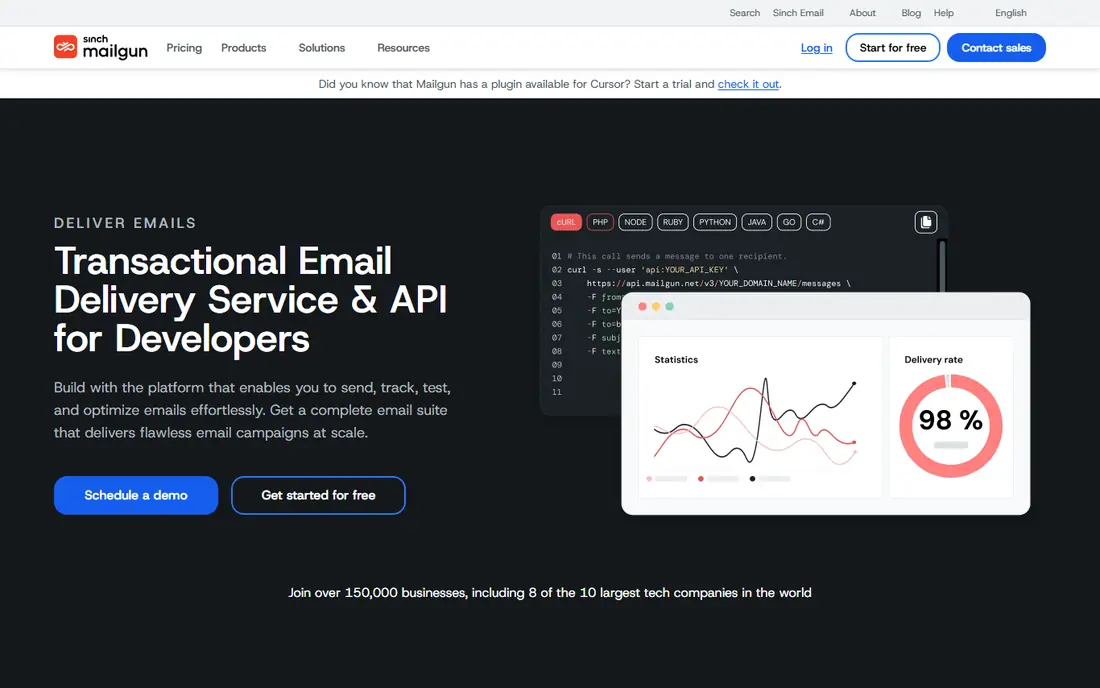
Mailgun is a developer-first sending service that fits teams moving transactional email away from SendGrid. Its API is well documented, logs are detailed enough to trace a single message, and tools for validation and inbound routing help with real product workflows. That focus makes it a natural choice for apps, not just newsletters.
The trade-off is that Mailgun is not a full marketing suite. You can send campaigns, but template design and automation are less polished than on Brevo or Mailchimp. If your main need is reliable app email with good debugging, Mailgun is a strong pick. If your main need is beautiful campaigns, pair it with a marketing tool or choose a different option below.
- Strong API and SMTP support
- Detailed logs and tracking
- Inbound routing and validation tools
- Marketing features are thinner than on full campaign platforms
- Pricing rises with volume
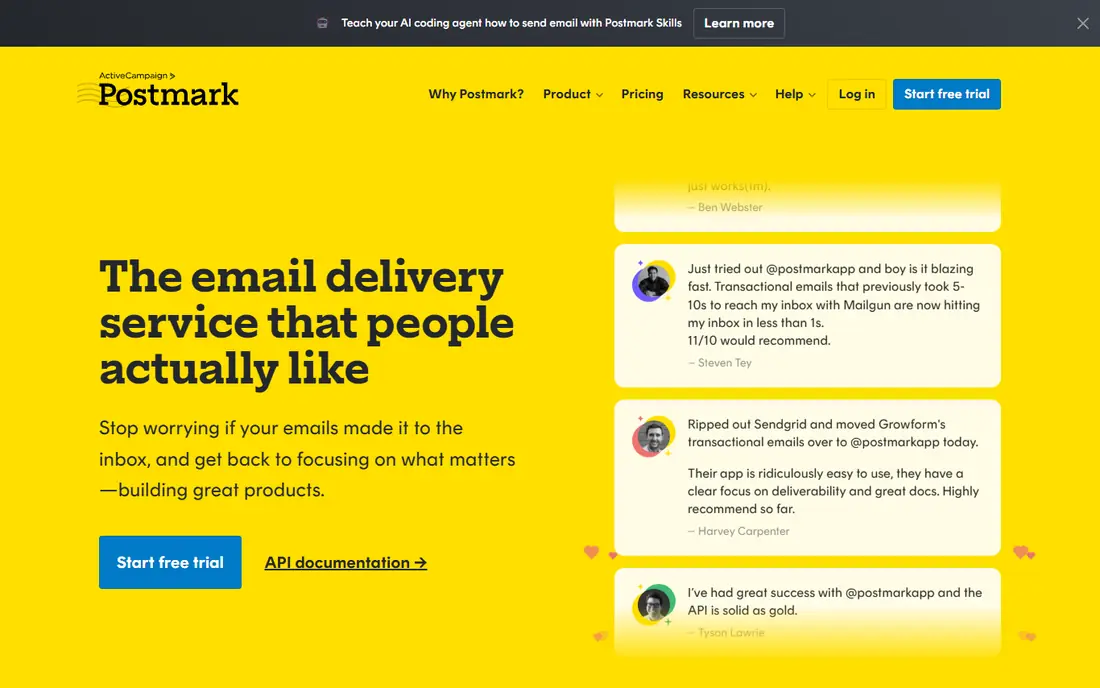
Postmark is deliberately narrow, and that narrow focus is its strength. It separates transactional messages, such as password resets and order confirmations, from bulk messages, so a newsletter problem is less likely to affect time-sensitive mail. Templates, message activity, and delivery reporting are built around that transactional job.
Teams that need both transactional and heavy marketing sending may find Postmark too limited on the marketing side. For product teams that care most about receipts and alerts arriving quickly and reliably, that limit is often acceptable. Postmark is the pick when transactional deliverability is the top priority.
- Separate streams for transactional and bulk mail
- Fast delivery focus
- Clear message activity and templates
- Not built for large marketing campaigns
- Broadcast features are limited by design
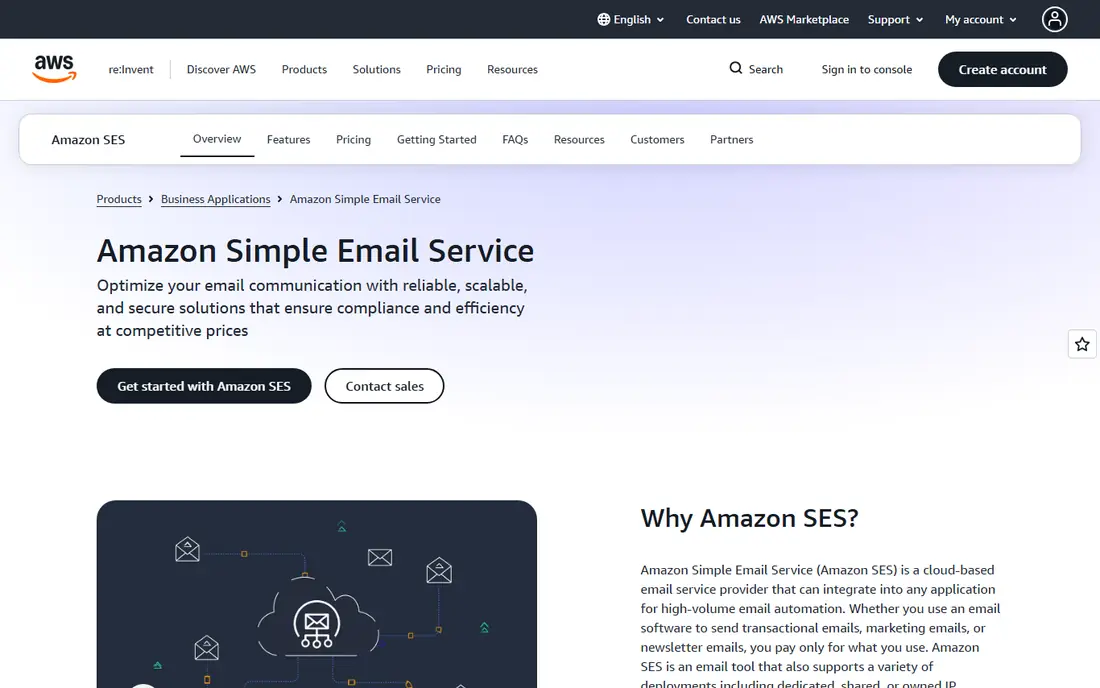
Amazon SES is the cheapest route for very high volumes, because you pay mainly per message rather than for a bundled platform. Teams already on AWS can add SES to existing infrastructure, use CloudWatch for monitoring, and build their own templates and lists around it. That flexibility is valuable at scale.
The cost saving comes with work. SES does not give you a polished campaign editor, drag-and-drop templates, or the same out-of-the-box analytics as a marketing platform. Small teams without developer time may spend more on setup than they save on sending. SES fits best when volume is high and developer capacity is available.
- Very low per-message cost at scale
- Built on AWS infrastructure
- Flexible API and SMTP access
- Needs more setup and monitoring tooling
- No built-in campaign editor or template library
Brevo, formerly Sendinblue, is one of the closest all-round SendGrid replacements for small and mid-sized teams. It combines marketing campaigns, automation, contact management, and a transactional API, so a team can run newsletters and app email from one account. SMS and chat tools add to that mix for teams that need more than email.
Pricing is volume-based, which means a growing list can push costs up faster than a contact-based plan. The interface also packs in many features, so new users may need time to find the tools they use most. For a team that wants one platform for both jobs without enterprise pricing, Brevo is a practical choice.
- Email, SMS, and automation in one platform
- Transactional API alongside campaigns
- Free tier for testing
- Pricing is based on email volume, so costs rise with list size
- Interface can feel busy at first
Mailchimp is best known for marketing email, and it remains a strong choice for campaigns, templates, and automation. Its integration library is large, which helps teams connect a store, CRM, or website without custom code. For SendGrid users who mainly send newsletters, Mailchimp is a familiar and capable replacement.
Transactional email works differently here. It is offered as an add-on, formerly Mandrill, with its own pricing on top of a marketing plan. That can make Mailchimp more expensive than a pure transactional service if app mail is your main need. Choose Mailchimp for marketing first, and add transactional only if you already use the platform for campaigns.
- Large template library and integrations
- Strong automation for marketing
- Transactional add-on for app mail
- Transactional email is an add-on with separate pricing
- Costs rise with contacts
Resend appeals to product teams that want a modern, developer-friendly API without legacy complexity. It supports React-based email templates, which fits teams already building with React, and its docs and webhooks are clear. Setup is fast, and the dashboard focuses on the messages and events developers actually check.
The trade-off is maturity. Resend has a smaller integration ecosystem than older providers, and it is not a full marketing platform. For a startup or product team sending transactional mail from a modern codebase, that focus is a benefit. For a marketing team that needs campaigns and list tools, Brevo or Mailchimp will fit better.
- Clean modern API and React email support
- Good developer experience
- Clear docs and webhooks
- Newer than Mailgun and Postmark, so ecosystem is smaller
- Marketing features are limited
Mailtrap started as an email testing tool, and that history still shapes its strengths. Developers can catch test mail in a fake inbox during staging, check HTML rendering, and avoid sending test messages to real users. The same account can then send production mail, with separate streams for transactional and bulk messages.
That dual role is useful for teams that want one vendor for testing and sending, but it can also mean paying for testing features you do not use. Mailtrap fits product teams that value safe staging workflows and clear production logs. Marketing-only teams may prefer a simpler campaign platform.
- Email testing in staging plus production sending
- Separate streams
- Useful analytics and logs
- Production pricing can rise with volume
- Testing features may be more than some teams need
MailerLite is a good SendGrid alternative for teams whose main job is newsletters and simple automation. The editor is easy to learn, automation covers common flows such as welcome series, and the free tier lets small lists test the platform before paying. Reporting is clear without being overwhelming.
It is not the best choice for high-volume transactional mail from an app. API and deliverability tooling exist, but they are not as deep as on Mailgun, Postmark, or Resend. If campaigns are your priority and transactional mail is a smaller need, MailerLite gives you a clean, affordable route.
- Easy editor and automation for beginners
- Free tier for small lists
- Clean reporting
- Transactional sending is not its main strength
- Advanced deliverability tools are thinner than on API-first services
How we picked these
We started with web search for SendGrid alternatives and transactional email services, then checked each vendor's own pricing, feature, and documentation pages, app-store listings where relevant, and public reviews. We kept only services that are working in October 2026 and that offer a clear route for transactional sending, marketing sending, or both.
We also checked pricing transparency. Where a vendor publishes a starting price, we used it. Where pricing is pay-as-you-go or varies by volume, we wrote "See website" rather than inventing a monthly figure. That matters for email, because the same service can cost very different amounts at 10,000 and 500,000 messages per month.
How to choose the right replacement
Decide which job comes first
If receipts and password resets matter most, pick an API-first service such as Postmark, Mailgun, or Resend. If newsletters matter most, pick Brevo, Mailchimp, or MailerLite. Trying to judge both jobs with one score will lead to a compromise that suits neither.
Test deliverability with your own domain
Set up SPF, DKIM, and DMARC correctly, warm up a new sending domain gradually, and send to a small test list first. Check inbox placement, bounce handling, and how quickly support answers when a message fails. A provider that looks cheap but lands in spam is not cheap at all.
Compare cost at your real volume
Do not compare starting prices alone. Price your actual monthly volume, including overage rates and dedicated IP costs if you need one. A low starting price can become expensive at scale, while a pay-as-you-go service such as SES can be far cheaper for steady high volume.
Keep transactional and marketing separate
Use separate domains or subdomains and separate streams for transactional and bulk mail where your provider allows it. That separation protects time-sensitive messages if a campaign triggers spam complaints or a blocklist issue.
Frequently asked questions
What is the best alternative to SendGrid for transactional email?
Postmark and Mailgun are the strongest transactional choices for most teams, with Resend close behind for modern product teams. Postmark suits teams that want transactional mail kept separate from bulk mail, while Mailgun suits teams that need deeper logs, routing, and validation tools.
What is the best alternative to SendGrid for marketing email?
Brevo and Mailchimp are the strongest marketing replacements, with MailerLite as a simpler budget option. Brevo combines campaigns and transactional sending in one platform, while Mailchimp offers a larger template and integration library for marketing-led teams.
Is Amazon SES cheaper than SendGrid?
At very high volume, SES is usually cheaper per message, because it charges mainly per email rather than for a bundled platform. At low volume, or for teams without developer time, a ready-made platform may be cheaper in total once setup and maintenance time are counted.
Do SendGrid alternatives offer a free plan?
Yes, most options in this list offer a free tier or trial, including Mailgun, Postmark, Brevo, Mailchimp, Resend, Mailtrap, and MailerLite. Free tiers usually cap daily or monthly sending, so they suit testing and small projects rather than production volume.
How do I move from SendGrid without breaking email delivery?
Move in stages. Set up the new provider, verify your domain with SPF, DKIM, and DMARC, and warm up sending gradually. Move a small share of traffic first, monitor bounces and spam complaints, and only move the rest once delivery is stable. Keep SendGrid active until the new setup is proven.
Should I use one provider for transactional and marketing email?
You can, and Brevo is built for that, but many teams use separate providers or separate streams to protect transactional delivery. If you use one provider, keep the streams and sending domains separate, and monitor each stream on its own.
Sources we checked (8)

Online Jobs is an independent blog about careers, online work, learning new skills and the tools that help people earn. More about us.
Keep reading
All posts
n8n Alternatives
n8n alternatives compared for 2026, with Zapier, Make, Activepieces, and more, covering visual builders, code steps, self-hosting, and pricing models.

ZoomInfo Alternatives
The best ZoomInfo alternatives in 2026, compared on price, free plans, data coverage, and which tool fits small teams or large sales teams best in detail.

Workday Alternatives
We compared the best workday alternatives for HR, payroll, and global hiring, from BambooHR and Gusto to Rippling, Deel, and HiBob for growing teams in 2026.