Reviews and Alternatives for Competitors in 2026: 9 Tools Compared

How we put this together: we compare official feature and pricing pages, app store listings, privacy policies and public user reviews. Prices change, so check the provider's site before you pay.
Key takeaways
- Semrush is our pick for most teams, because it reviews a competitor's search, ads and content in one place.
- Ahrefs leads on backlinks and content, while Similarweb leads on traffic and market share estimates.
- Crayon and Klue are the specialist picks for tracking competitor pricing, messaging and product changes over time.
- Owler and SpyFu suit small teams on a budget, with company news and ad history at lower prices.
- No single tool reviews every angle of a competitor, so match the tool to the question you are actually asking.
Quick comparison
| Name | Who it suits | Starting price | Free option | |
|---|---|---|---|---|
 Semrush | All-round competitor review | See website | Free trial | Visit |
 Ahrefs | Backlinks and content review | See website | Free trial | Visit |
 Similarweb | Traffic and market review | See website | Free trial | Visit |
 Crayon | Tracking competitor changes | See website | No | Visit |
 Klue | Sales battlecards | See website | No | Visit |
 Owler | Company news tracking | Free | Yes | Visit |
 SpyFu | Ad and keyword history | See website | Free trial | Visit |
 BuzzSumo | Content performance review | See website | Free trial | Visit |
 Visualping | Website change alerts | Free | Yes | Visit |
The best reviews and alternatives for competitors
Reviewing a competitor means answering several different questions at once: what do they rank for, where does their traffic come from, what ads are they running, what did they change this week, and what do customers say about them. No one tool answers all of those well, so this list treats each product as a specialist first and an all-rounder second. We compared official feature pages and pricing pages, judging each tool on the competitor data it provides, how current that data is, ease of use and price. Where a paid price was not confirmed on the vendor's own page, we list it as See website, since these vendors change plans often.
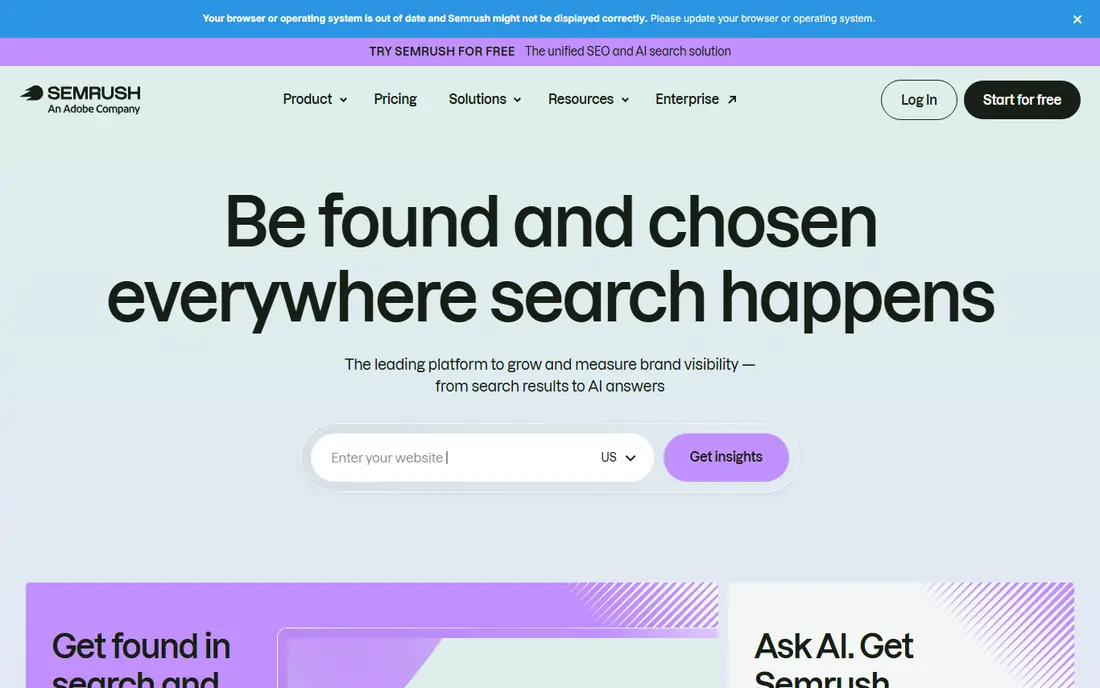
Semrush is our pick for most teams that want a complete competitor review. Enter a rival's domain and you can see its top organic keywords, paid ads, traffic sources, backlinks and best-performing content, then compare it side by side with your own site. That breadth makes it the default first tool for agencies and marketing teams.
The price is the honest drawback, since full access costs far more than a single-purpose tool. New users can also feel lost in the sheer number of reports. Start with domain overview and keyword gap reports, which answer the most useful competitor questions, and expand from there.
- Organic and paid search, traffic, content and social data in one suite
- Domain comparison tools
- Huge keyword database
- Expensive for small teams
- Depth can overwhelm first-time users
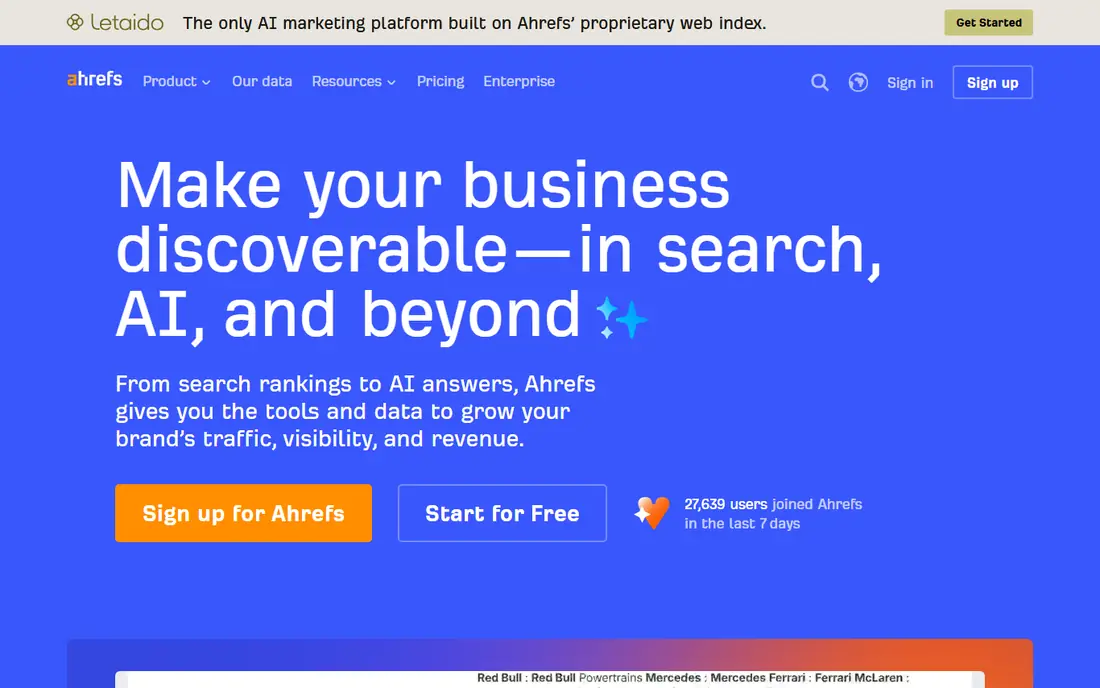
Ahrefs is the best tool for reviewing a competitor's links and content. Its backlink index shows who links to a rival and why, its content explorer finds the rival's most shared and linked pages, and its keyword tools reveal which terms drive their traffic. For SEO-led competitor reviews, it is the gold standard.
Full access needs a paid plan, and paid advertising history is thinner than Semrush or SpyFu. If your main question is how a competitor earns links and traffic from content, Ahrefs answers it better than any rival here.
- Outstanding backlink index and content explorer
- Clear site audit and rank tracking
- Fast, reliable data
- No free plan for full access
- Weaker on paid ad history than SpyFu or Semrush
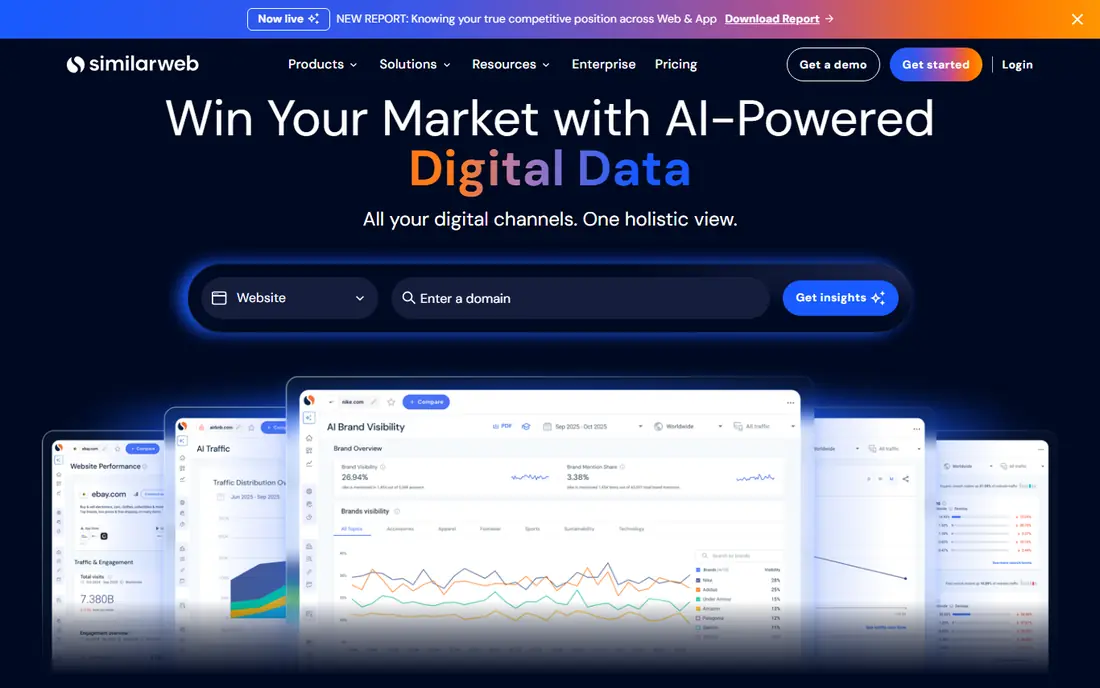
Similarweb answers the question other tools cannot: how big is this competitor, really. Its traffic estimates, channel breakdowns and audience data let you compare rivals by visits, geography and referral sources, and its market share views put a single site in industry context. For sizing a market or benchmarking a rival's reach, it is unmatched.
Remember that its traffic numbers are modelled estimates, not server logs, so treat small differences with caution. Full detail also sits behind paid plans. Used for direction and scale rather than exact counts, Similarweb is an essential second tool beside Semrush or Ahrefs.
- Website and app traffic estimates
- Channel mix and audience insights
- Market share comparisons
- Traffic figures are modelled estimates, not exact counts
- Full data needs a paid plan
Crayon is the specialist for competitors that keep moving. It monitors rival websites, pricing pages, product updates and messaging, then alerts your team when something changes and packages the news into battlecards salespeople can use. For product marketers and revenue teams, that live feed beats a one-off review that goes stale in a month.
Pricing is enterprise-level and not published, which puts it out of reach for many small teams. It also needs a human owner to curate alerts, or the feed becomes noise. For firms where competitor moves directly affect deals, Crayon pays for itself in saved surprises.
- Tracks pricing, messaging, product and website changes
- Alerts and battlecards for sales teams
- Wide source coverage
- Enterprise pricing with no published entry price
- Needs someone to curate the intel
Klue turns competitor research into something a salesperson can use mid-deal. Its battlecards summarise a rival's strengths, weaknesses, pricing and talk tracks, and they surface inside the CRM and Slack where reps already work. News tracking keeps cards current without manual research each quarter.
Like Crayon, Klue is priced for larger teams and offers no published entry price. Its value also depends on adoption: cards nobody opens help nobody. For B2B teams that lose deals to the same two or three rivals, Klue is the most practical way to arm the sales floor.
- Battlecards built for sales conversations
- Tracks competitor news and positioning
- Integrates with CRM and Slack
- Enterprise pricing
- Best value only when sales teams actually use the cards
Owler is the best free starting point for competitor review. Its company profiles list competitors, funding, headcount estimates and news, and following a firm sends alerts when it raises money, hires executives or acquires a rival. For a founder tracking a market, that news feed is genuinely useful at no cost.
Tactical depth is limited: you will not get keyword gaps or ad history here. Treat Owler as the company-level layer of your research, then add Semrush or Similarweb when you need marketing detail. At a price of free, it belongs in every competitor toolkit.
- Free company profiles and competitor lists
- News alerts on funding, hires and acquisitions
- Easy to follow many firms
- Limited tactical marketing data
- Deeper data needs a paid plan
SpyFu is the budget pick for ad research. It shows which keywords a competitor has bought, what their ads said, and how that history changed over years, which is invaluable when a rival suddenly appears in your market. Its entry price undercuts the big suites, making it accessible to small teams and freelancers.
Backlink and traffic depth lag Ahrefs and Similarweb, and the design feels older than its rivals. If your question is what a competitor spends on search ads and which keywords they chase, SpyFu answers it cheaply and well.
- Long history of competitor ads and keywords
- Affordable entry price
- Easy domain comparisons
- Less depth on backlinks and traffic than Ahrefs or Similarweb
- Interface feels dated
BuzzSumo reviews the content angle of a competitor. Enter a rival's domain and see which articles earned the most shares and links, which topics trend in your niche, and which journalists cover them. For content teams planning their next quarter, that evidence beats guessing which topics matter.
It is not a full SEO or traffic suite, so pair it with Ahrefs or Semrush for rankings and links. Pricing is also steep for content-only use. Teams whose growth depends on content will find BuzzSumo's shared-content data worth the cost.
- Finds a competitor's most shared content
- Journalist and influencer discovery
- Content alerts and trends
- Not a full SEO suite
- Pricing is high for content-only use
Visualping is the simplest competitor tracker here, and sometimes the most useful. Point it at a rival's pricing page, homepage or product page, and it alerts you when anything changes, with a visual comparison of what moved. For catching price changes and repositioning early, nothing beats a direct page watch.
It covers pages only, so it cannot tell you about keywords, traffic or ads. Frequent checks and many pages need a paid plan. As a cheap early-warning system beside a bigger research tool, Visualping is excellent value.
- Alerts when a competitor changes any page
- Visual comparison of before and after
- Free plan for a few pages
- Page-level only, with no keyword or traffic data
- Frequent checks need a paid plan
How we picked these
We compared official feature pages and pricing pages, judging each tool on the competitor questions it answers, data freshness, ease of use and price for a small or mid-sized team. We deliberately mixed search, traffic, content, pricing and news tools, because a real competitor review needs several angles. Where a paid price was not confirmed on the vendor's own page, we list it as See website. We did not claim hands-on testing, and we did not invent user counts or ratings.
How to review a competitor in an afternoon
Start with Owler for company news and a competitor list, then run the main rival through Semrush or Ahrefs for keywords, ads and links. Add Similarweb for traffic scale, and set Visualping on the pricing page for ongoing alerts. That four-tool pass, most of it free or trial-based, gives a fuller picture than any single expensive subscription used alone.
Write down what you learn in plain language: who the rival serves, what they charge, what they rank for, and what customers praise or complain about. A competitor review that nobody reads is wasted effort, so share a one-page summary with the team and revisit it quarterly. Markets move, and a review from last year is a history lesson, not intelligence.
Alternatives and ethics
Reviewing competitors is normal business practice, but keep it to public information: websites, ads, published content and public filings. Do not misrepresent yourself to gain access, scrape private data, or copy a rival's content. The tools above all work from public or licensed data, which keeps your research both effective and defensible.
Frequently asked questions
What is the best tool for competitor analysis?
Semrush is the best all-round tool, covering search, ads, traffic and content. Ahrefs leads on backlinks, Similarweb leads on traffic estimates, and Crayon and Klue lead on tracking changes and arming sales teams.
What is a free alternative to Semrush for competitor research?
Owler is free for company news and competitor lists, Visualping is free for a few page alerts, and SpyFu offers a cheaper entry point for ad history. Ahrefs and Semrush also offer limited free tools and trials for a first review.
How do I find my competitors online?
Start by searching your main keywords and noting who ranks and advertises for them, then check Owler for company lists in your niche. Semrush's domain overview and Similarweb's similar-sites features will surface rivals you had not considered.
Are Similarweb traffic numbers accurate?
Similarweb traffic figures are modelled estimates based on panels and partnerships, not exact server counts. They are reliable for ranking competitors by scale and spotting trends, but small differences between similar sites should not be over-read.
What are competitor battlecards?
Battlecards are short summaries salespeople use during deals, covering a rival's strengths, weaknesses, pricing and suggested responses. Klue and Crayon build and maintain them automatically from tracked competitor changes.
How often should I review competitors?
Review major competitors quarterly and watch pricing pages continuously with a tool such as Visualping. A one-off review goes stale quickly, so combine a regular deep review with automated alerts for changes between reviews.
Sources we checked (9)

Online Jobs is an independent blog about careers, online work, learning new skills and the tools that help people earn. More about us.
Keep reading
All posts
Workday Alternatives
We compared the best workday alternatives for HR, payroll, and global hiring, from BambooHR and Gusto to Rippling, Deel, and HiBob for growing teams in 2026.
Which SaaS Tools Have the Best Customer Support
Which SaaS tools have the best customer support? Compare eight popular tools on help centres, live help, response options and overall support quality.
Top AI Helpdesk Software
Searching for top AI helpdesk software in 2026? We compared 8 AI helpdesks on automation, pricing, channels and ease of setup for small and growing teams.