Best Redbubble Alternatives in 2026: 9 Platforms Compared

How we put this together: we compare official feature and pricing pages, app store listings, privacy policies and public user reviews. Prices change, so check the provider's site before you pay.
Key takeaways
- Marketplace sites bring built in shoppers, while store based platforms give you more control over branding, pricing, and customer data.
- Printful and Printify suit sellers who want their own Shopify or Etsy store, while Society6 and TeePublic suit artists who prefer a ready made shop.
- Check base costs before you set a retail price, since a small change in base cost can change your profit on every sale.
- If you sell abroad, Gelato and other local production networks can cut shipping time and costs compared with shipping from one country.
- Order a sample before you promote a product widely, so you can check print quality, fabric, colour, and sizing for yourself.
Quick comparison
| Name | Who it suits | Starting price | Free option | |
|---|---|---|---|---|
 Printful | Branded Shopify and Etsy stores | Free | Yes | Visit |
 Printify | Low base costs and provider choice | Free | Yes | Visit |
 Society6 | Art prints and home decor | Free | Yes | Visit |
 TeePublic | Artist marketplaces and apparel | Free | Yes | Visit |
 Zazzle | Wide product range | Free | Yes | Visit |
 Threadless | Artist community and apparel | Free | Yes | Visit |
 Spring | Creator merch for followers | Free | Yes | Visit |
 Fourthwall | Branded creator stores | Free | Yes | Visit |
 Gelato | International print on demand | Free | Yes | Visit |
The best Redbubble alternatives
Redbubble works well for artists who want to upload designs and let a marketplace handle printing, shipping, and customer traffic. The trade off is less control over pricing, branding, and customer relationships. The platforms below offer different mixes of traffic, control, and product range, so the best choice depends on how you want to sell.
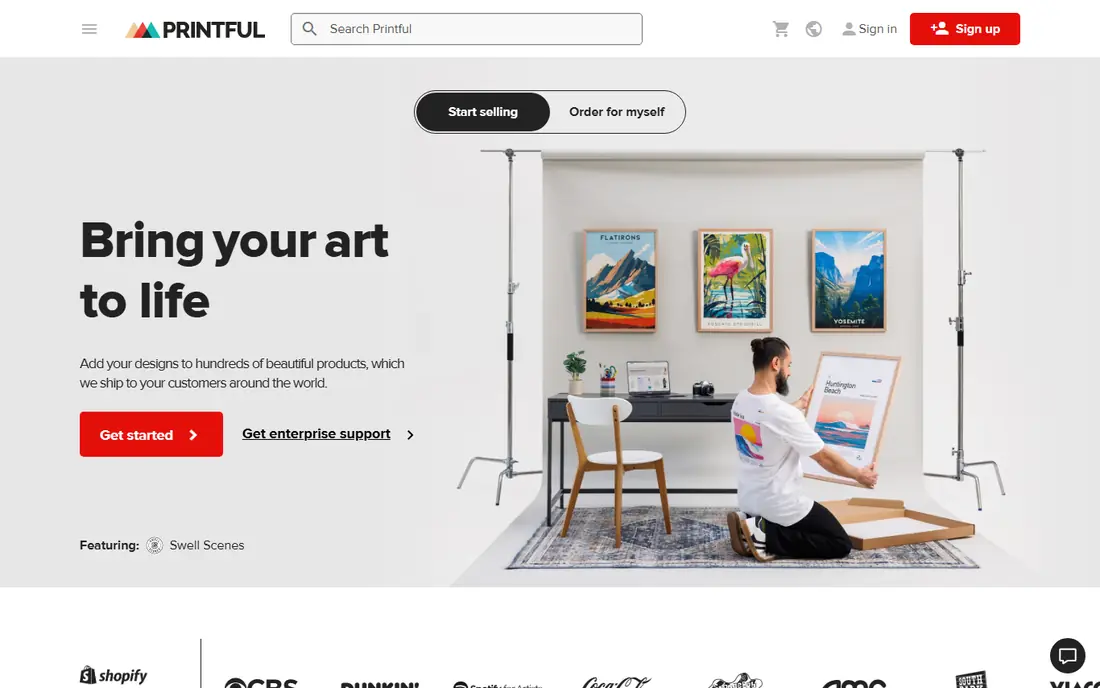
Printful is a strong first move away from a marketplace if you want a brand of your own. You connect it to Shopify, Etsy, WooCommerce, or another store, upload designs, and Printful prints and ships each order as it comes in. You set retail prices, so your profit is the gap between that price and the base cost plus shipping. Quality control is the main draw. Printful runs its own production facilities for many products, which helps keep print results consistent across orders. It also offers custom labels, packing slips, and packaging options on many items, which makes a store feel more like a real brand and less like a generic print shop. The downside is traffic. Printful does not bring shoppers to your store, so you need social media, search, email, or ads to get sales. If you already have an audience, or you plan to build one, that control is worth it. If you rely on marketplace browsing, a site like Society6 or TeePublic may bring sales sooner.
- In house quality control
- Custom branding options
- Wide product catalogue
- Base costs can be higher than some rivals
- You must drive your own traffic
- Store platform fees are separate
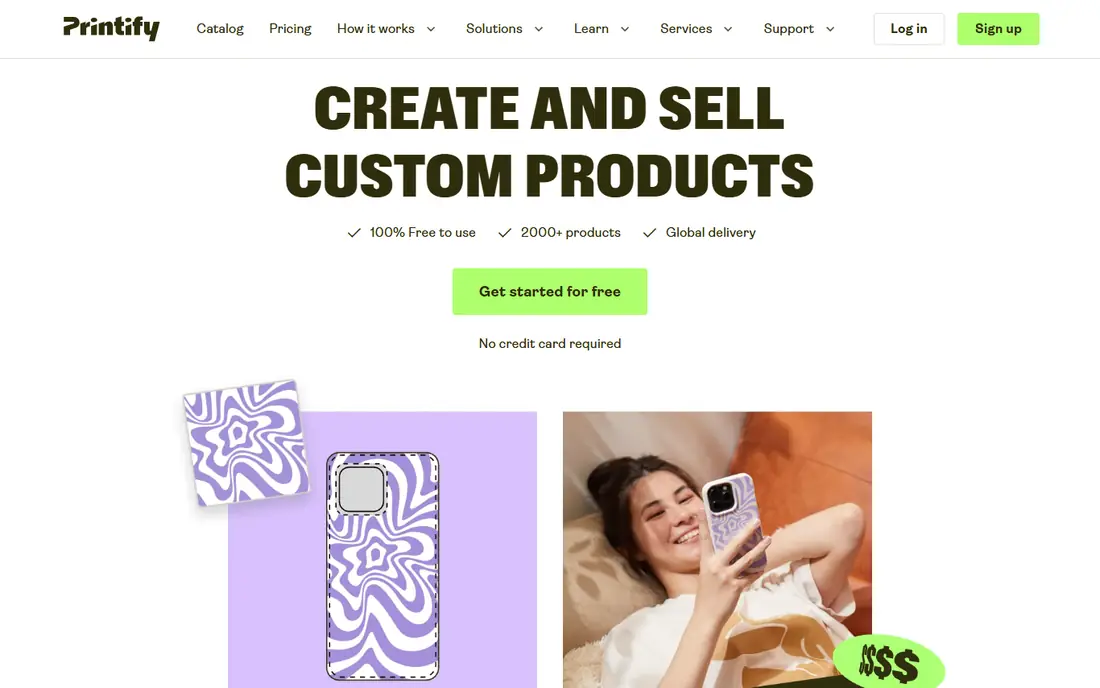
Printify takes a different route from Printful. Instead of one production network, it connects you to many print providers, and you can choose a provider for each product based on price, location, and reviews. That choice often leads to lower base costs, which can help margins on apparel and other popular items. The platform works well for sellers who test many designs and want to compare suppliers without changing stores. You can switch providers if quality slips or shipping times grow, and you can pick a provider near your main buyers to shorten delivery. Printify also links to major store platforms, so the order flow stays automatic once a sale happens. Provider choice brings a risk to manage. Print quality and speed can differ between providers, so samples matter even more here. Check the provider rating, order a sample of each best seller, and keep a note of which provider you used for each product.
- Large network of print providers
- Competitive base costs
- Shopify and Etsy links
- Quality can vary by provider
- Support may involve a third party
- You must drive traffic

Society6 is closest in spirit to Redbubble for visual artists. You open a shop, upload artwork, and Society6 applies it to prints, pillows, bedding, phone cases, and other home goods. Shoppers browse the marketplace, which means you can get sales without running ads or building a store from scratch. Art quality is the reason many illustrators and photographers stay with Society6. Framed prints, canvas prints, and tapestries suit detailed work better than a basic tee, and the site design puts the artwork first. That focus helps when your designs are made for walls and rooms rather than apparel alone. Control is limited, as with most marketplaces. Society6 sets base prices and artist earnings follow its rules, so you cannot tune margins product by product in the same way as Printful. Use Society6 to reach art buyers, and pair it with a branded store if you want higher margins on your best designs.
- Strong art and decor range
- Built in marketplace traffic
- No store setup needed
- Limited pricing control
- Lower margins on some items
- Limited branding
TeePublic is a marketplace built around apparel, with a large audience for graphic tees, hoodies, and related items. Artists upload designs, TeePublic handles printing and shipping, and shoppers can find work through search, collections, and site promotions. Setup is quick, which makes it easy to test designs alongside Redbubble. The audience matters for pop culture, humour, typography, and illustration styles that sell well on tees. Site sales and discounts can drive volume, though they also mean many shoppers expect low prices. TeePublic works best as a traffic channel rather than a sole business. Keep your best designs there, watch which styles sell, and use that data to decide what to offer at higher prices in your own store.
- Large apparel audience
- Simple shop setup
- Regular site sales bring traffic
- Price led shoppers
- Limited custom branding
- Earnings depend on site pricing
Zazzle offers one of the widest product ranges in print on demand, from apparel and mugs to invitations, office goods, and gifts. Designers can open a store, set royalty rates on many products, and let buyers customise text and details on some items. That range helps if your work suits gifts and personalised products, not just apparel. The customisation angle is a useful difference. Buyers who want a name, date, or message on a product can adjust it in the browser, which can lift conversion on weddings, birthdays, and business gifts. Zazzle also brings marketplace traffic, so you do not need to build a store audience from zero. Competition is strong, and many products look similar at first glance. Strong titles, clear tags, and original designs matter more than volume alone. Zazzle suits sellers who want breadth and who are willing to learn its royalty and pricing rules product by product.
- Very wide product catalogue
- Customisation tools for buyers
- Marketplace traffic
- Crowded marketplace
- Branding is limited
- Pricing control varies by product
Threadless began as an artist community, and that community feel still shapes the platform. Artists submit designs, shoppers vote and buy, and Threadless handles production and shipping. Challenges and collections can give a new design extra exposure that a quiet shop page would not get on its own. For illustrators who enjoy community feedback, Threadless offers a useful loop. You can test an idea, see how people react, and refine it before you invest time in a full product range. The apparel quality and print standards are also a draw for artists who care about how a design looks after washing. As with other marketplaces, you trade control for traffic. Pricing, promotions, and shop layout follow Threadless rules, and sales can rise and fall with site trends. Many artists use Threadless for discovery and community, then direct repeat buyers to a branded store for higher margin products.
- Active artist community
- Design challenges and exposure
- Quality apparel focus
- Marketplace rules shape pricing
- Less control than a private store
- Traffic can be uneven
Spring, formerly Teespring, is built for creators who sell to an existing audience. You create products, get a free hosted store, and link it to YouTube, Twitch, and other creator channels. Spring handles production, shipping, and support, so a creator can launch merch without building a store or holding stock. That creator focus is the main reason to pick Spring over a general marketplace. If your sales come from videos, streams, or social posts, a direct merch link keeps the path short. You set prices above base cost and keep the difference, which gives more pricing freedom than a fixed royalty marketplace. The limits matter for store owners. Spring does not link to Shopify or Etsy in the same way as Printful, and shipping times can be longer than local production options. It suits a creator first business, while a brand that wants a full store may prefer Printful, Printify, or Fourthwall.
- Free hosted store
- YouTube and Twitch links
- No upfront stock costs
- No Shopify or Etsy integration
- Longer shipping on some orders
- Limited branding depth
Fourthwall gives creators a branded store without the work of running a separate ecommerce platform. You get a storefront with your name and design, product pages, and checkout, while Fourthwall handles print on demand, shipping, and sales tax handling on applicable sales. That mix suits YouTubers, podcasters, streamers, and musicians who want merch to feel part of their brand. The store design is cleaner than a generic marketplace page, and you can link it from social profiles, video descriptions, and live streams. Fourthwall also supports digital products and memberships on some plans, which helps creators who sell more than apparel. A free plan covers the core store, with a paid Pro plan adding extra features. Fourthwall still needs traffic. It does not bring marketplace shoppers, so it works best when you already have followers or a clear plan to reach them. For a creator who wants brand control without Shopify setup, it is one of the strongest Redbubble alternatives.
- Full branded storefront
- Handles sales tax on many sales
- Creator channel links
- Best for creators with an audience
- Fewer providers than Printify
- Paid plan adds features
Gelato solves a problem that single country print on demand often creates: slow and costly shipping for buyers abroad. Its network prints orders close to the buyer in many countries, which can shorten delivery times and reduce shipping costs for international customers. That matters if a large share of your audience lives outside your home country. The platform links to Shopify, Etsy, and WooCommerce, so orders flow in the same way as other store based services. You upload designs, choose products, and Gelato routes each order to a local partner. For posters, apparel, wall art, and photo books, local production can also reduce the risk of customs delays. Product availability varies by country, so a product that sells well in one region may not be offered in another. Check your main markets before you build a full catalogue, and order samples from the regions where you expect the most sales.
- Local production in many countries
- Faster delivery for global buyers
- Shopify and Etsy links
- Product range varies by country
- Pricing varies by location
- You must drive traffic
How we picked these
We compared official feature pages, pricing pages, app store listings, and public reviews for print on demand platforms that serve artists and creators today. We looked at who brings traffic, who controls pricing, what products each platform offers, how shipping works, and how much branding each option allows. We used first person plural language for our method, and we did not claim hands on testing that did not happen. We also weighed the difference between a marketplace and a store platform, since that choice shapes earnings more than any single feature. A marketplace can bring early sales, while a store platform can bring higher margins and customer data once you have traffic. The list mixes both models so readers can match the platform to their stage.
Choosing the right Redbubble alternative
Marketplace or your own store
Choose a marketplace if you want shoppers to find you and you are happy to accept lower margins in return for less marketing work. Choose a store platform if you want to control prices, branding, and customer emails, and you can bring traffic through content, social media, or search.
Check base costs and shipping
Before you publish, write down the base cost, shipping cost, and platform fee for each product. Then set a retail price that leaves a clear profit after those costs and any payment fees. Test shipping times to your main countries, since a slow delivery can hurt reviews even when print quality is good.
Samples, files, and product fit
Order samples of your best sellers and check colour, print placement, fabric weight, and sizing. Upload high resolution files in the format each platform asks for, and preview the design on each product size. A design that looks strong on a tee may need a different crop for a poster or a phone case.
Growing beyond one platform
Start with one or two platforms and learn what sells before you spread across many sites. Track which designs earn the most, which products get returns, and where your buyers live. Use that data to expand the winners to a branded store, and keep marketplace listings for designs that benefit from browsing traffic.
Frequently asked questions
Is Printful better than Redbubble for artists?
Printful gives more branding and pricing control, while Redbubble gives built in marketplace traffic. Printful suits artists who want a brand and can drive traffic, while Redbubble suits artists who want simple uploads and discovery. Many artists use both for different goals.
Can I sell the same design on Redbubble and another platform?
In most cases, yes, unless you join an exclusive programme or sign a deal that limits where a design can appear. Check the terms of each platform before you publish, and avoid exclusive collections if you want to sell the same art in several places.
Do I need to pay upfront for print on demand?
Most platforms in this guide let you start free and charge only when an order is placed. You pay the base cost and shipping from the retail price, so you do not need to buy stock in advance. Paid plans add discounts or features, but they are not required to start.
Which Redbubble alternative is best for international shipping?
Gelato is a strong choice for international buyers because it prints locally in many countries. Printful and Printify also ship worldwide, but delivery times and costs depend on the product and the buyer location. Check shipping options for your main countries before you choose.
How much profit can I make per sale?
Profit depends on base cost, shipping, retail price, and fees. Marketplace royalties can be low per item, while a branded store can leave more profit if you set a higher retail price and keep marketing costs in check. Work out profit per product before you promote it, not after.
Should I leave Redbubble completely?
Not always. Redbubble can still bring passive sales from marketplace search, even if you build a branded store elsewhere. Keep listings that sell, remove designs that underperform, and use Redbubble as one channel in a wider plan rather than your only channel.
Sources we checked (9)

Online Jobs is an independent blog about careers, online work, learning new skills and the tools that help people earn. More about us.
Keep reading
All posts
ZoomInfo Alternatives
The best ZoomInfo alternatives in 2026, compared on price, free plans, data coverage, and which tool fits small teams or large sales teams best in detail.

Workday Alternatives
We compared the best workday alternatives for HR, payroll, and global hiring, from BambooHR and Gusto to Rippling, Deel, and HiBob for growing teams in 2026.

Which SaaS Tools Have the Best Customer Support
Which SaaS tools have the best customer support? Compare eight popular tools on help centres, live help, response options and overall support quality.