People Data Labs Alternatives in 2026: 8 Tools Compared

How we put this together: we compare official feature and pricing pages, app store listings, privacy policies and public user reviews. Prices change, so check the provider's site before you pay.
Key takeaways
- Apollo.io is our pick for most teams, since it pairs a large contact database with outreach tools at a published price.
- Clay suits teams that want the highest match rates by combining many data providers in one workflow.
- ZoomInfo remains the enterprise choice for breadth and direct dials, though pricing is quote-based and high.
- Lusha and RocketReach are good low-friction options for small teams that need quick contact lookups.
- Hunter is the simplest choice when you only need to find and verify work email addresses.
Quick comparison
| Name | Who it suits | Starting price | Free option | |
|---|---|---|---|---|
 Apollo.io | All-in-one prospecting | $49 per user per month | Yes | Visit |
 ZoomInfo | Enterprise breadth | See website | No | Visit |
 Lusha | Quick SMB lookups | $29 per user per month | Yes | Visit |
 RocketReach | Large people search | $39 per month | No | Visit |
 Clay | Waterfall enrichment | $149 per month | No | Visit |
 Cognism | European compliance | See website | No | Visit |
 UpLead | Verified SMB data | $99 per month | No | Visit |
 Hunter | Email finding only | See website | Yes | Visit |
The best people data labs alternatives
People Data Labs is an API-first provider of person and company data, which suits engineering teams building custom pipelines. The alternatives below suit different needs, from sales teams that want a ready-to-use database to data teams that want higher match rates. We compared official pricing pages, database focus, enrichment options, and workflow tools.
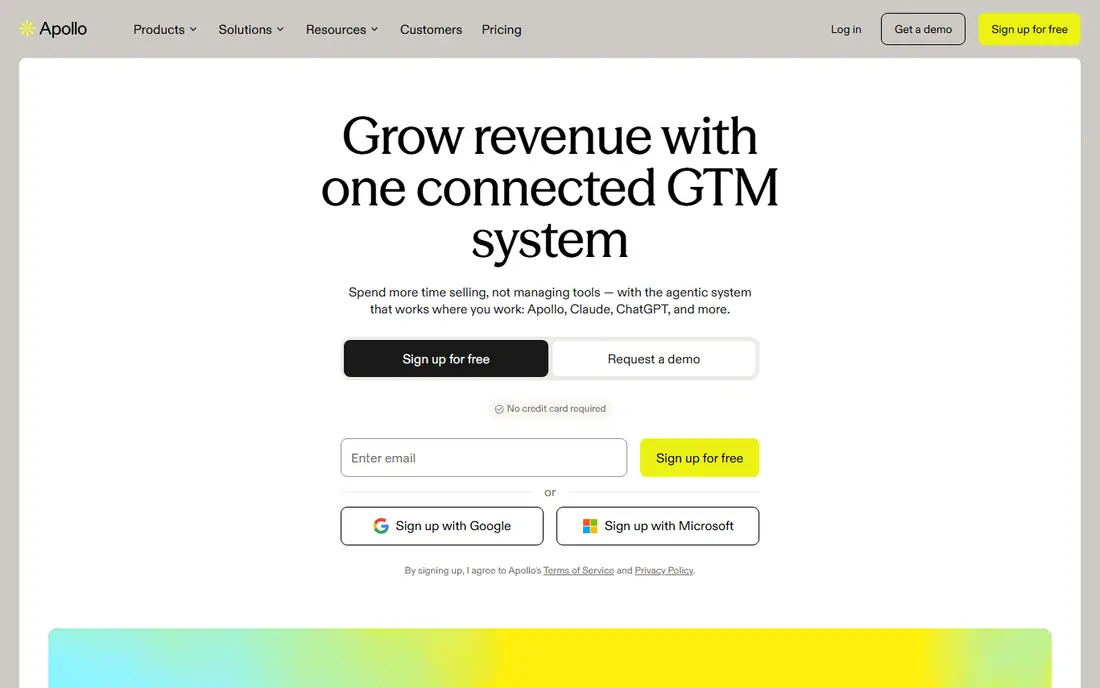
Apollo is the most common switch from a raw data API, because it gives non-technical teams a database they can search, enrich, and contact from one place. You can build lists by title, industry, and company size, verify emails, and run sequences without stitching separate tools together. The free plan lets you test match rates on your own target accounts before paying.
The limits show up in phone data. Direct dial and mobile coverage lag behind ZoomInfo, so cold-calling teams should test phone match rates carefully. Credit overages and add-ons can also push the real monthly cost above the headline price. For email-led prospecting at a fair price, Apollo is the best all-round alternative.
- Large contact database plus sequences, dialer, and CRM sync
- Published pricing
- Free plan to test data quality
- Phone coverage is thinner than ZoomInfo
- Costs rise with credit overages and add-ons
- Data accuracy varies by segment
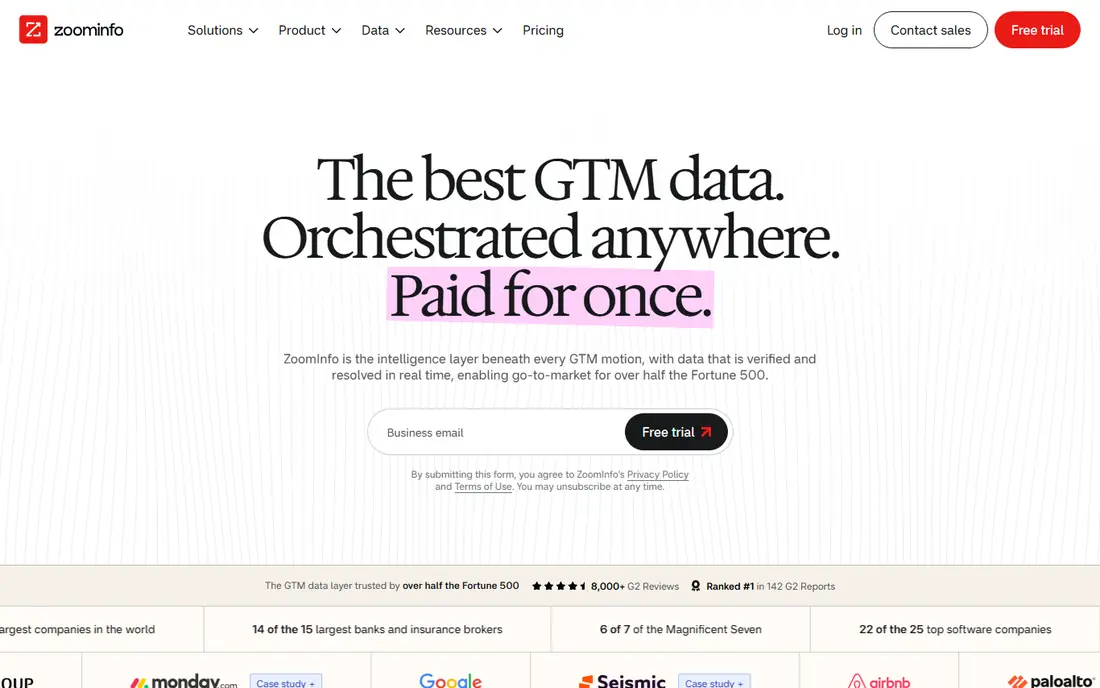
ZoomInfo is the enterprise benchmark that other tools are measured against. Its database covers a huge number of contacts and companies, with direct dials, intent signals, and org data that help large sales teams prioritise accounts. Integrations with major CRMs keep enriched data flowing into existing workflows without manual exports.
Price and contract structure are the barriers. Entry packages are quoted annually and run into five figures for small teams, which puts ZoomInfo out of reach for many startups. Smaller firms should test Apollo, Lusha, or UpLead first, and move to ZoomInfo only when phone coverage and scale justify the contract.
- Very large B2B database
- Strong US direct dial coverage
- Intent, technographic, and company data in one platform
- High annual pricing, often quoted per team
- Contract terms can be rigid
- Overkill for small teams with simple needs
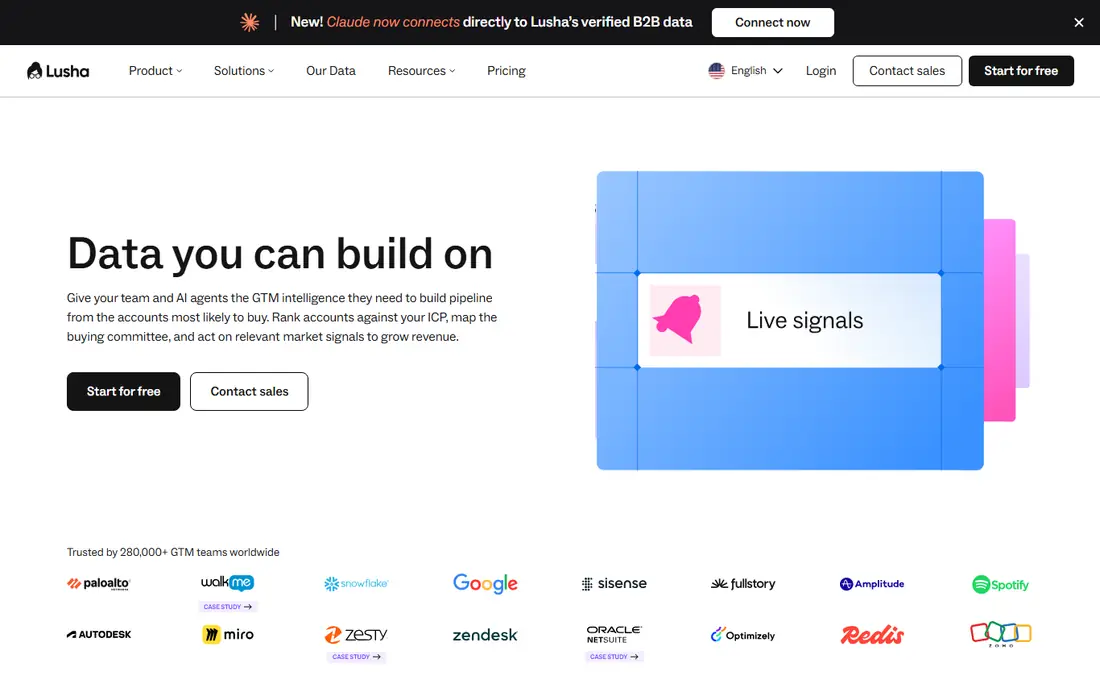
Lusha suits a small sales team that wants fast answers while browsing LinkedIn or company sites. The extension reveals emails and direct dials with one click, and the interface needs almost no training. That speed matters for reps who prospect in short bursts between calls and meetings.
Depth is the trade-off. Lusha will not match ZoomInfo on company intelligence or intent data, and credit limits mean heavy users need a higher plan. For a small team that values simplicity and quick phone numbers over a full intelligence platform, Lusha is a good, low-cost fit.
- Simple browser extension for quick lookups
- Strong direct dials for North America at a low price
- Easy to learn
- Database depth is thinner than ZoomInfo or Apollo
- Credit limits shape real usage
- Enterprise features are lighter
RocketReach is a straightforward people search tool, built for finding a person and their contact details fast. Search by name, employer, title, or keyword, then export results for outreach or enrichment. That simplicity suits recruiters, founders, and small sales teams who need contact details without a full sales platform.
It does not offer the same sequencing, dialer, or workflow depth as Apollo, so teams that want outreach built in will need another tool. There is also no permanent free plan, though trials are offered. For quick, large-scale people search, RocketReach remains a solid, focused option.
- Large people search database
- Simple search by name, company, or title
- Email and phone lookups in one tool
- No free plan
- Outreach tools are thinner than Apollo
- Data freshness varies by profile
Clay is different from a single database, because it enriches each record through a chain of providers until it finds a match. That waterfall approach lifts match rates well above any single source, which matters when your list has hard-to-find titles or niche industries. AI research agents can also gather company context, such as funding, hiring, and tech stack, alongside contact data.
The price and learning curve are higher than a simple lookup tool. You need to design waterfall steps, manage provider credits, and learn the workflow builder to get full value. For data teams and growth teams that care most about match rate and list quality, Clay is the strongest alternative to a raw API.
- Combines 100 or more data providers in waterfall workflows
- AI-assisted research and list building
- Strong CRM sync
- Higher starting price
- Learning curve for waterfall logic
- Costs depend on provider credits as well as the plan
Cognism is the pick for teams selling into Europe, where phone-verified mobile numbers and GDPR compliance matter more than raw database size. Its Diamond Data set focuses on verified mobiles, and compliance tools help teams document lawful processing. Intent signals and triggers also help reps time outreach better.
Pricing is quote-based and aimed at mid-market and enterprise teams, so small firms may find Apollo or Lusha cheaper. US-focused teams should also test coverage before committing, since Cognism strength is Europe first. For European outbound with compliance at stake, Cognism is a leading choice.
- Strong European coverage with phone-verified mobiles
- Clear GDPR compliance focus
- Intent and sales trigger data
- Quote-based pricing, often high for small firms
- US coverage is thinner than ZoomInfo
- Contract-based rather than self-serve
UpLead positions itself on accuracy, with a guarantee that sets it apart from cheaper, unverified lists. You can filter by title, industry, location, technology used, and intent signals, then export verified emails and phones to your CRM. Published pricing makes budgeting easier than with quote-based rivals.
The database is smaller than ZoomInfo, and phone coverage varies by industry, so test your target segment before buying. The starting price is also higher than entry plans from Apollo or Lusha. For a mid-size team that values verified emails and fewer bounces, UpLead is a dependable option.
- Accuracy guarantee on verified contacts
- Transparent published pricing
- Technographic and intent filters for list building
- Database is smaller than ZoomInfo
- Phone data is thinner for some segments
- Higher starting price than Lusha or Apollo basic plans
Hunter does one job well: find and verify work email addresses for a person or a domain. Enter a company domain to see common email patterns and verified addresses, or search by name to find a specific contact. Verification scores help you avoid bounces, and bulk tools handle list cleaning.
It will not replace a full contact database, since there are no phones, org charts, or intent signals. Teams that need only emails, such as content outreach or partnership teams, will find Hunter the cheapest and simplest tool here. Pair it with Lusha or Apollo if you later need phones.
- Simple domain search and email finder
- Built-in email verification
- Easy bulk verification for lists
- Email only, no phone database
- Company data is thinner than full platforms
- Paid plans needed for volume
How we picked these
We compared official pricing pages, database focus, enrichment methods, verification claims, and workflow tools, and we favoured providers that are actively maintained and offer a realistic path for sales, marketing, or data teams. We included API-style enrichment, all-in-one prospecting, waterfall tools, and a single-purpose email finder, rather than eight versions of the same database. We did not claim hands-on testing, and database sizes and accuracy vary by segment, so test match rates on your own lists.
How to test a data provider before you buy
Start with your own target list, not a vendor demo list. Take 100 to 200 real prospects from your CRM, including hard titles and small companies, and run them through each trial. Measure email match rate, phone match rate, bounce rate on a small send, and how many records needed manual fixing. A provider that looks strong on a demo list can fail on your niche.
Next, check compliance and consent for your region. Confirm how data was sourced, what lawful basis applies in Europe, and how opt-outs and deletion requests are handled. Document that check, since data compliance is a business risk, not just a legal footnote, and it matters more than a small price difference.
Finally, price the full workflow, not just the licence. Add credits, seats, enrichment overages, CRM sync, and any verification tool you will need alongside the main product. A cheap database that needs two add-ons can cost more than a pricier all-in-one tool, so compare the delivered monthly total for your actual volume.
Frequently asked questions
What is the best alternative to People Data Labs?
Apollo.io is our pick for most teams, since it combines a large database with outreach tools at a published price. Clay suits data teams that want the highest match rates through waterfall enrichment, while ZoomInfo suits enterprises that need breadth and direct dials. Test match rates on your own list before you decide.
Is Apollo better than ZoomInfo?
Apollo is better on price, ease of use, and built-in outreach, while ZoomInfo is better on database breadth and US direct dial coverage. Small and mid-size teams usually get better value from Apollo, while large enterprise teams with heavy calling needs may justify ZoomInfo. Compare phone match rates for your target segment, since that gap matters most.
Can I enrich data without an API?
Yes, most tools in this list offer web apps, browser extensions, bulk uploads, and CRM integrations that need no coding. Clay and Apollo also offer APIs for teams that want automation, while Lusha and RocketReach work well as simple lookup tools. Pick a no-code path if your team has no engineering time for a custom pipeline.
How accurate is B2B contact data?
Accuracy varies by provider, segment, and how recently a person changed jobs, so no vendor is perfect. UpLead offers an accuracy guarantee, while other vendors publish verification processes rather than guarantees. Always verify emails before a large send, and expect some decay each month as people move roles.
Do I need consent to use B2B contact data?
Rules vary by region, and Europe GDPR rules are stricter than US rules for business contact data. Check each vendor compliance documentation, document your lawful basis, and honour opt-outs promptly. When in doubt, get advice for your specific use case, since this guide is not legal advice.
Sources we checked (8)

Online Jobs is an independent blog about careers, online work, learning new skills and the tools that help people earn. More about us.
Keep reading
All posts
ZoomInfo Alternatives
The best ZoomInfo alternatives in 2026, compared on price, free plans, data coverage, and which tool fits small teams or large sales teams best in detail.

Workday Alternatives
We compared the best workday alternatives for HR, payroll, and global hiring, from BambooHR and Gusto to Rippling, Deel, and HiBob for growing teams in 2026.
Which SaaS Tools Have the Best Customer Support
Which SaaS tools have the best customer support? Compare eight popular tools on help centres, live help, response options and overall support quality.