Best Peec AI Alternatives in 2026: 8 Tools Compared

How we put this together: we compare official feature and pricing pages, app store listings, privacy policies and public user reviews. Prices change, so check the provider's site before you pay.
Key takeaways
- Peec AI tracks how brands appear in AI answers, and its alternatives differ mainly on engines covered, prompt volume, and price per prompt.
- Otterly.AI offers the cheapest entry at $29 per month, while Profound and AthenaHQ target larger teams with deeper reporting.
- Scrunch stands out for crawler and site-delivery analysis, not just prompt tracking, which suits teams fixing how AI systems read their site.
- Prompt volume is the real price driver, so count the prompts, engines, and locations you will actually track before comparing plans.
- No tool controls what an AI answer says, so treat these platforms as measurement and guidance, not as a guarantee of visibility.
Quick comparison
| Name | Who it suits | Starting price | Free option | |
|---|---|---|---|---|
 Profound | Enterprise AI visibility | $99 per month | Free trial | Visit |
 Scrunch | Crawler and site analysis | $250 per month | Free trial | Visit |
 AthenaHQ | Attribution and broad engines | $295 per month | Yes | Visit |
 Otterly.AI | Budget AI tracking | $29 per month | No | Visit |
 Goodie | Small full-stack vendor | See website | No | Visit |
 Rankscale | Wide engine coverage | $17 per month | Yes | Visit |
 Rank Prompt | All-round prompt tracking | $49 per month | Yes | Visit |
 Semrush AI Visibility Toolkit | SEO suites adding AI tracking | $99 per month | Free trial | Visit |
The best Peec AI alternatives
Peec AI is an AI visibility platform that tracks brand mentions, position, and sentiment across AI answers from engines such as ChatGPT, Google AI Overviews, and Google AI Mode. Its published entry price sits near $95 per month, with agency plans priced by credits. The alternatives below cover the same job with different strengths: some track more engines, some add crawler data, and some bundle AI visibility into a larger SEO suite. We compared official pricing pages and published October 2026 comparisons.
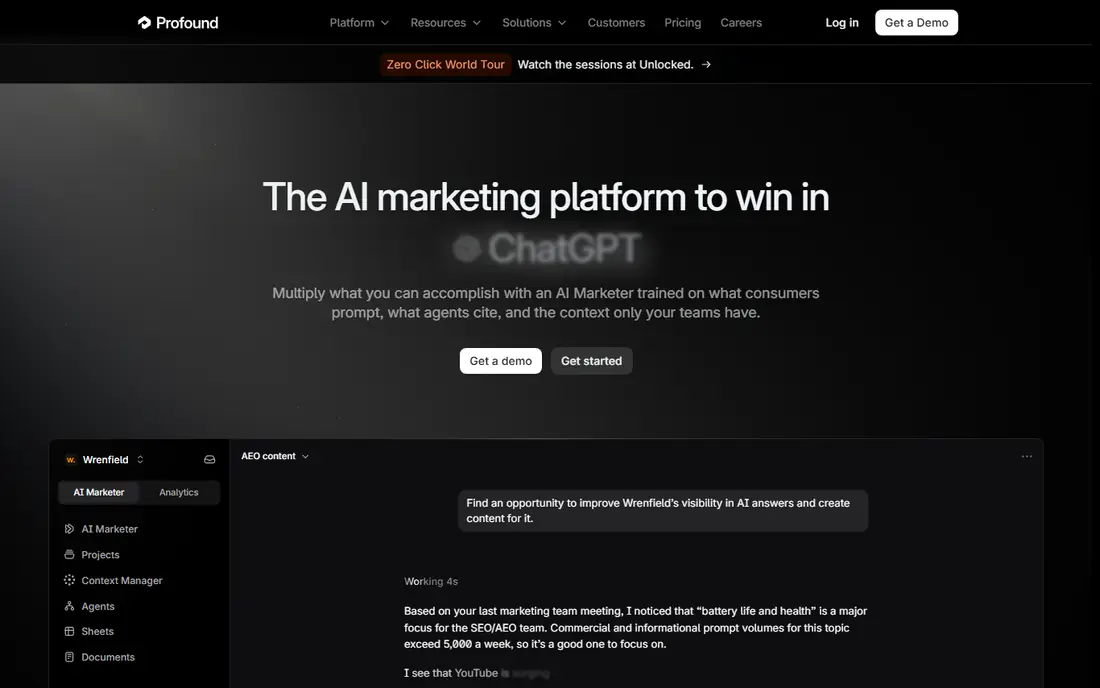
Profound is the category leader for larger brands and agencies that need deep AI visibility reporting. It tracks answer-engine inclusion, prompt volumes, shopping analytics, and competitor presence, with up to nine engines on enterprise plans including ChatGPT, Perplexity, Google AI Mode, Gemini, Claude, and Copilot. A published entry price near $99 per month covers ChatGPT only, with higher tiers adding engines.
The catch is that the full product is enterprise-priced and custom, so small teams may pay for depth they do not use. A free trial covers a small prompt set for a short period. Choose Profound when procurement, security review, and national-scale reporting matter as much as the tracking itself.
- Broad engine coverage on enterprise plans
- Strong reporting
- Real prompt-demand data
- Entry tier covers limited engines
- Enterprise pricing is custom
- Best value needs scale
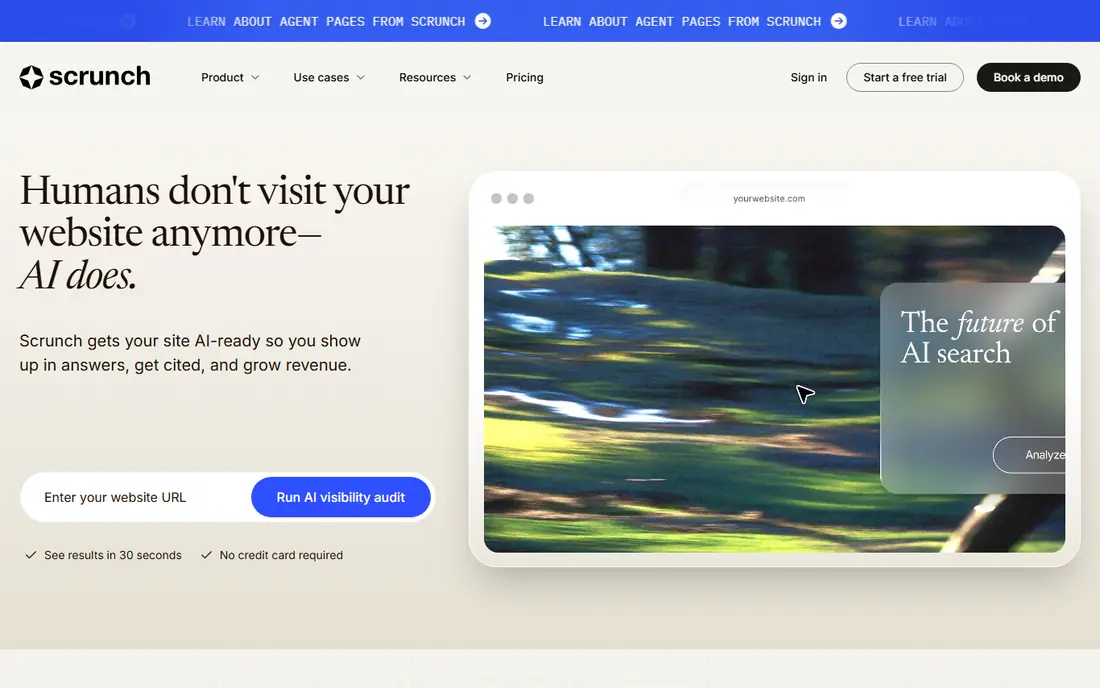
Scrunch goes beyond prompt tracking by showing how AI crawlers actually read your site, using prompt data plus server and CDN crawler logs. That matters because a brand can rank in prompts yet still be misread by the systems that fetch its pages. The Core plan costs $250 per month billed annually, or $300 monthly, with 125 prompts in one brand workspace, and a 7-day trial.
The entry price is high for small teams, and Core covers fewer engines than Enterprise. For teams that want to fix the source site, not just watch mentions, Scrunch is the strongest pick in this list, and its published pricing makes budgeting straightforward.
- Prompt tracking plus real crawler data
- Machine-readable site delivery
- Clear published entry price
- Higher entry price
- Single-brand focus on Core
- Enterprise adds more engines
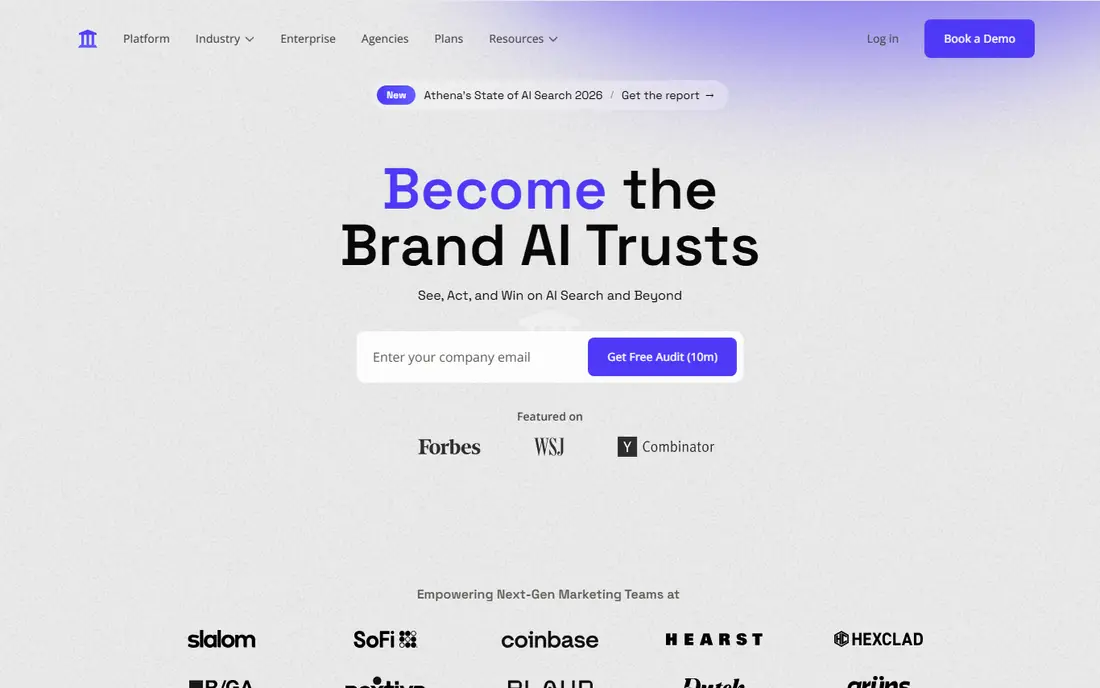
AthenaHQ suits teams that want AI visibility beside real business data. It tracks 11 models on Starter, pairs AI mentions with GA4 and Search Console data, and offers revenue attribution that most rivals lack. A free tier covers a small credit allowance, while Starter costs $295 per month.
Credit pricing is the watch point. Teams should map their prompt, engine, and location volume to credits before buying, since overages change the bill. For data-driven marketing teams that need to connect AI mentions to traffic and revenue, AthenaHQ justifies its higher entry price.
- Broad engine coverage
- GA4 and Search Console alongside AI data
- Rare revenue attribution
- High Starter price
- Credit-based pricing needs care
- Enterprise features cost more
Otterly.AI is the budget entry point for AI visibility tracking. The Lite plan costs $29 per month for 15 prompts, with Standard at $189 and Premium at $489 for larger prompt sets. It covers ChatGPT, Google AI Overviews, Perplexity, and Microsoft Copilot by default, with Claude, Google AI Mode, and Gemini as paid add-ons, and seats are unlimited.
The Lite allowance is small, so growing teams will upgrade quickly, and reporting depth trails Profound and AthenaHQ. For a small brand or agency testing AI visibility for the first time, Otterly.AI is the cheapest credible starting point, and our pick for most people on a tight budget.
- Lowest entry price here
- Unlimited seats
- Covers major engines
- Some engines cost extra
- Lite prompt allowance is small
- Reporting is lighter than enterprise tools
Goodie is a smaller full-stack vendor that tracks how AI models describe a brand and helps teams improve that presence, with a retail and shopping angle that suits product brands. It covers ChatGPT, Claude, Perplexity, Gemini, Copilot, Grok, and Meta AI, which is broad for a vendor of its size.
Pricing is quote-only, so buyers cannot compare it at a glance, and its smaller scale means support and roadmap deserve extra checks. For teams that want one small vendor handling both measurement and optimization, Goodie is worth a demo, provided the quote and references check out.
- Full-stack visibility and optimization in one vendor
- Broad engine list
- Retail and shopping focus
- No public list price
- Smaller vendor
- Attribution claims need verification in a demo
Rankscale offers the widest engine list in this group, with 17 or more engines, and one of the lowest entry prices. The Essentials tier costs about $17 per month on annual billing, with Growth at $385 and Enterprise at $780 per month in published comparisons. That range suits everyone from solo marketers to larger teams, provided the credit model fits their prompt volume.
The entry tier is limited in credits and dashboards, so serious tracking needs a higher tier. Rankscale is also newer than the enterprise leaders, so buyers should check references. For teams that care about engine breadth above all else, Rankscale is a strong, low-cost pick.
- Very low entry price
- 17 plus engines
- Published enterprise pricing
- Credit model needs mapping
- Entry tier is limited
- Newer vendor than Profound
Rank Prompt, also written as RankPrompt, covers ChatGPT, Gemini, Grok, Perplexity, and Claude with mentions, citations, competitor benchmarking, and fix suggestions. Starter costs $49 per month, Pro about $89, Agency $149, and Agency Plus $299 in published comparisons, with a free first report to test the product.
The prompt and credit allowances differ by tier, so buyers should confirm how many prompts, engines, and locations a plan covers. Rank Prompt suits agencies and mid-size brands that want a balanced tracker without enterprise pricing, and its fix suggestions help turn measurement into action.
- Balanced engine coverage
- Fix suggestions
- Agency tiers available
- Prompt allowances vary by tier
- Smaller brand than Profound
- Reporting depth varies
Semrush AI Visibility Toolkit
Who it suits: SEO suites adding AI tracking
Semrush AI Visibility Toolkit adds AI answer tracking to the Semrush SEO platform, using real-prompt clickstream data alongside Semrush-run prompt tracking. The toolkit costs about $99 per month per domain billed annually, on top of a Semrush subscription for full access, with four named engines at entry and weekly Perplexity tracking in some comparisons.
Teams that already pay for Semrush get the most value, since AI data sits beside keyword, backlink, and site audit data they already use. Teams that do not use Semrush should compare standalone trackers first, since the combined cost exceeds a single-purpose tool. For SEO-led teams, the bundle is convenient and credible.
- AI visibility inside a full SEO suite
- Real prompt clickstream data
- Familiar for SEO teams
- Add-on pricing on top of Semrush
- Per-domain billing
- AI tracking is not the whole suite
How we picked these
We compared official pricing pages and published October 2026 comparisons of AI visibility tools, favoring platforms that track real AI answers across multiple engines and are actively sold. Where published prices differed by billing term or engine count, we reported the most commonly cited entry figure and noted the limit. We did not claim hands-on testing we did not do, and we treated prompt volume, not headline price, as the main cost driver.
How to choose the right Peec AI alternative
Start by listing the prompts that matter: brand questions, comparison questions, and buying questions your customers actually ask AI tools. Then count engines and locations, since tracking 50 prompts on three engines is a different workload from tracking 50 prompts on one. Price each finalist at that real workload, not at its entry tier.
Next, decide whether you need measurement only or fixes too. Prompt trackers show what AI answers say, while Scrunch-style tools also show how crawlers read your site, and Goodie-style vendors add optimization help. Run a trial on your own brand and two competitors, and check whether the reports answer a real decision, such as which pages to update or which prompts to target. If the report only confirms what you already knew, the tool is not earning its price.
Frequently asked questions
What is Peec AI?
Peec AI is an AI visibility platform that tracks how a brand appears in AI-generated answers, including mentions, position, and sentiment across engines such as ChatGPT, Google AI Overviews, and Google AI Mode. It suits brand teams and agencies that need daily tracking across many client brands.
What is the best Peec AI alternative for small businesses?
Otterly.AI is the cheapest credible starting point at $29 per month, while Rankscale offers wide engine coverage from about $17 per month on annual billing. Both suit small prompt sets, and teams should upgrade once prompt volume grows.
What is the best Peec AI alternative for enterprises?
Profound leads for enterprise reporting and scale, while AthenaHQ suits teams that need attribution and broad engine coverage. Scrunch is the best pick for enterprises that also need crawler and site-delivery analysis.
How is AI visibility tracking different from SEO rank tracking?
SEO rank tracking measures where a page ranks in search results, while AI visibility tracking measures whether and how a brand appears inside AI-generated answers. Both matter, since AI answers increasingly shape what users see before they click.
Can these tools improve my AI visibility?
They measure and guide improvement, but they cannot force an AI model to mention a brand. Teams improve visibility by fixing site content, structured data, citations, and crawler access, then using these tools to check whether the changes worked.
How many prompts should I track?
Start with the questions customers actually ask, typically 50 to 150 prompts for a single brand, covering brand, comparison, and buying questions. Add competitor prompts and new questions over time, and prune prompts that never produce useful decisions.
Sources we checked (8)

Online Jobs is an independent blog about careers, online work, learning new skills and the tools that help people earn. More about us.
Keep reading
All posts
ZoomInfo Alternatives
The best ZoomInfo alternatives in 2026, compared on price, free plans, data coverage, and which tool fits small teams or large sales teams best in detail.

Workday Alternatives
We compared the best workday alternatives for HR, payroll, and global hiring, from BambooHR and Gusto to Rippling, Deel, and HiBob for growing teams in 2026.
Which SaaS Tools Have the Best Customer Support
Which SaaS tools have the best customer support? Compare eight popular tools on help centres, live help, response options and overall support quality.