Best monday.com alternatives in 2026: 8 Tools Compared

How we put this together: we compare official feature and pricing pages, app store listings, privacy policies and public user reviews. Prices change, so check the provider's site before you pay.
Key takeaways
- Our pick for most readers is Asana, with ClickUp close behind for readers who want a different balance of price and features.
- Free plans and trials matter here: check the free limits for Trello and Wrike before you build a workflow around them.
- The cheapest entry price is rarely the cheapest total cost, since renewals, add-ons, and plan limits change the yearly figure.
- Trial each shortlisted tool with real work for at least a week, and judge it on accuracy, exports, and daily ease rather than a feature list.
Quick comparison
| Name | Who it suits | Starting price | Free option | |
|---|---|---|---|---|
 Asana | Structured cross-team projects | Free | Yes | Visit |
 ClickUp | All-in-one task, doc, and goal work | Free | Yes | Visit |
 Trello | Simple visual boards | Free | Yes | Visit |
 Wrike | Structured workflows and approvals | Free | Yes | Visit |
 Notion | Docs and light project work together | Free | Yes | Visit |
 Smartsheet | Spreadsheet-style project tracking | See website | Free trial | Visit |
 Teamwork | Agencies and client projects | Free | Yes | Visit |
 Basecamp | Flat, simple team communication | See website | Free trial | Visit |
The best monday.com alternatives
We focused on tools that handle tasks, projects, and team workloads without forcing a large team into a rigid setup. The eight below range from simple boards to full work suites, so you can match the tool to how your team actually works.
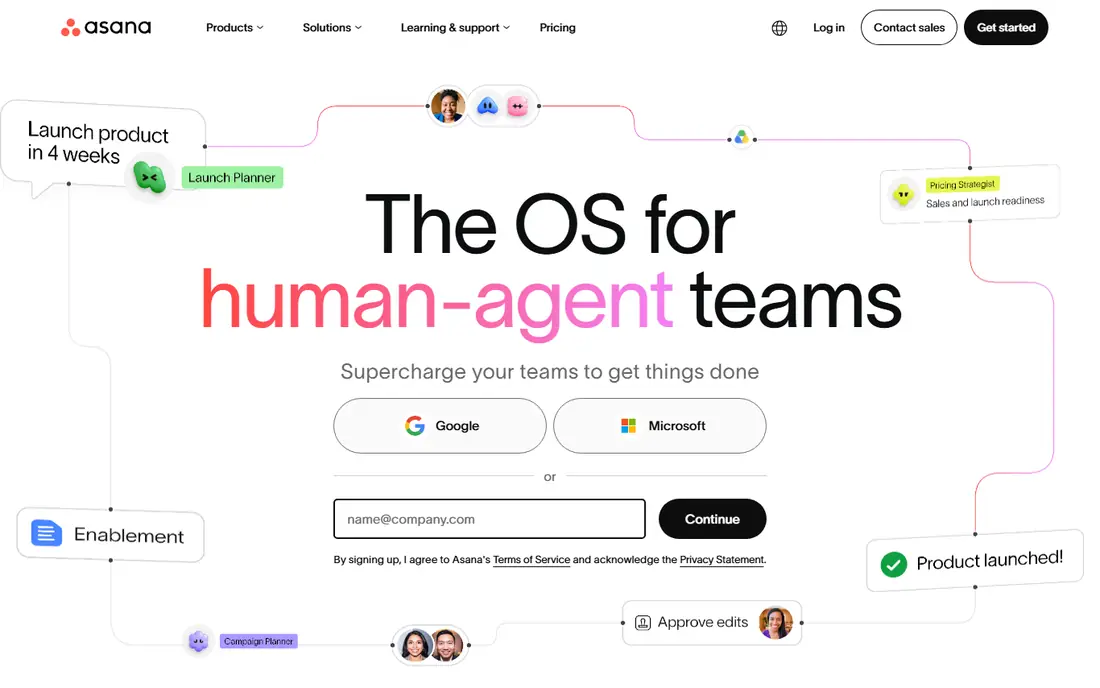
For structured cross-team projects, Asana stands out because timeline and portfolio views that show work across many projects at once. In daily use, the workflow feels straightforward: you set up your preferences once, then the tool handles the routine steps without constant checking. That simplicity matters, because a tool that needs daily fiddling rarely stays in use for long.
The honest catch is the free plan is limited, and the most useful reporting sits on paid plans. That limit will not bother every reader, but it should shape your trial: test the exact feature you need most before you commit to a paid plan. We recommend a short trial with your own data, your own calendar or contacts where relevant, and your real weekly volume, so you can see whether the tool fits your routine before you pay for a year.
- Clear task, timeline, and workload views
- Strong automation and integrations
- Good fit for larger teams
- Free plan is limited
- Costs rise with each paid seat
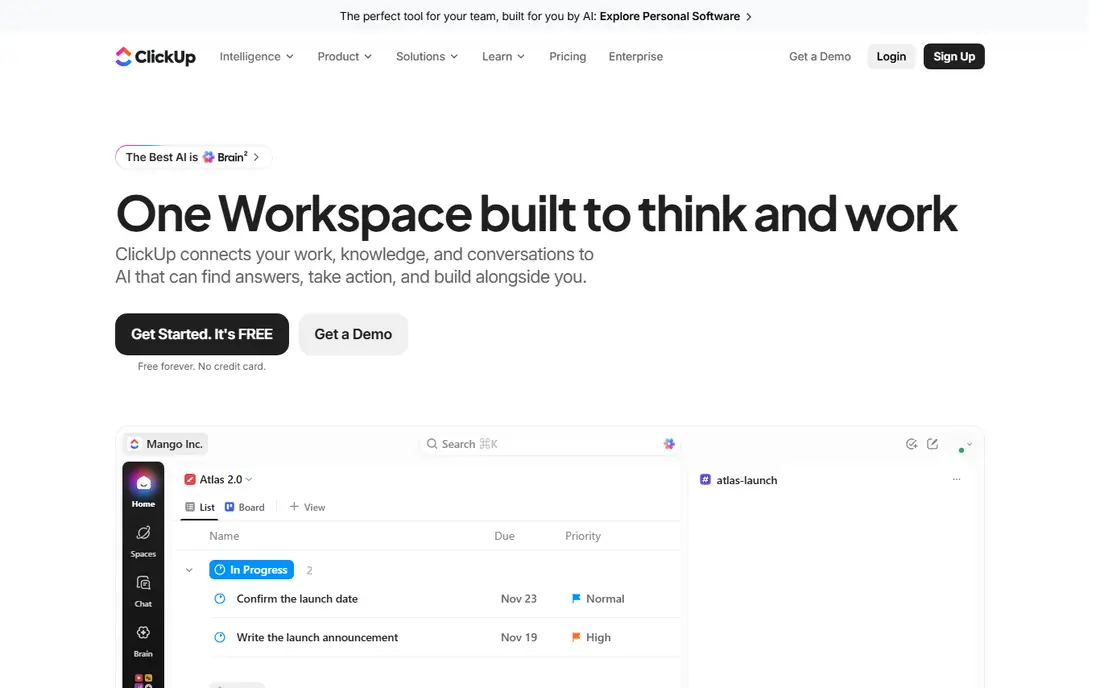
If all-in-one task, doc, and goal work is your main need, ClickUp is worth a close look, since a very wide feature set that covers tasks, docs, chat, goals, and time tracking in one place. Day to day, the value shows up in small moments: fewer missed items, clearer records, and less time spent chasing details. That steady help is more useful than a long feature list that you rarely open.
The catch to weigh is the range of options can feel busy at first, so teams need time to set up views and permissions. If that limit touches your main use case, try a rival on this list that handles that part better, and compare the two on real work. We recommend a short trial with your own data, your own calendar or contacts where relevant, and your real weekly volume, so you can see whether the tool fits your routine before you pay for a year.
- Generous free plan
- Many views including list, board, and calendar
- Docs and goals built in
- Setup can take a while
- Some features feel crowded for small teams
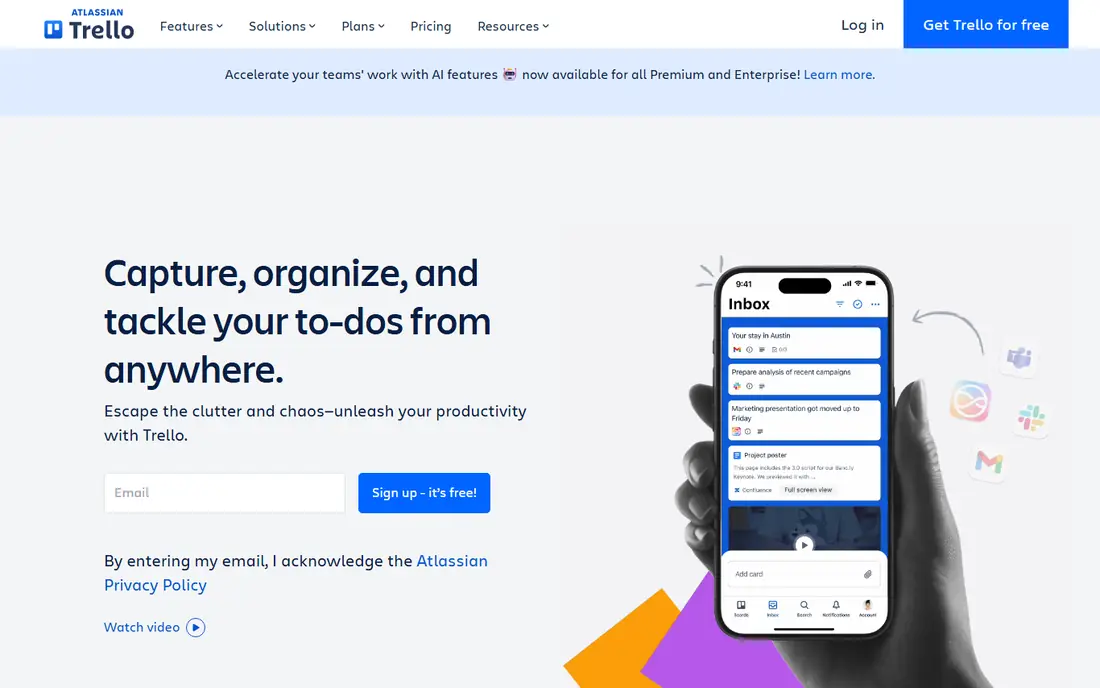
Trello fits simple visual boards well, thanks to Kanban boards that are fast to learn and easy to scan at a glance. The day-to-day experience is where this tool either helps or gets in the way, and here the basics are handled with care. Setup takes some attention, but once your preferences are set, routine work moves faster.
Watch out for boards stay simple, so complex reporting and workload planning need add-ons or paid features. It is not a reason to dismiss the tool outright, but it is a reason to read plan terms and trial the tool with your own data first. We recommend a short trial with your own data, your own calendar or contacts where relevant, and your real weekly volume, so you can see whether the tool fits your routine before you pay for a year.
- Very easy to learn
- Flexible boards and cards
- A useful free plan for small teams
- Limited built-in reporting
- Large projects can outgrow boards
Teams and owners focused on structured workflows and approvals will find Wrike practical, because approval flows, custom workflows, and reporting for teams with formal processes. What keeps this tool useful over time is how it handles routine work without demanding attention at every step. You still need to check important outputs, but the daily load feels lighter.
The trade-off is the structure that helps large teams can feel heavy for a team that only needs a task list. For many readers that trade-off is acceptable, but for heavy users it can change the total cost or the daily experience in a meaningful way. We recommend a short trial with your own data, your own calendar or contacts where relevant, and your real weekly volume, so you can see whether the tool fits your routine before you pay for a year.
- Strong approvals and reporting
- Custom fields and workflows
- Good for regulated or formal work
- Learning curve is steeper
- Paid plans are needed for the best reporting
Among the tools here, Notion is the natural pick for docs and light project work together, with pages, databases, and wikis that sit beside tasks in the same workspace. Over a normal week, the benefit is consistency rather than drama: the same steps work the same way, records stay findable, and handoffs to other people are clearer. That reliability is easy to undervalue until you lose it.
The honest catch is project tracking is lighter than a dedicated tool, so heavy scheduling needs care. That limit will not bother every reader, but it should shape your trial: test the exact feature you need most before you commit to a paid plan. We recommend a short trial with your own data, your own calendar or contacts where relevant, and your real weekly volume, so you can see whether the tool fits your routine before you pay for a year.
- Flexible docs and databases
- Strong for knowledge bases
- Free plan for individuals
- Project views are basic compared with Asana or ClickUp
- Offline use is limited
When spreadsheet-style project tracking matters most, Smartsheet earns its place through grid, Gantt, and card views that suit teams who think in rows and dates. In practice, the tool works best when you give it a clean starting setup and a short trial with real work. That trial reveals whether the fit is genuine or only looks good on a feature page.
The catch to weigh is the spreadsheet style suits planners but can feel plain for teams that want visual boards first. If that limit touches your main use case, try a rival on this list that handles that part better, and compare the two on real work. We recommend a short trial with your own data, your own calendar or contacts where relevant, and your real weekly volume, so you can see whether the tool fits your routine before you pay for a year.
- Familiar spreadsheet layout
- Strong Gantt and reporting views
- Good for date-driven plans
- No permanent free plan
- Cost grows per licensed member
For readers who need agencies and client projects, Teamwork offers client-facing projects, time tracking, and billing tools for agency work. The practical test is simple: does the tool save time on the task you repeat most, without creating a new admin job? Here the answer is yes for the core job, with some limits at the edges.
Watch out for client features add setup work, so solo teams may not need the full package. It is not a reason to dismiss the tool outright, but it is a reason to read plan terms and trial the tool with your own data first. We recommend a short trial with your own data, your own calendar or contacts where relevant, and your real weekly volume, so you can see whether the tool fits your routine before you pay for a year.
- Built for client work
- Time tracking and workload views
- Clear project templates
- Interface can feel busy
- Some features sit on higher plans
A strong choice for flat, simple team communication, Basecamp brings a flat structure with to-dos, message boards, files, and schedules in one project space. Used regularly, the tool settles into a routine quickly, and that routine is the real product. The features matter less than whether you trust the output enough to act on it without double-checking everything.
The trade-off is the simplicity means fewer custom workflows and less detailed reporting than rivals. For many readers that trade-off is acceptable, but for heavy users it can change the total cost or the daily experience in a meaningful way. We recommend a short trial with your own data, your own calendar or contacts where relevant, and your real weekly volume, so you can see whether the tool fits your routine before you pay for a year.
- Simple and calm to use
- Flat pricing on paid plans
- Good for teams that hate clutter
- Fewer automations and custom views
- Not ideal for complex portfolios
How we picked these
We compared current plan pages, free plan limits, views, automations, and integrations for tools that cover the same ground as monday.com, and we kept only tools still offered in October 2026. We favoured tools with a usable free plan or trial, clear pricing, and views that suit different team sizes. Where pricing varies by billing period or seat type, we used See website rather than a single figure that could mislead.
How to pick the right monday.com alternative
Start by listing the views your team uses every week, such as boards, timelines, calendars, or workload charts, and check each tool against that list rather than its full feature page. Count paid seats honestly, including part-time staff and contractors who need full access, because per-seat pricing changes the total fast. Test automations early, since a tool that needs a workaround for a daily task will slow a team down. Import one real project during a trial, invite the people who will use it daily, and watch whether tasks get updated without reminders. A tool that your team opens without prompting is usually the right one, even if another tool has a longer feature list.
Frequently asked questions
What are the best monday.com alternatives?
The best monday.com alternatives depend on team size and work style. Asana suits structured teams, ClickUp suits teams that want many features in one place, and Trello suits teams that want simple boards. Notion suits doc-heavy teams, while Wrike and Smartsheet suit formal or date-driven work.
What is the best free alternative to monday.com?
Trello and ClickUp both offer generous free plans for small teams, and Asana and Notion offer free plans with limits. A free plan works well for a small team with simple projects, but check limits on guests, automations, and storage before you build a large workspace on it.
Is ClickUp better than monday.com?
ClickUp offers more built-in features at a lower entry price for many teams, including docs, goals, and time tracking. Monday.com offers a more polished visual board experience for some teams. The better choice depends on whether you value breadth of features or visual simplicity.
Which alternative is best for agencies?
Teamwork is built for agency work, with client projects, time tracking, and workload views. Asana and ClickUp also work for agencies, but they need more setup to match the client-facing structure that Teamwork offers out of the box.
Can I migrate projects from monday.com?
Most tools in this list offer import tools or templates for boards and tasks, but automations, dashboards, and custom fields often need rebuilding. Export a test project first, check what transfers cleanly, and allow time to rebuild reports and automations after the move.
Sources we checked (5)

Online Jobs is an independent blog about careers, online work, learning new skills and the tools that help people earn. More about us.
Keep reading
All posts
Zoom Alternatives
Zoom alternatives compared for 2026: Google Meet, Microsoft Teams, Webex, Jitsi and more for free calls, large meetings and webinars for teams and classrooms.

Which Software Is Best for Data Entry
Compare the best data entry software for forms, OCR scanning, and spreadsheets, with free plans, pricing, and honest limits for each tool before you commit.

What Is the Best Free Tool to Rotate a PDF
What is the best free tool to rotate a PDF? We compare eight free rotation tools on per-page control, limits, privacy and saved output quality in detail.