Ghost Alternatives in 2026: 8 Platforms Compared

How we put this together: we compare official feature and pricing pages, app store listings, privacy policies and public user reviews. Prices change, so check the provider's site before you pay.
Key takeaways
- WordPress is the most flexible Ghost alternative, with free open-source software, though hosting, themes, and plugins add cost and maintenance.
- Substack is free to publish and takes 10 percent of paid subscription revenue, which suits writers who want discovery and no monthly fee at the start.
- Beehiiv and Kit suit newsletter businesses, with free plans up to 2,500 and 10,000 subscribers respectively, and paid plans from $49 and $33 per month at common tiers.
- Buttondown at $9 per month for its Basic plan suits minimalist writers, while Squarespace, Webflow, and Medium cover design-led sites, designer sites, and built-in audiences.
Quick comparison
| Name | Who it suits | Starting price | Free option | |
|---|---|---|---|---|
 WordPress | Flexible self-owned publishing | Free | Yes | Visit |
 Substack | Free publishing with discovery | Free | Yes | Visit |
 beehiiv | Newsletter growth | Free | Yes | Visit |
 Kit | Creator automation and sales | Free | Yes | Visit |
 Buttondown | Minimalist newsletters | Free | Yes | Visit |
 Squarespace | Design-led websites | See website | Free trial | Visit |
 Webflow | Designer-led sites | Free | Yes | Visit |
 Medium | Built-in audience writing | Free | Yes | Visit |
The best Ghost alternatives
Ghost is an open-source publishing platform with memberships, newsletters, and a clean editor, available as self-hosted software or as Ghost(Pro) hosting from $18 per month billed yearly in published sources. People look for alternatives when they want a larger built-in audience, stronger email automation, a full website builder, or a simpler newsletter tool. The platforms below cover those needs, with very different trade-offs on ownership, fees, and design control.
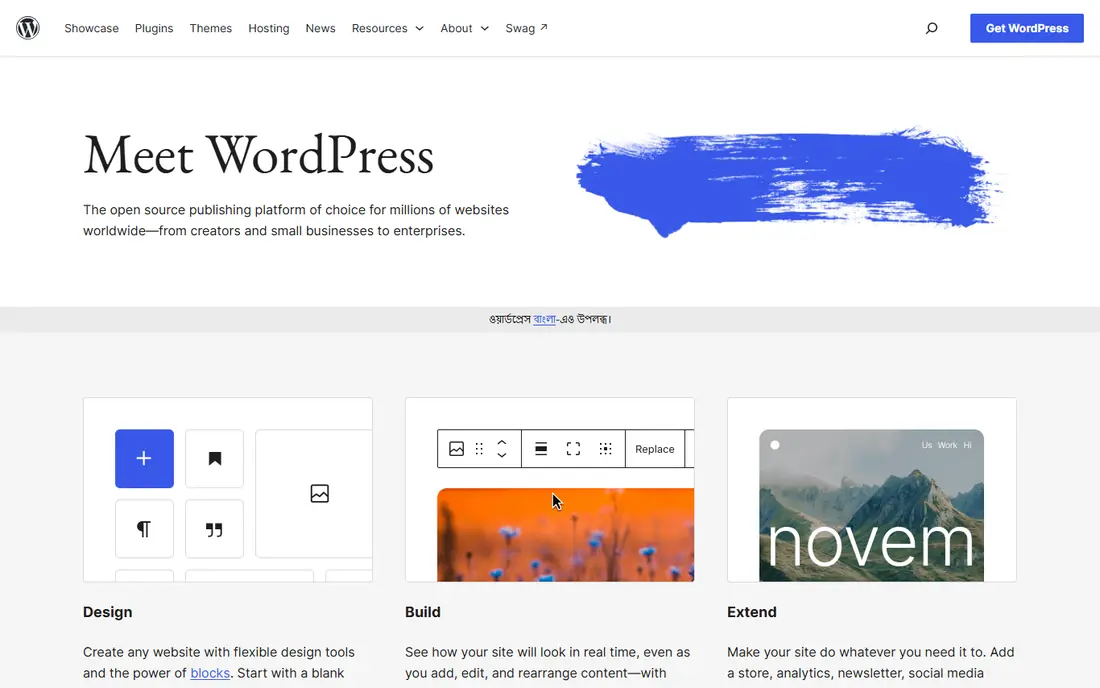
WordPress is the most flexible alternative to Ghost, and the best pick when ownership and extensibility matter most. The software itself is free, it powers a large share of the web, and its theme and plugin ecosystem covers memberships, newsletters, paywalls, podcasts, job boards, and commerce. You control hosting, data, design, and exports, which is a level of ownership no hosted newsletter platform matches.
The catch is maintenance. You arrange hosting, handle updates and backups, manage security, and choose plugins for newsletters and memberships, which adds cost and work compared with Ghost(Pro) or beehiiv. For a publisher with technical help or a developer, WordPress is the strongest long-term platform. For a solo writer who wants to publish and send without admin work, a hosted newsletter platform will feel easier.
- Free open-source software
- Huge theme and plugin ecosystem
- Full control over site, data, and memberships
- Hosting, maintenance, updates, and security are your job
- Newsletter and membership features need plugins
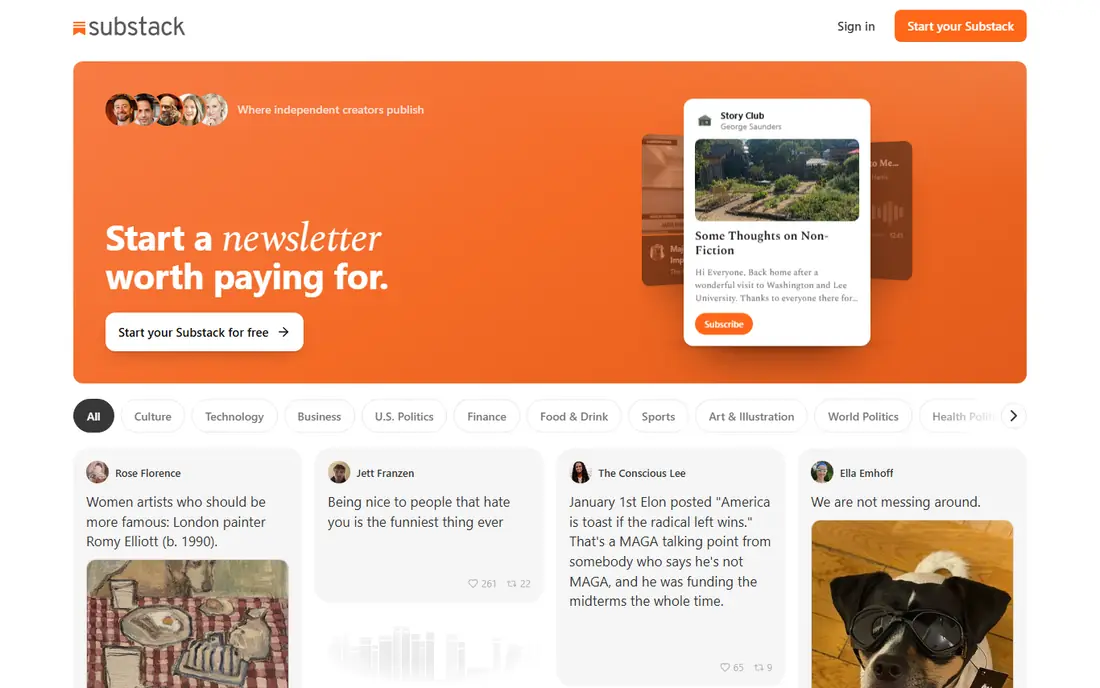
Substack suits writers who want to start free and grow through discovery. Publishing and sending are free with no subscriber limit, paid subscriptions are simple to turn on, and recommendations, the app, and network effects can bring new readers without paid marketing. For a new writer testing an idea, that zero monthly cost is hard to beat.
The trade-off is revenue share and control. Substack takes 10 percent of paid subscription revenue, plus Stripe payment fees, so the fee grows with your success and cannot be bought down with a monthly plan. Design options, site structure, and data control are also more limited than in WordPress or Ghost. Choose Substack for audience growth and simplicity at the start. Move to beehiiv, Ghost, or WordPress when the 10 percent share outweighs the value of discovery.
- Free to publish with unlimited subscribers
- Built-in discovery, recommendations, and app audience
- Simple paid subscriptions
- Takes 10 percent of paid subscription revenue plus payment fees
- Limited design and site control
Beehiiv is the strongest direct newsletter alternative to Ghost for growth-focused publishers. Its free Launch plan covers up to 2,500 subscribers with unlimited sends, paid plans take 0 percent of paid subscription revenue, and built-in referral tools and an ad network help newsletters grow and monetize before a large paid base exists. Paid Lite pricing in published sources starts at $49 per month billed yearly at common subscriber tiers.
The catch is that beehiiv is newsletter-first, not a full content system. Website design, SEO control, and complex site features are more limited than in WordPress or Webflow, and the paid entry price is higher than Buttondown or Kit at small list sizes. For a newsletter business that lives on growth, referrals, and ads, beehiiv is a strong pick. For a publication that needs a full website, Ghost or WordPress fits better.
- Free plan up to 2,500 subscribers
- 0 percent platform fee on paid plans
- Referral program and ad network for growth
- Paid Lite plan from $49 per month at common tiers
- Website and SEO features are weaker than a full CMS
Kit, formerly ConvertKit, suits creators who sell as well as publish. Its free plan covers up to 10,000 subscribers with unlimited broadcasts, landing pages, and forms, while paid Creator plans add visual automations, sequences, polls, and branding removal, starting at $33 per month billed yearly at common tiers in published sources. Digital product sales and a creator network add income routes beyond subscriptions.
The trade-off is publishing feel. Kit is email and automation-first, so its public archive and site design feel less like a polished publication than Ghost or beehiiv. Commerce fees also apply on sales, so check the current fee on Kit help pages before pricing products. Choose Kit when automation, sequences, and product sales matter more than a magazine-style website.
- Free plan up to 10,000 subscribers
- Visual automations and sequences
- Digital product sales and creator network
- Creator plan from $33 per month at common tiers
- Commerce fees apply on sales
- Less publishing polish than Ghost
Buttondown is the minimalist pick for writers who want email done well without a growth machine. It supports Markdown, custom sending domains, a hosted archive, an API, and external canonical links for issues, so a newsletter can keep a public presence while the permanent version lives elsewhere. Its free plan covers up to 100 subscribers, and its Basic plan starts at $9 per month for up to 1,000 subscribers in published sources, with paid subscriptions as a $9 add-on.
The limit is scale features. Buttondown offers fewer referral, ad, automation, and design tools than beehiiv or Kit, and its free plan is small. For an indie writer, a developer newsletter, or a small paid list, that focus is a strength, since the tool stays simple and cheap. For a newsletter business chasing rapid growth, beehiiv or Kit will offer more levers.
- Simple Markdown writing and sending
- Hosted archive and API
- Basic plan from $9 per month
- Paid subscriptions as an add-on
- Free plan covers only 100 subscribers
- Fewer growth and design features than beehiiv or Kit
Squarespace suits publishers who want a beautiful website first, with blogging and email as part of that site. Its templates are polished, design controls are visual, and hosting, domains, and commerce can sit in one account, which simplifies running a publication plus a shop or portfolio. That all-in-one simplicity appeals to design-led independents and small media brands.
The catch is publishing depth. Squarespace blogging and email tools are solid, but memberships, paid newsletters, and audience automation are less developed than in Ghost, beehiiv, or Kit, and there is no permanent free plan, only a trial. Pricing is also plan-based and varies by features, so use "See website" for the current figure and check the plan that covers memberships or commerce if you need them. Choose Squarespace when design and a full site matter most.
- Polished templates and design controls
- Hosting, domains, and commerce in one place
- Blogging and newsletter features included
- No permanent free plan
- Membership and newsletter depth is less than Ghost or beehiiv
- Less extensible than WordPress
Webflow is the designer alternative to Ghost for publishers who want precise control over layout without writing code for every page. Its visual builder, CMS collections, and hosting suit publications with custom article templates, landing pages, and structured content. A free starter plan lets designers test the builder before paying for a site plan.
The trade-off is complexity and pricing structure. Webflow takes longer to learn than Squarespace or Substack, pricing is per site, and newsletters and memberships usually need integrations or third-party tools rather than built-in Ghost-style features. For a design-led publication with a designer on the team, Webflow offers control Ghost templates cannot match. For a writer-led newsletter, it adds work without clear benefit.
- Strong visual design control
- CMS collections for structured content
- Hosting included on paid site plans
- Learning curve for newcomers
- Per-site pricing
- Newsletter and membership features need integrations
Medium suits writers who want readers without building an audience from zero. Publishing is free, the platform brings built-in readers and discovery, and the Partner Program pays writers based on member reading time, with a $5 per month membership for readers in published sources. For essays, commentary, and occasional publishing, Medium removes hosting, design, and email setup entirely.
The limit is ownership. You do not control design, branding, subscriber list, or distribution in the way Ghost, WordPress, or beehiiv allow, and earnings depend on Medium rules and distribution. Medium is a good place to publish and be found, and a weak place to build a standalone publication business. Use it for reach, and pair it with a newsletter platform if owning the audience matters.
- Free to publish
- Built-in readers and discovery
- Partner Program for earnings from member reading time
- Limited design, branding, and list control
- Earnings depend on Medium distribution
- No full site ownership
How we picked these
We compared official pricing pages, feature documentation, and 2026 newsletter and publishing roundups, focusing on platforms that cover Ghost core jobs: publishing, newsletters, memberships, or audience growth. We kept a mix of self-owned, hosted newsletter, website builder, and audience platforms, and we used "See website" where pricing varies by plan or is not a single entry figure. Prices quoted are entry or common-tier figures from vendor and comparison sources checked in October 2026, and platforms change tiers often, so confirm the current figure before committing.
What to check before you switch from Ghost
Start with what Ghost gives you that you actually use: the editor, memberships, paid newsletters, themes, or self-hosting control. If memberships and paid newsletters are central, beehiiv, Kit, and WordPress with plugins are the closest replacements, while Substack covers paid subscriptions with a revenue share. If the editor and site design matter most, WordPress, Squarespace, and Webflow deserve the shortlist. If discovery matters most, Substack and Medium offer audiences Ghost does not.
Next, test migration with real content. Export posts, subscribers, and paid member data from Ghost, then import a sample into two finalists and check formatting, images, subscriber tags, and paid status. A platform that imports posts cleanly but loses paid member history will create support work. Also check custom domain setup, email sending domain authentication, and archive URLs, since broken links and failed email authentication hurt a move more than a missing template.
Finally, model total cost at your real size. A free plan that ends at 100 or 2,500 subscribers, a 10 percent revenue share, and a per-site fee behave very differently as a list grows. Price each finalist at your current subscriber count and at double that count, including payment fees, add-ons for paid subscriptions, and hosting where relevant. The cheapest starter is not always the cheapest at scale.
Ownership versus discovery
Ownership platforms like WordPress and Ghost give you control over data, design, and fees, but you must bring your own audience. Discovery platforms like Substack and Medium bring readers, but you give up design control and, in Substack case, a share of revenue. Beehiiv and Kit sit in between, with owned lists plus growth tools. Decide which side of that trade matters more for your next year of growth.
Newsletter versus website
A newsletter platform optimizes for sending, growth, and paid subscriptions. A website platform optimizes for design, SEO, and structured content. Ghost tries to do both, which is why replacing it often means choosing a primary job. If email revenue is the business, choose a newsletter platform. If the website is the business, choose WordPress, Squarespace, or Webflow and add email through a plugin or integration.
Frequently asked questions
What is the best Ghost alternative for newsletters?
Beehiiv and Kit are the strongest newsletter alternatives, with beehiiv leading on growth tools and Kit leading on automation and product sales. Substack is best for free publishing with discovery, while Buttondown is best for minimalist newsletters. Choose beehiiv for growth, Kit for automation and sales, and Substack for zero monthly cost at the start.
Is WordPress better than Ghost?
WordPress is more flexible and extensible than Ghost, with a larger theme and plugin ecosystem and full control over hosting and data. Ghost is simpler, with built-in memberships and newsletters and a cleaner editor, especially on Ghost(Pro). Choose WordPress for a full website with many features, and Ghost for a focused publication with less maintenance.
Does Substack take a cut of paid subscriptions?
Yes. Substack is free to publish, but it takes 10 percent of paid subscription revenue, plus Stripe payment processing fees. Beehiiv takes 0 percent on paid plans, while Kit charges commerce fees on sales. That fee difference matters as paid revenue grows, so model it at your expected paid subscriber count before choosing.
Can I self-host a Ghost alternative for free?
WordPress software is free and can be self-hosted, though hosting itself costs money and you handle maintenance. Ghost software is also free to self-host, which is why this list focuses on alternatives rather than Ghost itself. Buttondown, beehiiv, Kit, and Substack are hosted services, so self-hosting does not apply to them in the same way.
What is the cheapest Ghost alternative?
Substack and Medium are free to publish, with costs only from revenue share or reader memberships. Buttondown from $9 per month is the cheapest paid newsletter option here at small list sizes, while WordPress software is free apart from hosting. Cheapest depends on whether you charge readers, since a revenue share can cost more than a monthly fee at scale.
Should I move from Ghost to beehiiv or Substack?
Move to beehiiv if you want newsletter growth tools, a 0 percent platform fee on paid plans, and a hosted platform without self-hosting work. Move to Substack if you want free publishing, built-in discovery, and no monthly fee, and you accept the 10 percent revenue share. Stay on Ghost if built-in memberships, a clean publication site, and self-hosting control matter more than discovery or growth tools.
Sources we checked (8)

Online Jobs is an independent blog about careers, online work, learning new skills and the tools that help people earn. More about us.
Keep reading
All posts
iPhone Alternatives
Looking for iPhone alternatives in 2026? Compare 9 Android phones from Samsung, Google, OnePlus, and more, with cameras, battery life, and honest trade-offs.

Who Has the Best Home Internet Service
Find who has the best home internet service for your address, with fiber, cable, 5G, and satellite providers compared on price, speed, and coverage here.

Software Engineering Best Practices
Learn software engineering best practices through 8 tools for CI, testing, code review, and observability that support better engineering for growing teams.