Best AI Competitor Analysis Tools in 2026: 8 Tools Compared

How we put this together: we compare official feature and pricing pages, app store listings, privacy policies and public user reviews. Prices change, so check the provider's site before you pay.
Key takeaways
- Similarweb and Semrush cover the broadest ground for most teams, with traffic, search, and advertising signals in one place.
- Crayon and Klue suit enterprise sales and strategy teams that need tracked changes, battlecards, and win-loss insight, with custom pricing.
- SpyFu at $39 per month and Owler with a free tier are the budget routes to PPC history and company news alerts.
- Ahrefs at $129 per month leads on backlinks and content, while Brand24 covers social mentions and sentiment that search tools miss.
Quick comparison
| Name | Who it suits | Starting price | Free option | |
|---|---|---|---|---|
 Similarweb | Traffic and market share | $125 per month | Yes | Visit |
 Semrush | SEO and PPC competitor research | $139.95 per month | Free trial | Visit |
 Ahrefs | Backlinks and content | $129 per month | No | Visit |
 SpyFu | Affordable PPC history | $39 per month | No | Visit |
 Crayon | Change tracking and battlecards | See website | No | Visit |
 Klue | Competitive enablement | See website | No | Visit |
 Owler | Company news and alerts | Free | Yes | Visit |
 Brand24 | Mentions and sentiment | See website | Free trial | Visit |
The best AI competitor analysis tools
Searches for competitors alternatives ai usually mean one thing: tools that use AI to track what rivals are doing, summarize changes, and surface signals a human would miss. The tools below cover traffic, search, advertising, pricing, messaging, social mentions, and company news, with AI features ranging from summarized reports to predictive scoring and battlecard drafting. No single tool covers every signal well, so the best choice depends on which rival moves matter most to your team.
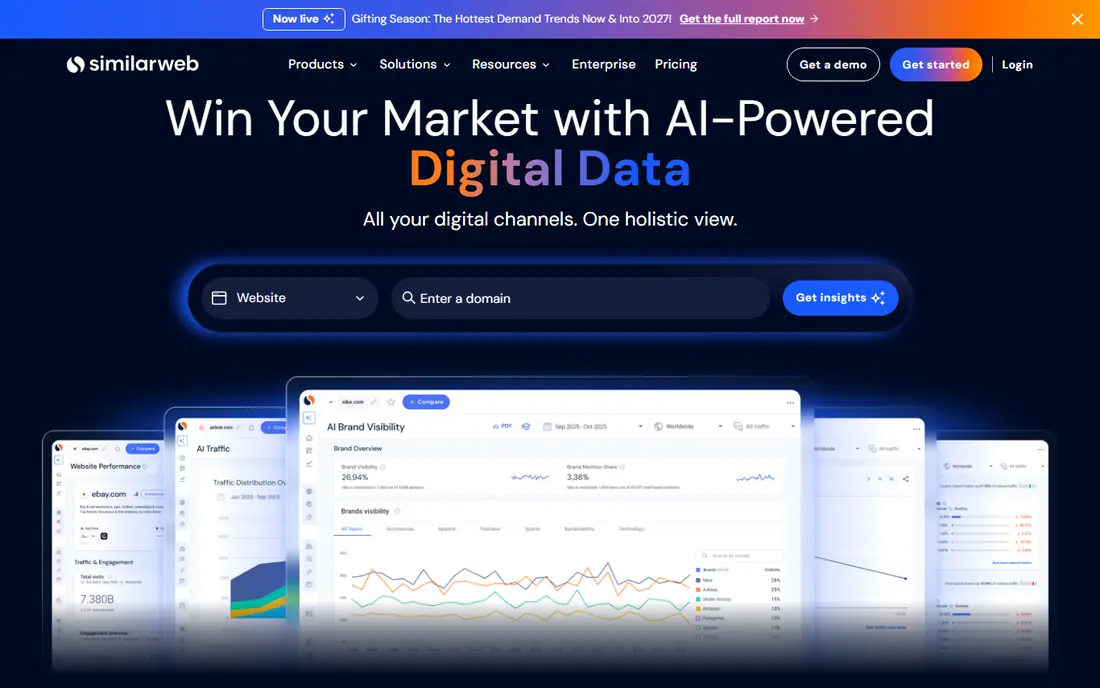
Similarweb is our first check for traffic and market questions. It estimates website visits, traffic channels, engagement, and audience overlap, which helps a team see whether a rival is growing through search, social, paid, or direct traffic. Published self-serve pricing lists a Competitive Intelligence plan at $125 per month billed yearly, with higher tiers adding SEO, AI search, and advertising data.
The catch is that traffic figures are estimates built from models and panels, not server logs from rivals, so treat them as direction and share, not as exact counts. Self-serve plans are also single-user with history windows of three to six months on lower tiers, so larger teams or longer trend work need custom plans. For market sizing and channel questions, Similarweb remains the clearest starting point.
- Website traffic estimates and channel mix
- Market share benchmarking
- Audience overlap data
- Traffic data is modeled, not exact
- Self-serve plans are single-user with short history windows
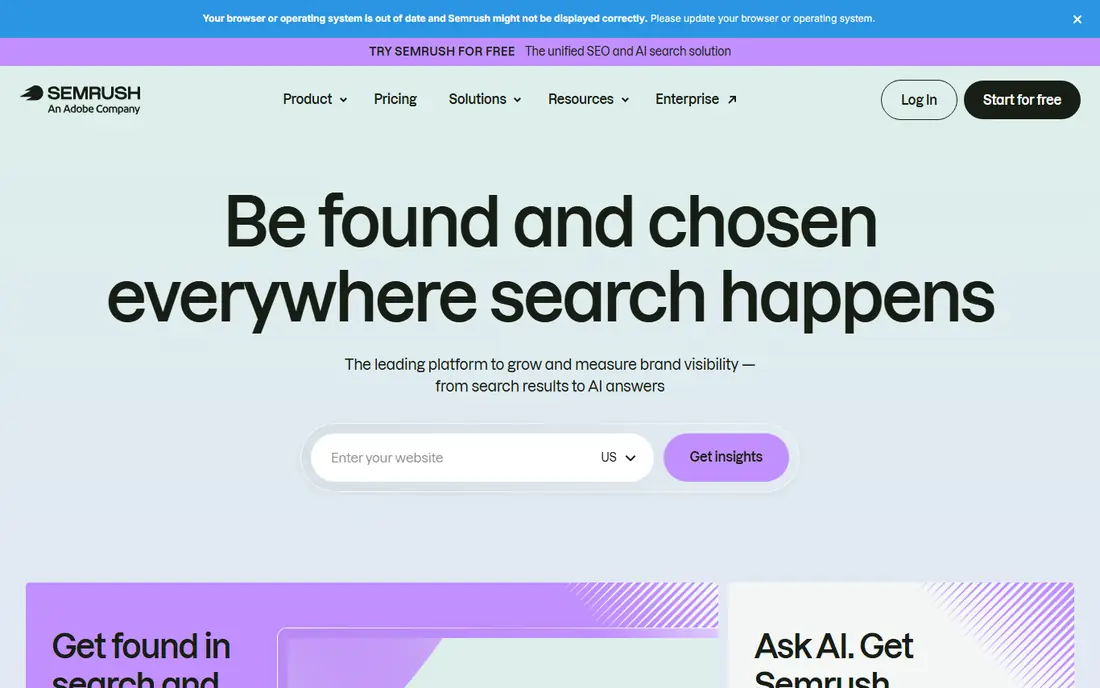
Semrush is the all-in-one pick for search-led competitor work. It covers organic keywords, paid keywords and ad history, backlinks, content gaps, and site audits, with AI tools for research summaries and reporting. Published sources list a Pro plan from $139.95 per month, which suits small and mid-size marketing teams that need search and PPC signals together.
The limit is packaging. Traffic and market intelligence in Semrush style data can sit in a separate Traffic and Market toolkit on some plans, so check whether the plan you buy includes the traffic data you expect. Costs also rise with extra users and toolkits. For SEO and PPC competitor research, Semrush is still the broadest single subscription in this list.
- Keyword, backlink, and PPC competitor data
- Content gap analysis
- AI-assisted research and reporting tools
- Full traffic and market data sits in a separate toolkit on some plans
- Costs rise with users and add-ons
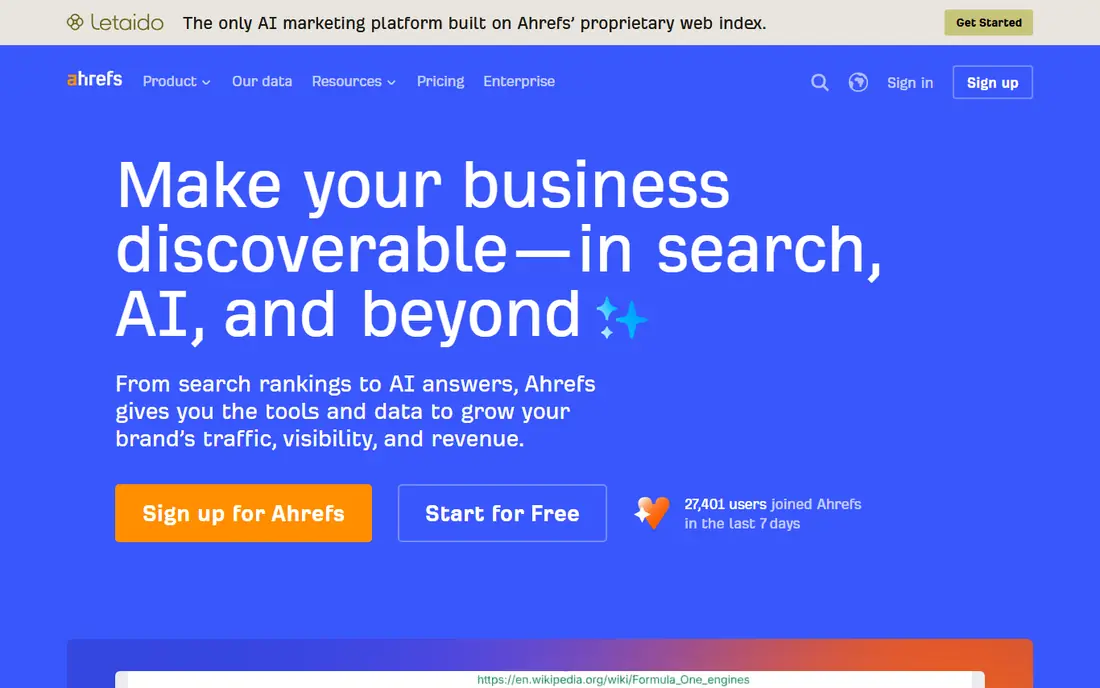
Ahrefs suits teams whose main competitor question is content and links: who links to rivals, which rival pages earn traffic, and which keywords they rank for. Its backlink index and content reports are widely used for that work, and published sources list entry pricing from $129 per month. For link building and content gap work, it is often more precise than a generalist tool.
The catch is scope and price scaling. Ahrefs is strongest on search and content, weaker on website traffic share, social listening, and pricing change tracking, and usage-based costs can rise as teams add projects and credits. Pair Ahrefs with Similarweb or Brand24 when you need traffic or social signals alongside link data. Use it alone when content and links are the main battleground.
- Deep backlink index
- Top content by competitor
- Keyword and rank tracking
- No permanent free plan for competitor data, apart from free Webmaster Tools for your own site
- Costs scale with usage
SpyFu is the budget pick for paid search competitor research. It shows rival PPC keywords, ad history, and organic keyword overlap at a low entry price, with published sources listing plans from $39 per month. Small teams and freelancers can answer the core PPC question, what are rivals bidding on and what ads have they run, without an enterprise subscription.
The trade-off is depth. SpyFu does not match Semrush or Ahrefs on backlink depth, content tools, or enterprise reporting, and its free tier is limited to a small number of searches. For affordable PPC history, it is excellent value. For a full competitor intelligence program, treat it as a complement to Similarweb or Semrush, not a replacement.
- Long PPC keyword and ad history
- Low entry price
- Simple competitor keyword reports
- Less enterprise depth than Semrush or Ahrefs
- Limited free searches only
Crayon suits enterprise teams that need to know the moment a rival changes pricing, messaging, or product positioning. It monitors a wide signal set, including website changes, job postings, social posts, press mentions, and earnings calls, then summarizes changes for sales and strategy teams. Battlecards and briefings turn those signals into material reps can use in deals.
The catch is price and effort. Crayon uses custom, demo-gated pricing, with published contract estimates in the tens of thousands per year, and it assumes a dedicated analyst or owner to curate signals. Small teams will find it heavy and costly. For enterprise sales enablement where a missed pricing change can lose a deal, Crayon is one of the strongest dedicated options.
- Tracks website, pricing, messaging, and product changes
- AI summaries for sales teams
- Battlecard and briefing workflows
- Custom enterprise pricing
- Setup and analyst time needed to get full value
Klue is built for competitive enablement, which means turning rival intelligence into sales-ready battlecards, win-loss insight, and deal support. It curates competitor signals, helps teams build and maintain battlecards, and supports win-loss analysis to learn why deals are won or lost against specific rivals. That sales focus separates it from traffic and SEO tools.
The limit is the same as Crayon: custom enterprise pricing, a demo-led sales process, and a need for sales adoption. A battlecard library only helps if reps actually open it during deals, so Klue needs enablement ownership, not just a subscription. Choose Klue when sales enablement is the goal and you have a team to maintain it. Choose Semrush or Similarweb when marketing research is the main need.
- Battlecards and competitive enablement workflows
- Win-loss analysis
- AI-assisted content curation
- Custom enterprise pricing
- Needs sales adoption to pay off
- Demo-gated sales process
Owler is the simplest, cheapest way to track rival company news. Its free tier lets users follow companies, receive news and funding alerts, and build competitor lists, while paid plans in published sources start from $35 to $39 per month depending on source and plan. For founders, strategists, and small teams, Owler answers the basic question, what just happened at a rival, without a large subscription.
The trade-off is depth. Owler does not offer deep traffic, keyword, backlink, or pricing change data, so it cannot replace Similarweb, Semrush, or Crayon for marketing analysis. Use Owler as a news layer alongside a research tool, or alone when company news and alerts are all you need. Its free tier makes that test easy.
- Free tier for company tracking
- News, funding, and leadership alerts
- Simple competitor lists
- Limited tactical marketing data
- Deeper features and data need paid plans
Brand24 covers the social and reputation side of competitor analysis that search tools miss. It tracks mentions of rivals across web and social sources, analyzes sentiment, and compares mention volume and reach, which helps teams spot a rival campaign, a PR problem, or a rising topic early. Published sources list entry pricing around $249 per month for some plans, though current plan pricing should be checked on the vendor site, hence "See website" in the field above for safety on the exact current tier.
The catch is noise and volume pricing. Social mention data includes irrelevant posts, so teams need filters, keywords, and exclusion rules to keep reports useful, and costs can rise with mention volume. For brand, PR, and social teams, Brand24 fills a gap that traffic and SEO tools leave open. For search-led teams, it is a complement, not a core replacement.
- Real-time mention tracking across web and social
- Sentiment analysis
- Competitor mention comparison
- Pricing varies by plan and mentions volume
- Social data needs careful filtering for noise
How we picked these
We compared official product pages, pricing pages, and 2026 competitor intelligence roundups, focusing on tools that track rivals with AI-assisted summaries, scoring, or curation, not just raw data tables. We kept a mix of traffic, search, PPC, change tracking, enablement, news, and social tools, and we used "See website" where vendors use custom pricing or where published plan prices vary by tier. Prices are entry figures from vendor and comparison sources checked in October 2026, and vendors change plans often, so confirm the current figure before purchase.
What to check before you choose an AI competitor tool
Start with the decision the tool must support. A pricing change alert helps sales, a keyword gap helps SEO, a traffic shift helps strategy, and a mention spike helps PR, but one tool rarely serves all four well. List the three rival moves that would change your next decision, then check which tool surfaces those moves fastest and clearest. That test beats a feature checklist, since many tools list AI features that amount to summarized reports rather than new data.
Next, test AI output on a known rival event. Pick a real pricing change, launch, or campaign from the past month, then see whether the tool found it, summarized it accurately, and linked to source pages. AI summaries that hallucinate details or miss the source are worse than no summary, because a team may act on a wrong claim. Check whether the tool shows sources, dates, and change history, so a human can verify before acting.
Finally, check data coverage, history, and export. Confirm which countries, channels, and rival types the tool covers, how far back history goes on your plan, and whether reports export to your CRM, slides, or docs. A tool with strong US search data but weak coverage in your market, or with only three months of history on the entry plan, can mislead trend work. Price the plan that covers your market, history, and user count, not just the entry tier.
AI summaries versus AI data
Some tools use AI mainly to summarize existing data, such as turning website changes into a briefing. Others use AI for scoring, prediction, or intent, such as ranking accounts by buying signals. Summaries save reading time, while scoring changes prioritization, so ask which kind of AI a tool offers. A summary tool still needs good underlying data, and a scoring tool still needs human review before a sales or strategy decision.
One tool or a stack
Most teams end up with a stack: Similarweb or Semrush for traffic and search, Crayon or Klue for enterprise enablement, Brand24 for social, and Owler for news. That stack costs more, but it avoids forcing one tool to cover signals it handles weakly. Small teams should start with one broad tool, add a second only when a specific signal gap causes a missed decision, and review the stack yearly for duplicate spend.
Frequently asked questions
What does competitors alternatives ai mean?
In search terms, it usually means AI tools that serve as alternatives for tracking competitors, summarizing rival changes, and surfacing market signals. This article covers that need with AI-assisted competitor analysis tools, from traffic and search platforms to change tracking and social listening. If you meant a specific product named Alternatives AI, check that product site directly, since this list focuses on competitor analysis tools as a category.
What is the best AI competitor analysis tool for small teams?
Similarweb for traffic, Semrush for search and PPC, and SpyFu for budget PPC history are the strongest small-team starting points. Owler adds free company news alerts, while Brand24 adds social mentions. Start with one broad tool that matches your main channel, then add a second tool only when a clear signal gap appears.
Are AI competitor tools accurate?
They are useful for direction, trends, and alerts, but not exact for every metric. Traffic figures are modeled estimates, keyword data comes from samples and indexes, and AI summaries can miss context or source details. Use these tools to spot changes and prioritize research, then verify important claims against rival sites, ads libraries, and primary sources before acting.
Can AI tools replace manual competitor research?
No, not fully. AI tools surface signals faster and at larger scale than manual checks, but they do not replace judgment about strategy, positioning, or deal tactics. The best workflow pairs automated alerts and summaries with human review: a person checks sources, tests the rival product or page, and decides what the signal means for pricing, messaging, or product work.
How much do AI competitor analysis tools cost?
Costs range from free tiers at Owler to $39 per month at SpyFu, $125 to $139.95 per month at Similarweb and Semrush entry tiers, and custom enterprise pricing at Crayon and Klue. Total cost depends on users, history, data toolkits, and mention or traffic volume. Price the plan that covers your market and history, and check renewal terms for enterprise tools.
Which tool is best for tracking competitor pricing changes?
Crayon is built for tracking pricing, messaging, and product changes, with alerts and battlecards for sales teams. Similarweb and Semrush can hint at pricing shifts through traffic and ad changes, but they are not dedicated pricing monitors. For ecommerce catalog pricing at scale, a dedicated price tracking tool may also be needed alongside Crayon.
Sources we checked (8)

Online Jobs is an independent blog about careers, online work, learning new skills and the tools that help people earn. More about us.
Keep reading
All posts
n8n Alternatives
n8n alternatives compared for 2026, with Zapier, Make, Activepieces, and more, covering visual builders, code steps, self-hosting, and pricing models.

ZoomInfo Alternatives
The best ZoomInfo alternatives in 2026, compared on price, free plans, data coverage, and which tool fits small teams or large sales teams best in detail.
Zoom Alternatives for Webinars
Compare Zoom alternatives for webinars in 2026, from browser-based rooms to enterprise events, with prices, attendee limits, features and honest trade-offs.