Best .com Alternatives in 2026: 8 Tools Compared

How we put this together: we compare official feature and pricing pages, app store listings, privacy policies and public user reviews. Prices change, so check the provider's site before you pay.
Key takeaways
- The best .com alternative depends on your audience: .co suits companies, .org suits nonprofits, and .io suits tech products.
- Renewal price matters more than the first-year price, since first-year discounts often hide a much higher renewal.
- Always check that your chosen name is free on the extension you want, and buy the matching .com later if it becomes available.
- Free WHOIS privacy is now standard at good registrars, so do not pay extra for it unless you have a special case.
Quick comparison
| Name | Who it suits | Starting price | Free option | |
|---|---|---|---|---|
 .co | Companies and startups | See website | No | Visit |
 .io | Tech products and startups | See website | No | Visit |
 .net | Network and tech services | See website | No | Visit |
 .org | Nonprofits and communities | See website | No | Visit |
 .ai | AI products and companies | See website | No | Visit |
 .dev | Developer tools and portfolios | See website | No | Visit |
 .app | Mobile and web apps | See website | No | Visit |
 .shop | Online stores | See website | No | Visit |
The best .com alternatives
When the .com you want is taken, the extension you choose next sends a signal about what you do. The options below are established alternatives to .com, each listed with a registrar that sells domains, so you can check availability and pricing for your exact name.
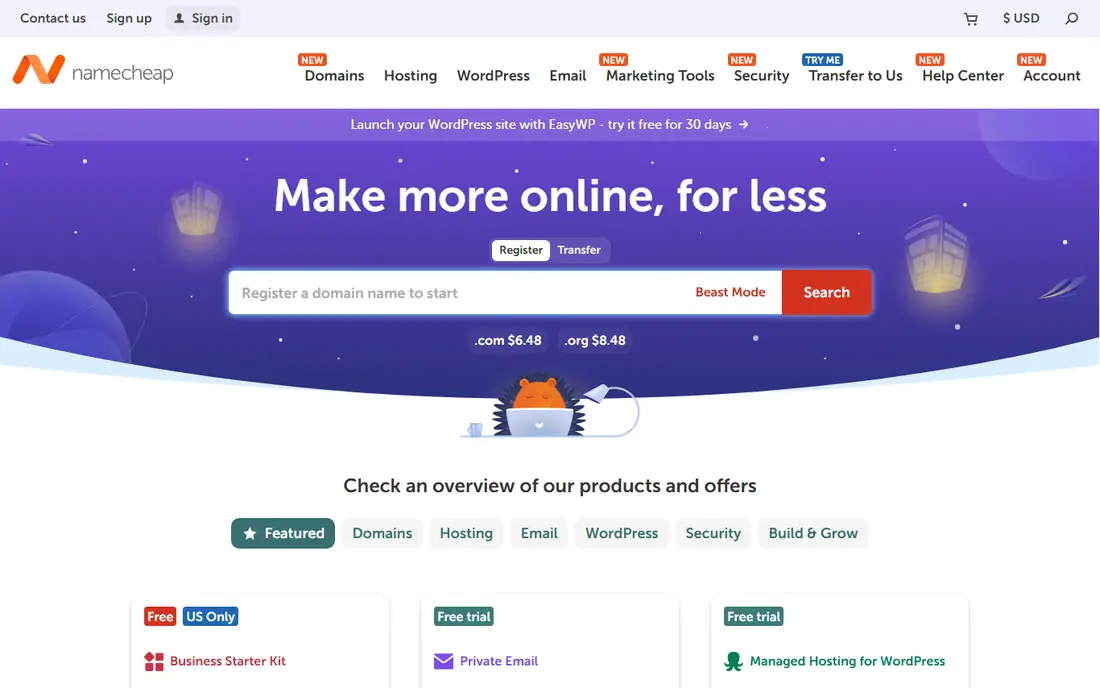
The .co extension is the closest cousin to .com on this list. It is short, easy to say, and widely used by companies and startups that could not get their .com. Visitors usually understand it at a glance, which helps when a name is shared in conversation or printed on packaging. The risk is confusion. Spoken aloud, .co sounds close to .com, so some visitors will still type the .com version by habit. That is why many .co owners also buy the .com later if it becomes free, or use a distinct brand name that does not rely on the extension alone. Check renewal pricing at your registrar before buying, since .co renewals differ more than .com renewals.
- Short and close to .com
- Widely recognised for companies
- Sold by most major registrars
- Can be confused with .com in speech
- Renewal prices vary widely by registrar
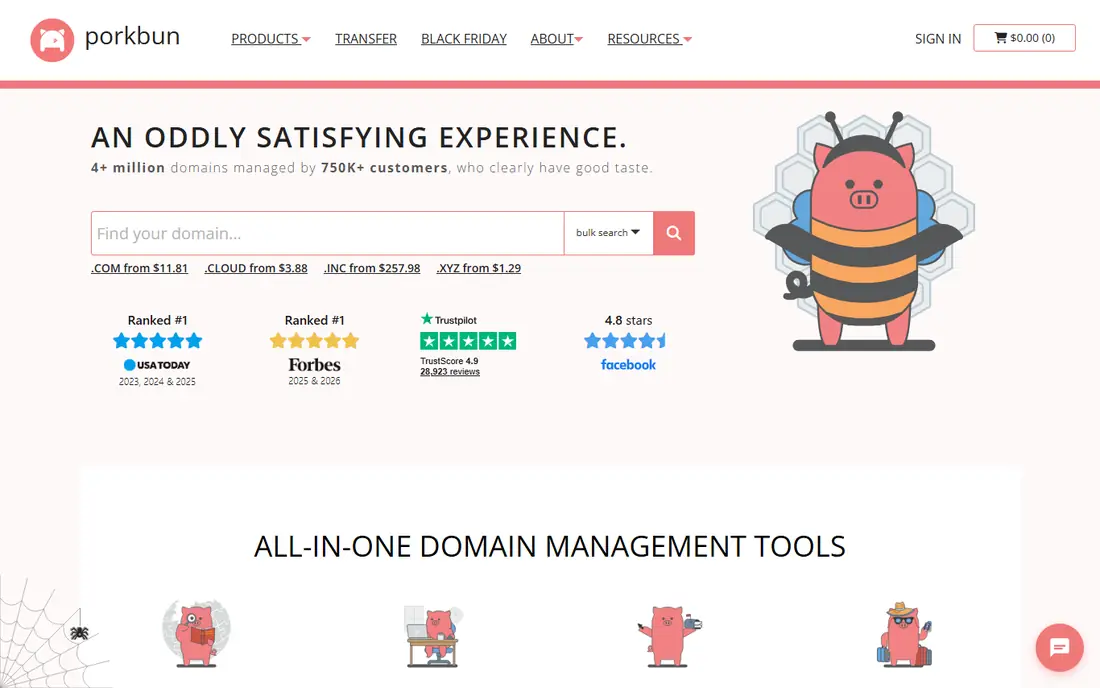
Tech startups adopted .io early, and it still signals a software or developer product more clearly than most extensions. A short .io name can feel modern and product-focused, which suits SaaS tools, developer platforms, and games. That recognition is strongest inside tech circles. Outside them, some visitors may not know .io or may mistype it, so it suits products whose audience is already tech-comfortable. Renewal pricing is another point to check. .io renewals are often higher than .com renewals, so work out the five-year cost, not just the first year, before committing a brand to it.
- Popular with tech startups
- Short and modern feel
- Strong developer recognition
- Renewal prices are often higher than .com
- Less familiar to non-tech audiences
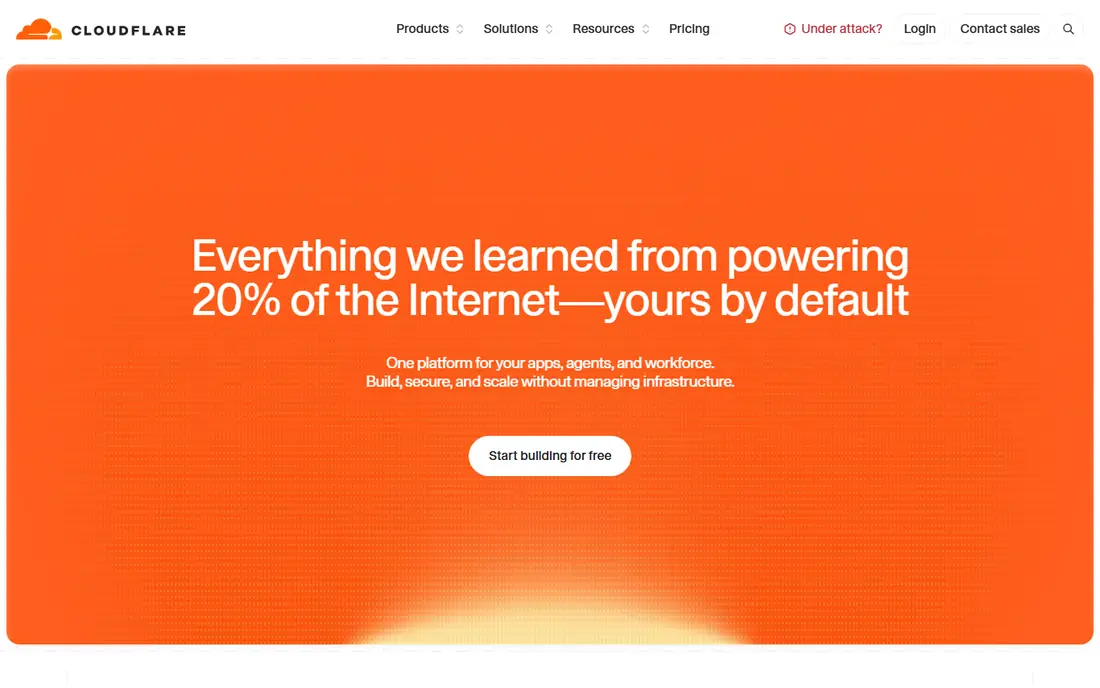
The .net extension has been around since the early internet, and that history is its strength. Most users recognise it, trust it, and can type it without thinking. It originally suited network providers, and it still fits internet services, hosting, and tech companies well. The drawback is perception. Many buyers treat .net as the fallback when .com is taken, so it does less branding work on its own. A strong brand name matters more on .net than on a more distinctive extension. On price and availability, .net is usually straightforward, with renewal prices close to .com at many registrars, which makes it a safe and predictable alternative.
- Long-established and trusted
- Familiar to most internet users
- Sold everywhere
- Often seen as second choice to .com
- Less distinctive for a new brand
For nonprofits, charities, open-source projects, and community groups, .org is often a better fit than .com. Visitors associate it with mission-driven work rather than sales, which can help donations, memberships, and volunteer signups. It is also one of the most recognised extensions in the world, so trust is rarely an issue. The limit is commercial fit. A for-profit shop on .org can confuse visitors about whether it is a nonprofit, so commercial companies should only use .org when the community or mission angle is genuine. Pricing is usually stable and comparable to .com, which makes long-term ownership easy to budget.
- Trusted for nonprofits and communities
- Widely recognised
- Stable pricing at many registrars
- Can feel wrong for a for-profit company
- Less suited to commercial sales pages
The .ai extension now signals artificial intelligence more clearly than any other option on this list. AI startups, tools, and research projects use it to tell visitors what they do before a single page loads. That clarity is valuable in a crowded AI market, where a name alone may not explain the product. The cost is the catch. .ai registrations and renewals are often priced well above .com, so a startup should check the renewal figure at its registrar and budget for it over several years. .ai also suits AI products best. A non-AI business on .ai may confuse visitors, so use it only when AI is central to what you sell.
- Clear signal for AI products
- Popular with AI startups
- Short and memorable
- Renewal prices are often high
- Audience outside AI may not recognise it
Developer tools, documentation sites, and personal portfolios fit .dev well. The extension tells a technical visitor at once that the site is for builders, which helps docs, API references, and open-source projects. It also works for a developer portfolio, where the extension itself shows the field. The audience is the limit. General consumers may not recognise .dev, and a consumer product on .dev can feel oddly technical. For a developer-facing product, that narrowness is a strength, since it filters for the right visitors. Check registrar pricing, since .dev prices vary, and confirm that email and DNS setup work as you expect before launch.
- Clear fit for developers
- Modern feel
- Good for docs and portfolios
- Narrow audience
- Less familiar to general consumers
The .app extension was made for applications, and it shows. Visitors understand at once that the site is an app, not a blog or a brochure site. That clarity helps app landing pages, web apps, and download pages, where the goal is to get users into the product quickly. Security is another plus, since .app domains require secure connections, which matches user expectations for apps that handle accounts and data. The fit is narrower than .com. A content site or a general business on .app can feel mismatched, so reserve .app for products that are genuinely apps. Pricing varies by registrar, so compare registration and renewal prices together.
- Clear fit for apps
- Secure by design at the registry level
- Easy to understand
- Less suited to blogs or content sites
- Renewal prices vary by registrar
Online stores get a clear benefit from .shop. Shoppers understand at once that the site sells products, which can help click-through from search results and ads. It suits single-product stores, niche shops, and brands that sell mainly online. The limit is future growth. A business that later adds services, content, or a community may find .shop too narrow, and rebranding a domain later is costly. For a store-first business, that trade is worth it. Compare registrar prices and check whether the name is also free on social platforms, since a shop name needs to work in more places than just the domain.
- Clear fit for online stores
- Easy for shoppers to understand
- Good for product pages
- Less suited to services or content
- Can look narrow if the business later expands
How we picked these
We compared registrar pricing pages, extension guides, and public domain data, and we checked each registrar homepage to confirm it is live. We did not invent extension facts, such as registry rules or exact prices, since those vary by registrar and change often. Where pricing varies, we wrote See website and pointed to the registrar, so readers can check the current figure for their exact name. The extensions above are all established alternatives to .com that are sold by major registrars.
How to pick the right .com alternative
Start with your audience, not with what is free. A tech audience will accept .io or .dev, a nonprofit audience trusts .org, and a general audience understands .net and .co most easily. Then say the full domain aloud and type it from memory. If it is easy to confuse with another extension, pick a more distinct brand name or buy both versions. Finally, compare the five-year cost, not the first year. Add registration, renewal, privacy, and email costs for five years at two registrars before you decide.
Check renewal price before you fall in love with a name
First-year discounts are marketing. The renewal price is the real price you will pay every year after that. Some registrars show renewal prices clearly on the search page, while others hide them until checkout. If you cannot find the renewal price, try another registrar or contact support before buying.
Protect the brand once you choose
Buy common misspellings only if they matter for your traffic, and set the domain to auto-renew with a payment method you will not lose. Enable two-factor authentication on your registrar account and lock the domain against transfers. Losing a domain to expiry or theft is far more costly than a year of renewal fees.
Frequently asked questions
What are the best alternatives to .com?
The best alternatives to .com are .co for companies, .net for general tech services, .org for nonprofits, .io for tech startups, and .ai for AI products. The right choice depends on your audience and what your site does. A short, memorable name matters more than the extension alone.
Is .co a good alternative to .com?
Yes, .co is a good alternative for companies and startups, since it is short and close to .com. The main risk is confusion in speech, where listeners may type .com instead. Use a distinct brand name and consider buying the .com later if it becomes available.
Is .io better than .com for a startup?
For a tech startup, .io can be better for branding, since it signals a software product. For a general audience, .com remains easier to remember and type. Tech startups often choose .io when their .com is taken, and they budget for higher renewal prices.
What is the best .com alternative for a nonprofit?
The .org extension is the best alternative for most nonprofits, since visitors associate it with mission-driven work. It is widely recognised and trusted, and pricing is usually stable. A nonprofit on .org should still check that its name is free and consistent across social platforms.
Do .com alternatives hurt search rankings?
Search engines treat most established extensions in a similar way, so the extension alone does not decide rankings. Content quality, site speed, and links matter far more. Choose an extension your audience trusts and remembers, then focus on content and technical quality.
Should I buy several extensions for one brand?
Buying the main alternative plus the .com, if available, can protect a brand from confusion and copycats. Buying every extension is rarely worth it. Start with the extension you will actually use, add the .com if you can, and only add others when traffic or confusion makes it necessary.
Sources we checked (8)

Online Jobs is an independent blog about careers, online work, learning new skills and the tools that help people earn. More about us.
Keep reading
All posts
n8n Alternatives
n8n alternatives compared for 2026, with Zapier, Make, Activepieces, and more, covering visual builders, code steps, self-hosting, and pricing models.

ZoomInfo Alternatives
The best ZoomInfo alternatives in 2026, compared on price, free plans, data coverage, and which tool fits small teams or large sales teams best in detail.

Workday Alternatives
We compared the best workday alternatives for HR, payroll, and global hiring, from BambooHR and Gusto to Rippling, Deel, and HiBob for growing teams in 2026.