Chicory AI Competitors and Alternatives in 2026: 8 Options Compared

How we put this together: we compare official feature and pricing pages, app store listings, privacy policies and public user reviews. Prices change, so check the provider's site before you pay.
Key takeaways
- Chicory turns recipe content into shoppable carts, and its closest rivals differ mainly in who they serve: publishers, brands, or retailers.
- Northfork and SideChef are the closest direct matches for publishers that want recipes to become full baskets at a retailer.
- Destini suits CPG brands that care most about where to buy and in-stock accuracy at local stores.
- Instacart Platform fits publishers and retailers that already work inside the Instacart checkout system.
- For developers building their own tools, Spoonacular offers recipe and ingredient data through an API rather than a ready-made shoppable button.
Quick comparison
| Name | Who it suits | Starting price | Free option | |
|---|---|---|---|---|
 SideChef | Publishers adding shoppable recipes | See website | No | Visit |
 Northfork | Full-basket recipe shopping | See website | No | Visit |
 Destini | CPG where-to-buy accuracy | See website | No | Visit |
 Whisk | Consumer recipe and shopping lists | Free | Yes | Visit |
 Instacart Platform | Retailer checkout integration | See website | No | Visit |
 AdAdapted | Shoppable ads for brands | See website | No | Visit |
 Quotient Technology | Retail media and promotions | See website | No | Visit |
 Spoonacular | Developers needing recipe data | See website | Yes | Visit |
The best Chicory AI competitors and alternatives
Chicory is known for making recipe pages shoppable, so readers landing on a recipe can add ingredients to a retailer cart. The options below cover that same job from different angles.
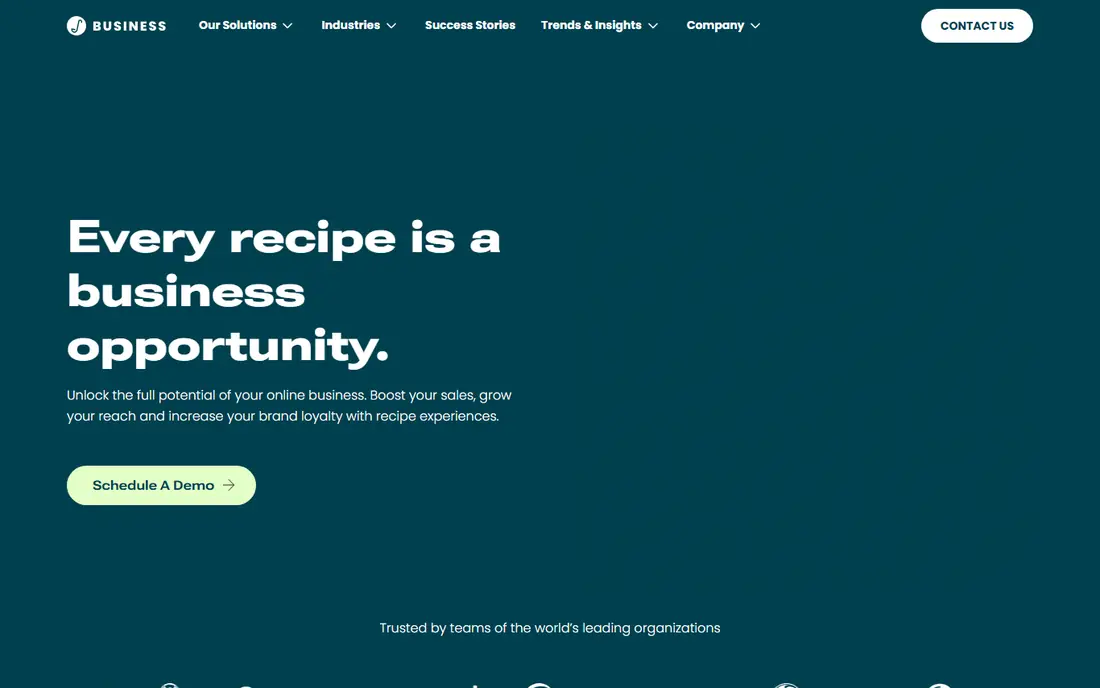
SideChef is one of the most direct answers for a publisher that wants a shoppable recipe button without building commerce from scratch. Its business platform focuses on turning recipe content into shopping, with tools for meal planning and ingredient lists alongside the cart handoff. For a food site with steady recipe traffic, that combination is practical rather than decorative. The main question to ask is coverage. A shoppable button only earns its place if it connects readers to retailers they actually use, with accurate products and prices. SideChef is worth a demo for publishers, but check retailer coverage in your main markets and ask how sponsored and unsponsored ingredients are handled before you commit.
- Shoppable recipe button built for publishers
- Meal planning and shopping features
- Works across recipe content
- Pricing is not public
- Fit depends on your publisher setup and retailer coverage
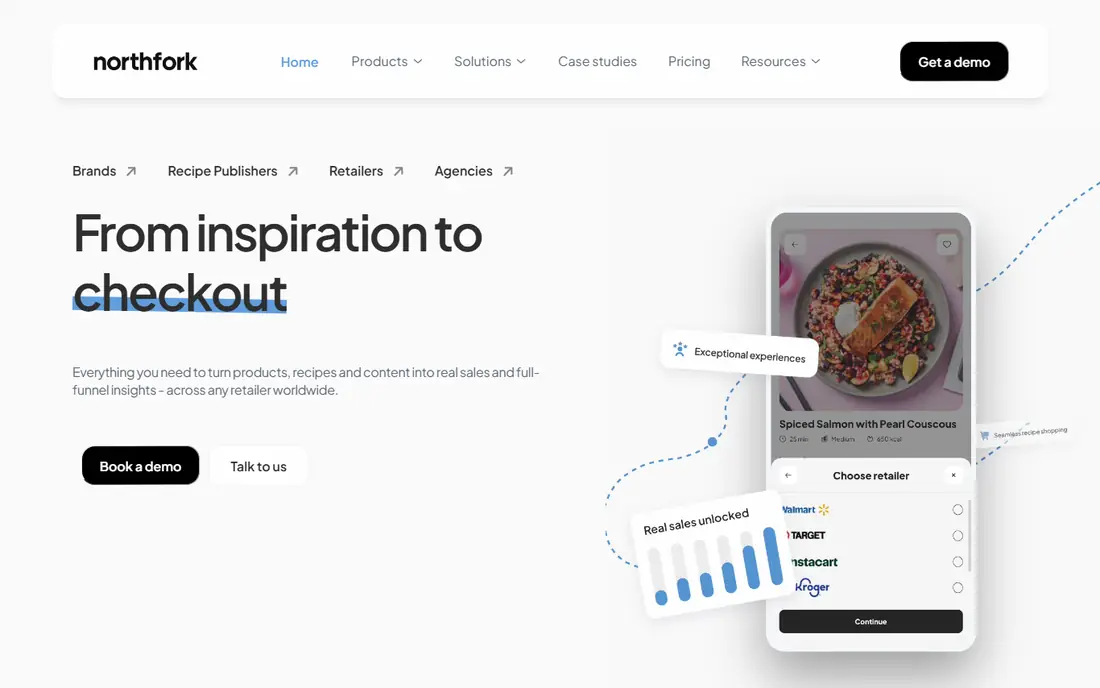
Northfork takes the full-basket view of recipe shopping, and that is what sets it apart from a simple buy button. Instead of adding one item at a time, it aims to convert a whole recipe into a basket with live stock and pricing, plus portion changes and swaps. Retailers, publishers, and brands each get a version of the same idea: inspiration becomes a checkout, not just a list. That breadth comes with an enterprise feel. Northfork suits companies with real recipe traffic or retail volume, and it will feel heavy for a small blog testing shoppable content for the first time. For larger players, though, the data and insights around conversion and substitutions are a genuine advantage over a basic button.
- Turns whole recipes into baskets
- Real-time stock and pricing
- Tools for retailers, publishers, and brands
- Enterprise sales process
- Smaller publishers may find it more system than they need
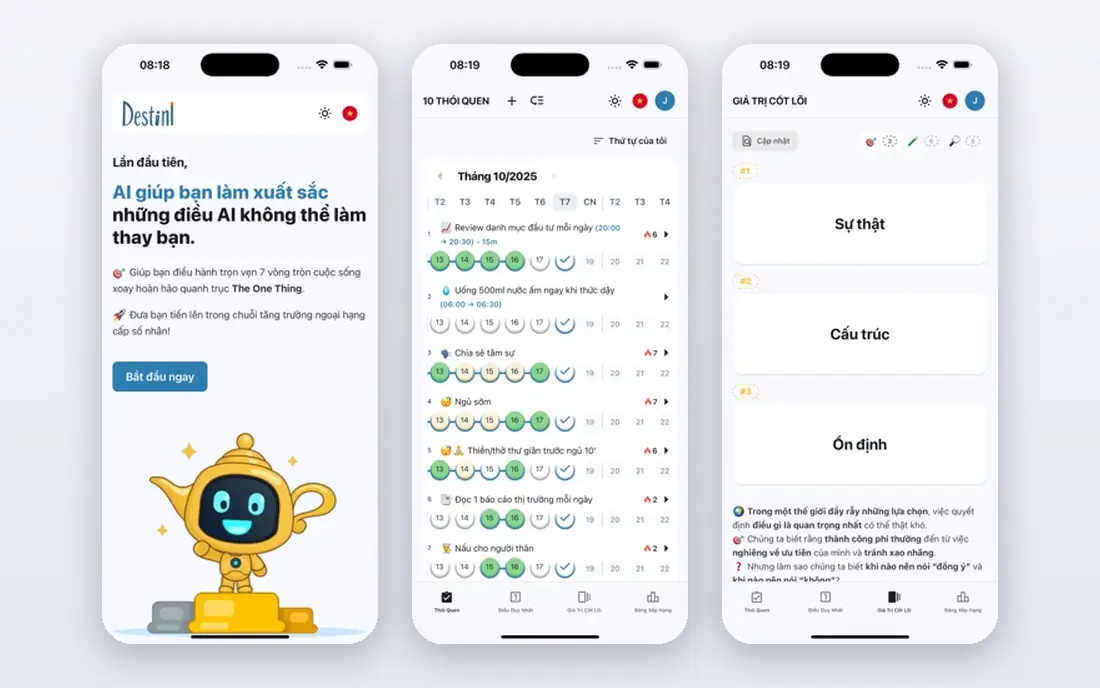
Destini comes at the problem from the brand side rather than the publisher side. It is best known as a product locator for grocery CPG brands, helping shoppers find where a product is sold and in stock. Its shoppable recipe button fits that same story: a reader clicks from a recipe and starts adding items toward a retailer cart, with brand availability kept front and center. The limit is scope. Destini adds products one at a time and does not offer the full-recipe completion, pantry logic, or swap handling that a dedicated recipe commerce platform provides. Brands that care most about accurate where-to-buy results and sponsored product placement will value it. Publishers wanting the richest recipe-to-basket flow should compare it directly with Northfork and SideChef.
- Strong product locator heritage
- In-stock focus for CPG brands
- Simple shoppable recipe button
- Recipe shopping is one part of a wider locator suite
- Full-recipe basket logic is limited compared with Northfork
Whisk, now part of Samsung Food, is the consumer-side alternative on this list, and it belongs here for a clear reason. Many readers already save recipes and build shopping lists in apps like this, so a brand or publisher that only thinks in terms of website buttons can miss where home cooks actually plan meals. Whisk covers recipe discovery, saving, meal planning, and list building in one free app. It is not a like-for-like replacement for Chicory for publishers, because it does not give a publisher the same shoppable button and commerce controls on their own site. Treat it as a distribution and planning alternative: a place where recipes meet shopping lists, rather than a tool you embed in your own pages.
- Free consumer app with recipe saving and shopping lists
- Large recipe community
- Samsung Food backing
- Not a B2B shoppable button for publishers
- Brand and publisher controls are limited compared with Chicory
Instacart Platform is the practical pick when your readers already shop through Instacart. Instead of routing a recipe to many different carts, it sends the basket into a checkout shoppers know, with retailer choice and delivery or pickup handled inside that system. For US publishers and brands with an Instacart audience, that familiarity can lift completion rates. The trade-off is dependence. You gain a polished checkout and wide retailer coverage, but you build inside one company's system rather than a retailer-neutral setup. Publishers with audiences outside Instacart's strong markets should check coverage first, and brands should weigh Instacart fees and placement rules against a neutral button.
- Direct route into Instacart checkout
- Huge grocery retailer coverage in the US
- Familiar cart experience for shoppers
- Ties you to the Instacart system
- Less useful where Instacart coverage is thin
AdAdapted answers a different question from Chicory, and that difference is worth understanding. Where Chicory starts from recipe content, AdAdapted starts from advertising: shoppable ad units that let shoppers add a product to a list or cart from an ad. For a CPG brand, that can shorten the path from seeing a product to buying it. Publishers looking for a recipe button will not find it here, and that is fine. AdAdapted belongs on the shortlist for brand teams that want shoppable media and retail measurement, especially alongside recipe content rather than inside it. Judge it on campaign results and retailer reporting, not on how it looks embedded in a recipe page.
- Shoppable media built for CPG brands
- Add-to-list and add-to-cart ad units
- Retail measurement focus
- Ad-led model rather than a publisher recipe button
- Needs ad budget to work well
Quotient Technology is a wider retail media and promotions platform, and it earns a place here because promotions are often what turn a recipe view into a purchase. Brands can deliver coupons and offers through retail channels, and retailers can run media tied to real shopping behavior. For a large CPG team, that promotion layer matters as much as any button. It is not a simple Chicory swap. Quotient is broad, enterprise-oriented, and built for teams running retail media programs at scale. Smaller brands and publishers will likely find Northfork, SideChef, or Destini more direct. Larger teams should consider Quotient as the promotion partner that sits alongside a recipe commerce tool.
- Retail media and promotion tools for brands and retailers
- Coupon and offer delivery
- Large retail network
- Broad platform, not a focused recipe tool
- Setup suits larger brand and retail teams
Spoonacular is the builder's alternative, and it changes the shape of the project. Instead of buying a finished shoppable button, a developer gets recipe search, ingredient data, nutrition information, and related tools through an API, then builds the exact shopping flow they want. That freedom suits teams with engineering time and a specific product idea. The cost is effort. There is no publisher button to paste in, no retailer cart handoff waiting out of the box, and the team must handle product matching and retailer links itself. If you want a fast, finished solution, pick SideChef or Northfork. If you want control and you have developers, Spoonacular gives you the raw material to build something distinct.
- Recipe, ingredient, and nutrition data through an API
- Flexible for custom builds
- Free tier for small use
- You must build the shopping experience yourself
- No ready-made shoppable button for publishers
How we picked these
We compared official feature pages, pricing pages, app store listings, privacy policies, and public reviews, and we focused on tools that connect recipes, grocery products, and checkout in some form. We included direct publisher tools, brand-side locator and ad options, and one developer API, because buyers searching for Chicory alternatives include all three groups. Prices are listed as See website where vendors price by agreement or do not publish a clear starting rate, so confirm current terms on the vendor's site.
How to choose the right alternative
The right pick depends less on feature lists and more on who you are in the chain.
If you are a publisher
Start with SideChef and Northfork, and ask each vendor to show a live recipe on a site like yours. Check which retailers your readers actually use, how substitutions work when an item is out of stock, and what reporting you get on carts started versus carts completed. A button that looks clean but sends readers to a retailer they never use will not earn its place.
If you are a CPG brand
Destini, AdAdapted, and Quotient deserve the first calls, in that order depending on whether you need where-to-buy accuracy, shoppable ads, or retail promotions. Ask how sponsored products are matched, whether a product only appears where it is in stock, and what proof you get that recipe views turned into sales. Brand safety and accurate availability matter more than a long feature list.
If you are building your own product
Spoonacular is the starting point for a custom build, and Whisk shows what consumers expect from recipe saving and lists. Budget real engineering time for product matching, because matching a recipe ingredient to the right retail product is the hard part. A demo that works on five tidy recipes can still fail on a thousand messy ones.
Frequently asked questions
What is Chicory AI?
Chicory is a platform that makes recipe content shoppable, letting readers add recipe ingredients to a retailer cart from the recipe page. It serves publishers, brands, and retailers in the grocery and CPG world. The alternatives in this article cover the same broad job, but they differ in whether they serve publishers, brands, or developers best.
What is the closest alternative to Chicory?
SideChef and Northfork are the closest direct matches for publishers that want shoppable recipes on their own sites. SideChef offers a shoppable recipe button built for publishers, while Northfork focuses on turning whole recipes into baskets with live stock and pricing. The better pick depends on your traffic, retailer coverage, and how much basket logic you need.
Is there a free alternative to Chicory?
Whisk through Samsung Food is free for consumers who want recipe saving, meal planning, and shopping lists. Spoonacular offers a free tier for small developer use through its API. For publishers and brands, however, most shoppable recipe platforms are priced by agreement, so expect a sales conversation rather than a free plan.
Do these tools work with any grocery retailer?
No, and retailer coverage is the first thing to check. Some tools route to many retailers, some focus on Instacart, and some depend on where a brand's products are in stock. Ask each vendor for a coverage list for your main markets, and test with real recipes your readers use rather than demo content.
How do shoppable recipes handle out-of-stock items?
Good platforms show stock status, suggest a swap, or adjust the basket before checkout. Weaker setups send shoppers to a cart with missing items and no guidance, which hurts completion. Ask vendors to demo an out-of-stock case, and check whether swaps respect brand sponsorship rules and shopper preferences.
Should a small food blog use a Chicory alternative?
A small blog should start with the simplest option that fits its traffic and retailer mix, and should not sign an enterprise deal for a handful of recipes. Consumer tools like Whisk can help readers plan and shop without any integration, while a publisher button makes sense once recipe traffic is steady and retailer coverage is proven. Test with a few top recipes before rolling a button across the whole site.
Sources we checked (8)

Online Jobs is an independent blog about careers, online work, learning new skills and the tools that help people earn. More about us.
Keep reading
All posts
Workday Alternatives
We compared the best workday alternatives for HR, payroll, and global hiring, from BambooHR and Gusto to Rippling, Deel, and HiBob for growing teams in 2026.
Which SaaS Tools Have the Best Customer Support
Which SaaS tools have the best customer support? Compare eight popular tools on help centres, live help, response options and overall support quality.

Top AI Helpdesk Software
Searching for top AI helpdesk software in 2026? We compared 8 AI helpdesks on automation, pricing, channels and ease of setup for small and growing teams.