Best Webinar Software in 2026: 8 Platforms Compared

How we put this together: we compare official feature and pricing pages, app store listings, privacy policies and public user reviews. Prices change, so check the provider's site before you pay.
Key takeaways
- GoTo Webinar and Demio are the most straightforward paid picks for regular marketing and training webinars.
- Livestorm is the only platform here with a usable free plan, which suits occasional hosts.
- Zoom Webinars suits teams already on Zoom, but its pricing is tiered by attendee count and needs checking.
- WebinarJam and Zoho Webinar are the budget ends of the list, for sales webinars and Zoho users respectively.
Quick comparison
| Name | Who it suits | Starting price | Free option | |
|---|---|---|---|---|
 Zoom Webinars | Existing Zoom teams | See website | No | Visit |
 GoTo Webinar | Training and conferences | $62 per month | Free trial | Visit |
 Demio | Marketing webinars | $45 per month | Free trial | Visit |
 Livestorm | Browser based events | $105 per month | Yes | Visit |
 WebinarJam | Sales webinars | $39 per month | Free trial | Visit |
 ClickMeeting | Trainers and educators | $48 per month | Free trial | Visit |
 BigMarker | Large virtual events | See website | No | Visit |
 Zoho Webinar | Small budgets and Zoho users | $8 per month | Free trial | Visit |
The best webinar software
Webinar pricing is rarely simple, since most platforms charge by attendees, hosts or both. We compared the leading options on starting price, attendee limits, automation and how easy they are for attendees to join.
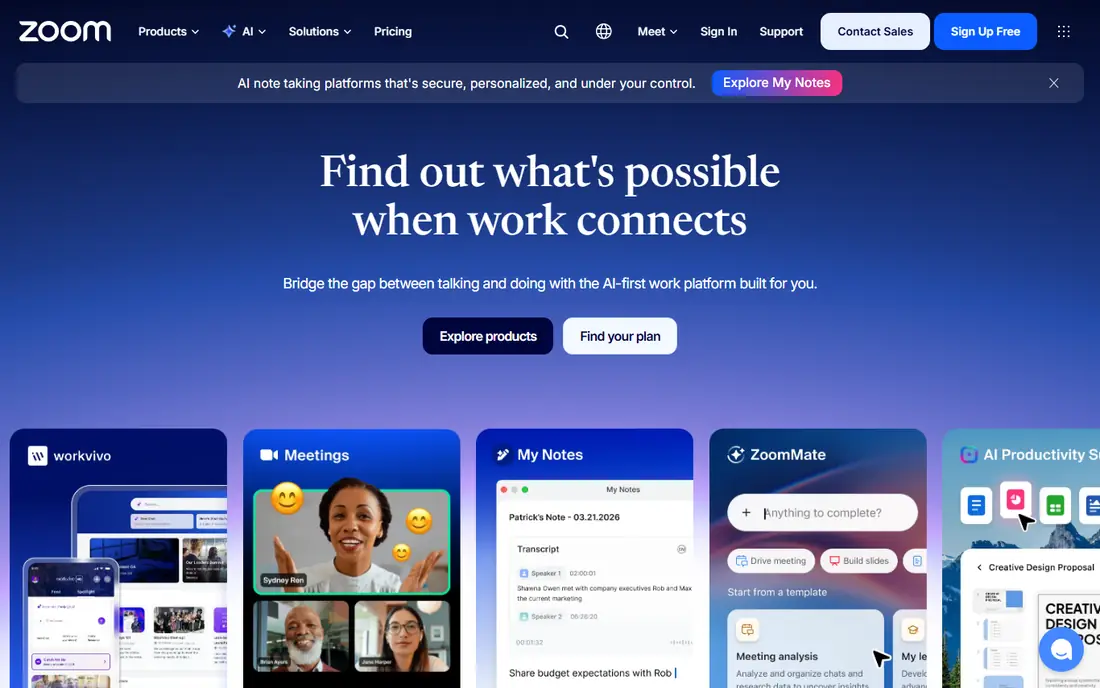
Zoom Webinars is the safe choice for companies already standardised on Zoom. Attendees recognise the join flow, hosts get polls, Q and A, breakout rooms and detailed reports, and the platform scales from a 500 person product launch to a 10,000 person virtual event. If your team lives in Zoom all day, the learning curve is close to zero.
The pricing is the awkward part. Plans are tiered by attendee count and sit on top of a Workplace subscription, so the real monthly cost depends on both. We list it as See website because published figures vary by tier and region. For Zoom houses, the familiarity is worth it. For everyone else, a simpler priced rival may cost less.
- Audiences already know how to join
- Scales to very large events
- Strong breakout and Q and A tools
- Pricing is tiered by attendee count
- Needs a Zoom Workplace plan underneath
- No free plan
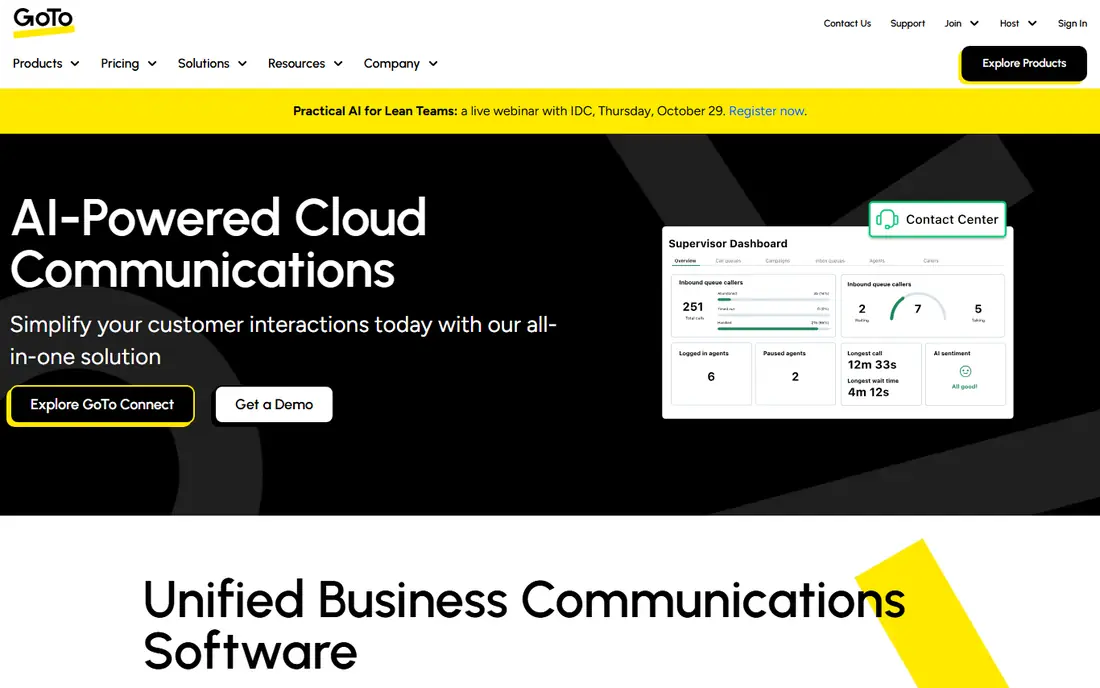
GoTo Webinar has hosted business webinars for years, and that maturity shows in reliability. It handles multi session training programmes and virtual conferences well, with registration pages, automated reminders, polls and handouts, plus GoTo Stage channel pages for organising recordings afterwards.
The interface is less modern than Demio or Livestorm, and the largest audiences need higher tiers. At $62 a month for one organiser and 500 participants on the entry tier, it is fairly priced for training teams. If polish matters more than proven scale, look at Demio first.
- Reliable large room hosting
- Channel pages for recorded libraries
- Strong analytics and CRM integrations
- Interface feels dated next to newer rivals
- Higher tiers needed for the largest audiences
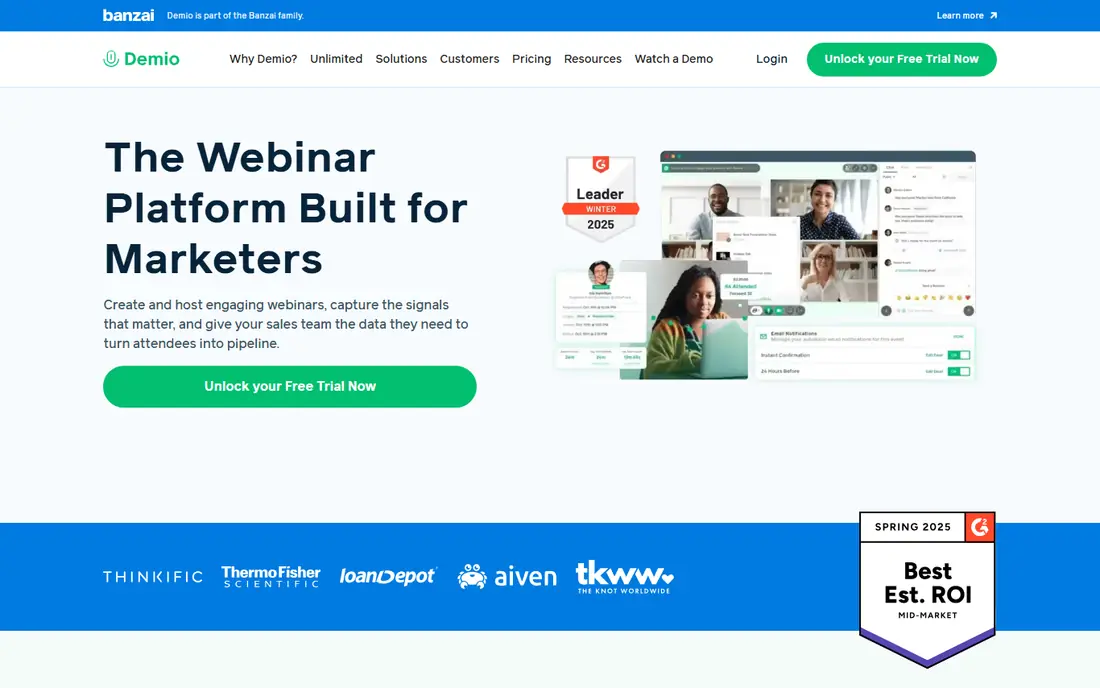
Demio is built for marketing teams that want a polished room without downloads. Attendees join in the browser, hosts get branded registration pages, polls, handouts and calls to action, and automated replays turn a live session into an evergreen funnel. Engagement tracking shows which attendees are warm leads.
The entry price of $45 a month covers just 50 attendees, so costs climb as your audience grows. For small, regular marketing webinars, that is a fair deal. For large audiences, GoTo Webinar or Zoom will usually cost less per head.
- No download needed for attendees
- Clean branded rooms
- Good engagement tracking and automated replays
- Entry plan covers only 50 attendees
- Costs rise steeply with audience size
Livestorm is a browser first platform with a genuinely usable free plan for short sessions and small audiences. Paid plans add longer sessions, more contacts, email automation, polls, Q and A and CRM integrations, and the whole experience feels modern for both hosts and attendees.
The pricing model needs attention. Paid plans charge by active contacts rather than a flat attendee cap, so a growing contact list can push costs up even if live attendance stays modest. For occasional hosts, the free plan is the best on this list. For heavy users, model your contact growth before committing.
- Fully browser based for hosts and attendees
- Free plan for small sessions
- Strong email automation and CRM links
- Paid plans price by active contacts, which can surprise
- Per host pricing adds up for teams
WebinarJam is the budget pick for coaches, consultants and course sellers running live sales webinars. At $39 a month on the Starter plan billed annually, it undercuts most rivals, and it builds the sales workflow in: registration, live offers, polls, chat and automated replays that keep selling after the live session ends.
The interface is busier than Demio or Livestorm, and public reviews are mixed on support response times. It is also a sales tool first, so training teams may miss the analytics depth of GoTo Webinar. For its target audience, though, the price and feature fit are hard to beat.
- Low starting price
- Built for live sales presentations
- Automated replays and offers built in
- Interface is busy
- Support quality varies in public reviews
- Higher tiers needed for big rooms
ClickMeeting suits trainers, educators and consultants who run a mix of live, automated and paid webinars. It supports paid registration, timeline based polls and calls to action, on demand replays and breakout rooms, and its education focus shows in features like whiteboards and tests.
The design is more functional than beautiful, and larger rooms cost more, as with most rivals. At $48 a month on annual billing, it sits in the middle of this list on price. For education use cases and paid sessions, it is a strong, practical pick.
- Paid and automated webinars supported
- Timeline based interactions
- Good for education and training
- Design feels less modern than Demio
- Attendee caps rise in price quickly
BigMarker is built for scale. It hosts webinars, virtual conferences and hybrid events for audiences into the tens of thousands, with custom branded hubs, media libraries, polls, offers and handouts, plus enterprise integrations for marketing teams. If your events programme is a pipeline engine, BigMarker has the depth to run it.
The cost is custom quoted, so we list it as See website, and small teams will find it overkill for a weekly 50 person session. Shortlist BigMarker when audience size, branding control and enterprise reporting matter more than a low starting price.
- Scales to very large audiences
- Custom branded hubs and media libraries
- Strong enterprise integrations
- Custom pricing makes comparison hard
- Overkill for small weekly webinars
Zoho Webinar is the cheapest way into proper webinar software, at $8 a month per organiser. It covers registration, live streaming, polls, Q and A and recordings, and it plugs into Zoho CRM and the wider Zoho suite, which makes follow up easy for existing Zoho users.
Advanced marketing automation and large scale event features lag the pricier platforms, and low tiers cap audiences tightly. For small teams, educators and Zoho users running modest webinars, that trade is excellent. For large marketing programmes, budget for a higher tier or a different platform.
- Lowest starting price here
- Solid core features
- Integrates with the Zoho suite
- Fewer advanced marketing features than Demio or BigMarker
- Smaller attendee caps on low tiers
How we picked these
We compared official feature pages, pricing pages, privacy policies and public reviews for webinar platforms available in October 2026. We checked starting prices, attendee limits, free plans, automation features and how attendees join. Platforms were dropped when pricing was unverifiable, when the product was mainly a meeting tool rather than a webinar tool, or when public reviews flagged persistent reliability problems.
How to choose the right webinar platform
Count attendees honestly
Most platforms price by attendee count, so a 50 person plan is useless for a 500 person launch. Look at your largest recent audience, add headroom, and price that tier, not the headline starter price.
Decide live, automated or both
Marketing teams often need automated replays, while training teams need live interaction. Demio, WebinarJam and ClickMeeting handle automation well, while GoTo Webinar and Zoom suit live scale.
Test the attendee experience
Join a test session as an attendee before you buy. A platform that needs downloads, plugins or a confusing join flow will cost you attendance, however good the host tools look.
Frequently asked questions
What is the best webinar software?
GoTo Webinar suits training teams, Demio suits marketing teams, and Zoom Webinars suits teams already on Zoom. Livestorm is best for occasional hosts thanks to its free plan.
What is the best webinar platform for education?
ClickMeeting and GoTo Webinar both suit education, with paid sessions, breakout rooms and recorded libraries. Zoho Webinar is a strong budget option for smaller classes.
What is the best platform for webinars with large audiences?
Zoom Webinars and BigMarker scale best, with audiences into the tens of thousands. GoTo Webinar also handles large training programmes reliably at a lower entry price.
Is there free webinar software?
Livestorm offers a free plan for small, short sessions. Most other platforms offer free trials instead, typically 7 to 14 days, so test before paying.
How much does webinar software cost?
Entry prices here run from $8 a month for Zoho Webinar to $105 a month for Livestorm, with Zoom and BigMarker on custom tiered pricing. Attendee counts and host numbers drive the real cost.
What is the best platform to host a webinar for marketing?
Demio is the strongest marketing pick for small to mid sized audiences, with branded rooms, engagement tracking and automated replays. WebinarJam suits sales focused webinars at a lower price.
Sources we checked (8)

Online Jobs is an independent blog about careers, online work, learning new skills and the tools that help people earn. More about us.
Keep reading
All posts
Best White Label SEO Companies
We compare the best white label SEO companies and tools in 2026 for agencies, from fulfilment services to branded reporting platforms, margins and prices.
Best Web Scraping Tools
Compare the best web scraping tools in 2026, from no-code Octoparse and Browse AI to Apify, Firecrawl, Bright Data, Zyte, ScraperAPI and free Scrapy, with prices.
Best Web Hosting Services
Find the best web hosting services for your site in 2026. We compare prices, speed, support and ease of use across eight leading hosting providers today.