Best Vendor Risk Management Software in 2026: 8 Tools Compared


Enterprises wanting privacy plus vendor risk in one platform · Starting price: See website
How we put this together: we compare official feature and pricing pages, app store listings, privacy policies and public user reviews. Prices change, so check the provider's site before you pay.
Key takeaways
- UpGuard is the only major option here with published entry pricing, while most rivals are quote-only.
- BitSight and SecurityScorecard lead for outside-in security ratings, while OneTrust and LogicGate lead for full lifecycle workflows.
- Prevalent and ProcessUnity suit mature programs that need configurable intake-to-remediation workflows.
- Buy for the job you have: ratings, assessments, or full lifecycle, since one tool rarely does all three equally well.
Quick comparison
| Name | Who it suits | Starting price | Free option | |
|---|---|---|---|---|
| OneTrust | Enterprises wanting privacy plus vendor risk in one platform | See website | No | Visit |
 UpGuard | Teams wanting published pricing plus security ratings | $1,750 per month | Yes | Visit |
 BitSight | Teams wanting continuous security ratings for vendors | See website | No | Visit |
 SecurityScorecard | Teams wanting ratings with free self-monitoring | See website | Yes | Visit |
 Prevalent | Teams wanting full vendor lifecycle management | See website | No | Visit |
 LogicGate Risk Cloud | Teams wanting configurable GRC workflows | See website | No | Visit |
 ProcessUnity | Mature programs needing configurable lifecycle workflows | See website | No | Visit |
 Panorays | Teams wanting automated assessments and fourth-party risk | See website | Free trial | Visit |
The best vendor risk management software
We compared the options below on fit, price, and the work they actually do well. Read the best-for line first, then check the price and the honest catch before you shortlist two or three to try.
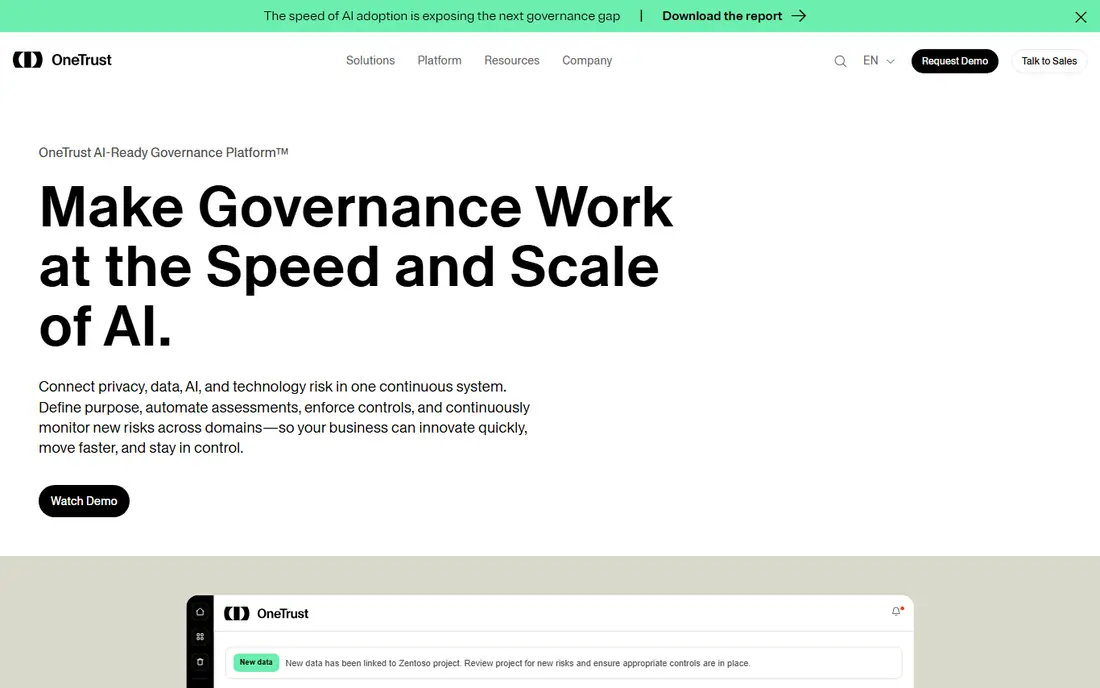
OneTrust covers third-party risk as part of a wider governance, risk, and privacy platform. Vendor onboarding, questionnaires, risk scoring, and offboarding sit alongside privacy and compliance tools, which helps a large company that already manages regulation in one system. Its workflow depth suits mature programs with many vendors and stakeholders.
The tradeoff is scale and cost. Pricing is quote-only and implementation needs dedicated staff, so a small team will find it heavy. A large enterprise that wants privacy and vendor risk together, with configurable workflows, will find OneTrust one of the most complete platforms here.
- Broad GRC coverage
- Third-party onboarding to offboarding
- Strong privacy tools
- Quote-only pricing
- Implementation needs dedicated staff
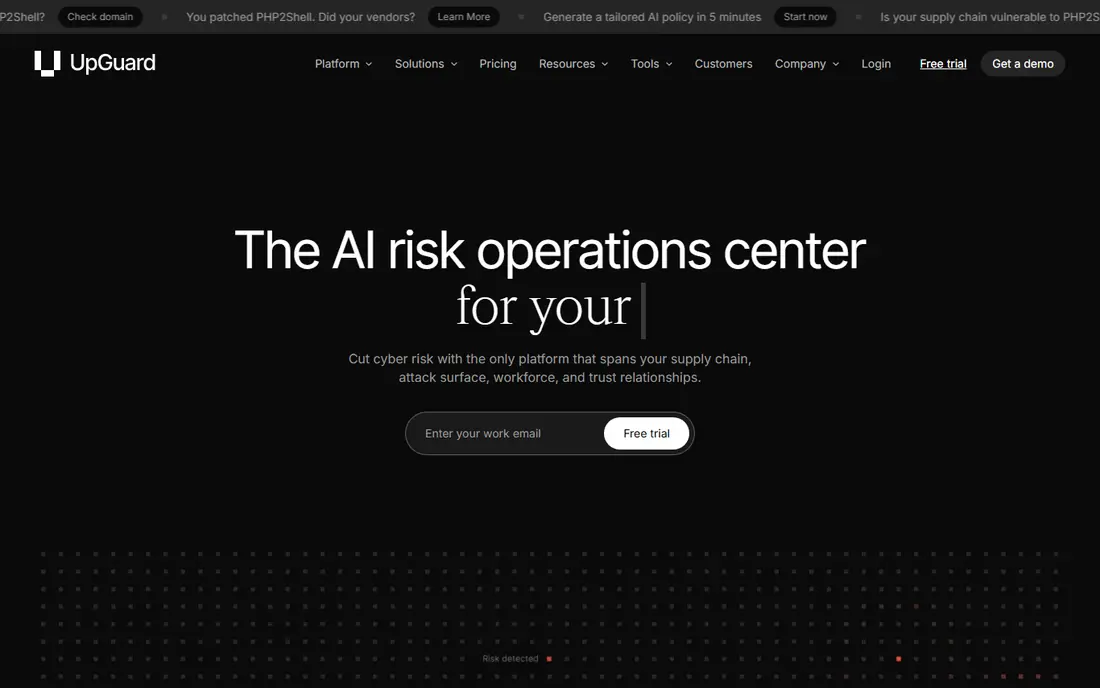
UpGuard is unusual in this category because it publishes entry pricing: the Standard Vendor Risk plan starts at $1,750 per month billed annually for 50 vendors, with extra vendors at $79 per month. It combines outside-in security ratings with questionnaires and attack surface monitoring, so a team can see vendor posture and gather evidence in one place.
The entry price is still high for a small team, and costs grow with vendor count. A team with only a handful of vendors may find a ratings-only tool cheaper. For a mid-size to large program that wants transparent pricing and both ratings and assessments, UpGuard is a strong and honest starting point.
- Published Standard pricing
- Ratings plus questionnaires
- Attack surface tools
- Entry price is high for small teams
- Extra vendors add monthly cost
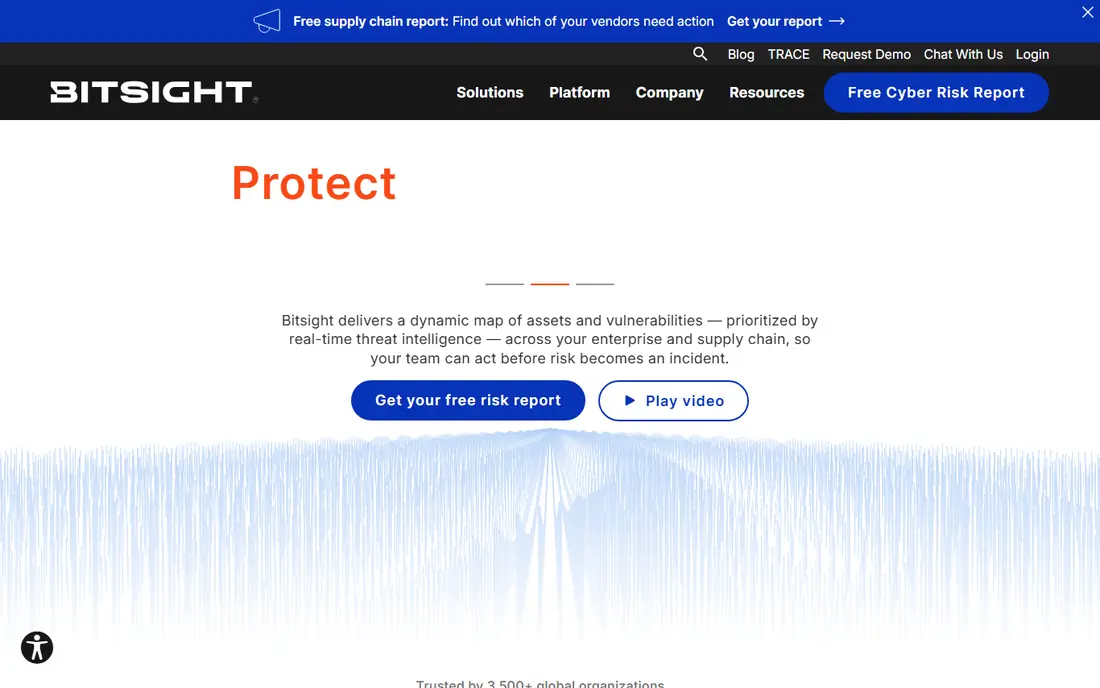
BitSight provides continuous, outside-in security ratings for vendors, based on observed security practices rather than self-reported answers. That makes it useful for monitoring a large vendor list between formal assessments, benchmarking vendors against peers, and spotting posture changes quickly. Risk teams use it to prioritize which vendors need a deeper review.
BitSight is not a full vendor lifecycle system. It does not replace questionnaires, contract tracking, or remediation workflows, so many teams pair it with a workflow tool. Pricing is quote-only. For a team that needs ongoing cyber risk visibility across many vendors, BitSight is a leading ratings choice.
- Continuous outside-in ratings
- Benchmark data
- Clear risk signals
- Ratings only, not full lifecycle workflows
- Quote-only pricing
SecurityScorecard
Who it suits: Teams wanting ratings with free self-monitoring
SecurityScorecard rates companies with letter grades based on observed security factors, covering millions of companies. A business can check its own scorecard free, which helps it understand how vendors and customers may view its posture. Paid vendor monitoring adds continuous ratings, alerts, and reporting for third parties.
The catch is that vendor monitoring is quote-only, and some users report alerts that lack enough detail to act on without further review. It also focuses on ratings rather than full lifecycle workflows. For a team that wants broad ratings coverage and a free way to start, SecurityScorecard is a practical pick.
- Letter-grade ratings
- Free scorecard for your own company
- Broad company coverage
- Vendor monitoring is quoted
- Alerts can lack detail for some users
Prevalent is a third-party risk specialist covering the full vendor lifecycle, from intake and questionnaires through risk scoring, remediation, and offboarding. Its automation helps a risk team run assessments at scale without chasing spreadsheets, and its scoring gives a consistent way to tier vendors by risk.
Pricing is quote-only, and a large program needs planning to configure tiers, questionnaires, and workflows well. A small team with few vendors may find it more than it needs. For a mid-size to large program that wants a dedicated lifecycle system rather than a ratings add-on, Prevalent is a strong choice.
- Onboarding through offboarding
- Questionnaire automation
- Risk scoring
- Quote-only pricing
- Setup needs planning for large programs
LogicGate Risk Cloud
Who it suits: Teams wanting configurable GRC workflows
LogicGate Risk Cloud lets risk teams build vendor workflows without heavy coding. Intake forms, assessment steps, approvals, and remediation tasks can be shaped to match internal policy, and the wider platform covers enterprise risk, compliance, and audit. That flexibility suits organizations whose vendor process does not fit a fixed template.
Flexibility has a cost: configuration takes admin time, and pricing is quote-only. A team that wants a ready-made vendor tool with minimal setup may prefer Prevalent or UpGuard. A team that values workflow control and already runs GRC in one platform will find LogicGate a powerful fit.
- Highly configurable workflows
- No-code building
- Broad GRC modules
- Quote-only pricing
- Needs admin time to configure well
ProcessUnity
Who it suits: Mature programs needing configurable lifecycle workflows
ProcessUnity serves mature third-party risk programs that need configurable workflows from intake to remediation. Vendor tiering, assessment automation, and reporting help a team manage hundreds of vendors consistently, and its controls suit regulated industries with audit demands. That depth is its main strength.
The tradeoff is fit for beginners. ProcessUnity assumes a program already exists, with tiers and policies defined, so a first-time buyer may find setup heavy. Pricing is quote-only. For a mature program that needs control and scale, ProcessUnity is a leading specialist option.
- Configurable intake-to-remediation workflows
- Vendor tiering
- Strong reporting
- Quote-only pricing
- Best for mature programs, not first-time buyers
Panorays automates vendor security assessments and maps risk beyond direct vendors to fourth parties and beyond. Its dynamic ratings combine questionnaire answers with observed data, which helps a team see risk that a single assessment would miss. That breadth suits supply chains and tech stacks where a vendor's own vendors matter.
Pricing is quote-only, and its focus is cyber risk rather than broad governance, privacy, or contract management. A team that needs full GRC should pair it with a wider platform or choose OneTrust or LogicGate. For cyber-focused vendor risk with automated assessments, Panorays is a strong contender.
- Automated vendor assessments
- Third, fourth, and Nth party mapping
- Dynamic ratings
- Quote-only pricing
- Focus is cyber risk rather than full GRC
How we picked these
We compared official feature pages, pricing pages, app store listings, privacy policies, and public reviews for each product, and kept only tools that are available now and truly fit the topic. We checked the starting price and free plan on the vendor site where it was published, and wrote See website where the vendor does not publish a price. We did not claim hands-on testing we did not do, and we left out tools that had closed, changed focus, or did not match the topic.
We weighed fit for the stated use first, then day-to-day ease of use, automation or workflow depth, integrations, and total cost as a team or list grows. A strong free plan helps a small user, while clear pricing, support, and upgrade paths matter more as volume rises.
How to choose vendor risk management software
Name the job: ratings, assessments, or lifecycle
Ratings tools such as BitSight and SecurityScorecard monitor posture continuously from outside. Assessment tools gather evidence through questionnaires. Lifecycle tools such as Prevalent and ProcessUnity manage intake, review, remediation, and offboarding. Many programs need two of these, so budget for a pair rather than expecting one tool to do everything.
Price by vendor count, not only by base fee
Quote-only pricing makes comparison hard, so ask every vendor how price scales with vendor count, tiers, and modules. UpGuard publishes a per-vendor figure, which helps anchor quotes. Ask for module-level line items, renewal caps, and what happens when vendor count grows mid-contract.
Test evidence, alerts, and remediation
Run a trial with real vendors if possible. Check whether questionnaires are reusable, whether ratings update clearly, and whether remediation tasks assign owners and deadlines. A tool that produces reports but no follow-up actions will not reduce risk. Ask who verifies evidence and how disputes over a rating are handled.
Frequently asked questions
What is the best vendor risk management tool?
UpGuard is the best transparent pick with published pricing, BitSight and SecurityScorecard lead for ratings, and OneTrust and LogicGate lead for full workflows. The best tool depends on whether you need monitoring, assessments, or lifecycle management.
What is the best vendor risk management platform for a small team?
A small team should start with a ratings tool or UpGuard entry tier, since enterprise GRC suites need dedicated staff. Count vendors first, then shortlist tools that cover that count at a clear price. Avoid buying a full lifecycle suite for a handful of vendors.
How much does vendor risk management software cost?
UpGuard Standard starts at $1,750 per month billed annually for 50 vendors. Most other major tools are quote-only, with price driven by vendor count and modules. Always request an itemized quote at your vendor count.
What is the difference between vendor risk ratings and assessments?
Ratings observe a vendor security posture from outside and update continuously. Assessments gather evidence through questionnaires and documents. Ratings show change quickly, while assessments show controls in depth. Mature programs use both.
Do I need vendor risk software for SOC 2 or ISO 27001?
Vendor risk review is part of common frameworks, but software is not required by the frameworks themselves. A tool helps at scale by tracking vendors, evidence, and remediation. Small programs can start with spreadsheets and move to software as vendor count grows.
Sources we checked (8)

Online Jobs is an independent blog about careers, online work, learning new skills and the tools that help people earn. More about us.
Keep reading
All posts
n8n Alternatives
n8n alternatives compared for 2026, with Zapier, Make, Activepieces, and more, covering visual builders, code steps, self-hosting, and pricing models.

ZoomInfo Alternatives
The best ZoomInfo alternatives in 2026, compared on price, free plans, data coverage, and which tool fits small teams or large sales teams best in detail.

Zoom Alternatives for Webinars
Compare Zoom alternatives for webinars in 2026, from browser-based rooms to enterprise events, with prices, attendee limits, features and honest trade-offs.