Best UX Companies in 2026: 9 Studios Compared

How we put this together: we compare official feature and pricing pages, app store listings, privacy policies and public user reviews. Prices change, so check the provider's site before you pay.
Key takeaways
- IDEO suits research-led innovation and service design for large organizations.
- Work & Co suits senior-led digital product design with engineering close by.
- Clay suits brand-forward product design for fintech and enterprise brands.
- frog suits global, multi-market product and service programs.
- UX pricing is project based, so compare scope, team seniority and research depth, not a monthly price.
Quick comparison
| Name | Who it suits | Starting price | Free option | |
|---|---|---|---|---|
 IDEO | Research-led innovation | See website | No | Visit |
 frog | Global product and service design | See website | No | Visit |
 Work & Co | Senior product design | See website | No | Visit |
 Clay | Brand-forward product UX | See website | No | Visit |
 Huge | Enterprise experience transformation | See website | No | Visit |
 Fantasy | Premium consumer product design | See website | No | Visit |
 ustwo | Long-term product ownership | See website | No | Visit |
 Ramotion | Startup product design sprints | See website | No | Visit |
 UX Studio | Research-driven audits and redesigns | See website | No | Visit |
The best UX companies
UX companies design how a product works, not just how it looks. They research users, map journeys, prototype flows and test designs before build. The firms below differ in size, research depth, brand focus and delivery model, so the best choice follows your product stage and problem type. No rankings, ratings or employee counts are claimed here, since those figures change and are rarely published on a comparable basis.
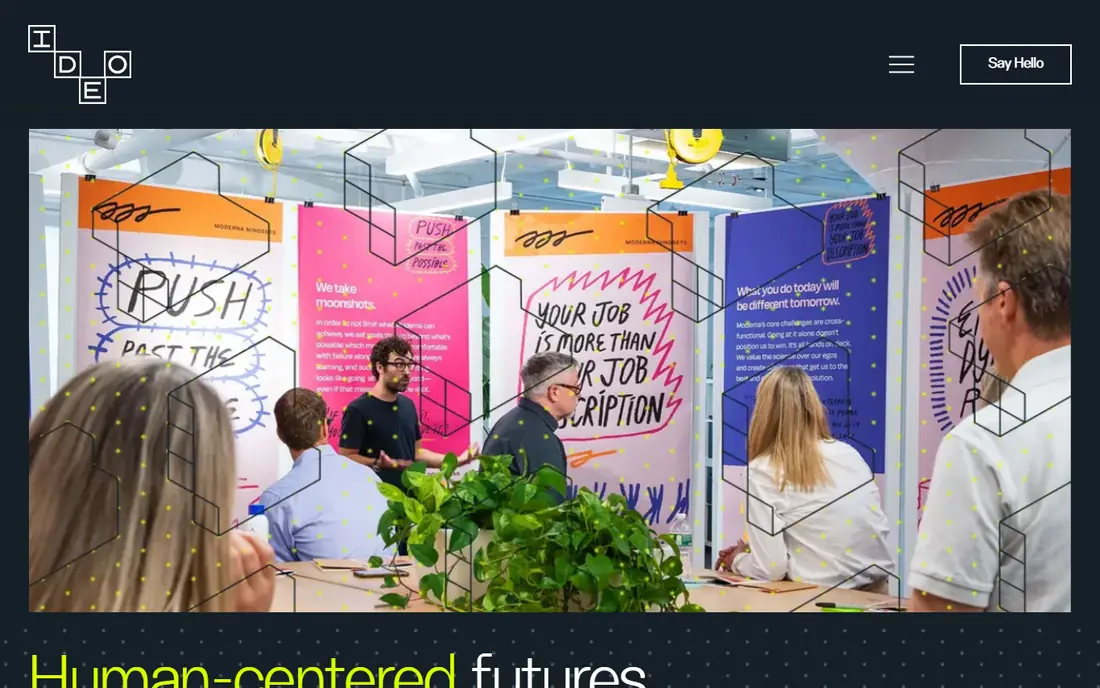
IDEO is known for human-centered design: research with real users, rapid prototyping and testing before a product is built. It works on product design, service design and organizational change, and it suits companies facing a new market, a complex service or a product that needs rethinking from first principles. Its design thinking approach has influenced many other studios.
The trade-off is scale and selectivity. IDEO engagements are typically enterprise-scale and project based, with timelines measured in months. A startup needing a quick interface refresh will find a smaller studio faster and cheaper. For a large organization that needs research-led innovation, IDEO remains a leading choice.
- Deep human-centered research
- Strong prototyping
- Service and product design together
- Enterprise-scale engagements
- Selective about projects and timelines
frog, part of Capgemini Invent, designs products, services and customer experiences for global companies. Its studios work across markets, which suits brands launching in several countries or redesigning a service that spans digital and physical touchpoints. It combines strategy, design and technology delivery in large programs.
That scale is also its limit. A single-market startup with a narrow product may find frog's process heavier than needed. For a complex, multi-market program where consistency across regions matters, frog's global delivery is a real advantage.
- Global studios and scale
- Product, service and CX strategy
- Venture and innovation work
- Large-program focus
- Smaller projects may feel heavy
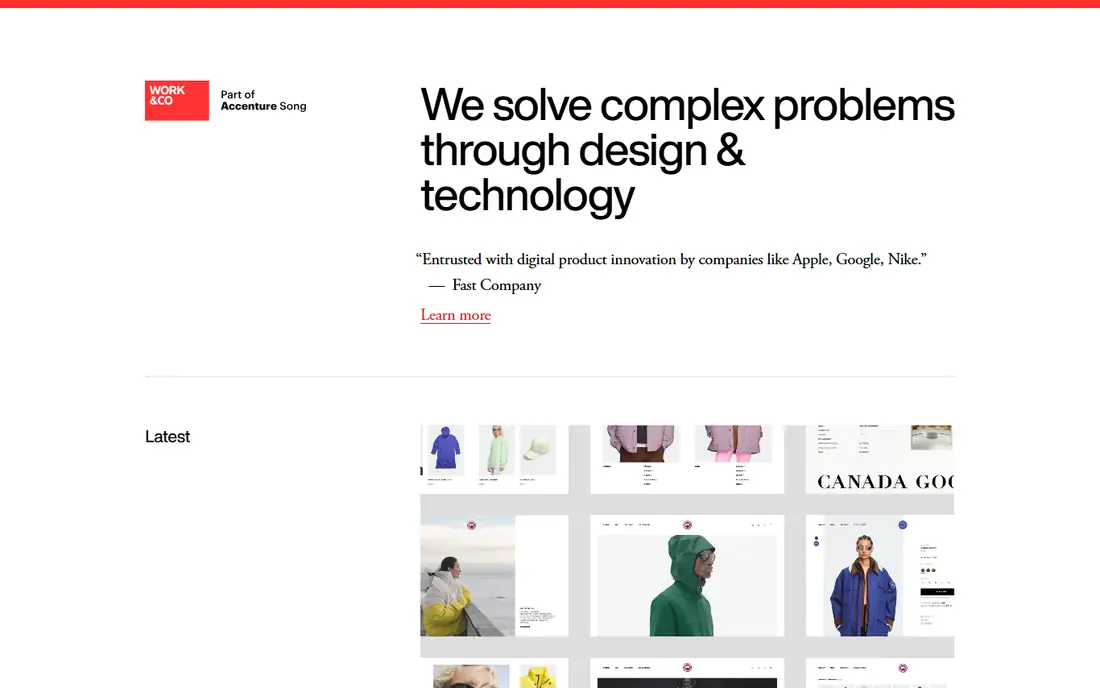
Work & Co builds digital products with senior designers working closely with engineers, which helps prototypes move to launch without losing design quality. It suits consumer platforms, public-sector products and high-traffic services where speed and craft both matter. Its work often covers product strategy, design systems and accessibility as well as interface design.
Pricing is project based and custom, so budgeting requires a scoped conversation. Availability can also be a factor for in-demand teams. For a company that wants a senior product team to ship a major digital product, Work & Co is a strong shortlist entry.
- Senior-led teams
- Fast prototype-to-launch work
- Design plus engineering
- Project pricing is custom
- Demand can limit availability
Clay designs digital products with brand, interaction, motion and development under one roof, which suits fintech and enterprise brands that want product and brand to feel like one system. Its teams are senior and boutique in scale, with founder and director oversight on projects in recent listings. That model helps when visual authority and product clarity both matter.
Boutique scale means capacity is limited, and pricing is project based rather than published. A company needing a very large, multi-year delivery team may need a larger firm. For a brand-led product that needs polish plus strategy, Clay is a compelling choice.
- Integrated brand and product design
- Motion and development in-house
- Senior oversight
- Boutique scale
- Project pricing is custom
Huge works on experience transformation for large enterprises, covering customer experience, personalization and digital product design at scale. It suits organizations redesigning a whole journey, from marketing to product to support, rather than a single screen. Its size allows it to staff large, long programs.
That size also means it is not a fit for a small startup or a single-feature redesign. Pricing is project based, and timelines run to months. For a large company that needs a coordinated experience change across channels, Huge belongs on the shortlist.
- Large enterprise programs
- CX and personalization
- Broad design and technology skills
- Enterprise scale and cost
- Smaller projects may not fit
Fantasy designs premium consumer products with a strong visual and cinematic quality, which suits brands where product personality and visual authority drive adoption. Its work covers interface design, interaction and product experience for consumer-facing companies that want to stand out.
For a data-heavy B2B dashboard, a research-heavy studio may be a better fit than a visually led one, since dense workflows need information architecture first. Pricing is project based. For a consumer product where brand and feel matter as much as function, Fantasy is a strong choice.
- Premium consumer interfaces
- Cinematic visual design
- Brand-forward products
- Visual focus may suit brand products more than data-heavy tools
- Pricing is custom
ustwo builds and runs digital products with embedded teams, often working with a client over a long period rather than delivering a single project and leaving. That model suits companies that want a product partner to own design, build and iteration together. Its human-centered approach focuses on everyday products that feel easy to use.
For a one-off audit or a short redesign, a retainer or embedded model may be more commitment than needed. Pricing is engagement based. For a company that wants a long-term product team rather than a short project, ustwo is worth considering.
- Embedded product teams
- Long-term ownership
- Human-centered interfaces
- Retainer model suits ongoing work more than one-off projects
- Pricing is custom
Ramotion works with startups and growth-stage companies on brand, UI and UX design in focused sprints. That model suits a new product that needs a clear identity, a usable interface and a launch-ready design in weeks rather than months. Its process is designed for teams that need senior output without a large enterprise engagement.
Sprints work best with clear goals and a decision-maker available to review work quickly. A company needing deep, multi-market research or a very large delivery team may need a different firm. For an early-stage product that needs fast, polished design, Ramotion is a practical choice.
- Fast sprint model
- Brand plus UI and UX together
- Startup-friendly process
- Sprint scope needs clear goals
- Larger enterprise programs may need a bigger firm
UX Studio focuses on UX research, audits and redesigns, with a process built around understanding users before changing interfaces. It suits companies that have an existing product with usability problems and need evidence for what to fix first. Audits, user testing and redesign plans are its core work.
As a smaller firm, capacity is limited, and pricing is set per project. A company needing a large, multi-market build may need a bigger partner. For a team that wants a research-driven answer to why users struggle, UX Studio offers a focused, evidence-led approach.
- Research-led audits
- Redesign frameworks
- Clear UX process
- Smaller firm with limited capacity
- Pricing is project based
How we picked these
We compared agency sites, case studies and recent UX agency guides from October 2026, and kept only firms that are live and truly offer UX design as a core service. We mixed large global firms with boutique studios, because buyers range from enterprises to startups. We did not claim rankings, ratings or employee counts, since those are not published on a comparable basis, and pricing is project based for all firms listed.
How to choose a UX company
Start with the problem, not the portfolio. A research problem needs a research-led firm, a brand problem needs a brand-forward firm, and a shipping problem needs a firm with engineering close by. Ask to see case studies in your sector, with the problem, process and outcome explained, not just final screens.
Check team seniority and who will actually work on your product. Ask about research methods, testing plans and how design decisions will be validated before build. Finally, scope the engagement clearly: deliverables, timeline, review cycles and what happens after launch. A clear scope prevents the most common agency disappointment, which is a beautiful design that never ships.
Frequently asked questions
What are the best UX companies?
IDEO, frog, Work & Co, Clay and Huge are among the most widely cited UX firms, but the best choice depends on problem type and budget. Research-led problems suit IDEO, global programs suit frog, senior product work suits Work & Co, and brand-led products suit Clay. Shortlist by fit, not by fame alone.
What is the best UX company to work for?
That depends on what a designer values: research depth, product shipping speed, brand work, global scale or startup pace. IDEO and frog suit research and scale, Work & Co and Clay suit senior product craft, and Ramotion suits startup pace. Job seekers should check current roles, team structure and recent work, since culture varies by studio and office.
How much does a UX company cost?
UX work is priced per project, based on scope, team seniority, research depth and timeline, so there is no single monthly price. Small audits and sprints cost far less than multi-month enterprise programs. Request a scoped quote with deliverables and team details, and compare like-for-like scopes.
How do I choose a UX design company?
Define the problem, check sector experience, ask who will work on the project, and review how the firm researches and tests designs. Run a small paid discovery or audit first if you are unsure. That test shows working style and output quality before a larger commitment.
Do UX companies also build products?
Some do, and some focus on design only. Work & Co, Clay and ustwo include engineering or development in their work, while other firms hand designs to a client engineering team. Confirm delivery scope early, including whether development, design systems and post-launch iteration are included.
Sources we checked (9)

Online Jobs is an independent blog about careers, online work, learning new skills and the tools that help people earn. More about us.
Keep reading
All posts
n8n Alternatives
n8n alternatives compared for 2026, with Zapier, Make, Activepieces, and more, covering visual builders, code steps, self-hosting, and pricing models.

ZoomInfo Alternatives
The best ZoomInfo alternatives in 2026, compared on price, free plans, data coverage, and which tool fits small teams or large sales teams best in detail.
Zoom Alternatives for Webinars
Compare Zoom alternatives for webinars in 2026, from browser-based rooms to enterprise events, with prices, attendee limits, features and honest trade-offs.