Best UGC Platforms in 2026: 8 Platforms Compared

How we put this together: we compare official feature and pricing pages, app store listings, privacy policies and public user reviews. Prices change, so check the provider's site before you pay.
Key takeaways
- UGC platforms connect brands with creators who film short, authentic videos and photos for ads and product pages, usually without the creator needing a large following.
- Billo is the simplest starting point for a first campaign, because it sells finished videos at a flat per-video price with no subscription.
- Insense and Aspire suit teams running paid social at volume, with whitelisting, usage rights management, and larger creator pools.
- Collabstr and Creator.co give brands the most control, since you browse creator profiles and book specific people at their own rates.
- Always confirm usage rights, exclusivity, and revision rounds in writing, because those terms vary more than headline prices do.
Quick comparison
| Name | Who it suits | Starting price | Free option | |
|---|---|---|---|---|
 Billo | First UGC campaigns at a flat price | See website | No | Visit |
 Insense | Paid social teams at volume | See website | No | Visit |
 JoinBrands | Low-cost volume campaigns | See website | Yes | Visit |
 Trend | Photo and video together | See website | No | Visit |
 Collabstr | Hand-picking specific creators | See website | Yes | Visit |
 Aspire | Enterprise influencer and UGC programs | See website | No | Visit |
 Creator.co | Creator discovery plus campaign management | See website | No | Visit |
 Cohley | Vetted creators and performance content | See website | No | Visit |
The best UGC platforms
User-generated content, usually shortened to UGC, means photos and videos made by real customers or creators rather than a brand's own studio. The platforms below help brands brief creators, receive content, and buy the rights to run it as advertising. They also work from the creator side, as places to find paid briefs without needing a huge audience.
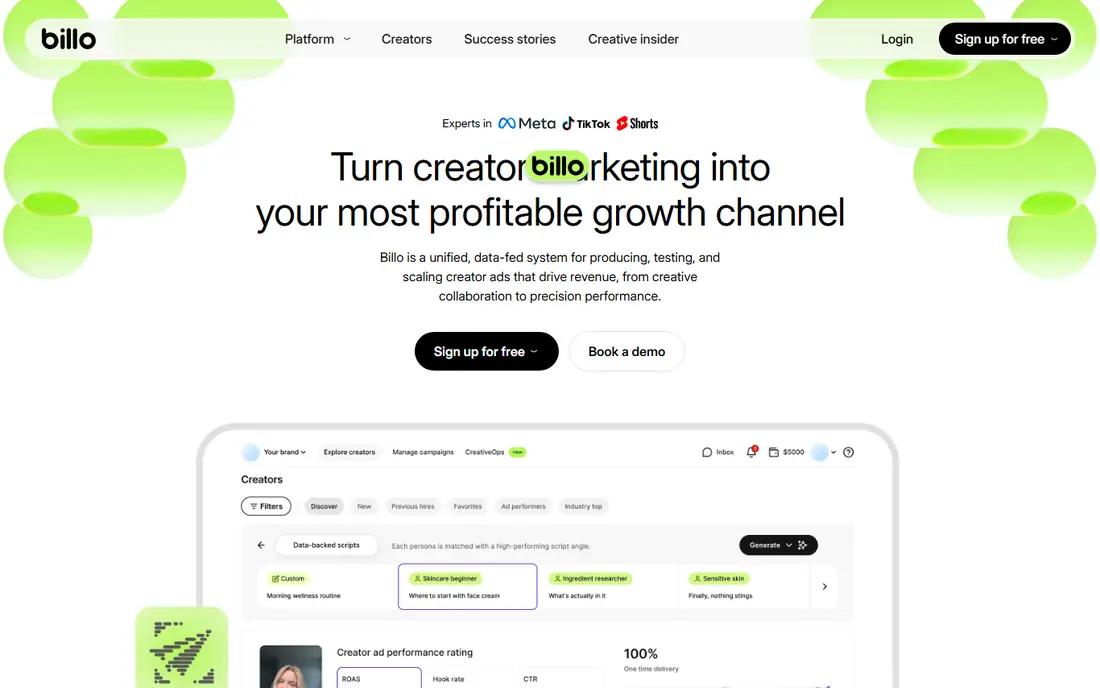
Billo is the easiest way to buy your first UGC videos. You write a brief, pick a package, and creators film testimonial-style videos that you can run as ads or post on product pages. Flat pricing means you know the cost before you commit, which removes the negotiation that puts many small brands off creator marketing.
The trade-off is curation over choice. You are buying a finished video more than hiring a specific creator, so brands with a very particular face, voice, or niche in mind may prefer a marketplace like Collabstr. For a first test of whether UGC ads work for your product, Billo's simplicity is hard to beat.
- Flat per-video pricing with no subscription
- Vetted US creators
- Simple ordering flow
- Less control over choosing individual creators
- Revisions and usage terms need checking per order
Insense is built for teams that already spend on paid social and want a steady pipeline of ad-ready content. Its creator pool spans many countries, and its workflow covers briefing, approvals, whitelisting, and usage rights in one place. That matters when you are running dozens of creatives and need to know exactly which videos you may run, where, and for how long.
The cost structure reflects that ambition. Insense charges a subscription plus a percentage fee, so a brand buying two videos a quarter will pay more here than on a pay-per-video marketplace. For a team producing UGC weekly, the management tools justify the price.
- Large international creator pool
- Built for Meta and TikTok partnership ads
- Whitelisting support
- Subscription pricing plus platform fees
- More than a small brand needs for a one-off test
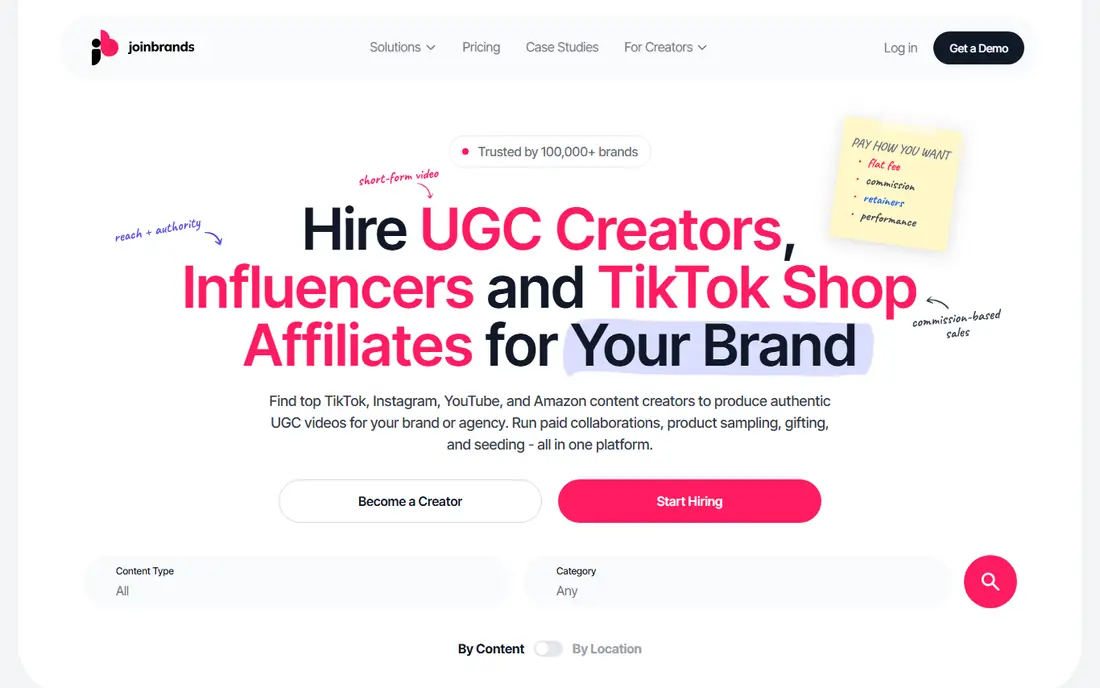
JoinBrands is the volume pick. Brands can browse creators and post briefs free, paying only for content they accept, and per-video prices start low. That makes it a good fit for ecommerce brands that need many variations of the same product video for ad testing, where ten decent clips beat one perfect one.
Scale brings inconsistency. With a very large creator pool, quality varies, so briefs need to be specific and review standards strict. Check exclusivity too, since content is typically non-exclusive unless you pay extra. For brands that review carefully, the price-to-volume ratio is the best on this list.
- Free to browse and post briefs
- Low per-video prices
- Fast average turnaround
- Creator quality varies across a very large pool
- Content is usually non-exclusive by default
Trend, formerly known for Instagram-focused creator work, now covers short-form video and photography through vetted creators. Brands buy credit packs and spend them on content, which suits teams that plan campaigns in batches rather than buying one video at a time. The vetting step means fewer weak submissions to filter through.
Credit packs are also the catch. They reward planning and punish impulse buying, since unused credits tie up budget. If you know you need a set number of photos and videos each month, Trend's quality and predictability are strong. If you only need one video, a pay-per-video rival is simpler.
- Vetted creators
- Photos alongside video
- Credit packs suit planned campaigns
- Credit-based pricing needs planning
- Smaller pool than the biggest marketplaces
Collabstr works more like a marketplace than a managed service. Brands search creator profiles, compare rates and past work, and book the people they want directly. That control appeals to brands with a specific audience, aesthetic, or niche, and to creators who want to set their own prices instead of accepting platform-set rates.
Control means work. You handle outreach, negotiation, and quality checks yourself, and the platform takes a fee on bookings. For brands that enjoy that hands-on approach, or that have found creators they want to reuse, Collabstr is the most flexible option here.
- Free to browse a huge creator directory
- Creators set their own rates
- Direct booking and messaging
- You do the vetting and negotiation
- Platform fees apply on bookings
Aspire is the enterprise end of this list, built for brands running ongoing influencer and UGC programs rather than one-off video orders. Its discovery tools, relationship management, and reporting suit teams that manage dozens of creators over months and need to show what each partnership delivered. Long-term ambassador programs are where it shines.
That depth comes with an enterprise price tag and a sales-led signup, so small brands should not start here. If your program already spans influencer posts, UGC ads, and affiliate tracking, Aspire brings those threads together in a way the simpler marketplaces do not attempt.
- Deep creator discovery and relationship tools
- Campaign analytics
- Suited to long-term ambassador programs
- Enterprise pricing and sales process
- Overkill for a single small campaign
Creator.co sits between the simple marketplaces and the enterprise suites. Brands can search a large creator database, run campaigns, manage deliverables, and handle payments without stitching several tools together. Mid-sized brands that have outgrown one-off video orders but are not ready for an enterprise platform will find the balance about right.
The main frustration is opacity. Pricing is by quote and some features depend on tier, so you need a demo to learn what your plan actually includes. Shortlist it if you want discovery plus management in one tool, and compare its quote against Insense before committing.
- Large creator database with search filters
- Campaign workflow and payments in one place
- Good for mid-sized brands
- Pricing is by quote
- Feature depth varies by plan tier
Cohley focuses on performance: content made to run as paid ads, from vetted creators, with briefing and rights support included. Brands that care about cost per result rather than cost per video tend to like this model, because the platform's process is tuned to produce ad-ready variations at volume.
As with other managed options, the price is by quote and the service fits brands with ongoing needs better than one-off buyers. If you are already spending on paid social and your bottleneck is fresh creative, Cohley deserves a place on the shortlist next to Insense.
- Vetted creator network
- Content built for paid social performance
- Usage rights and briefing support
- Quote-only pricing
- Geared to brands with ongoing content needs
How we picked these
We compared official product pages, pricing pages, and public platform documentation for UGC platforms that serve brands, and checked each homepage to confirm it loads and belongs to that product. We favored platforms where a brand can brief creators, receive content, and buy usage rights, and we included both marketplace and managed models so different budgets are covered. Creator-side details, such as fees and payout terms, are noted where the platform publishes them.
Getting good UGC without wasting budget
The platform matters less than the brief. Vague briefs produce generic videos, while a brief with a hook, three talking points, and examples of what to avoid produces usable ads. Write the brief as if the creator has never seen your product.
Nail the rights before you pay
Confirm where the content can run, for how long, and whether the creator can work with competitors during that period. Paid social, website, and email use are often priced separately, and whitelisting usually costs extra. Get it in the platform order or contract, not in a chat message.
Test more than one creator
UGC performance varies more by creator than by platform. Order from three or four creators for a first campaign, run the videos as ads with equal budgets, and double down on the winners. A platform that makes reordering from a winning creator easy saves time on round two.
Review like an advertiser, not a fan
Judge submissions on the first three seconds, the clarity of the product benefit, and whether the video looks native to the feed it will run in. Polished studio quality is not the goal. A believable person explaining a real benefit is.
Frequently asked questions
What is a UGC platform?
A UGC platform connects brands with creators who make photos and videos featuring the brand's product. The brand briefs the creator, reviews the content, and buys the rights to use it in ads, on product pages, or on social channels.
What is the best UGC platform for a small brand?
Billo is a strong first choice for small brands, because flat per-video pricing and no subscription make costs predictable. JoinBrands is the better pick if you need many low-cost videos for ad testing.
Do UGC creators need a large following?
No. Most UGC platforms do not require a follower minimum, because the brand runs the content as its own ad rather than relying on the creator's audience. Portfolio quality and niche fit matter more than follower counts.
How much does UGC content cost?
Prices vary by platform and creator, from low-cost videos on volume marketplaces to higher rates for vetted creators and managed campaigns. Always confirm whether usage rights, revisions, and whitelisting are included in the quoted price.
What are UGC usage rights?
Usage rights state where, how long, and in what media a brand may use creator content, such as paid social ads for six months. Confirm these terms before payment, since running content beyond its rights can lead to extra fees or disputes.
What is the best UGC app for creators starting out?
JoinBrands and Collabstr are good starting points for creators, because both let you list a profile and apply for briefs without a follower minimum. Billo suits US creators who want straightforward product video briefs.
Sources we checked (8)

Online Jobs is an independent blog about careers, online work, learning new skills and the tools that help people earn. More about us.
Keep reading
All posts
ZoomInfo Alternatives
The best ZoomInfo alternatives in 2026, compared on price, free plans, data coverage, and which tool fits small teams or large sales teams best in detail.

Workday Alternatives
We compared the best workday alternatives for HR, payroll, and global hiring, from BambooHR and Gusto to Rippling, Deel, and HiBob for growing teams in 2026.
Which SaaS Tools Have the Best Customer Support
Which SaaS tools have the best customer support? Compare eight popular tools on help centres, live help, response options and overall support quality.