Best TMS Software in 2026: 9 Tools Compared


Global enterprise shippers · Starting price: See website
How we put this together: we compare official feature and pricing pages, app store listings, privacy policies and public user reviews. Prices change, so check the provider's site before you pay.
Key takeaways
- Enterprise shippers should shortlist Oracle, SAP, Blue Yonder, and Manhattan, while mid-market shippers and 3PLs should look first at Infios, Descartes, and Trimble.
- Small carriers and brokers can start far cheaper with Rose Rocket and AscendTMS, but those tools cover less of the enterprise planning and audit range.
- Almost every enterprise TMS prices by quote, so compare implementation, carrier onboarding, and support costs, not just the license.
- The best TMS is the one that connects to your carriers, warehouse, and ERP without forcing you to retype shipment data at each step.
Quick comparison
| Name | Who it suits | Starting price | Free option | |
|---|---|---|---|---|
| Oracle Transportation Management | Global enterprise shippers | See website | No | Visit |
 SAP Transportation Management | SAP-centric global networks | See website | No | Visit |
 Blue Yonder TMS | Large retailers and manufacturers | See website | No | Visit |
 Infios TMS | Mid-market to enterprise multi-modal control | See website | No | Visit |
 Manhattan Active Transportation Management | Warehouse-linked enterprise shipping | See website | No | Visit |
 Descartes | Cross-border compliance and parcel | See website | No | Visit |
 Trimble TMS | North American truckload and fleet operations | See website | No | Visit |
 Rose Rocket | Small to mid carriers and brokers | $99 per month | Free trial | Visit |
 AscendTMS | Small fleets and brokers starting out | See website | Yes | Visit |
The best TMS software
Transportation management systems plan, book, track, and settle freight across parcel, LTL, truckload, air, ocean, rail, and intermodal modes. We compared official product pages, feature lists, and logistics reviews, and we marked prices as See website where vendors price by quote, shipment volume, or user count.
Oracle Transportation Management
Who it suits: Global enterprise shippers
Oracle Transportation Management, often called OTM, is the enterprise suite many global shippers standardize on when freight spans modes, countries, and trade rules. It covers order management, planning and optimization, tendering, execution, visibility, and freight settlement in one system, with strong support for complex scenarios such as multi-leg, multi-stop, and pooled shipments. Integration with Oracle ERP and warehouse systems reduces manual data entry for companies already on Oracle.
The cost and effort are the honest drawbacks. Licensing is quote-based, implementation is a multi-month project, and most deployments need experienced consultants. Smaller shippers will find the depth unnecessary and the total cost hard to justify. For large enterprises with global freight complexity, OTM remains a benchmark choice.
- Deep planning, tendering, and settlement
- Natural fit with Oracle ERP and warehouse systems
- Handles complex global trade
- Implementation runs for months and needs consultants
- Licensing and services costs are high
- Overkill outside large enterprises
SAP Transportation Management
Who it suits: SAP-centric global networks
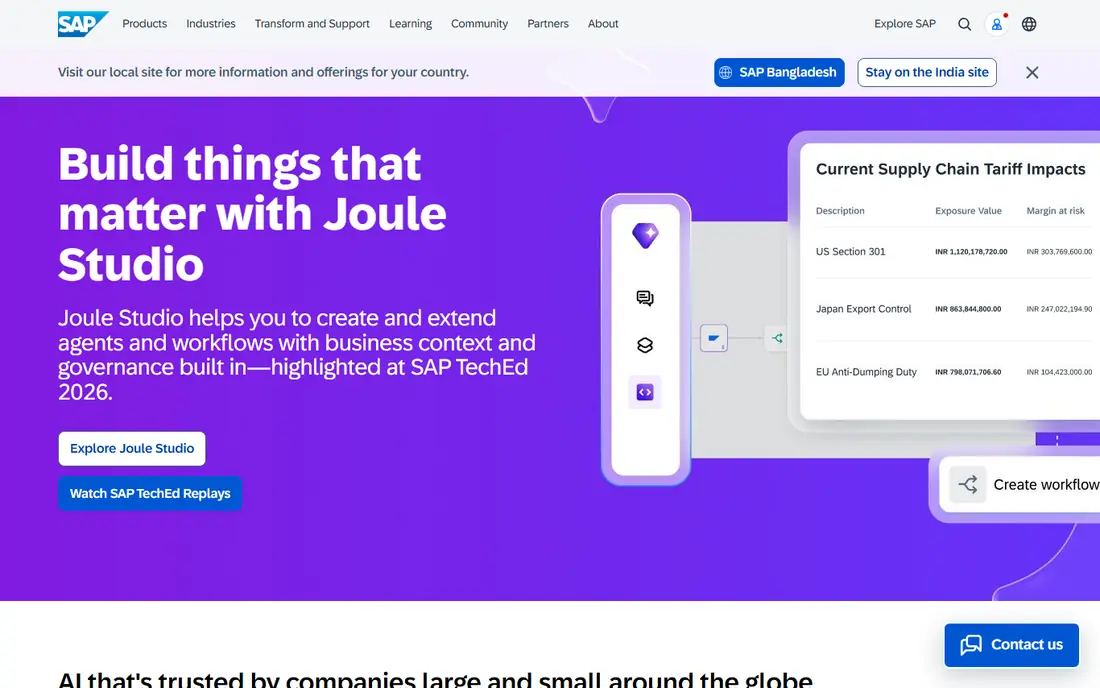
SAP Transportation Management, or SAP TM, is the natural TMS for companies already running SAP ERP, warehouse, and order systems. Freight planning, tendering, execution, tracking, and settlement flow from the same order and master data, which reduces reconciliation between transport and finance. It handles parcel, LTL, truckload, ocean, air, and rail within a global network, with strong support for freight cost allocation and audit.
Pricing is quote-based and implementation is a major project, often tied to a wider SAP program, so standalone buyers should weigh that effort carefully. Companies outside SAP may get faster value from a standalone TMS such as Infios or Descartes. For SAP-centric global shippers, SAP TM keeps transport, warehouse, and finance on one data foundation.
- Deep SAP ERP and warehouse integration
- Strong planning and freight settlement
- Global enterprise scale
- Quote-based pricing
- Implementation is a major project
- Best value only inside an SAP estate
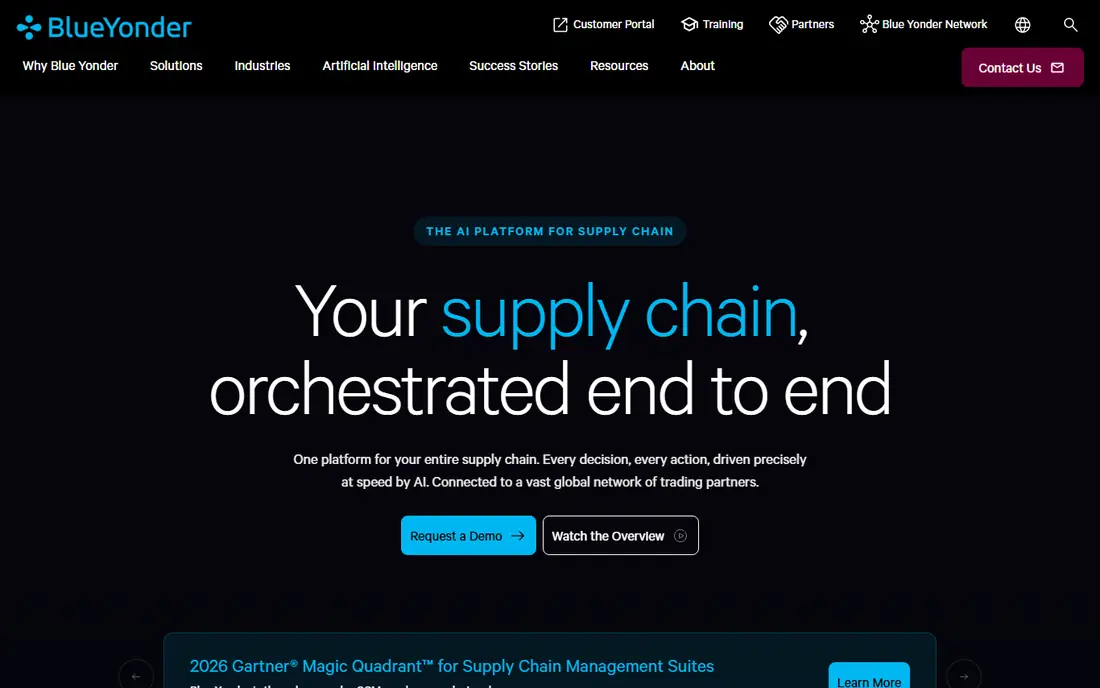
Blue Yonder TMS uses AI-led planning and optimization to help large retailers and manufacturers choose routes, consolidate loads, and respond to disruptions in real time. Its strength lies in pairing transport planning with wider supply chain planning, so inventory, orders, and transport decisions stay linked. Real-time tracking and performance analytics help teams spot late shipments and cost drift before they become service failures.
As with other enterprise platforms, pricing is quote-based and implementation is a project, not a quick setup. Mid-market shippers may find the scope and cost more than they need. For large companies where transport cost and service levels move the bottom line, Blue Yonder offers planning depth that simpler tools cannot match.
- AI-led planning and optimization
- Strong retail and manufacturing fit
- Integrates with warehouse and order systems
- Enterprise pricing by quote
- Implementation and change management take time
Infios TMS is the platform formerly known as MercuryGate, rebranded after its acquisition, and it remains a strong multi-modal TMS for shippers, 3PLs, forwarders, and brokers. It covers rating, booking, tracking, and settlement across parcel, LTL, truckload, air, ocean, rail, and intermodal, with freight audit and claims management that finance teams value. Carrier connectivity helps teams tender quickly, and configurability lets the system adapt to unusual workflows rather than forcing standard ones.
Pricing is entirely quote-based, and implementation runs as a guided project, so buyers should get scope, timeline, and total cost in writing before signing. Older reviews and references still say MercuryGate, so ask vendors and peers about both names. For companies too large for small-business tools and too pragmatic for Oracle-scale projects, Infios hits a useful middle ground.
- Multi-modal support for shippers, 3PLs, and brokers
- Strong freight audit and claims
- Large carrier network
- Quote-based pricing
- Implementation is a guided multi-month project
- MercuryGate rebrand still confuses some buyers
Manhattan Active Transportation Management
Who it suits: Warehouse-linked enterprise shipping
Manhattan Active Transportation Management suits enterprises already using Manhattan warehouse and order systems, since transport, warehouse, and order data share one cloud platform. Carrier management, rating, tendering, execution, and freight audit run alongside warehouse operations, which helps companies that ship from many distribution centers. The cloud-native design delivers continuous updates without large upgrade projects.
Pricing is aimed at large enterprises, and customization outside the Manhattan model can be less flexible than in a highly configurable tool such as Infios. Companies without Manhattan warehouse systems may get faster value elsewhere. For Manhattan customers and large shippers who want transport and warehouse planning in one place, it is a strong enterprise choice.
- Unified with Manhattan warehouse and order management
- Strong carrier management and freight audit
- Cloud-native updates
- Premium enterprise pricing
- Less flexible for highly customized workflows outside Manhattan
Descartes offers a broad logistics network covering transportation management, customs and regulatory compliance, routing, and parcel shipping, which makes it especially useful for cross-border trade. Its compliance tools help shippers handle customs filings, denied party screening, and trade documentation, while its parcel and freight tools support rating, booking, and tracking across carriers. That combination suits importers, exporters, and e-commerce shippers with international volume.
The product range is modular, so pricing and scope vary by module, and direct comparison with a single TMS license takes care. Smaller domestic-only shippers may not need the compliance depth. For cross-border operations where a customs error can delay a shipment for days, Descartes offers a specialist strength few general TMS tools match.
- Strong cross-border and customs compliance
- Broad parcel and freight network
- Modular products for different needs
- Modular pricing can be hard to compare
- Enterprise focus in many products
Trimble TMS serves carriers, brokers, and shippers with a focus on North American truckload operations, dispatch, and fleet management. Its tools cover order entry, planning, dispatch, tracking, and settlement, with integrations to fleet telematics and driver workflows that asset-based carriers need. That fleet link helps operations teams see trucks, drivers, and loads in one view, rather than juggling separate dispatch and TMS systems.
Trimble sells several TMS and fleet products under its brand, so buyers should confirm exactly which product, modules, and pricing apply to their operation. Pricing is quote-based, and reviews note that costs can feel high for smaller fleets. For North American truckload carriers and fleets, Trimble remains a well-established, practical choice.
- Strong North American truckload workflows
- Fleet and dispatch integration
- Good for carriers and asset-based fleets
- Quote-based pricing
- Interface and setup vary by Trimble product line
Rose Rocket is a practical starting point for small to mid-size carriers, brokers, and trucking companies that need a real TMS without enterprise pricing. It covers quoting, dispatch, tracking, invoicing, and customer portals, with a starting price of $99 per month that makes budgeting simple for a small operation. The interface is built for trucking workflows, so dispatchers and drivers can use it without long training.
Enterprise planning, optimization, and audit depth are thinner than in Oracle, SAP, or Infios, and parcel-heavy shippers may need a parcel specialist alongside it. For a carrier or broker moving from spreadsheets to a first TMS, Rose Rocket offers the lowest-risk entry point on this list.
- Low starting price
- Carrier and broker workflows
- Customer portal and tracking
- Less enterprise planning depth than Oracle or Infios
- Parcel strength is lighter than freight strength
AscendTMS is built for small fleets, owner-operators, and brokers taking their first step from spreadsheets to a TMS. Its free plan supports small teams without a credit card or contract, covering dispatch, load tracking, invoicing, and driver management for basic operations. That low barrier lets a small company test a real system on live loads before paying.
The free plan limits team size, and advanced planning, optimization, and freight audit features are lighter than in enterprise platforms. Growing companies will eventually need a paid tier or a larger TMS. For a first TMS at minimal cost, AscendTMS is the easiest place to start, and its paid plans keep the step up affordable.
- Free plan for small teams
- Dispatch, tracking, and invoicing in one place
- Low barrier to first TMS use
- Free plan limits team size
- Advanced optimization and audit features are lighter than enterprise tools
How we picked these
We compared official product pages, feature lists, and logistics reviews for TMS tools that are live and maintained in 2026, and we covered enterprise, mid-market, and small-carrier tiers. We favored systems with real multi-modal or parcel coverage, carrier connectivity, and freight audit, since those decide whether a TMS saves money or just records shipments. We flagged quote-based pricing clearly, because implementation and carrier onboarding often cost as much as the license itself.
Choosing a TMS by company type
Global enterprise shippers should shortlist Oracle, SAP, Blue Yonder, and Manhattan, and run a proof of concept with real orders and carriers. Mid-market shippers and 3PLs should compare Infios, Descartes, and Trimble on total cost and implementation time. Cross-border shippers should weigh Descartes compliance tools heavily. Small carriers and brokers should start with Rose Rocket or AscendTMS, and move up only when volume or audit needs demand it.
Frequently asked questions
What is the best TMS software?
Oracle Transportation Management and SAP Transportation Management lead for global enterprises, Blue Yonder leads for large retailers, and Infios leads for mid-market multi-modal control. Manhattan suits warehouse-linked enterprises, while Rose Rocket and AscendTMS suit small carriers. The best choice depends on company size, modes, and existing systems.
What is the best transportation management software for small businesses?
Rose Rocket, starting at $99 per month, and AscendTMS, with a free plan for small teams, are the best small-business starting points. Both cover dispatch, tracking, and invoicing without enterprise implementation. Move to Infios, Descartes, or Trimble when volume, modes, or audit needs outgrow them.
What is the top TMS software for 3PLs?
Infios TMS is a strong 3PL choice, thanks to multi-modal support, freight audit, and carrier connectivity for shippers, 3PLs, and brokers. Oracle and Manhattan also serve large 3PLs, while Rose Rocket suits smaller 3PL and broker operations. Check whether the TMS supports client billing and portal access, since 3PLs need those for customers.
How much does TMS software cost?
Small-carrier tools start at $99 per month for Rose Rocket, with AscendTMS offering a free plan for small teams, while enterprise platforms from Oracle, SAP, Blue Yonder, Manhattan, Infios, Descartes, and Trimble price by quote. Always ask for implementation, carrier onboarding, and support costs in writing, since those can match or exceed the license cost.
What does a TMS do?
A TMS plans, books, tracks, and settles freight. It rates shipments across carriers, tenders loads, tracks status, manages documents, and audits freight invoices against quoted rates. Good TMS tools also connect to warehouse, order, and ERP systems, so shipment data flows without retyping at each step.
Is Oracle or SAP TMS better?
Oracle Transportation Management is better for standalone global freight complexity and for companies on Oracle ERP, while SAP Transportation Management is better for companies already running SAP ERP and warehouse systems. Both need major implementation projects, so choose by your existing stack and by which integration will save more manual work.
Sources we checked (9)

Online Jobs is an independent blog about careers, online work, learning new skills and the tools that help people earn. More about us.
Keep reading
All posts
ZoomInfo Alternatives
The best ZoomInfo alternatives in 2026, compared on price, free plans, data coverage, and which tool fits small teams or large sales teams best in detail.

Workday Alternatives
We compared the best workday alternatives for HR, payroll, and global hiring, from BambooHR and Gusto to Rippling, Deel, and HiBob for growing teams in 2026.
Which SaaS Tools Have the Best Customer Support
Which SaaS tools have the best customer support? Compare eight popular tools on help centres, live help, response options and overall support quality.