Best Tech Company Case Study Examples in 2026: 9 Libraries Worth Studying

How we put this together: we compare official feature and pricing pages, app store listings, privacy policies and public user reviews. Prices change, so check the provider's site before you pay.
Key takeaways
- The best case study libraries are organized by industry, company size, and problem, so you can find a story that matches your own situation.
- Salesforce and HubSpot publish some of the most detailed customer stories, with clear problem, solution, and outcome structure.
- Google Cloud and AWS are strongest for technical readers who want architecture detail, not just marketing claims.
- Read case studies critically: look for specific numbers, named customers, and honest discussion of what changed.
- Use these examples as models for structure and evidence, not as templates to copy word for word.
Quick comparison
| Name | Who it suits | Starting price | Free option | |
|---|---|---|---|---|
 Salesforce | Learning classic B2B story structure | Free | Yes | Visit |
 HubSpot | Studying marketing and sales growth stories | Free | Yes | Visit |
 Microsoft | Enterprise and industry-specific stories | Free | Yes | Visit |
 Google Cloud | Technical migration and data stories | Free | Yes | Visit |
 AWS | Cloud architecture case studies | Free | Yes | Visit |
 Adobe | Creative and digital experience stories | Free | Yes | Visit |
 Shopify | Ecommerce growth stories | Free | Yes | Visit |
 Slack | Team productivity and adoption stories | Free | Yes | Visit |
 Stripe | Payments and platform business stories | Free | Yes | Visit |
The best tech company case study examples
This article treats each entry as a company and its published case study library, since the library itself is what you study. All of these libraries are free to read, and we compared their organization, depth, and usefulness for marketers, founders, and students learning how to write persuasive customer stories.
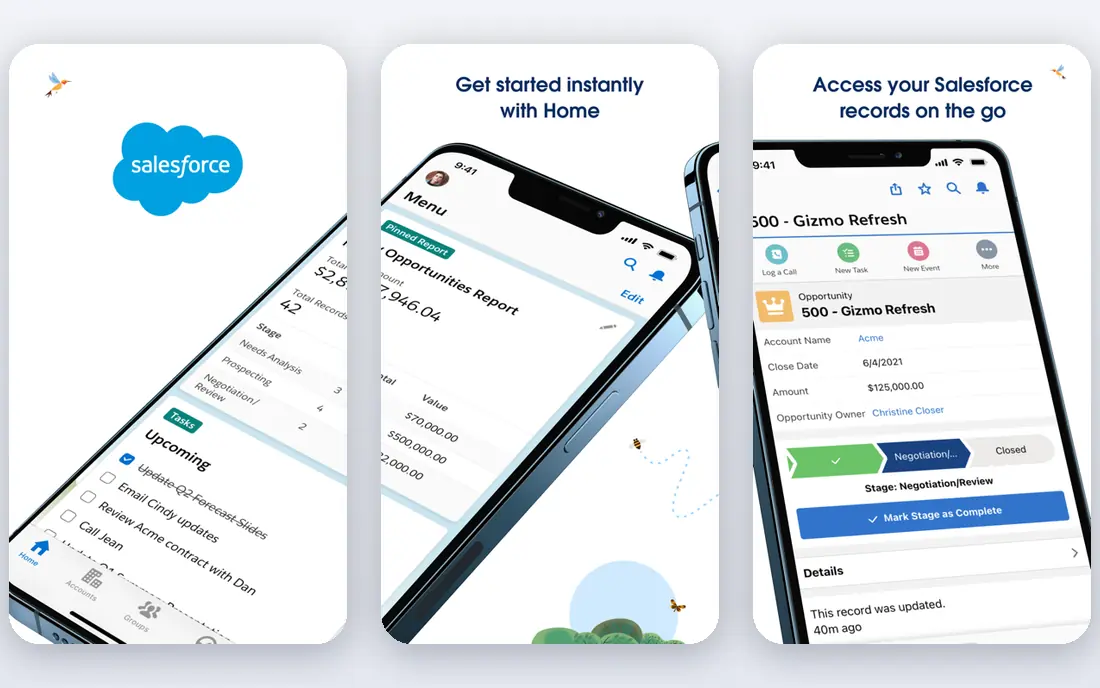
Salesforce publishes one of the most studied customer story libraries in B2B technology, and it is a good place to start if you are learning the form. Most stories follow a clear arc: a company with scattered customer data, a Salesforce implementation that unifies it, and measurable changes in sales, service, or efficiency. That consistency makes it easy to compare stories and to see which details make a claim believable.
The honest catch is perspective. Every story is told from the vendor side, so challenges are framed as problems Salesforce solved, and competing tools rarely get a fair hearing. Read for structure and evidence, such as named customers, specific workflows, and concrete outcomes, and treat the product praise as marketing rather than independent review.
- Large, well-organized customer story library
- Clear problem and outcome framing
- Stories across many industries
- Stories favor Salesforce products heavily
- Smaller companies are less represented
HubSpot case studies are especially useful for marketers because they focus on pipeline, lead generation, and content performance rather than only on technology. The library is easy to filter by industry, company size, and HubSpot product, which helps a reader find a company that resembles their own. Small and mid-size businesses appear often, which is a welcome contrast to libraries dominated by giant enterprises.
The weakness is context. A claim about lead growth means little without knowing the starting point, the time period, and what else changed at the same time. Good HubSpot stories include that context, but weaker ones do not, so read with a critical eye and note which stories give you enough detail to judge the result fairly.
- Strong marketing and sales focus
- Filterable by industry and company size
- Many small and mid-size customers
- Growth claims need context about starting point
- Product-centric framing
Microsoft customer stories cover an unusually wide range of industries, from hospitals and schools to factories and financial firms, and that breadth is the main reason to study them. A reader looking for a case study in a regulated or complex industry will usually find a relevant Microsoft story, often with video alongside the written version. The stories also show how a single vendor relationship can span productivity, cloud, and security tools.
The trade-off is scale. The library is huge, and finding the most relevant story takes filtering and patience. Smaller companies may also find the enterprise settings hard to relate to, since the budgets and teams involved are far larger than a startup can match. Use Microsoft stories for industry insight, not as a direct model for a small business.
- Deep industry coverage from health care to manufacturing
- Enterprise-scale stories
- Video and written formats
- Very large library can be hard to browse
- Enterprise focus may feel distant for startups
Google Cloud case studies stand out for readers who want to know how something was built, not just that it worked. Many stories describe the starting architecture, the migration steps, and the data platform that replaced it, which gives engineers and technical founders something concrete to learn from. The customer range is global, and industries from retail to media to public services all appear.
The catch is accessibility. A marketing reader without a technical background may find the architecture discussion heavy, and some stories assume comfort with cloud terms. Pair a Google Cloud story with a HubSpot or Salesforce story on a similar topic if you want both the business result and the technical path that produced it.
- Strong technical detail on migrations and data platforms
- Clear architecture discussion
- Global customer range
- Technical depth can overwhelm non-technical readers
- Assumes cloud familiarity
AWS publishes one of the largest case study libraries in technology, covering startups, public sector bodies, and global enterprises. Many stories include architecture diagrams and service lists, which makes them useful for teams planning a cloud migration or a new platform build. Filtering by product, industry, and company size helps narrow the volume to stories that match your project.
The weakness follows from the strength: quality varies. Some AWS stories are detailed and specific, while others are short and promotional, with little more than a customer quote and a service list. Skim for stories that name the starting problem, describe the build, and give a concrete outcome, and skip the ones that only praise the platform.
- Enormous library across startups and enterprises
- Architecture diagrams in many stories
- Searchable by product and industry
- Sheer volume makes curation hard
- Stories vary widely in depth
Adobe customer stories are the best on this list for creative and marketing teams, because they focus on how companies design digital experiences, manage content, and personalize customer journeys. The stories are often visually rich, with examples of campaigns and sites that readers can inspect, which makes the lessons easier to grasp than a purely numerical claim. For a team studying content operations or personalization, Adobe is a strong starting point.
The limitation is scope. Adobe stories rarely address infrastructure, operations, or back-office transformation, so a reader studying those topics should look elsewhere. As with every vendor library, the product framing is favorable, so focus on the workflow and design decisions rather than the praise for the tool itself.
- Strong focus on customer experience and content
- Visual storytelling
- Useful for creative and marketing teams
- Stories center on Adobe tools
- Less useful for infrastructure or operations topics
Shopify case studies are unusually readable because they center on merchants and founders, not only on the platform. Stories range from a single-person shop to a large consumer brand, and they often describe practical decisions about store design, product launches, and international selling. For anyone studying ecommerce, that founder voice makes the lessons feel concrete rather than abstract.
The honest catch is that growth stories often leave out the full cost of growth, including advertising spend, discounting, and agency fees. A revenue claim without those costs can mislead a new merchant about how profitable a strategy really was. Read Shopify stories for merchandising and store ideas, and treat revenue figures as starting points for your own math, not as promises.
- Merchant stories from small shops to large brands
- Practical ecommerce detail
- Founder voices
- Ecommerce-only focus
- Growth stories often omit paid marketing costs
Slack customer stories are worth studying because they tackle a problem every team recognizes: too many meetings, scattered messages, and slow decisions. The stories describe how specific teams changed their working habits, set up channels, and reduced email or meeting load, which gives a reader practical ideas rather than vague claims about collaboration. The writing is usually concise, which makes several stories easy to read in one sitting.
The weakness is verification. Productivity gains are harder to measure than sales or cost savings, and Slack stories often rely on team quotes rather than hard numbers. Read them for adoption tactics and change management lessons, and be cautious about treating a reported time saving as a guaranteed result for your own team.
- Clear focus on how teams actually work
- Adoption and change stories
- Readable length
- Smaller library than the cloud giants
- Productivity claims are hard to verify
Stripe case studies are the best choice for founders and operators studying platform, marketplace, and subscription businesses. The stories explain how companies handle payments, onboarding, fraud, and international expansion, which are topics that generic case study libraries rarely cover in depth. The customer range is global, and the writing tends to stay focused on business decisions rather than drifting into product promotion.
The limitation is topic range. If your study goal is health care operations, manufacturing, or internal IT, Stripe stories will not help much. Within commerce and platforms, though, they are among the most useful examples available, especially for understanding how payment choices shape the customer experience.
- Strong for platform and marketplace models
- Clear business model discussion
- Global customer stories
- Payments focus limits breadth
- Less useful outside commerce topics
How we picked these
We compared published case study libraries from major technology companies, looking for libraries that are free to read, organized for browsing, and rich in specific detail rather than only in praise. We favored libraries that cover different reader needs, from marketing and sales to technical architecture and ecommerce, and we excluded companies whose customer stories are few, hard to find, or limited to short testimonials. All libraries listed here were live and publicly accessible at the time of writing.
How to read and use these examples
Start by matching the story to your situation, not to the brand you admire most. A case study from a company of similar size, in a similar industry, facing a similar problem will teach you more than a famous story from a giant company with a budget you will never have. Note the starting point, the specific change made, and the outcome, and check whether the story gives you enough detail to judge whether the outcome followed from the change.
Next, study structure before style. The strongest stories open with a concrete problem, describe the decision and the work in plain terms, and close with a specific result tied to that work. Notice how they use quotes: a good quote adds a human detail or a decision rationale, while a weak quote only praises the vendor. When you write your own case study, borrow the structure and the discipline about evidence, and write your own story in your own words.
Building your own case study from these models
Collect evidence before you write. Gather the starting numbers, the timeline, the people involved, and the exact steps taken, and ask your customer what surprised them and what they would do differently. That honest detail is what separates a believable story from a promotional one. Draft the problem first, keep the product description short, and let the customer voice carry the turning points. Then check every number with the customer before publication, and keep the story updated if results change.
Common weaknesses to watch for
Be alert to missing context, such as a growth claim without a starting point, a cost saving without the implementation cost, or a time saving without a description of how it was measured. Also watch for stories where the customer is unnamed or the industry is vague, since those details are often omitted when a result is weak. A library with a few detailed, named stories is more useful than a library with hundreds of thin ones.
Frequently asked questions
What makes a tech case study impressive?
An impressive case study names a real customer, states a concrete starting problem, describes the specific work done, and reports a result that can be tied to that work. Vague praise and large numbers without context are the opposite of impressive, no matter how famous the company is.
Are vendor case studies trustworthy?
They are useful but not independent, since the vendor chooses which stories to publish and how to frame them. Treat them as models for structure and as sources of ideas, and verify any claim that matters to your decision with independent data or a direct conversation with the customer when possible.
How long should a good case study be?
Most strong examples run long enough to cover problem, solution, and outcome with specific detail, which is usually several hundred words or more, plus supporting quotes. Very short stories can work as testimonials, but they rarely teach a reader enough to copy the approach.
Can small companies write case studies like these?
Yes, and small companies often write the most relatable ones, since their constraints match many readers. Focus on one clear problem, one specific change, and one honest result, and you will have a story that a larger library would be glad to publish.
Where should I start if I only have time for three libraries?
Start with Salesforce for classic structure, HubSpot for marketing and sales growth, and Google Cloud or AWS for technical depth. Those three cover the main ways a case study can be useful, and the rest of this list adds depth in specific areas.
Sources we checked (10)

Online Jobs is an independent blog about careers, online work, learning new skills and the tools that help people earn. More about us.
Keep reading
All posts
n8n Alternatives
n8n alternatives compared for 2026, with Zapier, Make, Activepieces, and more, covering visual builders, code steps, self-hosting, and pricing models.

ZoomInfo Alternatives
The best ZoomInfo alternatives in 2026, compared on price, free plans, data coverage, and which tool fits small teams or large sales teams best in detail.

Workday Alternatives
We compared the best workday alternatives for HR, payroll, and global hiring, from BambooHR and Gusto to Rippling, Deel, and HiBob for growing teams in 2026.