Best Talent Management Software in 2026: 8 Tools Compared

How we put this together: we compare official feature and pricing pages, app store listings, privacy policies and public user reviews. Prices change, so check the provider's site before you pay.
Key takeaways
- Workday, SAP SuccessFactors, and Oracle HCM suit large, global employers that need one system for HR, talent, and payroll.
- Lattice and 15Five suit companies that already have an HR system and want better performance, goals, and engagement.
- BambooHR and Rippling suit small and mid-size companies that want HR and talent tools in one simpler platform.
- HiBob suits mid-size and multinational teams that want a modern, culture-focused HR system.
- Pricing is often quote-based at the enterprise end, so compare modules, implementation time, and admin effort, not just a headline price.
Quick comparison
| Name | Who it suits | Starting price | Free option | |
|---|---|---|---|---|
 Workday HCM | Large enterprises | See website | No | Visit |
 SAP SuccessFactors | Global SAP employers | See website | No | Visit |
 Oracle Fusion Cloud HCM | Oracle ERP employers | See website | No | Visit |
 Cornerstone OnDemand | Learning and talent at scale | See website | No | Visit |
 Lattice | Performance and engagement | $13 per month | No | Visit |
 BambooHR | Small and mid-size HR simplicity | $10 per month | Free trial (7 days) | Visit |
 HiBob | Modern multinational HR | See website | No | Visit |
 Rippling | HR, payroll, and IT in one system | $8 per month | Free trial (14 days) | Visit |
The best talent management software
Talent management covers hiring, onboarding, goals, performance reviews, learning, succession, and workforce planning. Some tools cover all of that inside a full HR suite, while others focus on performance and engagement and sit alongside an existing HR system. Here are the tools that cover most team sizes and needs.
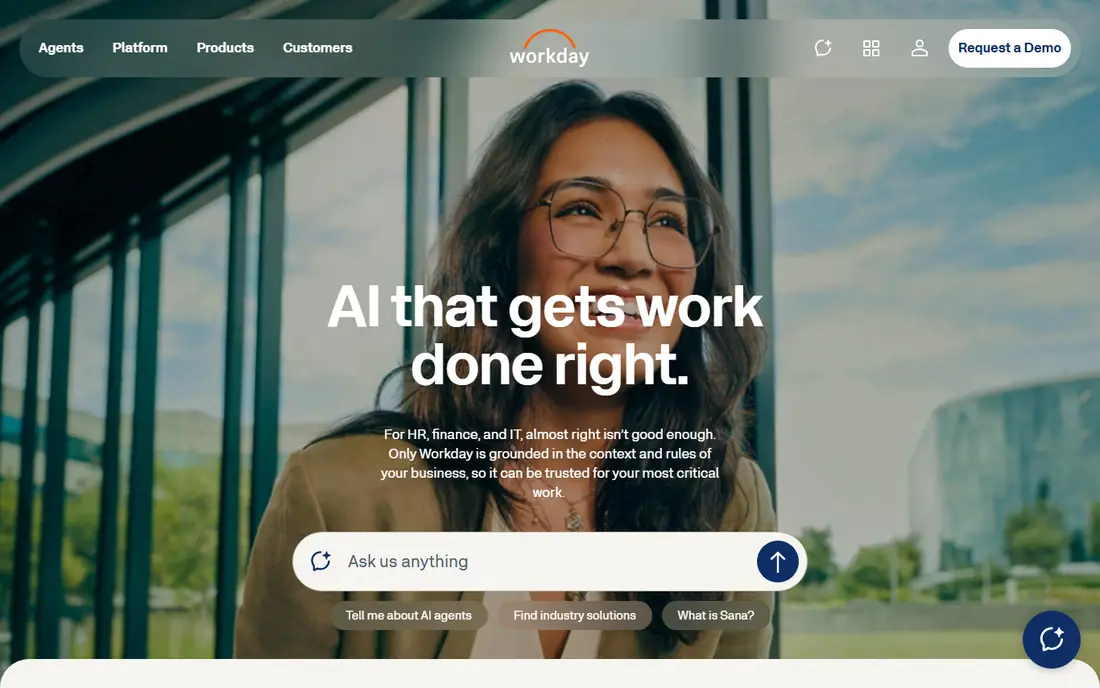
Workday HCM is the enterprise default for many large employers. It combines core HR, recruiting, onboarding, talent, learning, compensation, and workforce planning in one cloud system, with finance on the same platform for companies that use both. That single record helps large firms report consistently across countries, business units, and job families.
The trade-off is scale and cost. Workday pricing is quote-based, implementation is a major project, and ongoing administration needs trained staff or a partner. Small companies will find it too much, but for a large, global employer that wants governance, audit trails, and planning in one place, Workday is hard to beat.
- One system for HR, talent, finance, and planning
- Strong reporting
- Global scale
- Quote-based pricing
- Long implementation
- Needs skilled admins
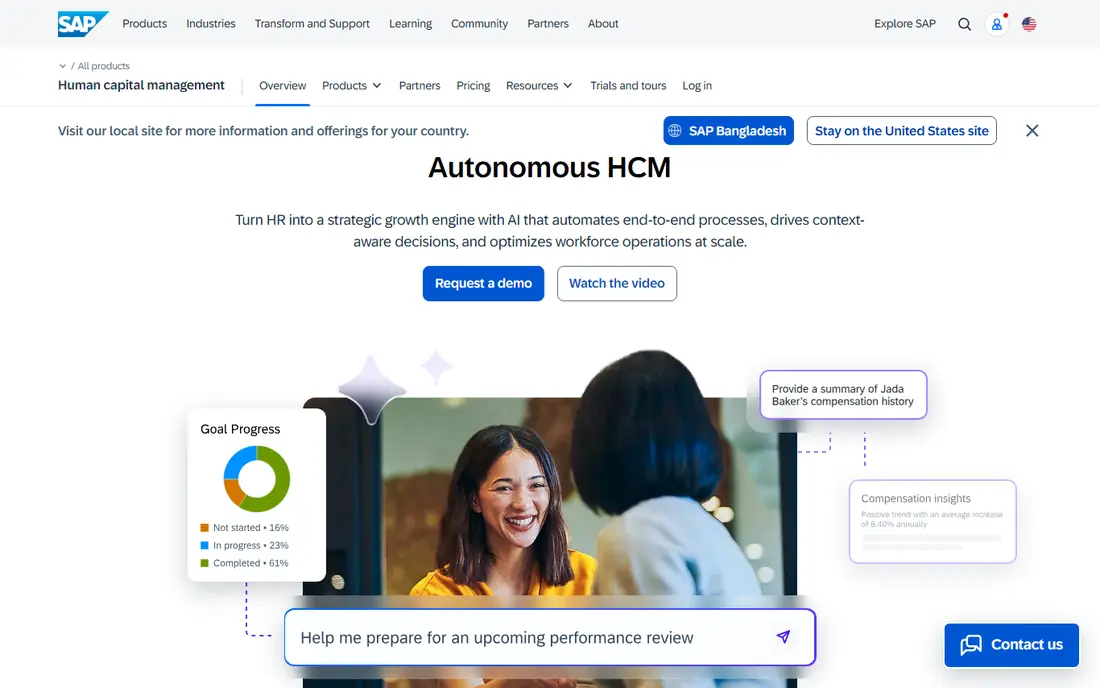
SAP SuccessFactors offers a full human capital suite, including employee central, recruiting, onboarding, performance and goals, learning, compensation, and succession. It suits global employers, especially those already running SAP for finance or supply chain, because data and processes can connect across the SAP system.
Module choices can be complex, and pricing is quote-based, so buyers should confirm exactly which modules are included in a quote. Implementation also takes planning, particularly for multi-country payroll and compliance. For SAP-centred enterprises, that integration depth is the main reason to choose SuccessFactors over a standalone talent tool.
- Full talent suite
- Strong global payroll links
- Deep SAP integration
- Quote-based pricing
- Complex module choices
- Implementation takes time
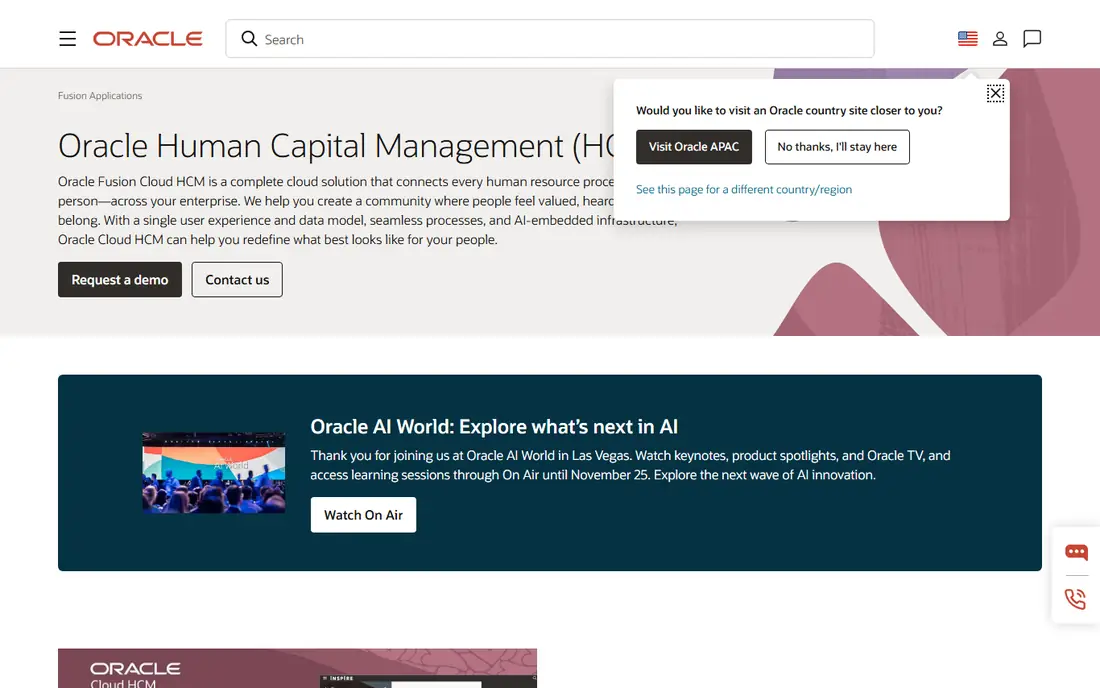
Oracle Fusion Cloud HCM covers core HR, talent management, workforce management, payroll, and recruiting in one cloud suite. It suits large employers, especially those already using Oracle ERP, because HR, finance, and supply chain data can share a common platform. Global companies value its multi-country HR, payroll, and compliance support.
As with Workday and SAP, pricing is quote-based and implementation is significant. Smaller companies should look at BambooHR, Rippling, or Lattice instead, because Oracle HCM is built for scale and governance, not for quick setup by a small HR team. For Oracle-centred enterprises, it offers a complete, integrated talent system.
- Full HCM suite
- Strong global HR and payroll
- Oracle ERP integration
- Quote-based pricing
- Enterprise complexity
- Implementation is a project
Cornerstone OnDemand is best known for learning, but its wider talent suite also covers recruiting, onboarding, performance, and succession. Large employers use it to link learning to career paths, compliance training, and performance goals, so an employee's development plan connects to the courses and skills they need.
That breadth suits enterprises with large, distributed workforces that need consistent training and talent processes across locations. Smaller teams may find the suite larger than they need, and pricing is quote-based. If learning and development is the main talent gap in your company, Cornerstone deserves a closer look than a general HR tool alone.
- Strong learning and development
- Talent and performance tools
- Large enterprise scale
- Quote-based pricing
- Broad suite can feel complex
- Implementation needs planning
Lattice focuses on the people side of talent management, rather than payroll or core HR records. It offers performance reviews, goals and OKRs, feedback, engagement surveys, and career development tools in a clean interface that managers and employees actually use. That focus makes it popular with companies that already have an HR system and want to improve performance culture.
Lattice pricing starts at a per-seat monthly rate on annual billing, with an annual minimum, and higher tiers add features such as advanced analytics and compensation tools. It does not replace an HRIS, so you still need a system for payroll, benefits, and employee records. For companies that want better reviews, goals, and engagement without replacing HR, Lattice is a strong choice.
- Clear performance reviews and goals
- Engagement surveys
- Career growth tools
- Needs an existing HRIS for core HR
- Annual minimums apply
- Some features need higher tiers
BambooHR is built for small and mid-size companies moving off spreadsheets. It covers employee records, onboarding, time off, performance management, and reporting in a simple interface, with payroll and time tracking available as add-ons. That simplicity helps HR teams with limited staff run core processes without a large implementation project.
Pricing starts at a per-employee monthly rate on higher tiers, with flat monthly pricing for smaller teams, and payroll is priced separately. Global payroll coverage is more limited than enterprise suites, so multinational firms should check country coverage before choosing. For a growing company that wants HR and basic talent tools in one place, BambooHR is easy to adopt and easy to explain to managers.
- Simple, friendly interface
- Onboarding and performance tools
- Good for growing teams
- Payroll is an add-on
- Advanced talent features need higher tiers
- Global payroll is limited
HiBob, known as Bob, is a modern HR platform for mid-size and multinational companies. It combines core HR, onboarding, time off, performance, compensation, and engagement tools, with a design that emphasises company culture, org charts, and employee experience. Multinational teams value its support for multiple languages, currencies, and local HR needs.
Pricing is quote-based and depends on employee count and modules, so small teams should request a quote before assuming it fits their budget. Payroll is handled through partners in many countries, rather than natively in every market, so confirm payroll delivery for your locations. For a mid-size company that wants a modern system employees enjoy using, HiBob is a strong contender.
- Modern, culture-focused design
- Strong for multinational teams
- Talent and engagement tools
- Quote-based pricing
- Payroll is via partners in many countries
- Some features need higher tiers
Rippling unifies HR, payroll, IT, and finance around a single employee record. When someone joins, Rippling can trigger payroll setup, benefits, device ordering, and app access together, rather than leaving each team to handle its own checklist. That automation saves time for growing companies where HR, IT, and finance would otherwise work from separate systems.
Pricing starts with a base monthly fee plus a per-employee rate for payroll, with other modules priced separately, so the total depends on which products you choose. Talent features such as performance and learning are available, but depth varies by module, so compare them against Lattice if performance is your main need. For a tech-forward company that wants HR and IT in one system, Rippling offers a broad, automated platform.
- HR, payroll, IT, and finance in one record
- Strong automations
- Many integrations
- Module pricing adds up
- Talent depth varies by module
- Setup needs care
How we picked these
We reviewed official feature pages, pricing pages, documentation, and public reviews for software that covers talent management as a core function, whether inside a full HCM suite or as a focused performance platform. We looked at recruiting, onboarding, goals, performance, learning, succession, reporting, and integrations, plus pricing transparency and team size fit. We did not claim hands-on testing for every platform, and we treated enterprise pricing as quote-based rather than guessing a figure.
We also balanced suite and specialist tools. A list with only enterprise suites would leave out companies that only need better performance reviews, while a list with only specialists would leave out large employers that need one governed system.
Choosing the right talent software
Start with the talent problem you need to solve first. If reviews are inconsistent and goals are unclear, Lattice or a similar performance tool may be enough. If hiring, onboarding, payroll, and records are scattered, a full HR platform such as BambooHR, Rippling, or HiBob may be better. If you run a global enterprise, a suite such as Workday, SAP SuccessFactors, or Oracle HCM is the realistic shortlist.
Separate core HR from talent add-ons
Many vendors sell talent features as modules on top of core HR. Confirm which modules are included in your quote, what each module actually does, and whether you can add modules later without a painful migration. A low starting price that excludes the performance or learning module you need is not a low price.
Test the manager and employee experience
Talent software fails when managers avoid reviews and employees ignore goals. During a trial, ask a few managers to run a review cycle, set goals, and give feedback, and ask employees to complete the same steps. If those tasks feel slow or confusing, adoption will suffer, no matter how strong the admin reporting looks.
Plan implementation and data migration
Enterprise suites need data migration, workflow design, and training, which can take months. Smaller platforms can go live in weeks, but still need clean employee data, clear review templates, and a launch plan. Ask each vendor for a realistic timeline, what migration help is included, and who owns the project on your side.
Frequently asked questions
What is the best talent management software?
For large enterprises, Workday HCM, SAP SuccessFactors, and Oracle Fusion Cloud HCM are the strongest suites. For mid-size companies, BambooHR, HiBob, and Rippling cover HR and talent in one platform. For performance and engagement alone, Lattice is a leading specialist choice.
What is talent management software used for?
It helps companies hire, onboard, set goals, run performance reviews, develop skills, plan succession, and track workforce trends. Some tools cover all of those areas, while others focus on one area, such as performance or learning, and integrate with an existing HR system.
Is Lattice better than BambooHR?
They solve different problems. Lattice is better for performance reviews, goals, and engagement, while BambooHR is better for core HR records, onboarding, and time off. Many companies use both, with BambooHR as the HR system and Lattice for performance.
How much does talent management software cost?
Small and mid-size tools can start around $8 to $13 per employee per month, plus add-ons, while enterprise suites are quote-based and depend on employee count, modules, and implementation. Always ask for a total quote that includes the modules you need.
Can small businesses use talent management software?
Yes, BambooHR, Rippling, and Lattice all suit small and mid-size teams, with simpler setup than enterprise suites. Start with one talent process, such as reviews or onboarding, and add modules only when the team is ready to use them well.
How long does implementation take?
Smaller platforms can go live in weeks, while enterprise suites often take months, including data migration, workflow design, and training. Ask the vendor for a timeline based on your employee count, countries, and modules, not a generic estimate.
Sources we checked (8)

Online Jobs is an independent blog about careers, online work, learning new skills and the tools that help people earn. More about us.
Keep reading
All posts
ZoomInfo Alternatives
The best ZoomInfo alternatives in 2026, compared on price, free plans, data coverage, and which tool fits small teams or large sales teams best in detail.
Workday Alternatives
We compared the best workday alternatives for HR, payroll, and global hiring, from BambooHR and Gusto to Rippling, Deel, and HiBob for growing teams in 2026.
Which SaaS Tools Have the Best Customer Support
Which SaaS tools have the best customer support? Compare eight popular tools on help centres, live help, response options and overall support quality.