Best Supply Chain Software in 2026: 8 Products Compared


Companies already on Oracle Cloud ERP · Starting price: See website
How we put this together: we compare official feature and pricing pages, app store listings, privacy policies and public user reviews. Prices change, so check the provider's site before you pay.
Key takeaways
- Most leading supply chain suites use quote-based pricing, so budget talks start with a sales conversation rather than a published price list.
- Oracle and SAP fit best when a company already runs their wider business systems, while specialists such as Kinaxis and Manhattan focus on planning and warehousing.
- NetSuite is the most accessible option here for mid-market companies that have outgrown spreadsheets.
- Implementation time and industry fit matter as much as feature lists, because these tools touch ordering, stock, transport and supplier data at once.
- Smaller teams should check whether a lighter inventory or planning tool would meet the need before committing to an enterprise suite.
Quick comparison
| Name | Who it suits | Starting price | Free option | |
|---|---|---|---|---|
| Oracle Fusion Cloud SCM | Companies already on Oracle Cloud ERP | See website | No | Visit |
 SAP Supply Chain Management | Global firms standardised on SAP | See website | No | Visit |
 Blue Yonder | Retail and manufacturing planning | See website | No | Visit |
 Kinaxis Maestro | Fast-changing plans and scenarios | See website | No | Visit |
 Manhattan Active | Warehouse and omnichannel fulfilment | See website | No | Visit |
 E2open | Multi-tier supplier networks | See website | No | Visit |
 Infor Supply Chain | Industry-specific manufacturing and distribution | See website | No | Visit |
 NetSuite SCM | Mid-market firms outgrowing spreadsheets | See website | Free trial | Visit |
The best supply chain software
We compared enterprise suites and one mid-market option on planning depth, warehouse execution, supplier visibility and pricing clarity. The list below starts with the broadest suites and moves toward more focused tools.
Oracle Fusion Cloud SCM
Who it suits: Companies already on Oracle Cloud ERP
Oracle Fusion Cloud SCM suits organisations that want planning, procurement, inventory and logistics in one cloud system rather than several linked tools. When finance and supply data already sit in Oracle, the shared data model can cut down on manual reconciliation and duplicate records. The suite also covers demand planning, supply planning and order management, which helps teams see a change in demand and its effect on stock and production in the same place.
The catch is scale and cost. Oracle does not publish a standard price for this suite, so buyers need a scoped quote and a clear view of which modules are included. Teams without Oracle experience should also allow time for training and for cleaning supplier, item and warehouse data before go-live. For Oracle-based firms, that effort is often worth it. For others, a specialist tool may deliver value sooner.
- Broad coverage across planning, inventory, manufacturing and logistics
- Strong links to Oracle finance and procurement
- Cloud updates arrive without a separate upgrade project
- Pricing is quote-based and hard to compare
- Implementation can be long for firms new to Oracle
SAP Supply Chain Management
Who it suits: Global firms standardised on SAP
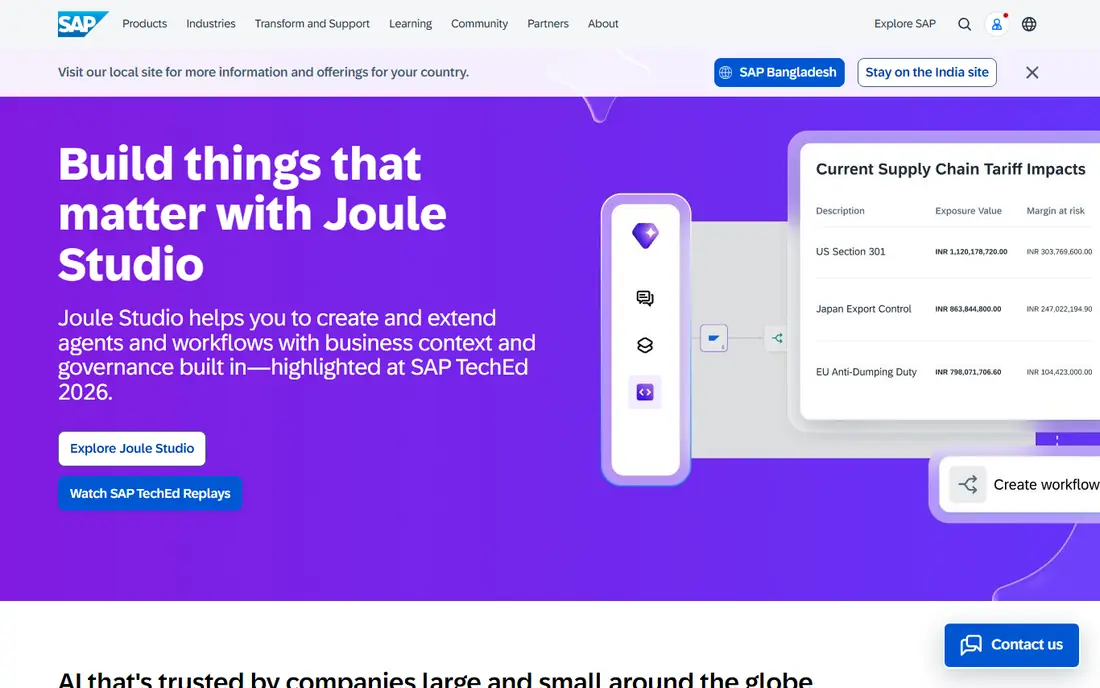
SAP takes a different route to the same goal: a planning core built around SAP Integrated Business Planning, paired with execution tools for manufacturing, warehousing and transport. For a company already running SAP S/4HANA, that shared foundation is a strong draw. Sales, production, stock and finance can work from related plans instead of separate spreadsheets that drift apart over a quarter.
Buyers should expect a serious project, not a quick signup. SAP pricing for supply chain products is typically quoted, and the final cost depends on users, modules and deployment choices. Smaller firms may find the range of options hard to narrow down without a partner. Large, multi-site firms with SAP in place are the natural audience, and they gain most when planning and execution are rolled out together.
- Deep planning with SAP Integrated Business Planning
- Wide global and industry coverage
- Close fit with SAP S/4HANA finance and production
- Quote-based pricing
- Complex to set up without experienced SAP help
Blue Yonder is best known for forecasting, replenishment and supply planning for retailers, grocers and manufacturers. Its tools help teams predict demand by store, channel or region, then turn that forecast into purchase and allocation plans. That focus matters when stock sits in many locations and small forecast errors turn into empty shelves or excess stock.
The platform also covers warehouse and transport work, so planning and execution can stay linked. Buyers should still plan for a structured rollout, because forecast models need clean sales history and clear rules for promotions, seasons and new products. Pricing is quoted rather than published, so a demo with real product data is a useful test before signing. For demand-led businesses, Blue Yonder remains a serious contender.
- Strong demand forecasting and replenishment
- Retail and manufacturing depth
- Planning and execution in one vendor range
- Quote-based pricing
- Breadth can make early setup demanding
Kinaxis Maestro, formerly known as RapidResponse, is built for companies whose plans change often. Instead of passing a plan from one team to another in stages, teams work on a shared model and can test a change, such as a supplier delay or a demand spike, and see the knock-on effects quickly. That style suits electronics, automotive, life sciences and other sectors where supply conditions shift week to week.
The strength here is scenario work. Planners can compare options side by side and pick a response with a clearer sense of cost, service and inventory effects. The limit is data discipline: the model is only as good as the demand, supply and capacity inputs fed into it. Pricing is quoted, and the tool is aimed at mid-size and large firms rather than small teams. For volatile supply chains, it is one of the most focused planning choices available.
- Concurrent planning across demand, supply and inventory
- Fast what-if scenario work
- Clear view of plan changes across teams
- Quote-based pricing
- Best value needs disciplined planning data
Manhattan Active focuses on the physical side of the chain: receiving, storing, picking, packing and shipping, plus order fulfilment across stores, warehouses and direct channels. For warehouse-heavy firms, that focus is the point. The system helps managers direct labour, track stock by location and promise delivery dates based on real availability rather than guesswork.
Manhattan also offers transport and planning tools, but buyers who need deep demand forecasting may pair it with a planning specialist. Implementation still needs care around warehouse layout, carrier links and order rules. Pricing is quoted, which fits its enterprise audience. If warehouse accuracy and fulfilment speed drive most of the value, Manhattan deserves a place on the shortlist.
- Strong warehouse management
- Omnichannel order fulfilment
- Cloud platform with regular updates
- Quote-based pricing
- Planning depth is narrower than pure planning suites
E2open is built around a network idea: suppliers, manufacturers, logistics providers and customers share data on one platform instead of exchanging files in separate systems. That structure helps firms track orders, shipments and inventory across several tiers of suppliers, which is hard to do well in a single-company system. It also covers demand and supply planning, global trade and logistics.
The trade-off is partner effort. Value grows as more suppliers and carriers connect, and that onboarding takes time and clear data standards. Firms with simpler, single-tier supply chains may not need this breadth. For global manufacturers and distributors with complex partner networks, E2open offers a view that point tools rarely match. Pricing is quoted, so buyers should ask what network fees and implementation are included.
- Network view across suppliers, partners and logistics providers
- Planning and trade tools in one platform
- Global shipment visibility
- Quote-based pricing
- Network onboarding takes coordination with partners
Infor Supply Chain
Who it suits: Industry-specific manufacturing and distribution
Infor takes an industry-first approach, with editions shaped for food and beverage, fashion, automotive, distribution and other sectors. That can shorten setup, because workflows, terms and common reports may already match how a sector works. The range covers supply planning, warehouse management, transport and supplier collaboration, depending on the chosen products.
Buyers should take care to pin down exactly which Infor products are in a quote, because the brand covers several tools under a broad supply chain banner. A guided demo using sector-specific examples helps here. Pricing is quoted and aimed at mid-size to large firms. For manufacturers and distributors that want sector depth without building every workflow from scratch, Infor is a practical option to test.
- Industry-specific editions for manufacturing and distribution
- Warehouse and planning coverage
- Cloud deployment options
- Quote-based pricing
- Product range can be confusing to compare
NetSuite SCM sits inside Oracle NetSuite, which makes it a different kind of choice from the suites above. Instead of buying a stand-alone supply platform, a growing firm gets inventory management, order management, procurement and warehouse tools alongside finance and customer records. That shared system can remove a lot of spreadsheet work and give managers a single view of stock, orders and cash.
The limit is planning depth. NetSuite handles everyday supply tasks well, but firms with complex multi-site forecasting or scenario needs may still want a specialist planning tool. Pricing is quoted, though NetSuite does offer trial access to explore the system. For mid-market firms that want one system to grow into, NetSuite is often the most realistic starting point on this list.
- Supply chain tools inside a wider ERP
- Clearer path for growing firms
- Inventory, order and procurement links in one system
- Less planning depth than specialist suites
- Pricing needs a quote for a full picture
How we picked these
We reviewed official feature pages, pricing pages and product documentation for each vendor, plus public user reviews, to check what each platform actually covers today. We favoured tools with current cloud offerings, clear planning or execution depth, and a track record in supply chain work, rather than general ERP tools with only basic stock features. Where a vendor does not publish pricing, we say so instead of repeating third-party estimates. That approach keeps the comparison honest for buyers who will need a quote in any case.
Choosing the right supply chain tool
Start with the problem that costs the most money or causes the most missed deliveries. A forecasting problem points toward Blue Yonder, SAP Integrated Business Planning or Kinaxis. A warehouse problem points toward Manhattan or NetSuite. A supplier visibility problem points toward E2open or Infor Nexus-style network tools. Naming the main pain first stops a broad suite purchase that solves a secondary issue.
Check data before features
Ask each vendor to show the tool with data shaped like yours, including multi-site stock, lead times and supplier constraints. Clean item codes, supplier records and sales history matter more than a polished demo. Also confirm integration with finance, warehouse hardware and carrier systems, plus who owns data cleanup during rollout.
Compare total cost, not just licences
Quote-based tools can differ widely once implementation, training, integrations and support are added. Ask for a written breakdown, renewal terms and what happens if user counts or sites change. A trial or pilot at one site can reveal training needs and data gaps before a full rollout.
Frequently asked questions
What is the best supply chain software?
There is no single winner, because the best fit depends on company size, existing systems and the main supply problem. Oracle and SAP suit firms already on those platforms, while Kinaxis, Blue Yonder and Manhattan suit planning, forecasting and warehouse needs in turn. NetSuite suits mid-market firms that want supply tools inside a wider ERP.
What is the top rated software for supply chain platforms?
Top rated lists vary by reviewer, sector and company size, so treat any single ranking with care. Look for tools rated well by firms similar to yours in size and industry, and test them with your own data. Planning depth, warehouse fit and support quality often matter more than a headline score.
How much does supply chain software cost?
Most enterprise tools on this list are quote-based, so cost depends on modules, users, sites and implementation scope. Mid-market ERP supply tools can also be quoted, though they tend to cost less than large specialist suites. Ask vendors for a full written quote that covers licences, implementation, training and support.
Is there a free supply chain software option?
Fully free enterprise supply chain suites are rare. Some vendors offer trials, and smaller firms may use free inventory or spreadsheet tools for basic stock control. Those lighter tools can work at low volume, but they lack the planning, network and warehouse depth covered here.
What are the best supply chain services for small businesses?
Small businesses often do better with inventory management inside an accounting or ERP system, or with a focused planning tool, rather than a full enterprise suite. NetSuite is one step up from that level. The right choice depends on order volume, warehouse count and how much forecasting the business actually needs.
Sources we checked (8)

Online Jobs is an independent blog about careers, online work, learning new skills and the tools that help people earn. More about us.
Keep reading
All posts
DocuSign Alternatives
We compared the best DocuSign alternatives on price, free plans, templates, audit trails and ease of use, including free DocuSign alternatives for small teams.
Best subscription billing software
Looking for the best subscription billing software? We compare 9 platforms for billing, dunning, tax, revenue recognition, and team workflows in 2026.
Best Workforce Management Software
Looking for the best workforce management software? We compare 8 tools for scheduling, time tracking, payroll, and compliance for hourly teams and managers.