Best Spa Booking Software in 2026: 8 Tools Compared

How we put this together: we compare official feature and pricing pages, app store listings, privacy policies and public user reviews. Prices change, so check the provider's site before you pay.
Key takeaways
- The best spa software depends on size, because solo providers, growing teams and multi-location groups need very different systems.
- Fresha and GlossGenius lead for low starting costs, while Vagaro offers a strong all-in-one balance for small teams.
- Mindbody and Zenoti suit multi-location and membership-driven businesses, but they cost more and need more setup.
- Marketplace commissions matter as much as subscription price, so check what you pay for clients found through the platform.
- Test the client booking flow on a phone before you buy, because that is where most spa clients will meet your business.
Quick comparison
| Name | Who it suits | Starting price | Free option | |
|---|---|---|---|---|
 Fresha | Marketplace discovery on a budget | See website | Free trial | Visit |
 Vagaro | All-in-one for small teams | See website | Free trial | Visit |
 GlossGenius | Polished booking for solo providers | See website | Free trial | Visit |
 Mindbody | Memberships and multi-location | See website | No | Visit |
 Booksy | Filling empty slots fast | See website | Free trial | Visit |
 Zenoti | Enterprise multi-location control | See website | No | Visit |
 Mangomint | Premium automation for growing spas | See website | Free trial | Visit |
 Boulevard | A premium client experience | See website | No | Visit |
The best spa booking software
We compared spa booking software on online booking, payments, client records, staff scheduling, marketing tools and price, with a focus on fit for different business sizes.
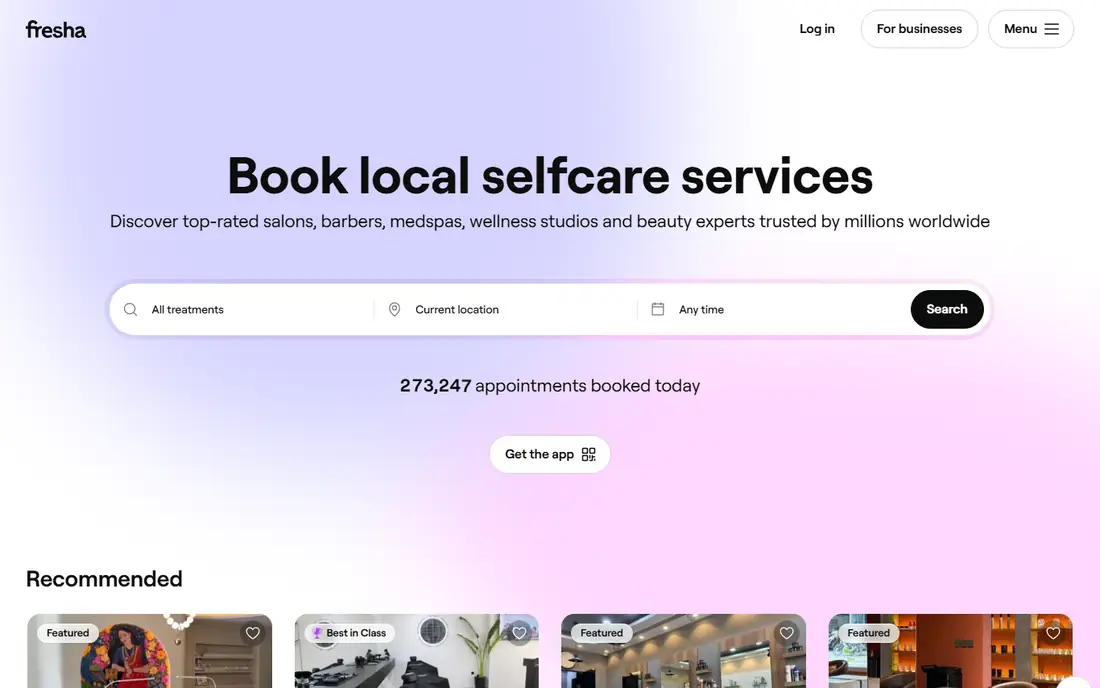
Fresha suits new and small spas that need clients more than they need advanced management features. Its marketplace puts your business in front of people searching for treatments nearby, which can fill a book faster than a standalone website alone. Booking, payments and reminders are included, so a solo provider can run the front desk from a phone.
The cost to watch is the marketplace commission on new clients found through Fresha, which is separate from the subscription. Own clients booked through your website do not carry that commission, so the total depends on where bookings come from. Fresha is no longer free, so confirm the current subscription and commission terms on its site before you rely on older reviews.
- A large client marketplace that can bring new bookings
- Low subscription pricing for solo providers
- Online booking with payment options
- A commission applies to new clients found through the marketplace
- The old free plan has ended
- Marketing tools are lighter than some rivals
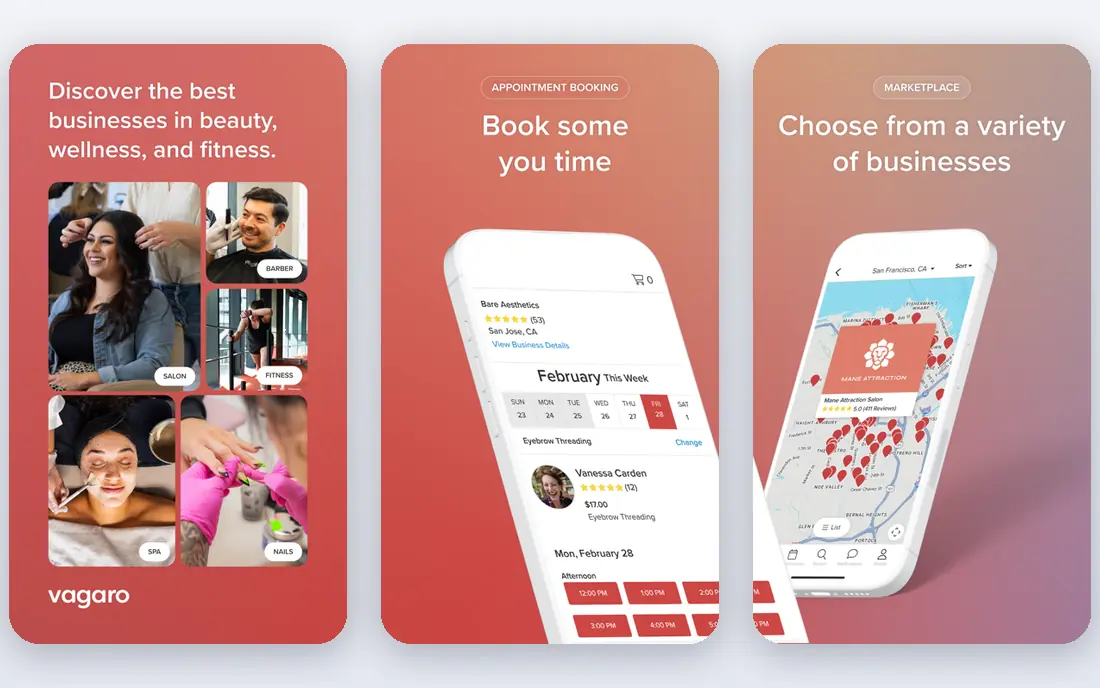
Vagaro is the all-round pick for small teams that want one system for booking, payments and day-to-day management. It covers staff calendars, client records, point of sale and marketing in one place, and its marketplace adds discovery on top of your own bookings. The pricing structure, with a cap for larger teams, helps a growing spa predict costs as staff numbers rise.
The drawback is add-ons. Features that look included in a demo may carry extra fees, and email marketing is less deep than a dedicated marketing tool. Take time during the trial to price your exact setup, including extra staff calendars and any add-ons you actually need, rather than trusting a headline monthly figure.
- Booking, payments, payroll and marketing in one system
- A marketplace for discovery
- A cost ceiling that helps larger small teams
- Add-on fees can raise the total
- Email marketing is limited compared with dedicated tools
- Setup takes time for larger teams
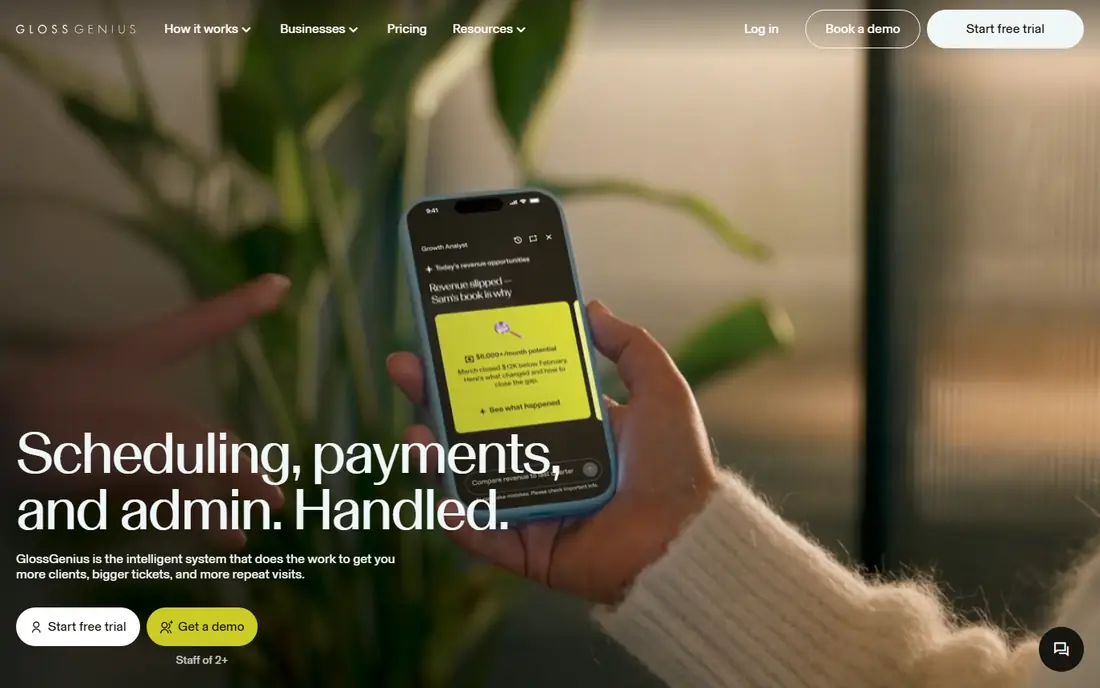
GlossGenius suits solo providers and small teams who want booking to look beautiful without a long setup. Its booking pages, reminders and payment flow feel modern, and clients can book in under a minute, which reduces abandoned bookings. Marketing tools bundled into the plans help with rebooking and promotions, so a small spa does not need a second tool for basic outreach.
The limit is scale. Multi-location management is not its strength, and larger groups will find Mindbody or Zenoti more capable. Advanced reporting and management features also sit on higher tiers, so growing teams should check what the standard plan omits. For a solo spa or a team of a few, the polish and price are hard to beat.
- A polished booking page and client experience
- Flat, predictable pricing on its standard plan
- Marketing tools bundled in
- Multi-location support is limited
- Advanced features sit on higher tiers
- Less suited to large spa groups
Mindbody is the pick for spas and wellness businesses built around memberships, packages and repeat visits. Its strength is handling recurring billing, class and appointment mixes, and multi-location schedules in one system, which matters when clients buy packs and book across sites. The consumer marketplace also brings discovery, similar to Fresha and Vagaro.
The cost and complexity are real. Starting prices sit above solo tools, the system takes longer to learn, and upper tiers require a quote, which makes comparison shopping slower. Smaller spas that only need booking and payments will find it heavy, but membership-driven groups will use features that simpler tools lack.
- Strong membership and package handling
- A consumer marketplace for discovery
- Multi-location management for groups
- Higher starting price than small-team tools
- A steeper learning curve
- Upper tiers are quote-based
Booksy suits providers who need to fill gaps quickly, especially independent stylists, barbers and small spas with variable demand. Its marketplace and Boost tools promote empty slots to nearby clients, which can turn a quiet afternoon into a booked one. Client booking is simple, and the app is familiar to many beauty clients already.
The trade-off is dependence. If a large share of bookings comes through the marketplace, the effective cost per client rises, and management tools are lighter than at Vagaro or Mindbody. Use Booksy as a discovery channel alongside your own booking page, and track which channel each client came from so you can judge the true cost.
- A strong marketplace for filling last-minute slots
- Boost features to promote empty times
- Simple booking for clients
- Marketplace dependence can raise effective costs
- Management features are lighter than Vagaro
- Multi-location support is limited
Zenoti is built for spa, salon and medspa groups that need tight control across locations. It governs staff and room allocation during booking, tracks inventory and packages, and gives head office analytics that simpler tools cannot match. For a group with several sites, that governance prevents double bookings and inconsistent pricing.
For everyone else, it is too much. Pricing is quote-only, setup is complex, and annual contracts are common, so a solo provider or single-site spa would pay for control it never uses. Zenoti earns its place for groups that have outgrown small-team tools and need enterprise discipline, not for businesses choosing their first booking system.
- Deep multi-location controls for staff, rooms and inventory
- Strong analytics for groups
- Enterprise-grade scheduling rules
- Custom quote pricing with no public starting price
- Complex setup that needs implementation help
- Overkill for solo providers
Mangomint suits growing spas where the front desk is the bottleneck. Express Booking removes login friction for returning clients, automation handles reminders, forms and follow-ups, and the interface feels fast for both staff and clients. Integrations with payment, email and accounting tools also help a growing business avoid manual retyping.
Price is the main drawback, since the per-location charge plus per-user fees puts it above Fresha, GlossGenius and Vagaro. Group booking is also less developed than at some rivals, so spas that sell many group sessions should test that flow. For a busy single site or a small group, the time saved at the front desk can justify the cost.
- Express Booking that lets returning clients rebook in two taps
- Strong automation for reminders and intake
- Modern, fast interface
- Higher monthly price than solo tools
- Per-user fees add to the location price
- Group booking features are limited
Boulevard, often styled as Blvd, suits upscale and boutique spas where the booking experience is part of the brand. Clients get a refined flow, staff get detailed profiles with preferences and history, and deposits, intake forms and messaging sit in the same system. That polish helps a premium spa justify premium treatment prices.
The barrier is price and transparency. Monthly costs are high, tiers are not openly published, and buying requires a demo and sales discussion. A small or mid-price spa will find better value elsewhere, but a boutique spa that competes on experience may find Boulevard's client flow worth the premium.
- A refined booking flow that suits upscale spas
- Strong client profiles and preferences
- Self-booking with deposits and intake
- High monthly cost
- Pricing is not openly published
- Contracts and setup need a sales conversation
How we picked these
We compared official feature pages, pricing pages and public reviews for spa booking software, and we kept only systems still available and working in October 2026. We favoured booking quality, payment handling, client records, staff scheduling and honest pricing, and we noted where marketplace commissions change the true cost. We did not claim hands-on testing, and prices we could not verify on a vendor site are shown as See website.
How to choose the right spa system
Start with size and growth plans, not features. A solo provider needs fast booking, payments and reminders, while a team of ten needs staff calendars, payroll links and rebooking tools, and a group needs multi-location control. Buying a group system too early wastes money, while buying a solo system for a growing team forces a painful migration later.
Next, test the client journey on a phone, from search to confirmed booking to payment. Count the taps, check whether deposits and intake forms work smoothly, and see how reminders look to the client. Then price the full setup, including payment processing, marketplace commissions, extra staff seats and add-ons, for a typical month. Finally, check data export and cancellation terms, so you can leave with your client list if the system stops fitting.
Payments, deposits and no-shows
Deposits and cancellation policies reduce no-shows more than reminders alone, but they must be clear before a client books. Choose a system that lets you set deposit rules per service, sends automatic reminders, and makes rescheduling easy, because a strict policy that is hard to follow will cost bookings. Review payment processing rates separately from subscription price, since a low subscription with high processing fees can cost more than a higher subscription with lower rates.
Frequently asked questions
What is the best spa booking software?
For most small spas, Vagaro is the strongest all-round pick, with Fresha leading for marketplace discovery and GlossGenius leading for polished solo booking. Mindbody and Zenoti suit larger, multi-location businesses, while Mangomint suits growing spas that need automation. Match the system to your size first, then compare booking quality and total cost.
What is the best spa software for a small spa?
Fresha, GlossGenius and Vagaro are the best starting points for a small spa. Fresha helps with discovery, GlossGenius offers a polished booking experience at a predictable price, and Vagaro adds deeper management tools as the team grows. Test the client booking flow on a phone for each one, and price payment processing and any marketplace commission before deciding.
What is the best booking app for spas?
The best booking app is the one clients actually finish using, which usually means a fast mobile flow, clear service descriptions and easy rescheduling. Fresha, Vagaro, GlossGenius and Booksy all offer strong mobile booking, with Booksy strongest for filling empty slots. Check reviews for your specific treatment types, since spa needs differ from salon and barber needs.
How much does spa booking software cost?
Costs vary widely, from low monthly plans for solo providers to quote-based enterprise pricing for groups, plus payment processing and possible marketplace commissions. We show See website where we could not verify a current vendor price, because subscription and commission terms change. Price your exact setup, including staff seats and processing, for a typical month before comparing.
Does spa booking software include marketing tools?
Most systems on this list include reminders, rebooking prompts and basic promotions, and several add email and text marketing. Vagaro, GlossGenius and Mangomint bundle useful marketing features, while Mindbody and Zenoti add deeper campaign and membership marketing for larger businesses. A dedicated marketing tool may still be needed for advanced email campaigns.
Sources we checked (8)

Online Jobs is an independent blog about careers, online work, learning new skills and the tools that help people earn. More about us.
Keep reading
All posts
n8n Alternatives
n8n alternatives compared for 2026, with Zapier, Make, Activepieces, and more, covering visual builders, code steps, self-hosting, and pricing models.

ZoomInfo Alternatives
The best ZoomInfo alternatives in 2026, compared on price, free plans, data coverage, and which tool fits small teams or large sales teams best in detail.
Zoom Alternatives for Webinars
Compare Zoom alternatives for webinars in 2026, from browser-based rooms to enterprise events, with prices, attendee limits, features and honest trade-offs.