Best Social Media Platforms for Business in 2026: 8 Platforms Compared

How we put this together: we compare official feature and pricing pages, app store listings, privacy policies and public user reviews. Prices change, so check the provider's site before you pay.
Key takeaways
- Facebook and Instagram remain the broadest choice for most small businesses, because of reach, local targeting, and shopping tools.
- LinkedIn is the strongest platform for business-to-business marketing, hiring, and professional content.
- TikTok and YouTube suit video-led businesses, while Pinterest suits product discovery and long-term traffic.
- X and Snapchat fit narrower needs, such as real-time updates and younger audiences, rather than serving as a first platform for every business.
- Start with one or two platforms you can post to consistently, and add more only when you have the time and content to sustain them.
Quick comparison
| Name | Who it suits | Starting price | Free option | |
|---|---|---|---|---|
 Facebook | Broad reach and local ads | See website | Yes | Visit |
 Instagram | Visual products and reels | See website | Yes | Visit |
 LinkedIn | Business-to-business marketing | See website | Yes | Visit |
 TikTok | Short video discovery | See website | Yes | Visit |
 YouTube | Long video and search | See website | Yes | Visit |
 Pinterest | Product discovery | See website | Yes | Visit |
 X | Real-time updates | See website | Yes | Visit |
 Snapchat | Younger audiences | See website | Yes | Visit |
The best social media platforms for business
Every platform in this guide is free to join, but they differ sharply in audience, content type, and advertising tools. A restaurant, a software company, and a clothing brand should not pick the same platform by default. We compared reach, audience, content formats, business tools, and advertising options to help you choose where to spend limited time.
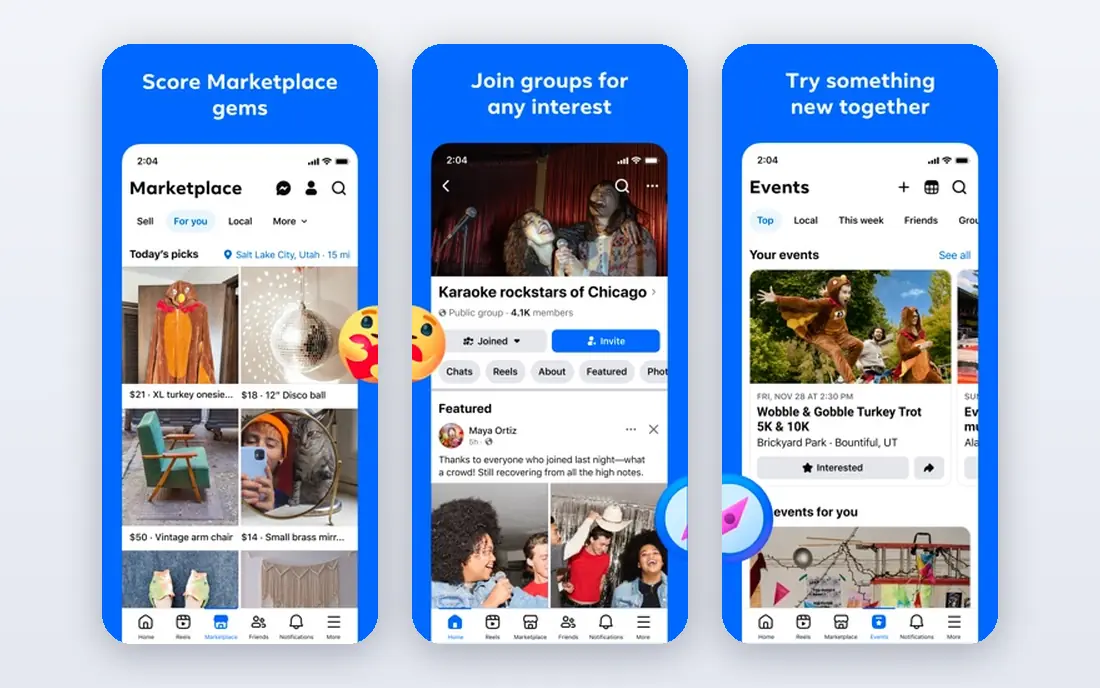
Facebook remains the most practical first platform for many businesses. A page can hold opening hours, reviews, events, and a shop, and groups can build a community around a local business or a niche product. Advertising tools allow targeting by location, interests, and behaviour, which suits local services and e-commerce alike.
The honest catch is organic reach. A business page post will reach only a small share of followers without paid promotion, so Facebook works best when organic posts are paired with a modest ad budget. For local businesses that need bookings, enquiries, and reviews, Facebook is still the safest starting point.
- Largest social audience in many markets
- Strong local and interest targeting for ads
- Pages, groups, events, and shops in one place
- Organic reach for business pages is low without ads
- Younger users are less active than on TikTok or Instagram
Instagram suits any business that can show its work: food, fashion, beauty, interiors, travel, and fitness all do well here. Reels drive discovery beyond existing followers, stories suit behind-the-scenes content, and shopping tags shorten the path from a post to a purchase. For visual brands, Instagram often drives more enquiries than a website alone.
Instagram demands regular visual content, which can be a burden for service businesses with little to photograph. It also offers fewer direct links than a website or YouTube, so use the bio link and story links wisely. If your product looks good on camera, Instagram should be near the top of your list.
- Strong for photos, reels, and stories
- Shopping tags link posts to products
- Good discovery through reels and explore
- Link options are limited outside the bio and stories
- Video-led algorithm rewards frequent posting
LinkedIn is the clear pick for business-to-business marketing. Decision makers, hiring managers, and industry peers are active here, and content such as case studies, hiring posts, and industry analysis performs well. Company pages, newsletters, and targeted ads help firms reach buyers by job title, industry, and company size.
LinkedIn is less useful for direct consumer sales, such as food or fashion, where Instagram or TikTok will reach buyers faster. It also rewards personal posting from founders and staff, not only company page posts, so plan for people, not only a brand account. For business-to-business firms, LinkedIn is essential.
- Professional audience for business-to-business sales and hiring
- Strong for articles, case studies, and thought leadership
- Useful company pages and ads
- Less suited to consumer impulse purchases
- Organic reach favours personal profiles over company pages in many cases
TikTok is the best platform for a small business that wants discovery without a large existing audience. A single short video can reach thousands of new viewers, which is rare on Facebook or Instagram today. Demos, tutorials, humour, and behind-the-scenes clips all work, and the shopping tools suit product-led brands.
The trade-off is pace. TikTok rewards frequent posting in a native, informal style, and a polished corporate video often performs poorly. Businesses that cannot commit to regular short video should not make TikTok their first platform. For video-confident teams, it is the fastest route to new customers.
- Very strong discovery for new accounts
- Short video suits demos, humour, and behind-the-scenes content
- Shopping and ad tools for e-commerce
- Content needs frequent, native-style video
- Trends move fast and older posts fade quickly
YouTube is the best platform for businesses that need to explain, teach, or prove quality. Tutorials, product reviews, case studies, and how-to videos rank in search for years, which gives YouTube a longer lifespan than any feed-based platform. Shorts add a short video route to discovery, while long videos build trust.
Production is the barrier. Good YouTube content needs planning, filming, and editing, and new channels grow slowly. For businesses with a complex product, a service that needs explanation, or a story worth telling in depth, YouTube is worth the effort. Pair it with a faster platform for day-to-day posts.
- Long-lasting search traffic from tutorials and reviews
- Shorts add short video discovery
- Strong for trust and detailed explanations
- Video production takes more time and skill
- Growth is slower than TikTok for new channels
Pinterest works like a visual search engine, and that gives it a different value from feed platforms. Pins for recipes, room designs, outfits, and wedding ideas can drive traffic for months or years, long after a feed post has faded. For e-commerce and content sites, Pinterest is a steady source of visitors who are already planning a purchase.
Pinterest is less useful for businesses with no visual product, such as legal or accounting services, and it does not suit real-time updates. If your business sells something people plan, save, and browse, Pinterest is a strong second platform alongside Instagram.
- Pins drive long-term traffic to websites and shops
- Strong for interiors, fashion, food, weddings, and crafts
- Shopping pins link to products
- Audience skews toward planning and inspiration, not impulse chat
- Less suited to services with nothing visual to pin
X, formerly Twitter, suits businesses that need to publish news fast: product launches, event updates, service alerts, and public replies. It is also a good place to join industry conversation, follow journalists, and respond to customers in public. For media, tech, and public-facing services, X remains useful.
For most small businesses, X should not be the first platform. Posts fade fast, and the audience is smaller than Facebook or Instagram for local consumer marketing. Use X when real-time updates or public conversation are part of your business, and keep expectations realistic for sales.
- Fast for news, updates, and customer replies
- Strong for tech, media, and public conversation
- Useful for live events
- Feed moves very fast, so posts fade quickly
- Audience and ad tools are narrower than Facebook or LinkedIn for many businesses
Snapchat is a niche pick, but a valuable one for brands aimed at younger customers. Stories, lenses, and filters suit fashion, beauty, food, events, and entertainment, and local filters can promote a shop or event to nearby users. For a brand whose customers are mainly under thirty, Snapchat can reach people other platforms miss.
Snapchat is not a general business platform. Content disappears quickly, analytics are lighter than Facebook or YouTube, and older or business-to-business audiences are thin. Add Snapchat only when your audience is clearly young and your content is visual and playful.
- Strong reach among younger users
- Stories and lenses suit playful brands
- Local filters and ads for events
- Content is short-lived by design
- Less suited to business-to-business or older audiences
How we picked these
We shortlisted platforms with a clear business presence, including business accounts or pages, advertising tools, and current availability in October 2026. We checked each official homepage to confirm the platform still exists and fits business marketing, and we read official business help pages and advertising guides to compare audience, formats, and tools. We left out platforms that are mainly messaging apps or closed networks, because they do not offer the same public marketing reach.
How to choose platforms for your business
Match the platform to the buyer
Business-to-business buyers are on LinkedIn. Local consumers are on Facebook and Instagram. Young consumers are on TikTok and Snapchat. Planners and shoppers are on Pinterest. Video learners are on YouTube. Start from the buyer, not from the platform you personally use most.
Pick one or two platforms and post consistently
A business that posts twice a week on one platform will beat a business that posts once a month on five platforms. Choose the platforms you can sustain, set a simple content rhythm, and measure enquiries, not only likes. Add a new platform only when the first ones are running well.
Use ads to support organic content, not replace it
Organic posts build trust and community, while ads put a proven post in front of new buyers. Test a small ad budget on your best-performing organic post, target it tightly, and track enquiries or sales. A platform that needs a large ad budget to work at all may not be the right first choice.
Frequently asked questions
Which social media platform is best for business?
The best social media platform for business depends on your customers. Facebook suits most local businesses, LinkedIn suits business-to-business firms, Instagram suits visual brands, and TikTok suits video-led brands. Most businesses do best with one broad platform plus one specialist platform.
Which social media platform is best for advertising?
Facebook and Instagram offer the broadest advertising tools for most businesses, with detailed targeting by location, interests, and behaviour. LinkedIn is best for business-to-business advertising by job title and industry, while TikTok and YouTube suit video ads. Test a small budget on each platform before committing.
What are the best social media platforms for small business?
The best social media platforms for small business are Facebook and Instagram, because they combine reach, local targeting, shops, and reviews in one place. Add TikTok if you can make short video, YouTube if you need tutorials, and Pinterest if you sell visual products.
What is the best social media platform for marketing?
There is no single best social media platform for marketing. The best social media platform for marketing is the one where your buyers already spend time and where your content type fits. A clothing brand will market best on Instagram and TikTok, while a consultancy will market best on LinkedIn and YouTube.
What is the best social media tool for business?
A social media tool for business, such as a scheduling or analytics tool, is different from a platform. Platforms are where customers are, while tools help you schedule posts, reply faster, and measure results. Choose the platform first, then pick a scheduling tool that supports it, rather than letting a tool dictate your platform choice.
Should a business be on every platform?
No. Being on every platform spreads time thin and leads to stale accounts, which can harm trust. Choose one or two platforms, post consistently, and keep your profile, hours, and contact details up to date. A single active profile beats five quiet ones.
Sources we checked (8)

Online Jobs is an independent blog about careers, online work, learning new skills and the tools that help people earn. More about us.
Keep reading
All posts
ZoomInfo Alternatives
The best ZoomInfo alternatives in 2026, compared on price, free plans, data coverage, and which tool fits small teams or large sales teams best in detail.

Workday Alternatives
We compared the best workday alternatives for HR, payroll, and global hiring, from BambooHR and Gusto to Rippling, Deel, and HiBob for growing teams in 2026.
Which SaaS Tools Have the Best Customer Support
Which SaaS tools have the best customer support? Compare eight popular tools on help centres, live help, response options and overall support quality.