Best Slideshow App in 2026: 8 Apps Compared

How we put this together: we compare official feature and pricing pages, app store listings, privacy policies and public user reviews. Prices change, so check the provider's site before you pay.
Key takeaways
- Canva is our starting point for most people, because it pairs a free plan with templates, music and simple sharing.
- Animoto suits small businesses that want a fast, template-led video from photos and short clips.
- Desktop tools such as Movavi and Icecream give more control over timing, but they ask more of the user up front.
- Check export quality and watermarks before you pay, since free plans often limit resolution or add branding.
Quick comparison
| Name | Who it suits | Starting price | Free option | |
|---|---|---|---|---|
 Canva | most people making photo slideshows | Free | Yes | Visit |
 Animoto | small businesses and fast template videos | $16 per month | Yes | Visit |
 Adobe Express | design-led slideshows and social posts | See website | Yes | Visit |
 Movavi Slideshow Maker | desktop users who want timing control | See website | Free trial | Visit |
 Icecream Slideshow Maker | simple desktop slideshows on Windows | See website | Yes | Visit |
 Clideo | quick browser slideshows with no install | See website | Yes | Visit |
 PhotoStage | budget desktop slideshows | See website | Free trial | Visit |
 VEED | slideshows that need captions and social formats | See website | Yes | Visit |
The best slideshow apps
A good slideshow app turns a folder of photos into a short video that people actually watch to the end. We compared template quality, music options, export quality and pricing, and kept only tools that handle photos plus music without a long learning curve.
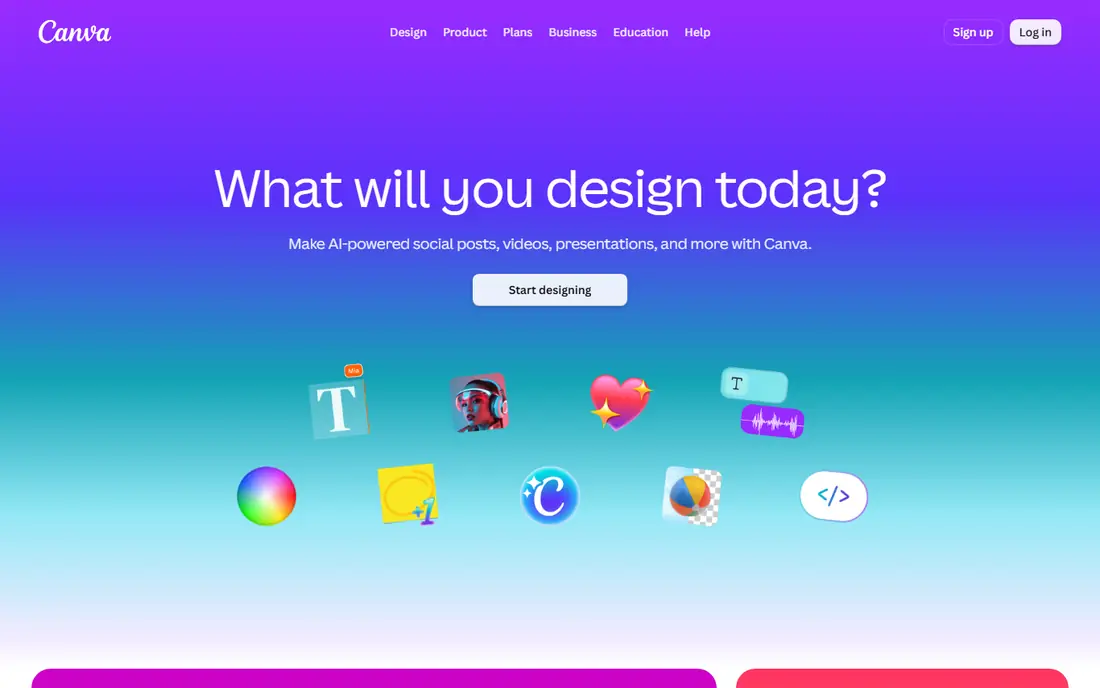
For readers who want most people making photo slideshows, Canva is a name worth checking first. Its strengths include easy templates; large music and stock library; works in browser and on mobile and that mix shapes who will get the most from it. We compared its official feature and pricing pages against the other tools in this list, and we looked at what it does well, what it limits, and who should look elsewhere before paying. Canva lets you drop photos into a template, add text and music, and export a video in common sizes for social feeds, presentations and family sharing. Its template library covers birthdays, weddings, travel and business promos, so you rarely start from a blank page. The drag-and-drop editor is forgiving, and changes to one slide do not force you to rebuild the whole project. The catch is control. Timing, transitions and audio mixing are simpler than in a desktop editor, so a very precise edit can feel constrained. If you need frame-level timing or complex audio work, pair Canva with a fuller video editor, or pick a desktop tool from this list.
- Easy templates
- Large music and stock library
- Works in browser and on mobile
- Free exports can be limited
- Advanced timing controls are basic
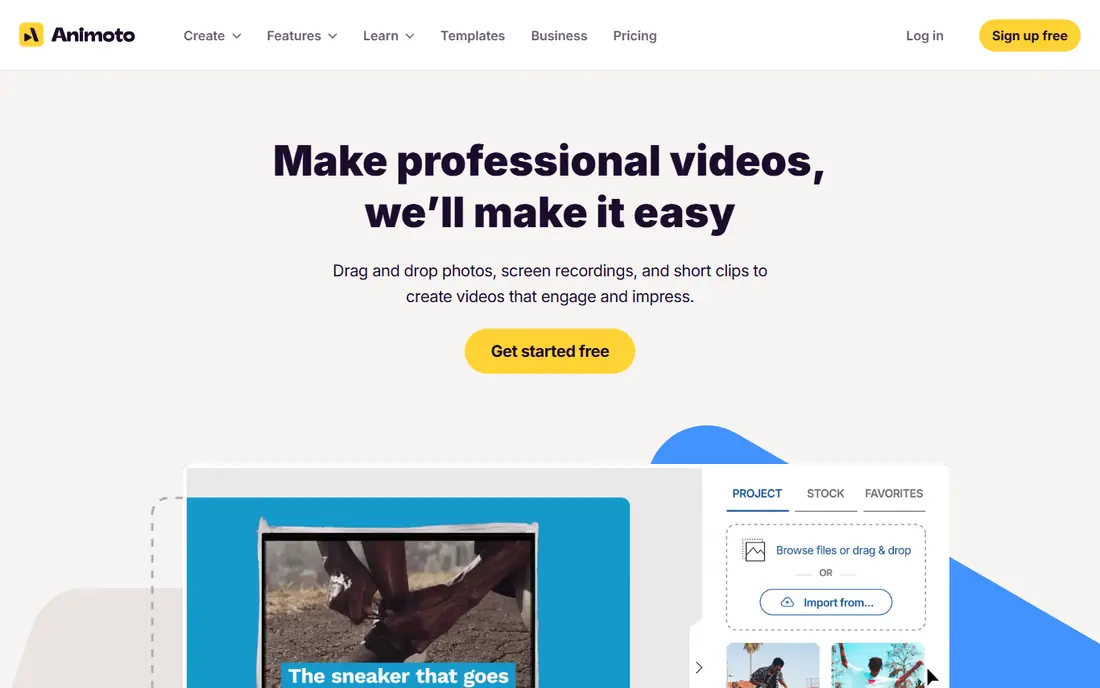
For readers who want small businesses and fast template videos, Animoto is a name worth checking first. Its strengths include very fast template workflow; licensed music included; clean social exports and that mix shapes who will get the most from it. We compared its official feature and pricing pages against the other tools in this list, and we looked at what it does well, what it limits, and who should look elsewhere before paying. Animoto is built for people who are not editors. You pick a storyboard style, add photos and short clips, choose a licensed track, and the app sets pacing and transitions for you. That structure is a real help for real estate listings, event recaps and simple social adverts, where speed matters more than custom motion. Paid plans remove the watermark and add higher resolution and branding options, so check the tier that matches how you will publish. If you want to edit individual clips in detail or build a highly custom look, Animoto will feel narrow, and a tool such as Movavi or VEED will suit you better.
- Very fast template workflow
- Licensed music included
- Clean social exports
- Free plan adds a watermark
- Creative control is limited
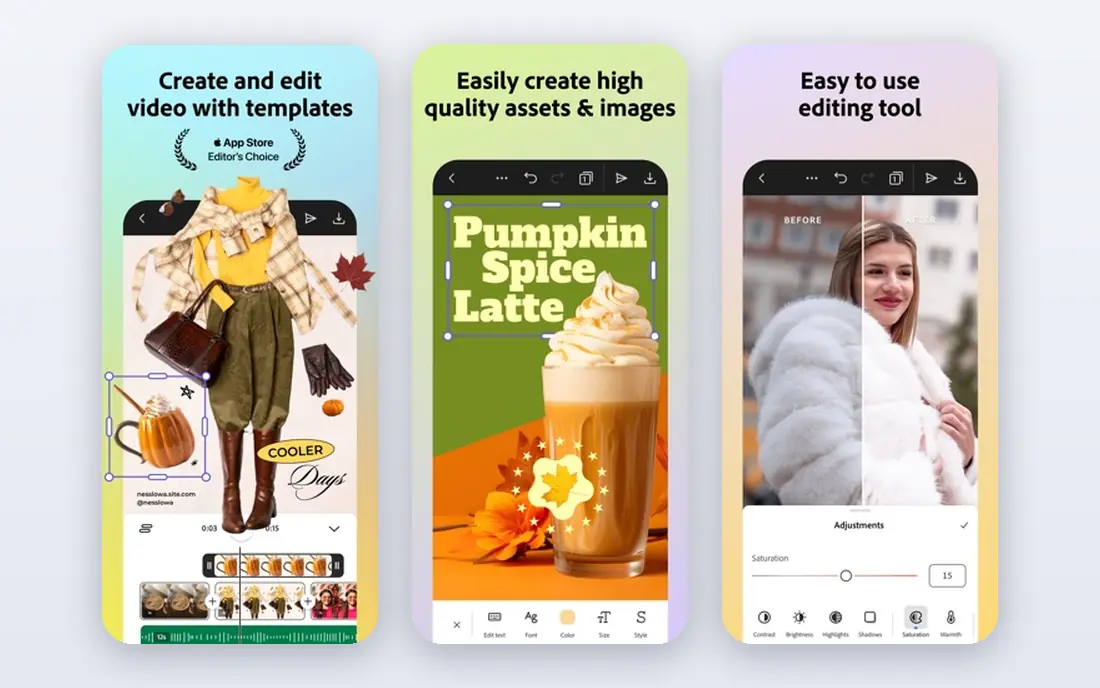
For readers who want design-led slideshows and social posts, Adobe Express is a name worth checking first. Its strengths include polished templates; strong design assets; adobe integration and that mix shapes who will get the most from it. We compared its official feature and pricing pages against the other tools in this list, and we looked at what it does well, what it limits, and who should look elsewhere before paying. Adobe Express suits people who already like Adobe templates and want a slideshow that looks like part of a wider brand kit. You can reuse colours, fonts and graphics across social posts and slideshows, which keeps a small business feed consistent without extra design work. The web and mobile apps make short projects easy to start and finish. For longer, music-led slideshows, the basic timing and audio options are the limit. You can make a clean short video, but syncing transitions closely to a music beat takes patience. Treat it as a design tool with video features, not as a full video editor.
- Polished templates
- Strong design assets
- Adobe integration
- Slide timing control is basic
- Audio editing is limited
Movavi Slideshow Maker
Who it suits: desktop users who want timing control
For readers who want desktop users who want timing control, Movavi Slideshow Maker is a name worth checking first. Its strengths include offline desktop editing; detailed timing and transitions; good export options and that mix shapes who will get the most from it. We compared its official feature and pricing pages against the other tools in this list, and we looked at what it does well, what it limits, and who should look elsewhere before paying. Movavi gives desktop users the control that browser tools often skip. You can set how long each photo stays on screen, choose transitions per slide, add titles and shape the flow of a longer slideshow. Working offline also helps when photo files are large or your connection is slow. The trade-off is effort. You will spend more time setting up a project than you would with a template-led app, and the full version needs a paid licence. That is fair value if you make slideshows often, but it is more than a one-off user needs.
- Offline desktop editing
- Detailed timing and transitions
- Good export options
- Paid licence needed for full exports
- No cloud collaboration
Icecream Slideshow Maker
Who it suits: simple desktop slideshows on Windows
For readers who want simple desktop slideshows on Windows, Icecream Slideshow Maker is a name worth checking first. Its strengths include simple desktop workflow; offline use; easy photo ordering and that mix shapes who will get the most from it. We compared its official feature and pricing pages against the other tools in this list, and we looked at what it does well, what it limits, and who should look elsewhere before paying. Icecream Slideshow Maker keeps the job simple: add photos, order them, add music and text, and export a video. The interface is plain in a good way, with few distractions, and it suits family slideshows, school projects and memorial videos where the photos should carry the result. It does not offer cloud storage or team collaboration, so it is a poor fit for a team that needs shared projects. It also lacks the template polish of Canva or Animoto. Pick it when you want a straightforward desktop tool and nothing more.
- Simple desktop workflow
- Offline use
- Easy photo ordering
- Windows only in practice
- No cloud storage or collaboration
For readers who want quick browser slideshows with no install, Clideo is a name worth checking first. Its strengths include no install needed; clean workflow; many file formats accepted and that mix shapes who will get the most from it. We compared its official feature and pricing pages against the other tools in this list, and we looked at what it does well, what it limits, and who should look elsewhere before paying. Clideo is a browser tool for quick jobs. Upload images, arrange them, add music and export a video, all without installing software. That makes it handy on a shared computer or when you need one slideshow in a hurry and do not want a new app on your device. Customisation stays basic, with fewer transitions and text effects than Canva or Adobe Express, and large files can take time to upload and process. Use Clideo for simple, short slideshows, and move to a desktop editor when a project grows in size or ambition.
- No install needed
- Clean workflow
- Many file formats accepted
- Customisation is basic
- Large uploads can be slow
For readers who want budget desktop slideshows, PhotoStage is a name worth checking first. Its strengths include low cost desktop option; simple narration and effects; offline use and that mix shapes who will get the most from it. We compared its official feature and pricing pages against the other tools in this list, and we looked at what it does well, what it limits, and who should look elsewhere before paying. PhotoStage is a low-cost desktop slideshow maker with narration, effects and transitions, and it works offline. It suits hobbyists and small organisations that want a one-off purchase style tool rather than a monthly subscription, and it handles straightforward photo-plus-music projects well. The interface feels older than newer browser tools, and there is little support for shared or cloud projects. If design polish matters most, Canva will look better. If you want a plain, affordable desktop tool for personal slideshows, PhotoStage does the job.
- Low cost desktop option
- Simple narration and effects
- Offline use
- Interface feels dated
- Collaboration is limited
For readers who want slideshows that need captions and social formats, VEED is a name worth checking first. Its strengths include browser editing; captions and subtitles; social size presets and that mix shapes who will get the most from it. We compared its official feature and pricing pages against the other tools in this list, and we looked at what it does well, what it limits, and who should look elsewhere before paying. VEED suits creators who turn photos into social videos and want captions, text overlays and the right size for each platform. You can build a slideshow in the browser, add captions for viewers who watch without sound, and export versions for different feeds without starting again. Free exports carry limits, so check resolution and watermark rules before you rely on the free plan for client work. VEED is also broader than a slideshow-only tool, which is a strength for creators and a distraction if you only want a simple family video.
- Browser editing
- Captions and subtitles
- Social size presets
- Free plan limits exports
- Advanced features sit on paid plans
How we picked these
We compared official feature pages, pricing pages, app store listings and public documentation for each product, and we checked that each official homepage belongs to the product named. We did not claim hands-on testing that did not happen, and we did not invent prices, awards, user counts or ratings. Where a price could not be confirmed from the vendor site, we wrote See website rather than guessing. We also weighed fit over fame. A well-known tool that does not match the topic was left out, while a smaller tool that matches the job well was kept in. That is why each list mixes leaders with smaller options, and why the best choice for one reader may not be the best choice for another.
How to pick a slideshow app without wasting an afternoon
Start with where the slideshow will be shown. A family video for a television needs clean, high-resolution export, while a short social clip needs square or vertical sizes and a fast export. If you only make one slideshow a year, a free plan or a single month of a paid plan may be enough, and a yearly plan would be poor value. If you make slideshows weekly for clients, templates, brand colours and a music library matter more than a low headline price. Test with your own photos, not stock images, because your photos will show whether the app handles mixed orientations, dark images and long captions well. Finally, read the music terms. A track that sounds fine in a personal video may not be licensed for a business page or an advert, so check the licence before you publish.
Check the free plan before you pay
Open the pricing page and read the free plan limits in full, including export quality, storage, minutes, seats and any watermark. A free plan that looks generous can still limit the exact feature you need, such as high-resolution export, CRM sync or team seats. Trial the paid feature you care about most during any trial period, and set a reminder before the trial ends.
Compare the total cost, not just the headline price
Add up the monthly or yearly fee, any per-seat or per-minute cost, payment processing where it applies, and the cost of add-ons you will actually use. A low headline price with expensive add-ons can cost more than a higher plan that includes them. If pricing is quote only, ask for the full cost in writing, including setup, support and renewal terms, before you compare vendors.
Frequently asked questions
What is the best app for slideshow videos with music?
For most people, Canva or Animoto work well, because both include music, templates and simple export. Canva is stronger for design-led slideshows, while Animoto is faster when you want a template to set the pace for you. Try a free plan first and check whether the music you want is included.
Is there a best slideshow app that is free?
Yes, several tools offer free plans, including Canva, Adobe Express and Clideo, but free exports may carry a watermark or cap resolution. That is fine for a quick draft or a personal share. For a wedding, a memorial or a client project, a paid export is usually worth it.
What is the best slideshow software for a computer?
Movavi Slideshow Maker, Icecream Slideshow Maker and PhotoStage suit desktop users who want offline work and finer timing control. They are a better fit than browser tools when you work with large photo sets or want to keep files local.
Can I make a photo slideshow on my phone?
Yes. Canva, Adobe Express and VEED all work in a browser or on mobile, and they handle photos taken on a phone well. For longer projects with many photos, a computer screen makes ordering and captioning easier.
How long should a photo slideshow be?
For most occasions, three to five minutes works well, with each photo on screen for a few seconds and music that matches the mood. Longer slideshows tend to lose viewers, so cut weaker photos rather than keeping every shot.
Sources we checked (8)

Online Jobs is an independent blog about careers, online work, learning new skills and the tools that help people earn. More about us.
Keep reading
All posts
Zoom Alternatives
Zoom alternatives compared for 2026: Google Meet, Microsoft Teams, Webex, Jitsi and more for free calls, large meetings and webinars for teams and classrooms.

Which Software Is Best for Data Entry
Compare the best data entry software for forms, OCR scanning, and spreadsheets, with free plans, pricing, and honest limits for each tool before you commit.

What's the Best App to Read PDFs
Find what's the best app to read PDFs in 2026, from Adobe Acrobat Reader and Foxit to PDF Expert and Xodo, with free options and honest limits for every device.