Best Sleep Meditation App in 2026: 7 Apps Compared

How we put this together: we compare official feature and pricing pages, app store listings, privacy policies and public user reviews. Prices change, so check the provider's site before you pay.
Key takeaways
- Medito is the only fully free option here, with no paywall, ads or premium tier, while Insight Timer has the largest free library.
- Calm leads on Sleep Stories, with more than 500, while Slumber focuses almost entirely on sleep stories and guided sleep meditations.
- Headspace and Balance suit people who want structure, with courses and personalised programmes rather than a pile of unrelated tracks.
- Most paid apps cost around 60 to 70 dollars per year, so the free tiers are worth trying for a week before you pay.
Quick comparison
| Name | Who it suits | Starting price | Free option | |
|---|---|---|---|---|
 Calm | Sleep Stories and a large library | $69.99 per year | Yes | Visit |
 Headspace | Structured courses and sleepcasts | $69.99 per year | Yes | Visit |
 Insight Timer | Largest free library | Free | Yes | Visit |
 Balance | Personalised programme | $69.99 per year | First year free | Visit |
 Aura | Personalised meditation and sleep picks | $59.99 per year | Yes | Visit |
 Medito | Completely free meditation | Free | Yes | Visit |
 Slumber | Sleep stories for adults and kids | $59.99 per year | See website | Visit |
The best sleep meditation apps in 2026
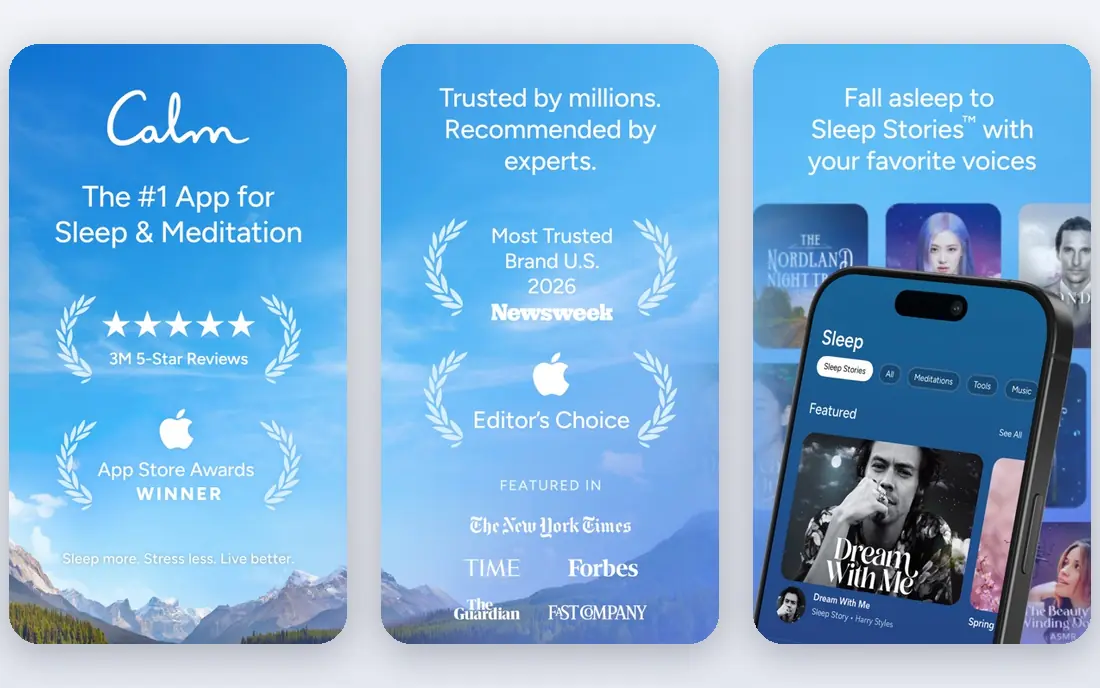
Calm is the obvious first stop if bedtime stories are what send you to sleep. Its homepage lists more than 500 Sleep Stories alongside soundscapes and guided sleep meditations, so you can switch between a narrated story, gentle music or a breathing session depending on the night. The wider library covers daytime meditation, breathing exercises and music, which makes the subscription easier to justify if you also want help winding down before bed rather than only at lights out.
Pricing is 69.99 dollars per year, or 14.99 dollars per month if you prefer to pay monthly. A limited selection of content is free, which is enough to test whether stories or guided sessions work better for you. The weakness is that the free tier is only a taster, and the stories that most people buy Calm for are paid. Try the free tracks for a few nights, and only subscribe if you find yourself reaching for a story every evening.
- More than 500 Sleep Stories
- Soundscapes and guided sleep meditations
- Broad daytime meditation library
- Best content sits behind the paywall
- Near the top of this list on price
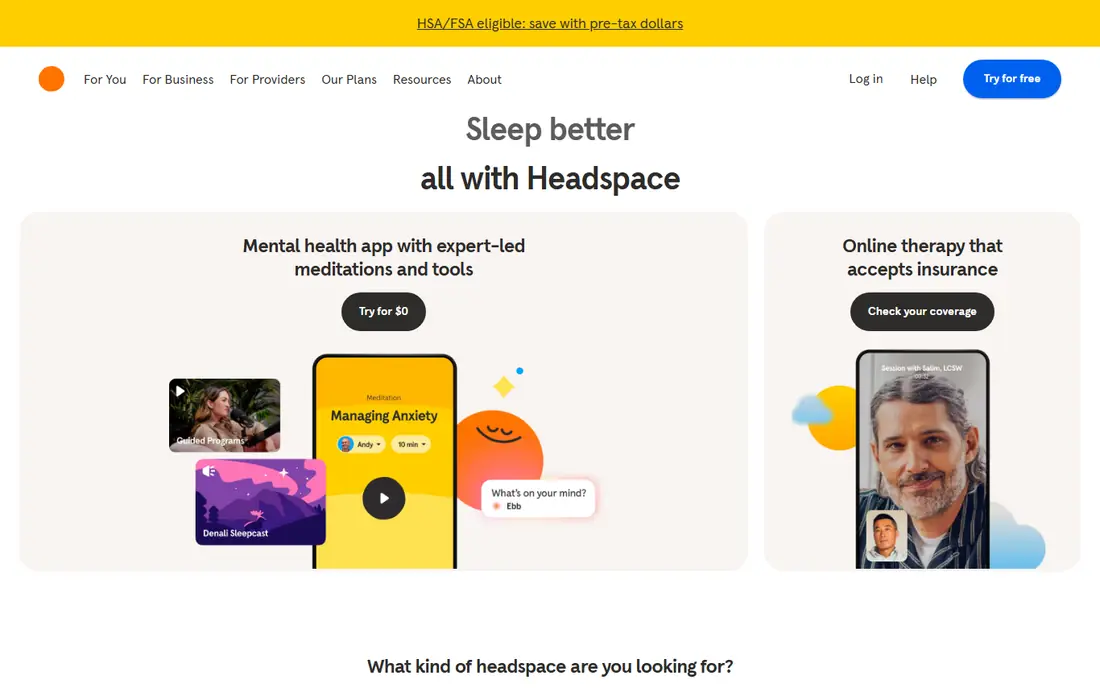
Headspace takes a more guided approach than Calm. Its sleep offering centres on sleepcasts, which are audio stories mixed with ambient sound, plus wind downs that ease you from evening activity toward sleep and soundscapes for the rest of the night. The homepage also lists more than 1,000 exercises across meditation, sleep and everyday mindfulness, organised into courses with a clear order, so you always know what to play next.
The free tier includes the Basics course and a small set of free sessions, which gives a fair sense of the teaching style. Full access costs 69.99 dollars per year or 12.99 dollars per month. Headspace suits people who like a plan and short daily sessions, and it works well if you want one app for both daytime stress and night-time sleep. If stories are the main draw, Calm and Slumber have deeper story catalogues.
- Sleepcasts, wind downs and soundscapes
- More than 1,000 exercises
- Clear course structure
- Fewer bedtime stories than Calm
- Sleepcasts can start to feel familiar over time
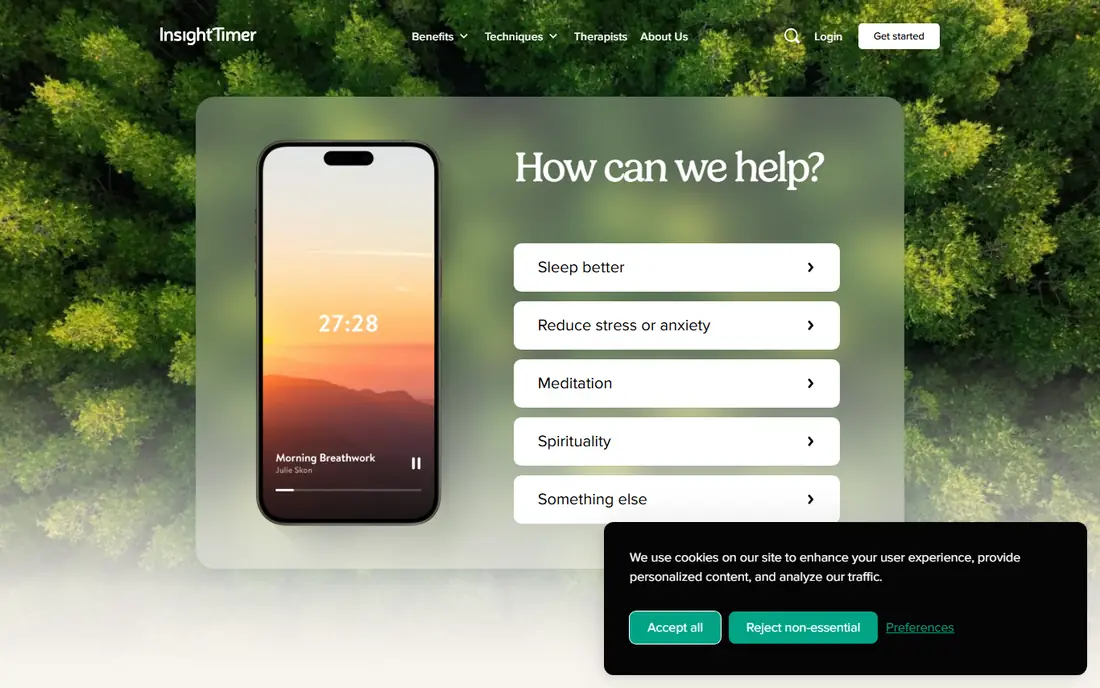
Insight Timer is the best place to start if you do not want to pay anything. Its free library runs to hundreds of thousands of tracks, including sleep meditations, nature sounds and bedtime tales, contributed by teachers around the world. That scale means you can find a voice and style that suits you, from slow breathing sessions to long nature sound mixes, without opening your wallet.
Member Plus costs 59.99 dollars per year or 9.99 dollars per month and adds extra courses and offline listening. The free tier is genuinely useful on its own, which sets Insight Timer apart from rivals whose free versions are little more than a demo. The trade-off is choice overload, and because so many teachers contribute, some tracks will suit you better than others. Save your favourites early and the library becomes much easier to use.
- Huge free library of sleep meditations and bedtime tales
- Nature sounds
- Many teachers to choose from
- Sheer size makes browsing harder
- Quality varies between teachers
Balance builds a personalised programme rather than handing you a catalogue to search. Its homepage says the programme adapts to your goals, stress, sleep, focus and mood, and it sets out daily plans that change as you answer questions and complete sessions. For sleep, that means guided meditations and breathing work chosen around what is keeping you awake, whether that is a busy mind, stress or an irregular routine.
The pricing is unusual and generous. The first year is free, after which the subscription costs 69.99 dollars per year or 11.99 dollars per month. That long free period makes Balance the lowest risk paid app here, since you can use it for months before deciding. The weakness is that the personalisation takes a few days to feel tailored, and if you mainly want a large library of bedtime stories, Slumber or Calm will give you more choice.
- Programme adapts to your goals, stress, sleep, focus and mood
- First year free
- Daily plans
- Personalisation needs several days of input before it settles
- Smaller story library than Calm or Slumber
Aura describes itself as a personalised app for mental wellness and sleep, and its homepage backs that up with a wide mix of content. Alongside sleep tracks you will find meditation, CBT material, therapy content, stories, hypnosis, soundscapes and live sessions with coaches and therapists. The app picks tracks for you based on your mood and goals, so you can open it at bedtime and press play without choosing from a long list.
Premium costs 59.99 dollars per year, and a limited set of tracks is free. Aura is a good fit if your sleep trouble is tied to stress or low mood and you want daytime support in the same app. The trade-off is breadth. If you only want a bedtime story and nothing else, the extra categories can feel like clutter, and two similar-sounding tracks sometimes cover the same ground. For sleep alone, Slumber is more focused.
- Personalised picks across meditation, sleep, CBT and therapy content
- Stories, hypnosis and soundscapes
- Live sessions
- Breadth can feel scattered if you only want sleep
- Some content categories overlap
Medito is the outlier in this list, and in a good way. It is run by a non-profit foundation, and its homepage states plainly that there are no paywalls, no ads and no exceptions. Every meditation, course and feature is free, the code is open source, and the content is developed with mindfulness researchers and experienced teachers. The project is built by more than 200 volunteers around the world.
That model comes with a limit. The catalogue is smaller than the commercial libraries here, and the foundation notes that less than 1 percent of users have ever donated, so the project depends on community support to keep growing. Even so, for anyone who wants a straightforward sleep meditation without a subscription, a trial countdown or ads, Medito is the easiest recommendation in this list. It also makes a fine second app alongside a story-led one like Slumber.
- Free forever with no ads and no paywalls
- Open source
- Content built with mindfulness researchers and teachers
- Smaller catalogue than commercial rivals
- Development depends on donations
Slumber does one thing and does it well. Its homepage lists more than 2,200 sleep stories and guided meditations, with new stories and meditations added every day, plus relaxing soundscapes that can be layered behind a story or left playing all night. Stories are told by soft, calming voices, and there are bedtime stories for kids as well as adults, which makes it a practical choice for a family bedtime routine.
Offline downloads are included, so you can save episodes before a trip and play them without Wi-Fi, and you can choose whether background sounds keep playing after a story ends. The subscription costs 59.99 dollars per year. The weakness is scope. Slumber is a sleep app first and last, so if you also want daytime meditation courses or stress programmes, you will need a second app such as Headspace or Medito. For falling asleep itself, though, few apps here match its depth of stories.
- More than 2,200 sleep stories and meditations
- New stories added every day
- Offline downloads
- Stories for kids
- Sleep-only focus
- Weak daytime meditation library
How we picked these
We started from the apps that appear most often in sleep and meditation recommendations, then checked each one against its own homepage and app store listing. An app only made the list if it offers dedicated sleep content, not just general meditation tracks, and if it is still available and working in October 2026. We compared the size and type of the sleep library, the price of the paid plan, what the free version actually includes, offline playback, and whether the app suits stories, guided sessions or a structured programme.
We did not test these apps overnight ourselves, and we do not claim otherwise. Our comparisons rest on official feature pages, pricing, app store listings and public reviews. Where a price or free tier was not published on the vendor site, we wrote See website rather than guessing. Prices in dollars are the US prices shown by the vendors, and they can differ in other countries.
How to choose a sleep meditation app
Stories or guided sessions
The first choice is what actually sends you to sleep. If your mind races, a story gives it something gentle to follow, and Calm or Slumber are the strongest picks. If you prefer being talked through breathing and muscle relaxation, guided sessions from Headspace, Balance or Medito will suit you better. Try both styles for a few nights before paying, since the difference is personal.
Free tier first
Every paid app here except Slumber offers something free, and Medito and Insight Timer are useful without paying at all. Use the free tier for at least a week, at the same bedtime each night, before subscribing. A sleep app only works as a habit, so the one you actually open at 10 pm matters more than the one with the longest feature list.
Offline playback and timers
Offline downloads matter if you travel, share Wi-Fi or want your phone in airplane mode at night. Slumber and Insight Timer's paid tier both support downloads. Also check whether the app lets sounds play all night or stops when the story ends, since some people wake when the audio cuts out and others wake when it keeps playing.
Price and trials
Most paid apps here cost around 60 to 70 dollars per year, with monthly options that cost more over a year. Balance stands out with its first year free, which removes the usual trial pressure. Before subscribing anywhere, check whether the price is billed yearly or monthly, and set a reminder to review the subscription after a month of real use.
Frequently asked questions
What is the best free sleep meditation app?
Medito is the best fully free option, since everything is free with no ads and no premium tier. Insight Timer is the best free library overall, with hundreds of thousands of tracks, though some courses and offline listening sit behind Member Plus.
Do sleep meditation apps actually help you fall asleep?
They help many people by giving the mind something calm to follow instead of worries, and by building a regular wind-down routine. Slow breathing, muscle relaxation and guided imagery all have research behind them as relaxation methods. They are not a treatment for sleep disorders, so persistent insomnia deserves a clinician, not just an app.
Which is better for sleep, Calm or Headspace?
Calm is better if bedtime stories are what help you drift off, since it has more than 500 Sleep Stories plus soundscapes. Headspace is better if you want structure, with sleepcasts, wind downs and courses in a clear order. Both cost 69.99 dollars per year, so the free tiers are the best way to decide.
Can I listen offline?
Yes, with the right plan. Slumber supports offline downloads, and Insight Timer includes offline listening with Member Plus. Check the app you choose before a trip, since free tiers often require an internet connection.
What should I do if I have insomnia?
Use an app for relaxation and routine, but do not rely on it alone. If poor sleep lasts for weeks, if you regularly lie awake for a long time, or if daytime tiredness affects your work or safety, speak to a clinician. These apps support relaxation and habit building, and they are not a substitute for professional help for sleep disorders.
Sources we checked (7)

Online Jobs is an independent blog about careers, online work, learning new skills and the tools that help people earn. More about us.
Keep reading
All posts
Best Sleep App
Compare the best sleep app options for falling asleep, sleep tracking and better bedtime habits, with Calm, Headspace, Sleep Cycle and more, plus pricing.
Best Apps for Sleep Tracking
Best apps for sleep tracking in 2026: compare Sleep Cycle, Pillow, SleepScore and more on price, features, phone or watch tracking, and value for your nights.
Zoom Alternatives
Zoom alternatives compared for 2026: Google Meet, Microsoft Teams, Webex, Jitsi and more for free calls, large meetings and webinars for teams and classrooms.