Best Sleep App in 2026: 8 Apps Compared

How we put this together: we compare official feature and pricing pages, app store listings, privacy policies and public user reviews. Prices change, so check the provider's site before you pay.
Key takeaways
- Calm is our pick for falling asleep, thanks to its large Sleep Stories library, sleep music and soundscapes, though most content needs a paid plan.
- Headspace suits people who want structured wind-down courses and sleepcasts alongside daytime mindfulness, rather than sleep audio alone.
- Sleep Cycle is the best choice on this list for phone-based sleep tracking, with a smart alarm and trend reports, but phone tracking is an estimate, not a medical measurement.
- Insight Timer offers the largest free library, which makes it the best first try before paying for a subscription.
- Loona and Pzizz suit people who like guided visual stories or short audio sessions, while BetterSleep suits people who want to mix their own sounds.
Quick comparison
| Name | Who it suits | Starting price | Free option | |
|---|---|---|---|---|
 Calm | Falling asleep with stories | $14.99 per month | Yes | Visit |
 Headspace | Structured wind-down courses | $12.99 per month | Free trial | Visit |
 Sleep Cycle | Phone sleep tracking | See website | Yes | Visit |
 Loona | Guided visual bedtime stories | See website | Free trial | Visit |
 Insight Timer | Large free library | Free | Yes | Visit |
 Pzizz | Short sleep audio sessions | See website | Free trial | Visit |
 SleepScore | Sleep tracking and coaching | See website | Yes | Visit |
 BetterSleep | Custom sleep sounds | See website | Yes | Visit |
The best sleep app
We compared these apps on sleep content, tracking, ease of use at bedtime, pricing and honesty about limits, with a focus on what actually helps people wind down rather than what looks good in an app store listing.
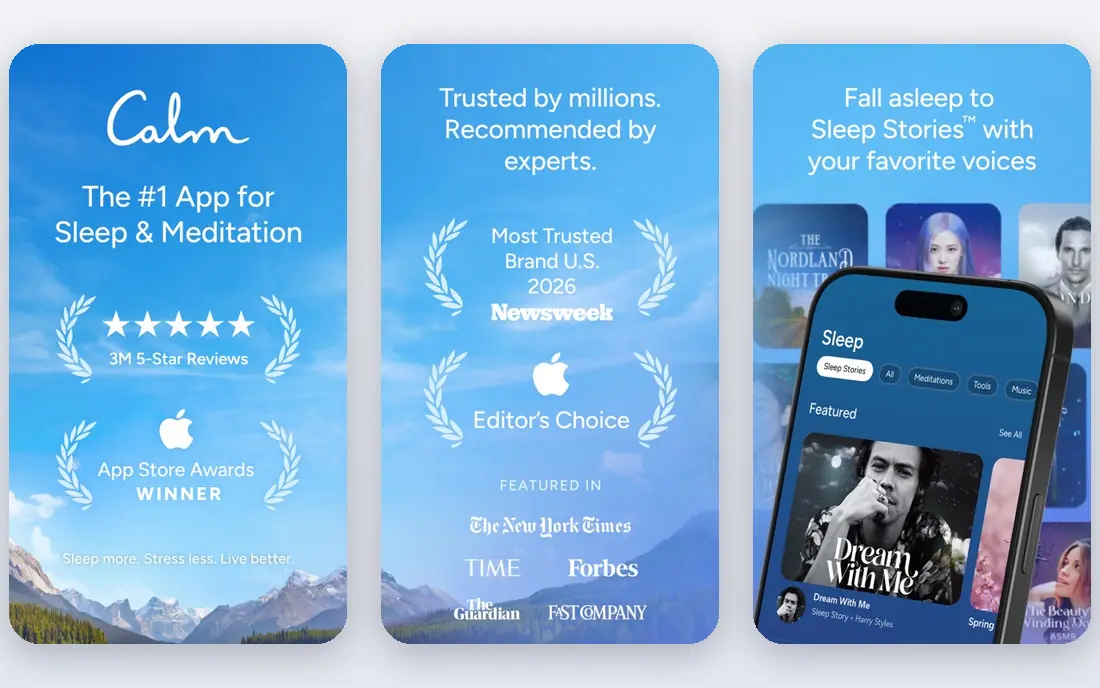
Calm is best known for Sleep Stories, bedtime stories for adults read by familiar voices, paired with sleep music, nature sounds and breathing exercises. The idea is simple: listening to a calm story gives a busy mind something gentle to follow, which helps many people stop replaying the day and fall asleep. Daily Calm sessions and multi-day programmes add daytime mindfulness for users who want more than bedtime audio.
The catch is access. A useful set of free meditations, a small set of free Sleep Stories and selected soundscapes are available without paying, but the full library needs Calm Premium. At bedtime, the size of the catalogue can also work against you, since browsing for the right story keeps the screen on longer. Save favourites during the day, so bedtime listening starts with one tap.
- Large Sleep Stories library with well-known narrators
- Sleep music and soundscapes
- Daily mindfulness sessions
- Most content needs Premium
- Catalogue can feel large and hard to browse at bedtime
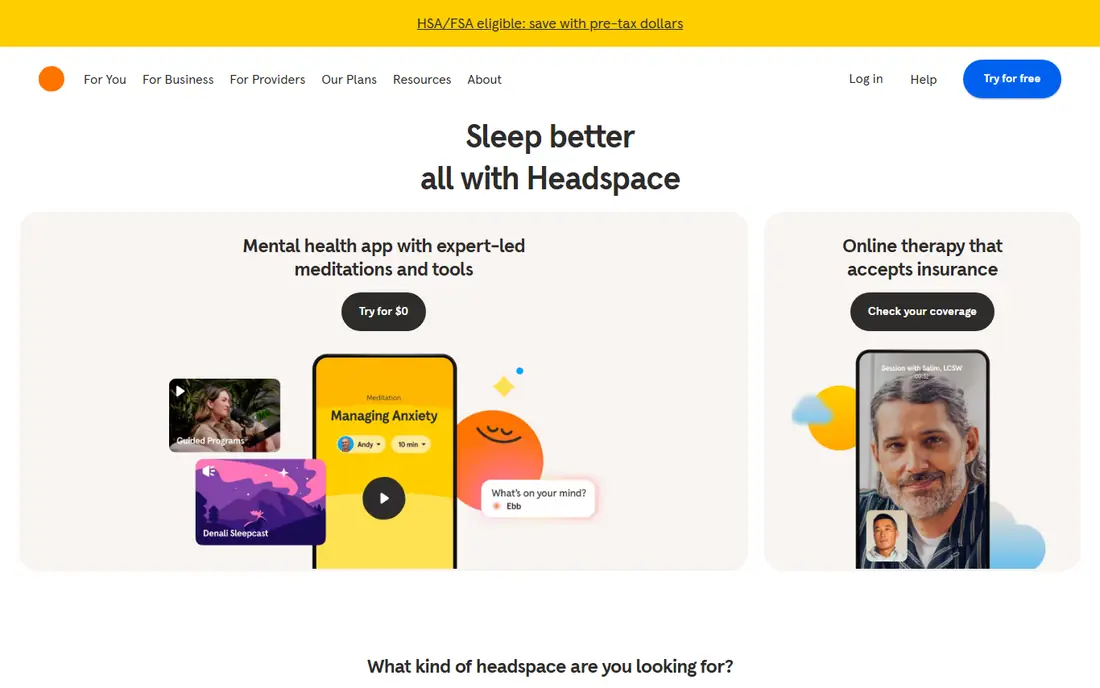
Headspace takes a teaching approach. Structured courses explain mindfulness step by step, and sleep content includes sleepcasts, which are ambient audio stories, plus sleep sounds and wind-down exercises. That structure suits people who want to learn a skill, not just press play on a story, and who like knowing what to do next each night. Short SOS sessions also help in the moment when stress spikes.
The limit is the paywall. After the free trial, most content needs a subscription, so the free tier is a taste rather than a usable long-term library. Sleep-story variety is also smaller than Calm, so listeners who fall asleep best to stories may prefer Calm. For people who want courses plus sleep content in one app, Headspace is a strong pick.
- Step-by-step courses for beginners
- Sleepcasts and sleep sounds
- Short SOS exercises for stressful moments
- Almost everything sits behind a subscription after the trial
- Less sleep-story variety than Calm
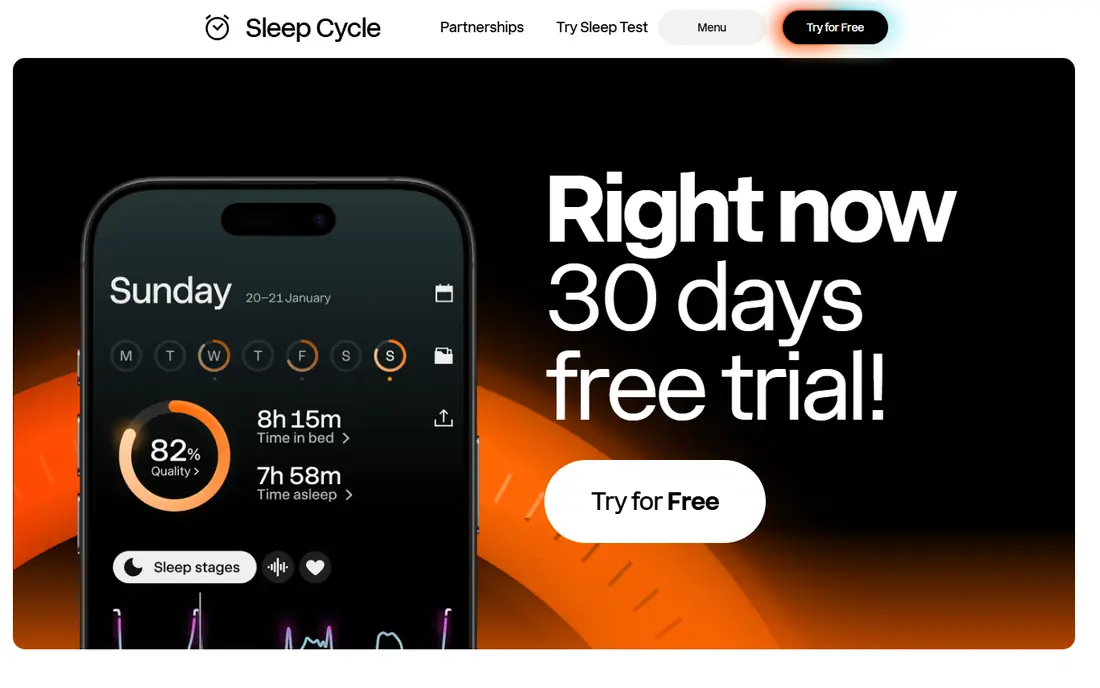
Sleep Cycle uses the phone microphone and motion sensors to estimate sleep stages, track trends over time, and wake you during a lighter sleep phase within a window you set. Trend reports show bedtime consistency, time in bed and estimated sleep quality, which can help people spot patterns, such as late weekends undoing weekday routines. Snore recording and sound notes add context that a simple alarm clock cannot.
Honesty matters here. Phone tracking estimates sleep from movement and sound, and it cannot diagnose sleep disorders or measure sleep as accurately as clinical equipment. Treat trends as useful signals, not as medical results. If you snore loudly, stop breathing during sleep, or feel exhausted despite long nights in bed, talk to a clinician rather than relying on an app score.
- Phone-based tracking with trends
- Smart alarm that wakes you in a lighter sleep phase
- Snore and sound recording options
- Phone tracking is an estimate, not a clinical measurement
- Best results need the phone near the bed
Loona is different from audio-only apps because its bedtime stories are visual and interactive, with calming scenes, colouring and music that guide you toward sleep. That format suits people who relax by doing something gentle with their hands and eyes, rather than by lying still and listening. Sessions are structured as a wind-down routine, which helps people who need a clear end to screen time and the day.
The screen itself is the trade-off. Some sleep guidance suggests avoiding screens before bed, and Loona asks you to look at one, albeit in a dim, calming design. If bright screens keep you awake, an audio-only app such as Calm or Pzizz will suit you better. If visual winding down helps you, Loona offers a distinctive routine that audio apps do not.
- Visual, interactive bedtime stories
- Calming colouring and music sessions
- Designed for winding down
- Visual format needs screen time at bedtime, which suits some people and not others
- Subscription for full access
Insight Timer offers thousands of free guided meditations, sleep tracks, talks and music from teachers around the world, plus a meditation timer and community groups. That free depth makes it the best first try on this list: you can build a bedtime habit without paying, and only consider the paid tier for structured courses, offline downloads and higher quality audio. For budget-conscious users, the free library alone covers most nightly needs.
Size is also the weakness. With so many teachers, quality varies, and new users can spend too long searching at bedtime. The fix is to search during the day, follow teachers you like, and save a short bedtime playlist. If you want a curated, guided path, Headspace or Calm will feel more directed, but neither matches Insight Timer for free choice.
- Very large free library from many teachers
- Timer, sleep tracks, talks and groups
- Low cost to try
- Quality varies between teachers
- Finding good sessions takes searching and saving favourites
Pzizz generates sleep audio sessions from music, voice and sound effects, designed to be listened to as you fall asleep and to fade as sleep comes. Sessions are short and simple to start, which suits people who do not want to browse a large catalogue at night. Nap and focus modes extend the same approach to daytime rest and work, so the app covers more than bedtime alone.
The generated style is a matter of taste. Some listeners find the shifting audio soothing and non-repetitive, while others prefer a human story or a structured course. Pzizz also offers less teaching content than Headspace and fewer stories than Calm. For people who want a quick, low-effort audio session each night, Pzizz is a practical, focused choice.
- Short, generated sleep audio sessions
- Nap and focus modes as well as sleep
- Simple bedtime use
- Less variety in stories and courses than Calm or Headspace
- Generated audio suits some listeners and not others
SleepScore tracks sleep using phone sensors and turns the data into a score, trends and personalised tips about bedtime, consistency and sleep environment. That coaching layer is its main difference from a simple tracker: instead of only showing a graph, it suggests small changes and tracks whether they help over time. For people who like data and gradual habit changes, that feedback loop can be motivating.
Two cautions apply. First, phone-based scores are estimates, and a single bad night score does not mean your health is poor. Second, coaching tips are general wellness guidance, not a diagnosis or treatment for sleep disorders. Persistent problems such as loud snoring, breathing pauses, long-term insomnia or daytime sleepiness deserve a clinician conversation, even if an app score looks reassuring.
- Sleep tracking with personalised coaching tips
- Trend reports
- Works with phone sensors
- Coaching is general guidance, not medical care
- Some features need a paid plan
BetterSleep, formerly Relax Melodies, lets users mix their own sleep sounds from rain, waves, white noise, music and many other elements, then save the mix as a personal soundscape. That control suits people who know exactly which sounds help them sleep and who find fixed playlists too generic. Sleep stories, meditations and tracking options sit alongside the mixer for users who want more than sounds alone.
The freedom can also distract, since building the perfect mix at midnight keeps you awake longer than pressing play on a saved favourite. Build mixes during the day and keep bedtime to one tap. For sound-first sleepers who want control over every element, BetterSleep offers the most flexible mixer on this list.
- Mix your own soundscapes from many sounds
- Sleep stories and meditations
- Sleep tracking options
- Sound mixing can become a distraction
- Full library needs a subscription
How we picked these
We compared vendor feature pages, pricing pages, app store listings and public reviews, and we required each app to focus on sleep, whether through sleep audio, tracking, wind-down routines or sound mixing. We weighted bedtime usability, content quality, tracking honesty and pricing transparency, and we kept free, mid-priced and subscription options so different budgets are covered. Where a vendor or app store listing did not give a clear starting price, we wrote See website rather than repeating an unverified figure.
How to choose a sleep app that actually helps
Start with the problem you are trying to solve. If falling asleep is the issue, an audio app such as Calm or Pzizz matters more than a tracker. If you want to understand patterns, a tracker such as Sleep Cycle or SleepScore matters more, but only if you will look at trends weekly rather than obsessing over a nightly score. If cost is the barrier, start with Insight Timer free library and add a paid app only if free content does not help.
Please note this plain disclaimer: these apps are wellness and tracking tools, not a substitute for medical advice, and they cannot diagnose or treat sleep disorders. If you have persistent insomnia, loud snoring with breathing pauses, excessive daytime sleepiness, or sleep problems that affect work, driving or mood, talk to a clinician. An app can support better bedtime habits, but it cannot replace that conversation.
Build a bedtime routine the app supports, not replaces
The best app habit is boring: same bedtime, dim lights, phone on charge away from the pillow where possible, and one saved favourite to press play on. Avoid browsing catalogues in bed, avoid checking a sleep score first thing and worrying about it, and give any new app at least two weeks before judging it. Small, consistent routines help more than any single feature, and an app that fits your routine will beat a feature-rich app you stop using.
Frequently asked questions
What is the best sleep app for falling asleep?
Calm is our pick for falling asleep, thanks to Sleep Stories, sleep music and soundscapes. Pzizz suits people who prefer short generated audio sessions, while Loona suits people who relax with guided visual stories. Try the free content or trial first, since falling asleep is personal and taste matters.
What is the best app to help you sleep for free?
Insight Timer offers the largest free library on this list, with sleep tracks, meditations and music from many teachers. Sleep Cycle and BetterSleep also offer free tiers, but their full features need paid plans. Start free, save favourites, and only pay if free content does not cover your nightly needs.
Do sleep tracking apps really work?
They estimate sleep from movement and sound, and they are useful for spotting trends such as bedtime consistency and time in bed. They are not as accurate as clinical sleep measurement, and they cannot diagnose sleep disorders. Use trends as a guide, not as a medical result.
What is the best sleep app for insomnia?
No app treats insomnia on its own, and persistent insomnia deserves a clinician conversation, since proven treatments exist that apps do not provide. For support alongside proper care, Calm and Headspace offer wind-down audio and courses, while SleepScore and Sleep Cycle help track patterns to discuss with a clinician.
Are sleep apps safe to use every night?
For most people, listening to calm audio at low volume is safe, but keep volume low, avoid bright screens in bed where possible, and do not let score-checking become a source of anxiety. If an app makes you worry more about sleep, or if you feel worse despite using it, pause and talk to a clinician.
What is the difference between Calm and Headspace for sleep?
Calm leans on Sleep Stories, music and soundscapes for falling asleep, while Headspace leans on structured courses, sleepcasts and wind-down teaching. Pick Calm if stories help you switch off, and Headspace if you want to learn a wind-down skill step by step.
Sources we checked (8)

Online Jobs is an independent blog about careers, online work, learning new skills and the tools that help people earn. More about us.
Keep reading
All posts
Best Apps for Sleep Tracking
Best apps for sleep tracking in 2026: compare Sleep Cycle, Pillow, SleepScore and more on price, features, phone or watch tracking, and value for your nights.
Zoom Alternatives
Zoom alternatives compared for 2026: Google Meet, Microsoft Teams, Webex, Jitsi and more for free calls, large meetings and webinars for teams and classrooms.
Top Rated Poster Maker Software
Top rated poster maker software compared for 2026: Canva, Adobe Express, VistaCreate, PosterMyWall and more for events, sales and classrooms for US users.