Best Sales Intelligence Tools for B2B Sales Teams in 2026: 9 Tools Compared


Enterprise data depth and phone coverage · Starting price: See website
How we put this together: we compare official feature and pricing pages, app store listings, privacy policies and public user reviews. Prices change, so check the provider's site before you pay.
Key takeaways
- Sales intelligence covers two jobs: finding the right contacts, and knowing when an account is ready to buy, and few tools do both equally well.
- ZoomInfo leads on data depth for larger teams, Apollo.io leads on value for smaller teams, and Cognism leads on phone verified data for European markets.
- Intent tools such as 6sense and Bombora help prioritise accounts, but they work best alongside a contact database, not instead of one.
- Data decays fast, so check verification, bounce handling and CRM sync before you judge a tool by database size alone.
Quick comparison
| Name | Who it suits | Starting price | Free option | |
|---|---|---|---|---|
| ZoomInfo | Enterprise data depth and phone coverage | See website | Yes | Visit |
 Apollo.io | All in one prospecting on a budget | $49 per user per month | Yes | Visit |
 Cognism | Compliant international data | See website | No | Visit |
 LinkedIn Sales Navigator | Relationship based social selling | $119.99 per month | No | Visit |
 6sense | Account intent and account based marketing | See website | No | Visit |
 Lusha | Quick contact lookups | $37.45 per month | Yes | Visit |
 Clay | Enrichment workflows across providers | $185 per month | Yes | Visit |
 Bombora | Standalone intent data | See website | No | Visit |
 SalesIntel | Human verified contact data | See website | No | Visit |
The best sales intelligence tools for B2B sales teams
A sales intelligence tool should save reps from bad lists and cold timing. The best ones combine verified company and contact data with buying signals, such as funding, hiring, technology changes or research activity, and they push that insight into the CRM where reps actually work. This list covers database leaders, intent platforms, enrichment workflow tools and social selling, with honest notes on pricing models, since many enterprise tools are quote based.
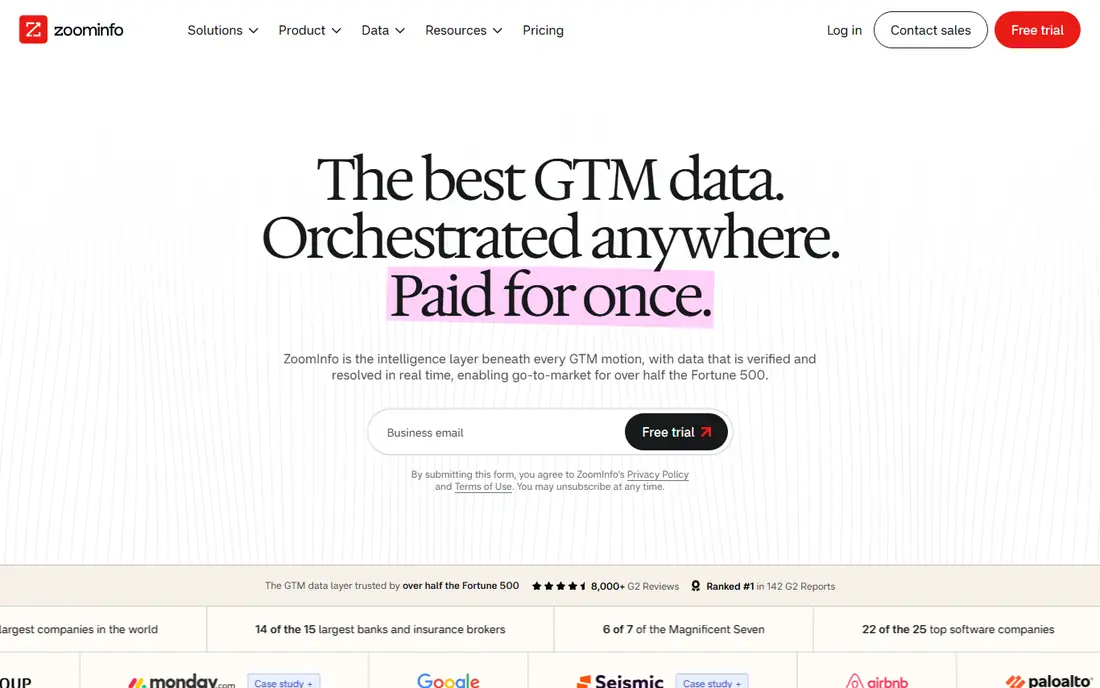
ZoomInfo remains the deepest all in one platform for teams that need verified business data, phone coverage and account context at scale. Its database, intent signals and Chorus conversation intelligence sit inside a GTM workspace, so a rep can move from finding an account to understanding its buying signals without switching tools.
The cost is the main barrier. Paid plans are custom quoted on a consumption model, and renewal prices can rise, so a team should model credits, seats and add ons carefully. Smaller teams that mainly need email prospecting may find Apollo.io cheaper for the same daily work. For mid market and enterprise teams with complex account targeting, ZoomInfo depth is still the benchmark other tools are measured against.
- Very large contact database
- Intent signals and conversation intelligence in the wider platform
- Free Lite tier to start
- Paid plans are custom quoted and can be costly
- Smaller teams may pay for depth they rarely use
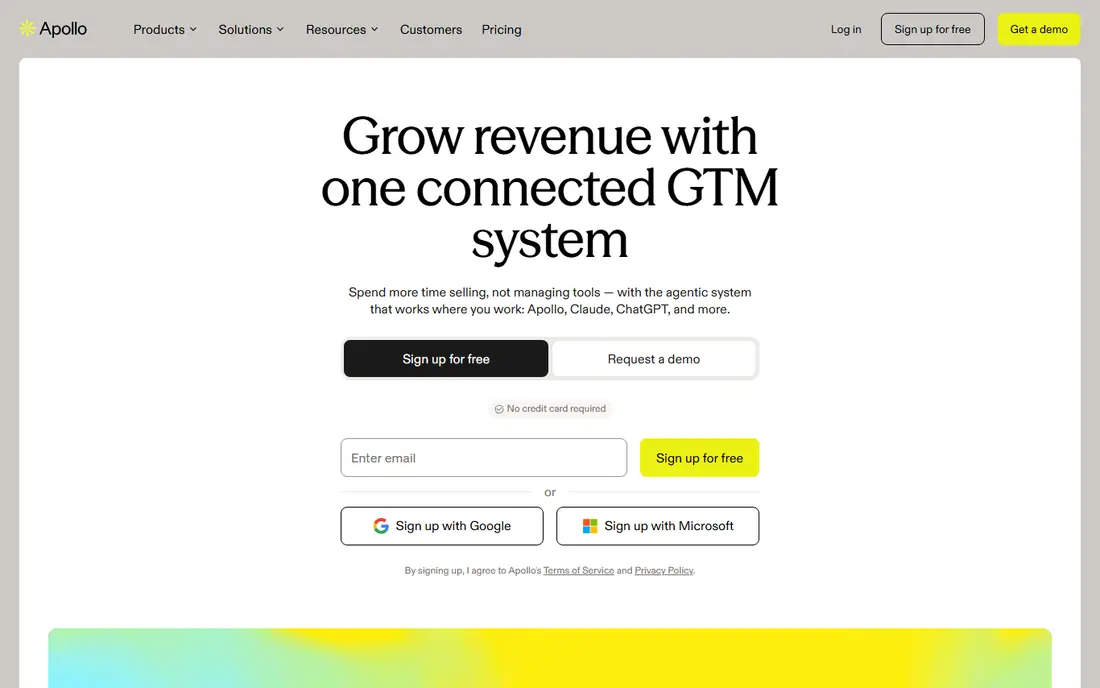
Apollo.io is the best value pick for small and mid sized teams because it pairs a large contact database with prospecting and outreach in one subscription. Reps can search, build lists, verify contacts and run sequences without buying a separate engagement tool, and the free tier lets a solo seller or small team test the workflow before paying. Paid plans start at $49 per user per month on annual billing, which is transparent compared with quote based enterprise rivals.
The trade off is depth. Apollo data is strong for many United States markets, but phone coverage and accuracy in some regions do not always match ZoomInfo or Cognism, so test your target market before committing a whole team. For budget conscious teams that want one tool for prospecting and outreach, Apollo is hard to beat.
- Contact database plus outreach sequences in one tool
- Free tier for starting
- Clear self serve pricing
- Data depth and phone accuracy vary by market compared with ZoomInfo
- Heavy outreach use needs careful deliverability work
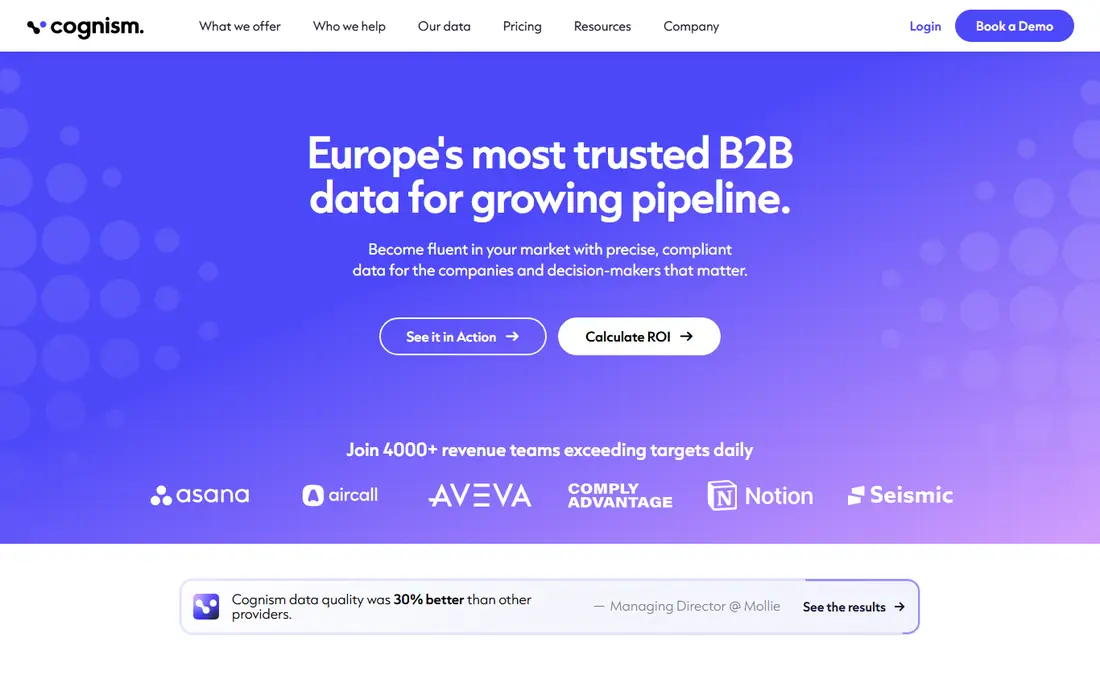
Cognism leads for teams selling into Europe, the Middle East and Africa, where phone verified mobile data and compliance handling matter more than raw database size. Its Diamond Data set focuses on phone verified mobiles, which helps cold calling teams reach decision makers instead of dialling dead numbers, and its compliance approach suits teams working under GDPR and related rules.
The limits are price and focus. Pricing is quote based and aimed at team contracts, so solo sellers will find it costly, and United States prospecting is not its strongest market. If your target list is mainly European, test connect rates on your own ideal customer profile before signing, since that is the metric that justifies the premium. If your market is mainly North American, ZoomInfo or Apollo may fit better.
- Phone verified mobile numbers for European markets
- Strong compliance focus
- Diamond Data for higher connect rates
- Quote based pricing aimed at teams, not solo users
- United States coverage is less central than European coverage
LinkedIn Sales Navigator
Who it suits: Relationship based social selling
LinkedIn Sales Navigator is not a traditional database, but it is essential for social selling because it sits on the professional network where buyers actually update job changes, post about projects and accept connection requests. Advanced search, lead lists, alerts and relationship mapping help reps find the right person, see mutual connections, and time outreach around a job move or company announcement. For account based selling, that relationship context is often more valuable than another email address.
The weakness is contact data. Sales Navigator does not replace a verified email and phone database, and at $119.99 per month for Core, with Advanced higher, it is costly as a standalone tool. Most teams pair it with Apollo, ZoomInfo or Cognism: use Sales Navigator for relationships and timing, and the database for verified contact details. If your buyers live on LinkedIn, that pairing is worth the cost. If they do not, spend the budget on data first.
- Access to LinkedIn professional network
- Relationship mapping and warm introductions
- Alerts on job changes and company news
- Not a full contact database with verified emails and phones
- Monthly cost is high for a single channel tool
6sense helps teams stop guessing which accounts are in market by scoring accounts on buying stage, intent signals and engagement across channels. Instead of handing reps a long list of companies, it prioritises the accounts most likely to buy soon, and it supports account based marketing campaigns aimed at those accounts.
The cost and setup are enterprise grade. Pricing is quote based, implementation needs clean CRM data and agreed definitions of a qualified account, and sales and marketing must agree on how to act on scores. A small team without that alignment will get less from 6sense than from a simpler database. For larger teams running account based programmes, 6sense is one of the strongest intent platforms available.
- Predictive buying stage scoring
- Account level intent across channels
- Strong account based marketing workflows
- Quote based enterprise pricing
- Needs marketing and sales alignment to deliver value
Lusha suits individual sellers and small teams who need a contact quickly while browsing LinkedIn or a company website. Its browser extension reveals email addresses and phone numbers for a profile in a few clicks, without building a large list first, and its free tier lets new users test accuracy on their own prospects. Paid plans start at $37.45 per month on annual billing, which keeps it accessible for a solo rep or a small team.
The model is the limit. Lusha is excellent for one off lookups, but it does not offer the same list building, intent scoring or workflow depth as ZoomInfo, Apollo or Clay for a large team programme. Data accuracy also varies by market, so verify a sample of contacts in your target region. Use Lusha as a fast lookup companion to a main database, or as a primary tool if your prospecting is mainly individual and LinkedIn led.
- Browser extension for fast LinkedIn and web lookups
- Free tier to start
- Simple pricing for individuals and small teams
- Lookup based model suits individuals more than large team workflows
- Data depth varies by region
Clay is different from a database: it is an enrichment and workflow platform that pulls data from many providers in a waterfall, so if one source lacks a phone number or job title, the next source tries. Revenue operations and go to market engineering teams use it to build clean, enriched lists, score accounts, and push verified data into the CRM automatically. That flexibility makes Clay powerful for teams with specific data quality rules or unusual target markets.
The trade off is complexity and cost. Clay needs someone to design workflows, choose providers and manage credits, and its Launch plan starts at $185 per month, before provider costs. A rep who only needs a list will find Apollo simpler. A team that needs repeatable, auditable enrichment across many sources will find Clay worth the setup, especially when data quality directly affects deliverability and conversion.
- Waterfall enrichment across many data providers
- Flexible workflow automation
- Strong fit for revenue operations teams
- Needs technical setup and data provider choices
- Starting price is higher than a simple lookup tool
Bombora provides intent data drawn from a cooperative of business websites, showing which companies are researching topics related to your product. That signal helps sales and marketing teams prioritise accounts that are actively exploring a category, even before they visit your site or fill in a form. Bombora integrates with major CRM, marketing automation and sales intelligence tools, so intent scores can appear where reps already work.
The limit is that intent is not contact data. Bombora tells you which account is interested, not necessarily which person to call or their verified email, so pair it with a database such as ZoomInfo, Apollo or Cognism. Pricing is quote based and aimed at programmes, not solo users. For teams with an account based strategy, Bombora intent plus a contact database is a proven combination.
- Cooperative intent data from many business sites
- Widely integrated with CRM and marketing tools
- Clear topic level signals
- Intent data alone does not give verified contact details
- Quote based pricing for larger programmes
SalesIntel focuses on human verified contact data, with a research on demand service that can verify or find contacts a database search misses. That human layer appeals to teams frustrated by bounced emails and wrong numbers, since verification happens by people as well as by automated checks. Some plans offer unlimited access models, which suit teams that build large lists and dislike credit counting.
The trade offs are price transparency and scale. Pricing is quote based, so budgeting requires a conversation, and SalesIntel is less widely known than ZoomInfo in some enterprise procurement lists, which can slow approval. For teams where data accuracy directly affects meeting rates, test a sample list against your current provider and compare bounce and connect rates. If SalesIntel wins on your market, the premium can pay for itself in saved rep time.
- Human verified data with research on demand
- High accuracy focus
- Unlimited access options on some plans
- Quote based pricing
- Smaller brand footprint than ZoomInfo in some enterprise shortlists
How we picked these
We compared official pricing pages, product documentation and public comparison guides to sales intelligence in October 2026, and we kept only tools that are live, maintained and clearly used by business to business sales teams for prospecting, enrichment or intent. We favoured tools with documented data verification, CRM integration or intent signals, not simple email finders alone, and we mixed database, intent and workflow tools so different go to market motions have a real choice. Where a price was not published on the vendor site during research, we wrote See website.
How to choose for your team size and market
Start with your gap, not with database size. If reps cannot find enough accurate contacts, choose a database leader for your market: ZoomInfo for enterprise depth, Apollo for value, Cognism for Europe. If reps have plenty of contacts but outreach lands cold, add intent from 6sense or Bombora, or timing signals from LinkedIn Sales Navigator, before buying more records. If data quality and workflow are the bottleneck, Clay can fix enrichment across providers without replacing your whole stack.
Test before you commit a team. Run the same 100 target accounts through two tools, check email bounce rates, phone connect rates and job title accuracy, and push the results into your CRM to see how clean the sync is. Check contract terms too: credit expiry, seat minimums, renewal increases and data usage rules can matter more than the headline price. A tool that wins on your real accounts, in your real market, is the right tool, even if another vendor claims a larger database.
Frequently asked questions
What is sales intelligence software?
Sales intelligence software helps business to business teams find the right companies and contacts, understand buying signals, and prioritise outreach. It combines company and contact data with intent, technographic and trigger signals, such as funding, hiring or technology changes, and it usually syncs with a CRM. A CRM records what happened in a deal, while sales intelligence tells reps who to contact and when.
Is ZoomInfo or Apollo better for a small business?
Apollo is usually better for a small business on value, since it combines a contact database with outreach sequences and transparent self serve pricing starting at $49 per user per month. ZoomInfo offers deeper data and enterprise features, but its custom quoted pricing suits larger teams better. Small teams should test both on their own target accounts and compare bounce rates before deciding.
Can sales intelligence tools replace a CRM?
No. Sales intelligence feeds a CRM with contacts, accounts and signals, while the CRM tracks deals, activities, pipeline and customer history. The two work together: intelligence finds and prioritises prospects, and the CRM manages the relationship through to close. Teams that try to run pipeline from a prospecting tool alone usually lose visibility as deals grow.
How accurate is B2B contact data?
Accuracy varies by provider, market and job type, and contact data decays as people change jobs, so no database stays perfect. Human verified providers and waterfall enrichment tend to perform better on phone numbers, while automated databases can be stronger on breadth. Test a sample in your market, check bounce handling and credit refunds, and refresh lists regularly rather than trusting an old export.
What is intent data in sales?
Intent data shows which companies are researching topics related to your product, based on content consumption across business websites or on your own site and ads. It helps teams prioritise accounts that are likely in a buying window, rather than calling every company in a list in order. Intent works best paired with verified contact data, since it identifies the account, not always the individual buyer.
Do I need LinkedIn Sales Navigator as well as a database?
Many teams use both, for different jobs. Sales Navigator helps with relationship mapping, warm introductions and timing around job changes, while a database provides verified emails, phones and list building at scale. If your buyers are active on LinkedIn, the pairing is valuable. If your buyers rarely use LinkedIn, spend first on a database for your market and add Sales Navigator later.
Sources we checked (9)

Online Jobs is an independent blog about careers, online work, learning new skills and the tools that help people earn. More about us.
Keep reading
All posts
Workday Alternatives
We compared the best workday alternatives for HR, payroll, and global hiring, from BambooHR and Gusto to Rippling, Deel, and HiBob for growing teams in 2026.
Which SaaS Tools Have the Best Customer Support
Which SaaS tools have the best customer support? Compare eight popular tools on help centres, live help, response options and overall support quality.

Top AI Helpdesk Software
Searching for top AI helpdesk software in 2026? We compared 8 AI helpdesks on automation, pricing, channels and ease of setup for small and growing teams.