Best Restaurant Software in 2026: 8 Tools Compared

How we put this together: we compare official feature and pricing pages, app store listings, privacy policies and public user reviews. Prices change, so check the provider's site before you pay.
Key takeaways
- Toast suits busy full-service restaurants that want a deep POS system with kitchen displays and multi-location reporting.
- Square for Restaurants is the easiest low-cost start, with a free plan and clear published pricing.
- TouchBistro and Lightspeed suit restaurants that want a dedicated restaurant POS with strong menu and table tools.
- SpotOn suits restaurants that want POS plus guest marketing and loyalty in one bundle.
- Always get processing rates, hardware costs, and contract length in writing, since those three items drive the real total cost.
Quick comparison
| Name | Who it suits | Starting price | Free option | |
|---|---|---|---|---|
 Toast | Busy full-service restaurants | See website | Free trial | Visit |
 Square for Restaurants | Low-cost start | Free | Yes | Visit |
 Lightspeed Restaurant | Menu and table management | $89 per month | Free trial | Visit |
 TouchBistro | Dedicated restaurant POS | $69 per month | Free trial | Visit |
 SpotOn | POS plus guest tools | See website | No | Visit |
 Revel Systems | Multi-location operations | See website | No | Visit |
 Clover | Flexible hardware and payments | See website | No | Visit |
 GloriaFood | Free online ordering | Free | Yes | Visit |
The best restaurant software
Restaurant software covers the point of sale, online ordering, kitchen displays, payments, and reporting. The tools below range from free online ordering to full POS systems for multi-location groups. The right pick depends on your service style, your budget, and whether you need hardware, reservations, or delivery tools as well.
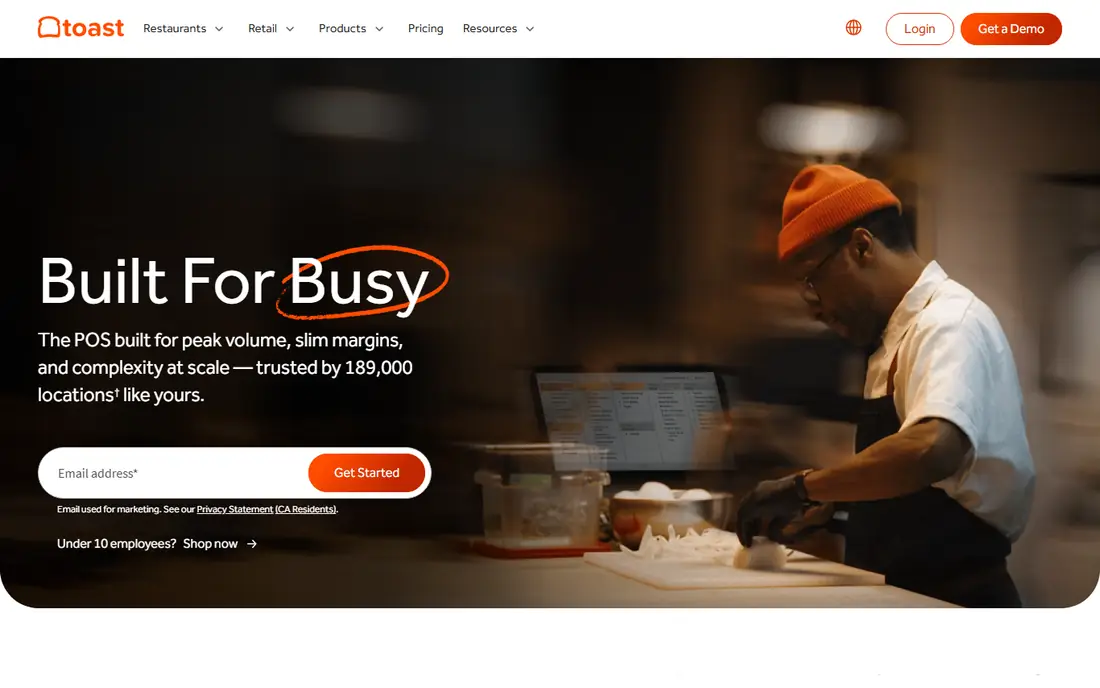
Toast is our pick for busy full-service restaurants because its POS is built around restaurant work from the start. Tables, tabs, split bills, kitchen displays, and handheld ordering are part of the core system, and multi-location reporting helps groups compare sites and manage menus centrally. Its integration range is also wide, with many third-party tools for accounting, scheduling, and delivery.
The catch is cost and commitment. Hardware, add-on modules, and processing fees sit on top of the software plan, and contracts are often longer than rivals. Get a written quote that lists the plan, each module, hardware, processing rate, and contract length before you sign. For a busy restaurant that will use its depth daily, Toast is hard to beat.
- Deep restaurant POS features
- Kitchen display integration
- Multi-location reporting
- Contract terms can be long
- Hardware and add-ons add cost
- Pricing needs a quote
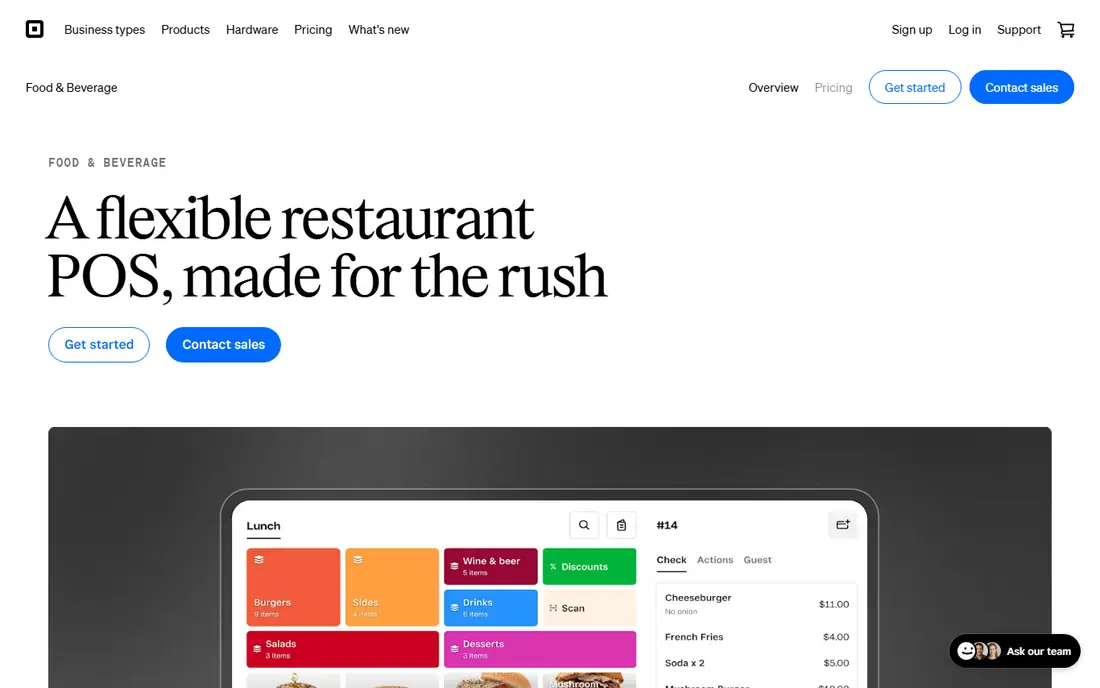
Square for Restaurants is the easiest way to start, especially for cafes, counter-service spots, food trucks, and smaller full-service restaurants. The free plan covers basic POS and payments, while paid plans add table management, team tools, and reporting. Pricing is published on the Square site, which makes comparison simpler than with quote-based rivals.
Larger full-service restaurants may find Square less deep than Toast for complex table and kitchen workflows. Paid add-ons can also add up per device. For a new or small restaurant that wants to open fast with no long contract, Square is the most straightforward choice in this list.
- Free plan to start
- Clear published pricing
- Works with Square hardware and payments
- Less depth than Toast for large full-service sites
- Add-ons are per-device on some plans
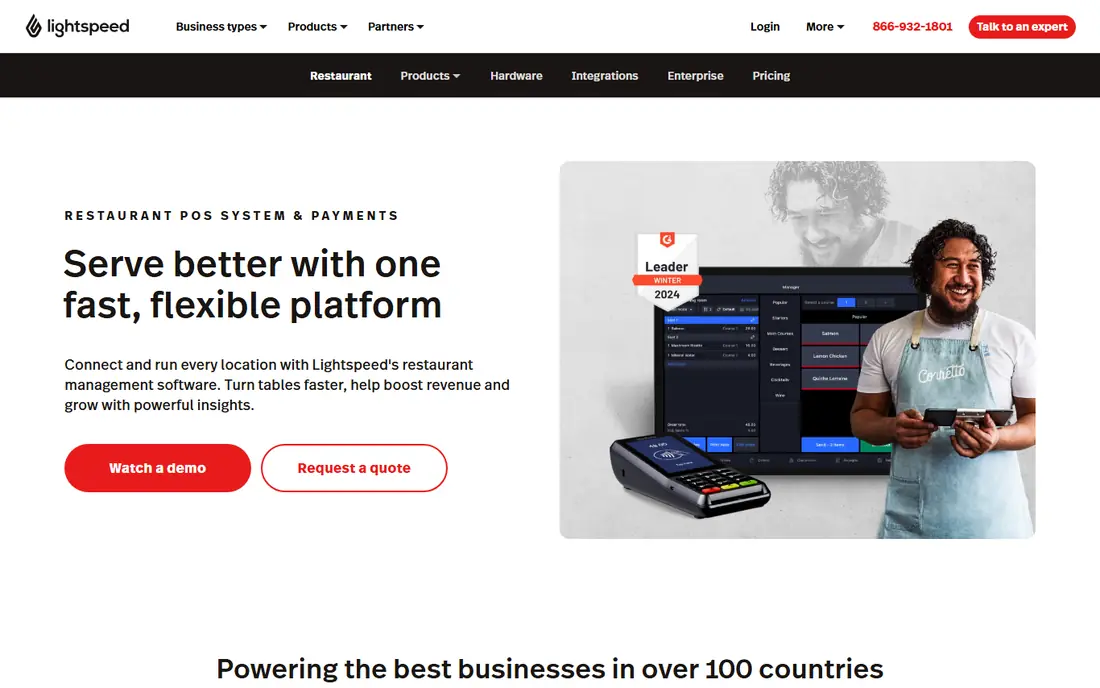
Lightspeed Restaurant suits restaurants that care about menu control and table flow. You can manage menus, modifiers, floor plans, and orders in one system, and reporting helps you track best sellers, busy hours, and staff performance. It works for full-service, quick-service, bars, and cafes, which makes it flexible for mixed concepts.
The starting price, around $89 per month in recent listings, is higher than Square, and advanced features sit on higher plans. Check the current plan price on the Lightspeed site, since pricing varies by region. For a restaurant that wants a polished, dedicated POS with strong menu tools, Lightspeed is a reliable pick.
- Strong menu and floor plan tools
- Good reporting
- Works across restaurant types
- Higher starting price than Square
- Some features need higher plans
TouchBistro was built only for restaurants, and that focus shows in its speed at the table and its menu tools. It runs on iPad, which keeps hardware simple and familiar for staff, and it covers tables, orders, payments, and reporting in one system. Pricing starts at $69 per month in recent listings, which gives small and mid-sized restaurants a clear starting point.
The iPad-only approach is a limit if you prefer other hardware, and its integration range is narrower than Toast. For a single or multi-location restaurant that wants a dedicated restaurant POS without enterprise complexity, TouchBistro is a strong, well-tested choice.
- Built only for restaurants
- Runs on iPad
- Clear published starting price
- IPad hardware needed
- Some integrations are narrower than Toast
SpotOn combines a POS with guest tools such as marketing, loyalty, and reservations, which suits restaurants that want to bring guests back without buying several separate tools. Online ordering is included in many bundles with no commission on those orders, which matters for restaurants with growing delivery and pickup volume.
Pricing is quoted by station and contract, so ask for a full written breakdown before you commit. Hardware is also SpotOn-specific, which limits switching later. For a restaurant that values guest marketing alongside its POS, SpotOn offers a tidy bundle that rivals sell as separate add-ons.
- POS plus marketing, loyalty, and reservations
- No commission on online orders in many plans
- Pricing varies by station and contract
- Hardware is SpotOn-specific
Revel Systems suits restaurant groups, franchises, and multi-location operators that need central control over menus, pricing, and reporting. The POS is flexible, with options for counter service, table service, drive-through, and kiosk ordering, and head office can manage changes across sites from one place. That central control is its main advantage over a single-site tool.
Pricing is quote-based, and setup takes more effort than a simple iPad POS. Small single-site restaurants will find it more than they need. For a growing group that needs consistent menus, central reporting, and franchise tools, Revel is worth a quote alongside Toast and Lightspeed.
- Strong for multi-location and franchise operations
- Flexible POS setup
- Good reporting
- Quote-based pricing
- Setup is more involved than Square or TouchBistro
Clover is a payment and POS system sold through many resellers, with a wide range of hardware from small card readers to full countertop stations. Its app marketplace adds inventory, loyalty, online ordering, and other tools, so a restaurant can shape the system around its needs. That hardware flexibility suits counter-service spots, cafes, and small restaurants that want a tidy counter setup.
The downside is pricing variation. Software and processing costs differ by reseller, so two restaurants can pay very different totals for similar setups. Avoid long hardware leases you cannot exit, and get software, processing, and hardware costs in writing from your reseller. Bought outright from a clear seller, Clover is a flexible and practical POS.
- Wide hardware range
- Many apps in its marketplace
- Flexible payment options
- Pricing varies by reseller
- Software costs vary widely
- Hardware leases need care
GloriaFood is different from the other tools here because it is not a full POS. It gives restaurants a free online ordering system, with an ordering page, menu management, and order alerts, so customers can order pickup and delivery without paying commission to a marketplace. That free start is why many small restaurants use it alongside, or before, a full POS.
It will not replace a POS for table service, kitchen displays, or in-person payments, and advanced features such as branded apps and promotions sit on paid plans. For a small restaurant that wants its own ordering channel without marketplace fees, GloriaFood is an excellent, low-risk addition. Pair it with Square or TouchBistro for a complete setup.
- Free online ordering system
- Own ordering page and app options
- Simple setup
- Not a full POS
- Paid features needed for advanced tools
- No hardware bundle
How we picked these
We compared official pricing pages, feature lists, and POS reviews for leading restaurant systems, and we kept only tools that handle restaurant orders, payments, or online ordering. We favoured tools with published pricing where available, and we marked quote-based pricing as See website. We also mixed full POS systems with a free ordering tool, since many small restaurants start with ordering before they buy a full POS. Prices, processing rates, and contract terms change, so confirm the current figures with each vendor before you sign.
How to choose restaurant software for your site
Start with your service style. Counter service and cafes suit Square, Clover, or GloriaFood. Full-service restaurants suit Toast, TouchBistro, or Lightspeed. Multi-location groups suit Toast, Revel, or Lightspeed. Matching the tool to the service style matters more than picking the most popular name.
Count hardware, processing, and contract costs
Add hardware, software, add-on modules, and card processing fees to get the real monthly total. A free software plan with a high processing rate can cost more than a paid plan with a lower rate once sales rise. Also check contract length and exit terms, since a long contract can lock you into a system that no longer fits.
Test the system on a busy service
Run a trial during a real busy period if you can, not just a quiet demo. Check order speed, kitchen display timing, split bills, refunds, and offline behaviour if the internet drops. Staff feedback from that test matters more than any feature list, since they will use the system every shift.
Check online ordering and delivery
Confirm whether online ordering is included, whether commission applies, and how delivery orders reach the kitchen. A system that handles in-person orders well but fumbles online orders will cause trouble as pickup and delivery grow. GloriaFood can fill an ordering gap, but a single system is simpler to run day to day.
Frequently asked questions
What is the best restaurant software for a small restaurant?
Square for Restaurants is the best small-restaurant starting point, thanks to its free plan and published pricing. TouchBistro is a strong next step if you want a dedicated restaurant POS with table and menu tools.
What is the best restaurant POS for a busy full-service restaurant?
Toast is the most complete pick for busy full-service sites, with kitchen displays, handheld ordering, and multi-location reporting. Lightspeed Restaurant and TouchBistro are also strong for full-service work.
Is there free restaurant software?
GloriaFood offers free online ordering, and Square for Restaurants offers a free POS plan. Both have paid upgrades for advanced features, but both let a small restaurant start without a monthly software fee.
How much does restaurant POS software cost?
Simple plans start free or around $69 to $89 per month, while larger systems use quote-based pricing by station or location. Add hardware, processing fees, and add-on modules to the software price for the real total.
Do I need a long contract for restaurant POS?
Not always. Square offers no long contract on its basic plans, while Toast and SpotOn often use longer terms. Read the contract length, renewal terms, and exit fees before you sign, and get them in writing.
Can restaurant software handle online ordering and delivery?
Yes, most POS tools in this list include online ordering, and GloriaFood offers a free ordering-only option. Check commission, delivery integration, and kitchen display handling for online orders before you choose.
Sources we checked (8)

Online Jobs is an independent blog about careers, online work, learning new skills and the tools that help people earn. More about us.
Keep reading
All posts
n8n Alternatives
n8n alternatives compared for 2026, with Zapier, Make, Activepieces, and more, covering visual builders, code steps, self-hosting, and pricing models.

ZoomInfo Alternatives
The best ZoomInfo alternatives in 2026, compared on price, free plans, data coverage, and which tool fits small teams or large sales teams best in detail.

Workday Alternatives
We compared the best workday alternatives for HR, payroll, and global hiring, from BambooHR and Gusto to Rippling, Deel, and HiBob for growing teams in 2026.