Best Restaurant Inventory Management Software in 2026: 9 Tools Compared


Overall restaurant inventory and purchasing · Starting price: See website
How we put this together: we compare official feature and pricing pages, app store listings, privacy policies and public user reviews. Prices change, so check the provider's site before you pay.
Key takeaways
- MarketMan is the best all-round dedicated restaurant inventory platform, with purchasing, recipe costing, and multi-location control in one system.
- Lightspeed Restaurant suits restaurants that already use Lightspeed point of sale, while xtraCHEF suits Toast point of sale users who want invoice scanning and approvals.
- Restaurant365 and Crunchtime suit multi-location chains and groups that need accounting, prime cost, and AI-assisted ordering alongside inventory.
- meez suits recipe-first kitchens that need scaling and standardisation, while Craftable suits bars and beverage-heavy venues that need pour costing.
- Start with invoice handling and recipe costing, because those two workflows decide whether food cost actually falls, not just whether stock is counted.
Quick comparison
| Name | Who it suits | Starting price | Free option | |
|---|---|---|---|---|
| MarketMan | Overall restaurant inventory and purchasing | See website | No | Visit |
 Lightspeed Restaurant | Point-of-sale-built inventory | See website | No | Visit |
 xtraCHEF by Toast | Toast users and invoice scanning | See website | Yes | Visit |
 Restaurant365 | Accounting-integrated chains | See website | No | Visit |
 Crunchtime | Multi-location inventory and AI tools | See website | No | Visit |
 Yellow Dog | Catering and multi-location operations | See website | No | Visit |
 meez | Recipe development and costing | $19 per month | No | Visit |
 Craftable | Bars and beverage costing | See website | No | Visit |
 BlueCart | Supplier ordering and invoicing | See website | No | Visit |
The best restaurant inventory management software
Restaurant inventory software should do more than count stock in a walk-in. It should connect purchasing, invoices, recipes, sales, and waste, so managers can see true food cost, spot price changes, and order the right amount. The tools below cover that job in different ways, from dedicated inventory platforms to point-of-sale-built tools and accounting-integrated systems for chains.
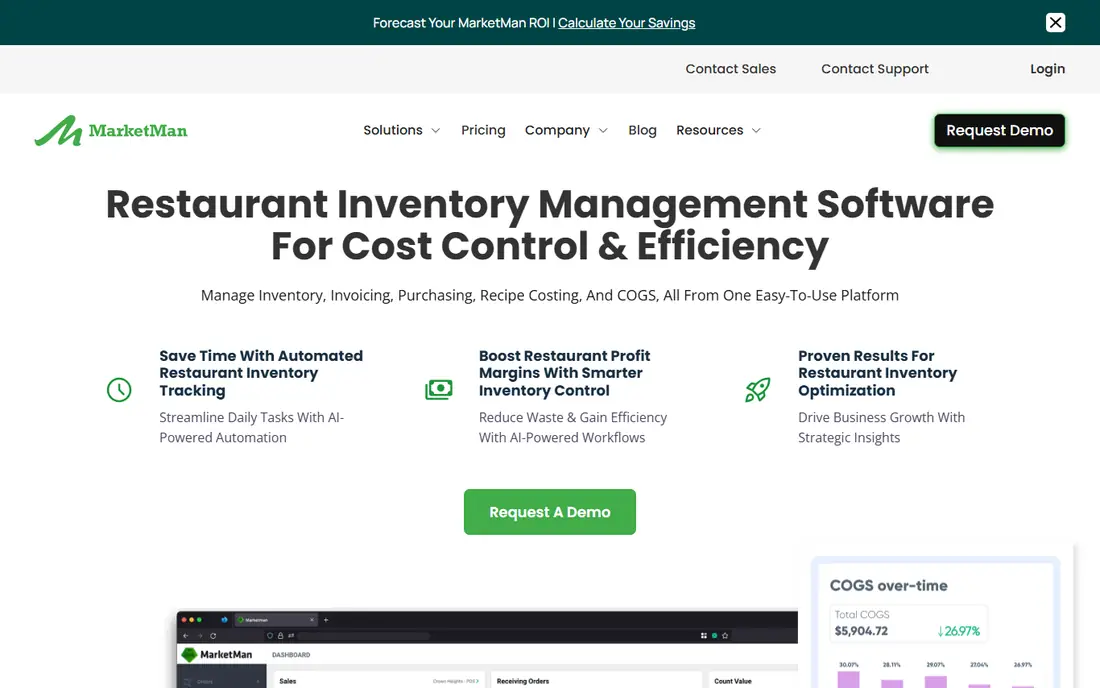
MarketMan is the dedicated inventory platform most restaurants should compare first. It covers stock counts, purchasing, supplier management, invoice processing, recipe costing, and accounts payable, with integrations to major point of sale and accounting systems. Suggested orders based on par levels, price-change alerts, and waste tracking help managers control food cost, while multi-location views let groups compare sites from one account. Setup takes longer than a point-of-sale add-on, because suppliers, items, and recipes need accurate data before the system pays off, and pricing is quote-based, with higher tiers providing full recipe and menu costing. For a single restaurant that only needs basic counts, MarketMan may be more than necessary. For inventory-heavy restaurants, groups, and operators whose main problem is purchasing and food cost, MarketMan is the most complete dedicated choice.
- Purchasing, inventory, recipe costing, and accounts payable in one place
- Supplier integrations and invoice handling
- Multi-location reporting
- Higher price and longer setup than point-of-sale add-ons
- Some advanced features sit on higher tiers
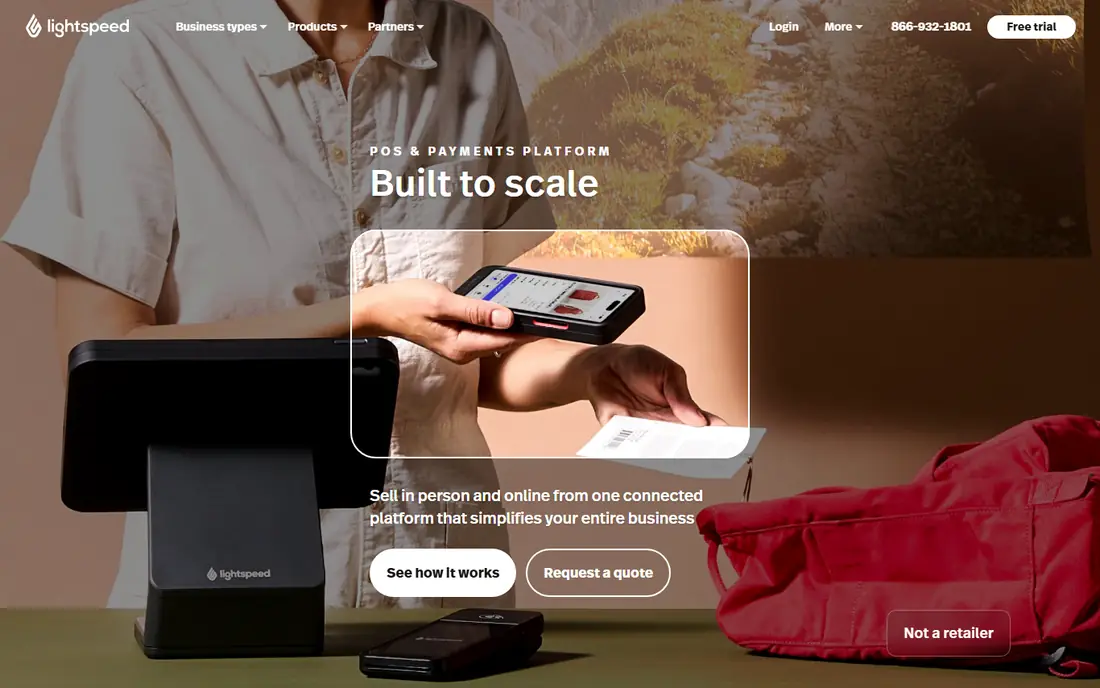
Lightspeed Restaurant suits restaurants that already run Lightspeed point of sale and want inventory without a separate system. Sales deplete ingredients automatically, menus link to recipes, and stock, sales, and reporting sit in the same dashboard that staff already use for ordering and payments. That tight link reduces manual entry and makes variance easier to spot, because sales and stock share the same data. Dedicated platforms such as MarketMan offer deeper purchasing, supplier, and accounts payable workflows, so a restaurant with complex procurement may still need one. Pricing is published on the vendor site and varies by plan. For a Lightspeed restaurant that wants inventory, purchasing basics, and reporting in one familiar system, Lightspeed Restaurant is the easiest and most coherent choice.
- Inventory tied directly to point of sale sales
- Ingredient depletion from orders
- Table, menu, and reporting tools in one system
- Inventory depth is less than dedicated platforms
- Best value only for Lightspeed point of sale users
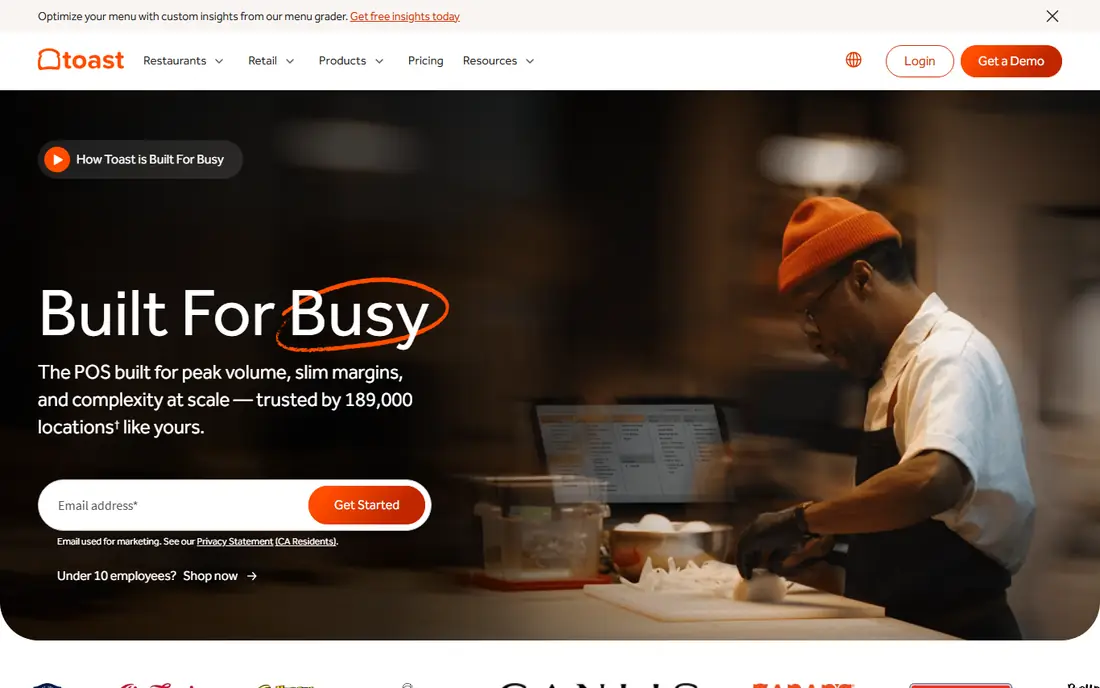
xtraCHEF by Toast is built for Toast point of sale users who want to control purchasing and food cost without leaving the Toast ecosystem. It scans supplier invoices, routes them for approval, tracks inventory, and links sales data from Toast to recipe and variance reporting, so managers can see where food cost drifts. A free entry tier covers basic use, which makes it easy for a Toast restaurant to try invoice automation before paying for deeper features. The limit is ecosystem fit. Restaurants that do not use Toast get less value, and advanced features sit on paid tiers, with pricing on the vendor site. For a Toast restaurant that struggles with paper invoices, manual entry, and approval delays, xtraCHEF is a practical, well-integrated step into inventory control, with a low-risk starting point.
- Invoice scanning and approval workflows
- Integrates with Toast point of sale
- Free entry tier for basic use
- Full value depends on Toast ecosystem
- Advanced inventory features need higher tiers
Restaurant365 suits multi-location chains and groups that want inventory, accounting, and operations in one back-office system. Recipe costing, inventory counts, purchasing, and sales data feed into accounting and prime cost reports, so finance and operations teams work from the same numbers. Scheduling and payroll tools sit alongside inventory, which helps groups manage labour and food cost together, rather than in separate spreadsheets. Pricing is quote-based and enterprise-level for chains, and implementation takes planning across locations. A single independent restaurant may find MarketMan or a point-of-sale tool simpler. For data-driven groups that need consistent reporting, accounting integration, and control across many sites, Restaurant365 is one of the strongest full back-office choices.
- Inventory plus accounting, payroll, and scheduling in one platform
- Recipe costing and prime cost tracking
- Strong multi-location reporting
- Quote-based pricing
- More platform than a single small restaurant needs
Crunchtime is built for restaurant chains, franchises, and multi-unit operators that need inventory, purchasing, and operations control at scale. It covers counts, orders, supplier management, and recipe costing, with AI-assisted tools for ordering and forecasting that help managers order closer to actual demand. Labour and scheduling features sit alongside inventory, so groups can manage food and labour cost, the two largest controllable costs, from one platform. Pricing is quote-based, and a chain-wide rollout needs training and data setup across sites. Independent restaurants will find dedicated single-site tools simpler and cheaper. For growing chains and franchise groups that need consistent inventory practice, forecasting, and reporting across many locations, Crunchtime is a strong enterprise-grade choice.
- Inventory, purchasing, and labour tools for chains
- AI-assisted ordering and forecasting
- Strong multi-location and franchise support
- Quote-based pricing
- Setup and training needed for chain-wide rollout
Yellow Dog suits catering businesses and multi-location operators that need inventory tied to events, production, and commissary work. It covers purchasing, stock, recipes, and catering workflows, so a caterer can cost an event, plan production, and track inventory for that event in one system, rather than juggling spreadsheets for each job. Multi-location support helps groups and commissary kitchens share stock and reporting. Pricing is quote-based, with details on the vendor site, and Yellow Dog is less widely known than MarketMan for a single restaurant. For caterers, commissary operations, and groups where events and production drive inventory, Yellow Dog offers a specialised fit that general restaurant tools handle less well, and it deserves a place on those shortlists.
- Inventory, purchasing, and catering workflows
- Multi-location and commissary support
- Recipe and event costing tools
- Quote-based pricing
- Less well known than MarketMan for single restaurants
meez is a recipe-first platform for kitchens that care about standardisation, scaling, and culinary consistency. Chefs can build, scale, and cost recipes, standardise preparation across locations, and see food cost per dish, which helps menu pricing and training. That recipe focus suits restaurant groups, hotels, and culinary teams where a dish must taste and cost the same in every kitchen. Published pricing starts at $19 per month for Starter, with Pro and Premium tiers above it, and some menu engineering features sit on the highest tier, so check the vendor site for the plan that matches your needs. Purchasing and accounts payable depth is less than MarketMan, so kitchens with complex procurement may pair meez with a purchasing tool. For recipe-led kitchens, meez is the clearest, most culinary-focused choice here.
- Recipe-first design with scaling and standardisation
- Clear food costing per dish
- Good for culinary teams and multi-unit recipe control
- Live menu engineering features sit on higher tiers
- Less purchasing depth than MarketMan
Craftable, formerly BevSpot, suits bars, pubs, and beverage-heavy restaurants that need to control drink cost as tightly as food cost. It tracks beverage inventory, pour costs, keg levels, and supplier orders, and it links drink sales to stock so managers can spot over-pouring, waste, and theft. Food costing is also covered, which helps venues that serve both food and drinks from one system. Pricing is quote-based, with details on the vendor site. A food-only restaurant without a serious bar programme gets less value from Craftable than from MarketMan or a point-of-sale tool. For bars, breweries, and restaurants where beverages drive margin, Craftable is the specialist pick, because it treats drink inventory with the same rigour that other tools apply to food alone.
- Beverage inventory, pour costing, and keg tracking
- Food and beverage costing in one platform
- Good for bars and beverage-heavy venues
- Quote-based pricing
- Less suited to food-only restaurants without a bar programme
BlueCart streamlines the ordering side of restaurant inventory, letting managers order directly from supplier catalogues on a phone or computer, rather than by phone, text, or paper. Consolidated invoicing simplifies accounts payable, and order history makes it easier to compare supplier prices and spot changes. For restaurants whose main pain is ordering friction and invoice paperwork, BlueCart removes a daily chore. It is not a full replacement for MarketMan or Restaurant365 on recipe costing, waste tracking, and deep food-cost reporting. Think of BlueCart as an ordering and invoicing layer that works well alongside a point of sale or a fuller inventory system. For independent restaurants and small groups that want cleaner supplier ordering without a large implementation, BlueCart is a practical, focused choice.
- Digital ordering from supplier catalogues
- Consolidated invoicing and accounts payable basics
- Mobile ordering for managers on the floor
- Less recipe and food-cost depth than dedicated inventory platforms
- Best as an ordering layer, not a full back office
How we picked these
We compared official feature pages, pricing pages, app store listings, privacy policies, and public user reviews, focusing on tools that handle restaurant inventory as a core job in 2026, from dedicated platforms to point-of-sale-built tools and chain back-office systems. We covered single restaurants, groups, caterers, and bars, because inventory needs differ sharply by venue type. We did not claim hands-on testing, and where pricing is quote-based we say so, so readers should request proposals for their location count and needs. We also weighed the workflows that actually move food cost: invoice handling, recipe costing, purchasing, and variance reporting. A tool that counts stock well but leaves invoices on paper will not cut food cost as much as a tool that automates invoices and ties them to recipes. That workflow view shapes the list, and it is why MarketMan leads for dedicated inventory, while point-of-sale and chain tools win for restaurants already inside those ecosystems.
What to check before you choose restaurant inventory software
Start with your point of sale and accounting systems. A tool that integrates cleanly with the till and ledger you already use will save more time than a feature-rich tool that needs manual data entry. List your suppliers, invoice formats, and recipe count, then test invoice scanning, recipe costing, and variance reporting with real data from one week, not with demo items. Pay attention to mobile counting, because counts happen in storerooms and walk-ins, not at a desk. Next, check pricing by location and tier. Many restaurant tools price per location, and recipe costing, menu engineering, or AI ordering may sit on higher tiers, so confirm the total for the features you actually need. Ask about implementation, training, and support, especially for multi-location rollouts, and run a pilot in one site for a month, tracking food cost, waste, and ordering time before rolling out to every location. A tool that staff will actually count with beats a powerful tool they avoid.
Frequently asked questions
What is the best inventory management software for restaurants?
MarketMan is the best all-round dedicated choice for most restaurants, with purchasing, inventory, recipe costing, and multi-location reporting in one platform. Lightspeed Restaurant suits Lightspeed point of sale users, xtraCHEF suits Toast users, and Restaurant365 suits chains that need accounting integration. The best pick depends on your point of sale, location count, and whether purchasing or recipe costing is your main problem.
How much does restaurant inventory software cost?
Pricing varies widely, from meez Starter at $19 per month to quote-based pricing for MarketMan, Restaurant365, Crunchtime, Yellow Dog, and Craftable, often priced per location. Point-of-sale-built inventory is usually bundled with point of sale plans, so check the vendor site for the full plan price. Ask for a written quote for your location count and required tiers, including implementation and training, before comparing tools.
Can restaurant inventory software reduce food cost?
Yes, when it is used consistently. Invoice automation catches price changes, recipe costing shows true dish cost, par levels prevent over-ordering, and variance reports highlight waste, theft, and portion errors. Software alone does not cut food cost: managers must act on variance, update recipes when supplier prices change, and count regularly. Restaurants that pair software with weekly food-cost reviews see the largest gains.
Do I need separate inventory software if my point of sale has inventory?
Point-of-sale inventory suits many single restaurants, especially when sales depletion and basic counts are enough. Separate software such as MarketMan or xtraCHEF helps when purchasing, supplier invoices, recipe costing, and multi-location control become complex, or when food cost needs detailed variance analysis. If your point of sale inventory already gives accurate food cost and clean ordering, a separate tool may add cost without adding value.
How often should a restaurant count inventory?
Most restaurants count high-value and fast-moving items weekly, with full counts monthly or biweekly, and cycle counts for key items in between. Inventory software helps by tracking perpetual stock from sales and deliveries, so physical counts verify the system rather than rebuilding it from scratch. Set a counting routine that staff can sustain, and investigate large variances promptly, rather than counting everything daily and burning out the team.
What is prime cost in restaurant management?
Prime cost is the sum of food and beverage cost plus labour cost, expressed as a percentage of sales, and it is a key measure of restaurant profitability. Tools such as Restaurant365 track prime cost by combining inventory and food cost data with payroll and scheduling data. Watching prime cost weekly helps managers spot when food prices, portioning, or staffing push costs above target, and it gives a single number to manage alongside sales.
Sources we checked (9)

Online Jobs is an independent blog about careers, online work, learning new skills and the tools that help people earn. More about us.
Keep reading
All posts
ZoomInfo Alternatives
The best ZoomInfo alternatives in 2026, compared on price, free plans, data coverage, and which tool fits small teams or large sales teams best in detail.
Workday Alternatives
We compared the best workday alternatives for HR, payroll, and global hiring, from BambooHR and Gusto to Rippling, Deel, and HiBob for growing teams in 2026.
Which SaaS Tools Have the Best Customer Support
Which SaaS tools have the best customer support? Compare eight popular tools on help centres, live help, response options and overall support quality.