8 Best Publishing Companies in 2026: 8 Companies Compared


Largest trade range · Starting price: See website
How we put this together: we compare official feature and pricing pages, app store listings, privacy policies and public user reviews. Prices change, so check the provider's site before you pay.
Key takeaways
- Penguin Random House and HarperCollins are the largest trade publishers, with many imprints across genres.
- Simon and Schuster, Hachette, and Macmillan round out the major trade houses in the United States.
- Scholastic suits children's books, while Wiley and Bloomsbury suit academic, professional, and literary niches.
- Most major houses accept submissions mainly through literary agents, so check each imprint submission page.
- The best publishing company for an author depends on genre, audience, and whether you have agent representation.
Quick comparison
| Name | Who it suits | Starting price | Free option | |
|---|---|---|---|---|
| Penguin Random House | Largest trade range | See website | No | Visit |
 HarperCollins | Wide trade and children's lists | See website | No | Visit |
 Simon and Schuster | Popular fiction and nonfiction | See website | No | Visit |
 Hachette Book Group | Trade and literary titles | See website | No | Visit |
 Macmillan | Literary and genre fiction | See website | No | Visit |
 Scholastic | Children's books and education | See website | No | Visit |
 Wiley | Academic and professional books | See website | No | Visit |
 Bloomsbury | Literary and academic titles | See website | No | Visit |
The best publishing companies
Publishing companies differ by size, genre focus, and how they accept manuscripts. The largest houses publish across many genres through imprints, while smaller or specialised houses focus on a niche. This list covers major trade, children's, academic, and literary publishers that authors most often research.
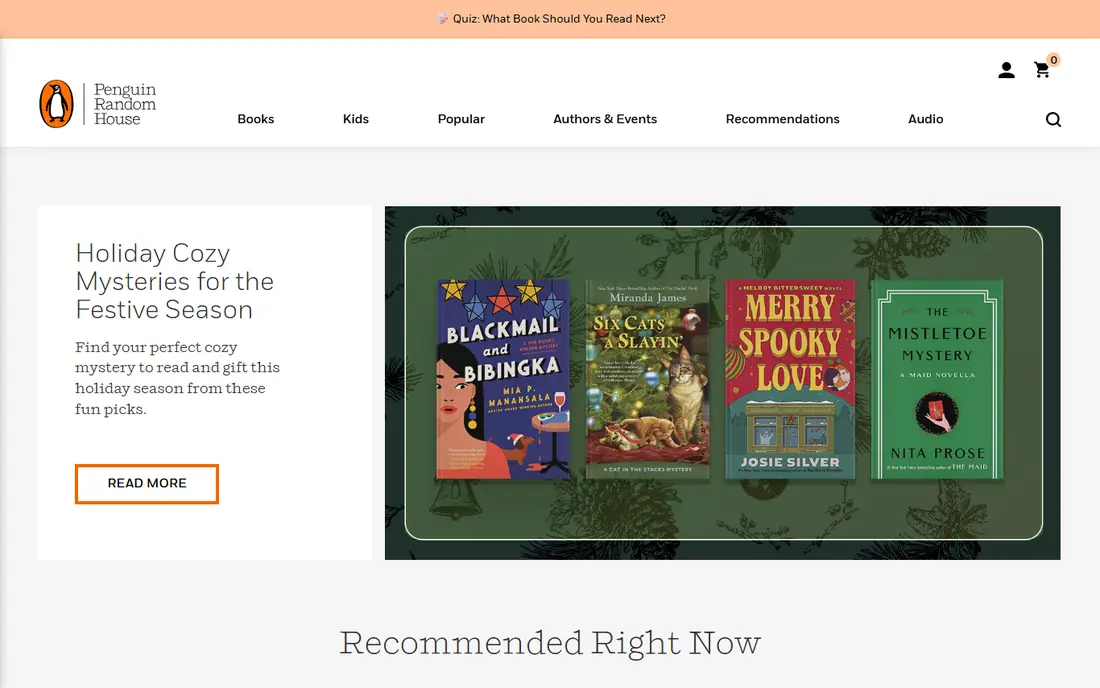
Penguin Random House is the largest trade publisher in the United States, with imprints covering literary fiction, genre fiction, nonfiction, children's books, and more. Its scale gives books wide distribution in bookstores and libraries, and its imprints include many well-known lists.
For authors, the main route is through a literary agent, and competition is high. If you write in a major commercial genre and have agent representation, Penguin Random House imprints are a natural first research stop. Check each imprint page for its focus, since imprints differ a lot.
- Very large imprint range across genres
- Strong distribution and marketing reach
- Many award-winning lists
- Submissions mainly through agents
- Large size can mean slower, more competitive decisions
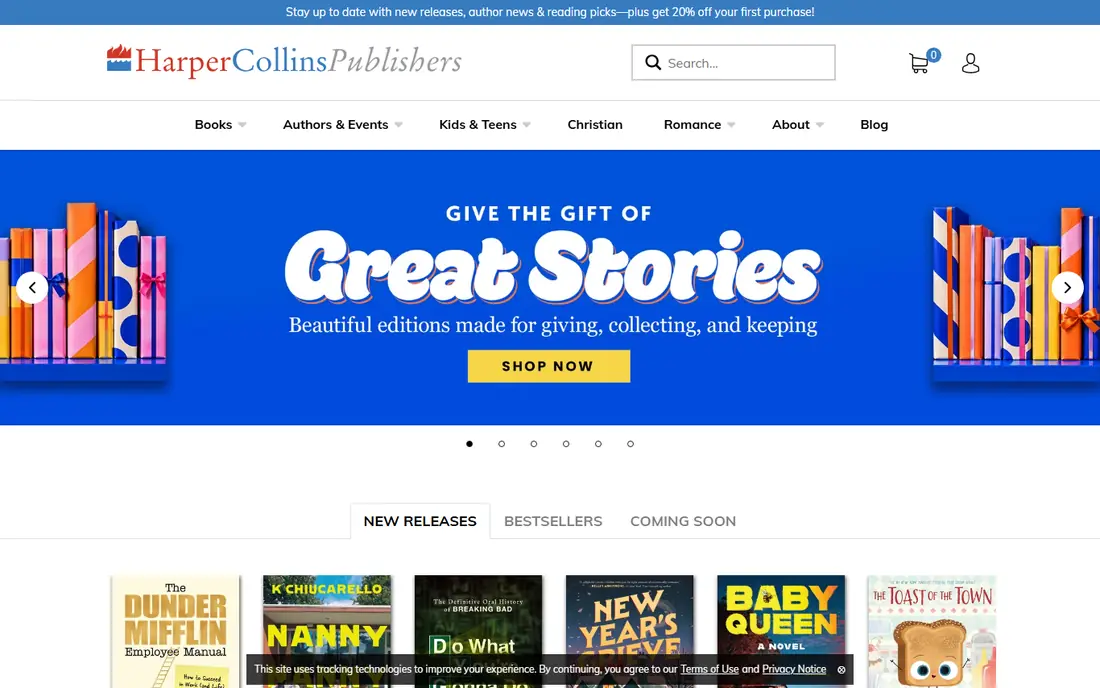
HarperCollins is another major trade house, with imprints for fiction, nonfiction, children's books, and Christian publishing. Its lists include popular series and literary titles, and its global reach helps books travel across markets.
As with other majors, agent representation is the usual route, and imprint fit matters. A thriller, a children's picture book, and a memoir will go to different imprints, so research the imprint list before querying. HarperCollins suits authors who want a major house with a broad range.
- Broad imprints for adults and children
- Strong backlist and global reach
- Many popular series
- Submissions mainly through agents
- Imprint fit matters more than house size
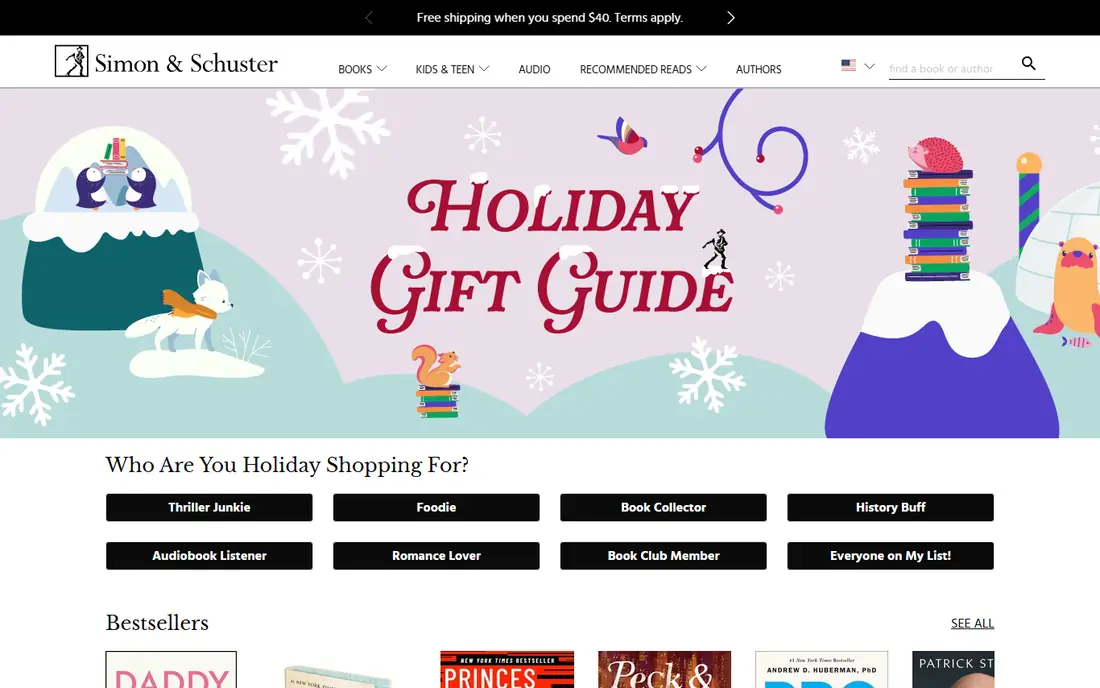
Simon and Schuster publishes popular fiction, nonfiction, children's books, and audio, with imprints that cover a wide commercial range. Its lists include many bestsellers and well-known authors, and its distribution reaches bookstores, libraries, and online retailers.
Authors with commercial, popular, or celebrity-linked nonfiction often find a natural fit here. Literary or highly niche work may fit better at a literary imprint elsewhere. Check the imprint pages and recent titles to judge fit.
- Strong popular fiction and celebrity nonfiction lists
- Many imprints
- Wide distribution
- Submissions mainly through agents
- Popular focus may suit commercial work best
Hachette Book Group, part of the French Hachette group, publishes literary fiction, commercial fiction, nonfiction, and children's books through imprints such as Little, Brown, Grand Central, and Orbit. Its range covers both literary and genre work, which gives authors several possible fits within one house.
Research imprints carefully, since a literary novel and a science fiction series will go to different teams. Hachette suits authors who want a major house with a strong literary side as well as commercial reach.
- Strong literary and commercial imprints
- Children's and audio lists
- Global parent company
- Submissions mainly through agents
- Imprint focus varies widely
Macmillan publishes through imprints including Farrar, Straus and Giroux, Tor, St. Martin's, and Macmillan Children's Publishing Group. Its literary and science fiction lists are especially well regarded, and its children's division is large.
Macmillan suits literary authors and genre writers in science fiction and fantasy, as well as children's authors. As with other majors, an agent is the usual route, and imprint research is essential. Check recent titles from each imprint to see where your work fits.
- Strong literary, science fiction, and children's imprints
- Respected editorial lists
- Audio division
- Submissions mainly through agents
- Some imprints rarely open to unagented work
Scholastic is the clear pick for children's books and educational publishing. Its series, school book clubs, and book fairs reach young readers directly, and its lists include picture books, middle grade, and young adult titles.
Adult authors will not find a fit here, and children's authors should follow Scholastic submission guidelines closely. If you write for children and want school and library reach, Scholastic is a first research stop.
- Largest children's publisher reach in schools
- Popular series and educational lists
- Book fairs and clubs
- Focus is children's and education, not adult trade
- Submissions follow specific guidelines
Wiley suits academic and professional authors rather than trade fiction writers. Its books cover science, technology, medicine, business, law, and other professional fields, and its proposals need a clear audience, competing titles, and teaching or professional use.
Trade authors should look elsewhere, but scholars and professionals with a textbook, reference, or practitioner book will find Wiley a natural fit. Check the subject pages and proposal guidelines for your field.
- Strong academic, professional, and reference lists
- Global distribution
- Journal and book programmes
- Not a trade fiction house
- Academic proposals need a clear market and peer case
Bloomsbury publishes literary fiction and nonfiction, children's books, and academic titles, with offices in London, New York, and other cities. Its literary list is well regarded, and its academic division covers humanities and social sciences.
Bloomsbury suits literary authors who want a respected, mid-size house, and academics in its subject areas. Submission routes vary by division, so check the relevant regional site and guidelines before querying.
- Respected literary list
- Academic and professional divisions
- Global offices
- Smaller than the largest majors
- Submissions vary by division and region
How we picked these
We compared official publisher pages, imprint lists, submission guidelines, and public catalogues for companies that publish books in the United States. We favoured houses with current, active lists across trade, children's, academic, and literary areas, and we noted where agent representation is the usual route. We did not claim hands-on testing, and we used publisher pages as the source for imprint and submission facts.
How to choose a publisher to approach
Start with genre and audience, not house size. A large house with the wrong imprint is a worse fit than a smaller house that publishes your exact kind of book. Read recent titles from each imprint, note the editors, and check whether your book would sit naturally beside them.
Next, check submission routes. Most major trade houses accept work through literary agents, while some imprints or divisions accept direct proposals in specific areas. If you do not have an agent, research agents who represent your genre first, since that is often the practical first step.
Finally, be realistic about timing and fit. Publishing decisions take months, and a rejection often means fit, timing, or list balance rather than quality alone. Query in small batches, track responses, and revise your proposal or query letter based on feedback.
Also keep a simple record of where you sent work, when you sent it, and what each publisher asked for. Some houses ask for a full proposal, others ask for sample chapters, and mixing those requirements up can delay a response. A clear tracker helps you follow up politely at the right time, and it stops you from sending the same work to the same imprint twice. It also helps you see which genres and imprints respond most often, so later queries go to better fits.
Frequently asked questions
Which publishing company is the best?
The best publishing company depends on genre and audience. Penguin Random House and HarperCollins offer the widest trade range, Macmillan suits literary and genre fiction, Scholastic suits children's books, and Wiley suits academic work. Fit with a specific imprint matters more than overall size.
What are the best book publishing companies for new authors?
New authors often start by finding a literary agent who represents their genre, since major houses mainly accept agented work. Research imprints at Penguin Random House, HarperCollins, Simon and Schuster, Hachette, and Macmillan, and query agents whose recent sales match your genre.
Do major publishers accept unsolicited manuscripts?
Most major trade houses accept manuscripts mainly through literary agents, though rules vary by imprint and division. Some academic and children's divisions accept direct proposals under specific guidelines. Always check the current submission page for the exact imprint before sending work.
What is the best publishing company for children's books?
Scholastic is a leading children's publisher, with school, library, and book fair reach. HarperCollins, Penguin Random House, Macmillan, and Simon and Schuster also have large children's divisions. Pick based on age range, format, and whether your book is a picture book, middle grade, or young adult title.
How do I choose between traditional and self-publishing?
Traditional publishing offers editorial, distribution, and marketing support, but it takes longer and requires agent or publisher acceptance. Self-publishing offers control and speed, but the author handles editing, cover, distribution, and marketing. Compare your goals, timeline, and budget before you decide.
Sources we checked (8)

Online Jobs is an independent blog about careers, online work, learning new skills and the tools that help people earn. More about us.
Keep reading
All posts
n8n Alternatives
n8n alternatives compared for 2026, with Zapier, Make, Activepieces, and more, covering visual builders, code steps, self-hosting, and pricing models.

ZoomInfo Alternatives
The best ZoomInfo alternatives in 2026, compared on price, free plans, data coverage, and which tool fits small teams or large sales teams best in detail.
Zoom Alternatives for Webinars
Compare Zoom alternatives for webinars in 2026, from browser-based rooms to enterprise events, with prices, attendee limits, features and honest trade-offs.