Best Procurement Software in 2026: 8 Tools Compared

How we put this together: we compare official feature and pricing pages, app store listings, privacy policies and public user reviews. Prices change, so check the provider's site before you pay.
Key takeaways
- Precoro is the only tool here with fully public pricing, starting at 499 dollars per month for its Core plan.
- Coupa, SAP Ariba, Oracle Procurement and JAGGAER are quote-based enterprise suites built for large, complex buying operations.
- Procurify and Tradogram suit mid-market teams that want budget control before money is committed, without a long implementation.
- Zip is the pick for companies whose biggest problem is approvals, since it focuses on intake and routing rather than full source-to-pay.
- Expect implementation time to grow with scope: mid-market tools can go live in weeks, while enterprise suites often take months.
Quick comparison
| Name | Who it suits | Starting price | Free option | |
|---|---|---|---|---|
 Coupa | Large enterprises consolidating spend | See website | No | Visit |
 SAP Ariba | Companies already running SAP | See website | No | Visit |
 Oracle Procurement | Oracle Fusion Cloud customers | See website | No | Visit |
 JAGGAER | Complex sourcing in manufacturing and public sector | See website | No | Visit |
 Precoro | Mid-market teams wanting public pricing | $499 per month | Free trial | Visit |
 Procurify | Mid-market spend control with AI help | See website | No | Visit |
 Zip | Intake and approval orchestration | See website | No | Visit |
 Tradogram | Growing teams outgrowing spreadsheets | See website | Free trial | Visit |
The best procurement software
Procurement software ranges from simple purchase order tools to full source-to-pay suites, and the right choice depends mostly on company size and how much of the buying cycle you want covered. We compared official pricing pages, feature documentation and public user reviews to build this list, and we favor tools that are clear about what they cost and what they leave out.
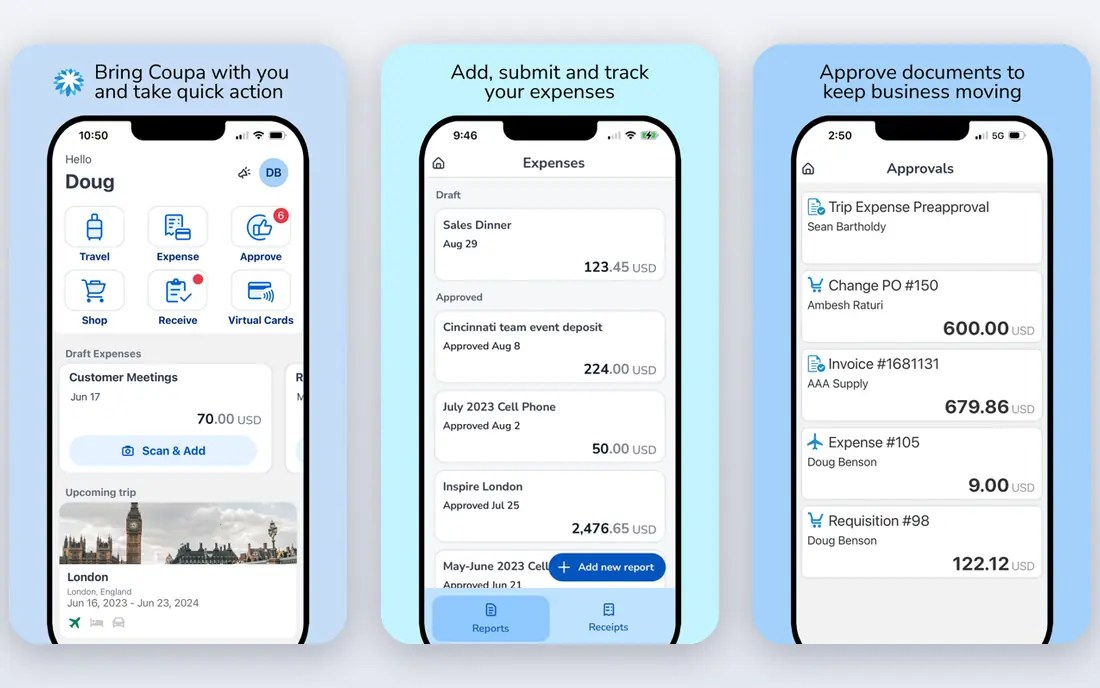
Coupa is the default shortlist entry for large companies that want purchasing, invoicing, expenses and payments in one system. Its Business Spend Management platform covers the whole cycle, and its supplier network and community benchmark data help finance teams compare their prices against peers. The AI features now handle intake routing and approval suggestions, which cuts down the back-and-forth that slows buying.
The catch is cost and commitment. Coupa does not publish prices, and buyers commonly report annual costs well into five figures, with implementation measured in months rather than weeks. Smaller companies will find the platform more than they need, and the breadth of the suite means some modules may sit unused. For a large enterprise replacing several point tools at once, though, Coupa is hard to beat.
- Full source-to-pay coverage
- Large supplier network and benchmark data
- Strong AI features for intake and approvals
- Quote-based pricing with no public figures
- Implementation can take months
- Broad scope can feel heavy for smaller teams
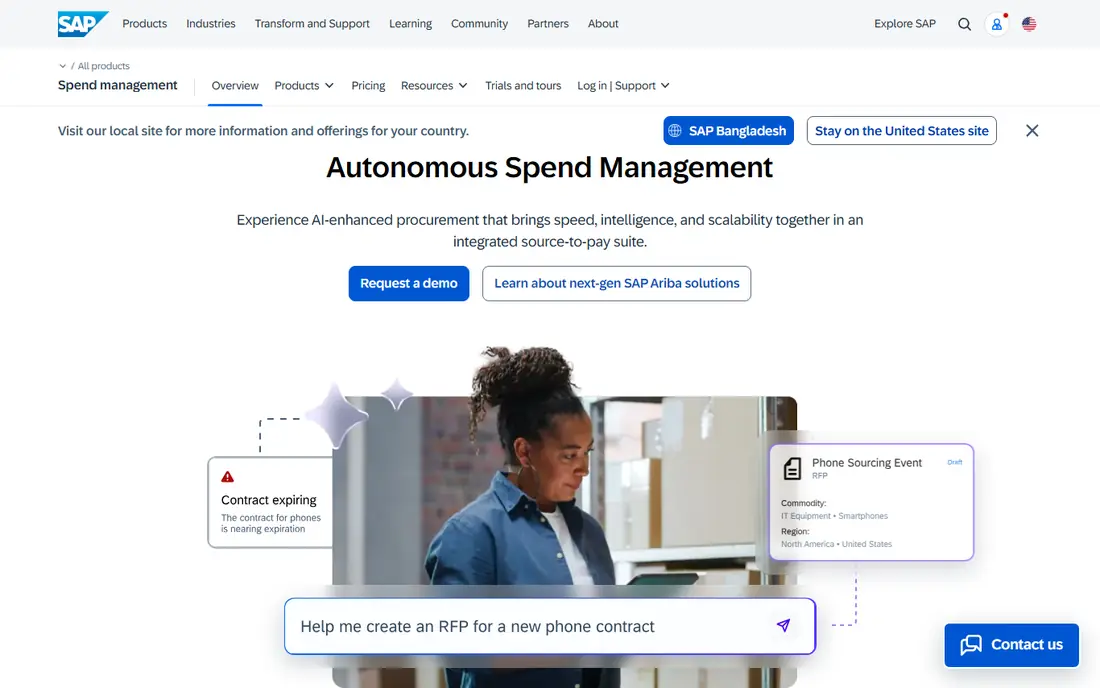
SAP Ariba is the procurement choice for organizations already standardized on SAP. Sourcing, supplier management, contracts, buying and invoicing run inside the same ecosystem as the ERP, and the Ariba Network connects buyers with millions of suppliers. For global manufacturers and enterprises already on SAP, that integration value is decisive, and the platform handles direct spend and complex compliance requirements well.
Outside SAP, the case is much thinner. Pricing is custom-quoted, implementations are long, and the platform assumes an SAP-shaped organization. Non-SAP companies usually get better value from Coupa or a mid-market tool. SAP shops should start here and validate the fit before entertaining alternatives, since switching away later is expensive.
- Deep integration with SAP ERP
- Huge supplier network
- Full sourcing, contract and invoicing coverage
- Quote-based enterprise pricing
- Long implementations
- Weak value outside the SAP world
Oracle Procurement, part of Oracle Fusion Cloud, gives Oracle customers procurement that lives inside their financial system. Purchase requisitions, supplier qualification, sourcing, contracts and invoicing share the same data as the general ledger, which removes reconciliation work and keeps multi-currency, multi-subsidiary buying consistent. For companies already running Oracle Financials, that native fit is the main selling point.
The trade-offs mirror SAP Ariba. Pricing is quoted rather than published, and the implementation effort is substantial, especially for global rollouts. Companies not already committed to Oracle will find faster and cheaper options elsewhere. If your finance team already lives in Oracle, this is the natural pick; if not, there is little reason to choose it over a standalone suite.
- Native procurement for Oracle financials
- Full source-to-pay coverage
- Strong global compliance and multi-currency support
- Quote-based pricing with no transparency
- Complex implementation
- Best value only inside Oracle environments
JAGGAER One connects source-to-contract, procure-to-pay and supplier intelligence in a single platform, with particular strength in complex sourcing. Manufacturing companies, universities and public sector bodies use it for structured sourcing events, contract management and supplier performance tracking across many locations. Its supplier community runs into the millions, which helps buyers find and qualify new vendors.
Like the other enterprise suites, JAGGAER is priced by quote and takes real implementation effort. It is built for organizations with dedicated procurement teams and complicated buying, so a company with straightforward purchasing will find it oversized. For complex, regulated or multi-site buying, its depth in sourcing and category management stands out from the mid-market tools on this list.
- Deep sourcing and category management
- Strong in manufacturing, higher education and public sector
- Large supplier community
- Quote-based pricing
- Enterprise implementation effort
- More complex than mid-market teams need
Precoro is our pick for mid-market teams that want to know the price before the first demo. Core costs 499 dollars per month billed annually and covers requisitions, purchase orders, approvals, vendor management and integrations with QuickBooks Online and Xero. The Automation tier at 999 dollars per month adds AI-powered invoice processing, real-time budget tracking, punchout catalogs and a supplier portal. Implementation typically runs two to eight weeks, far faster than enterprise suites.
There are edges to confirm before buying. Spending cards and some expense features sit outside the published plans, so card-heavy teams may need a second tool. Reviewers also note that the mobile app is less complete than the desktop version and that NetSuite integration can be rough. For a mid-market team that wants purchase order discipline with a known price, Precoro is the straightforward choice.
- Published pricing, rare in this category
- Procure-to-pay with three-way matching and real-time budgets
- Typical go-live in weeks
- Company cards and expense claims are not in the published plans
- Mobile app trails the desktop
- Reviewers note NetSuite integration difficulties
Procurify gives mid-market finance teams control at the moment money is requested, not after it is spent. Requests, purchase orders, invoices and bill payments run through one system, and AI agents draft requests, apply codes and match invoices to purchase orders. Budget holders see committed spend in real time, which stops the common problem of discovering overspend at month end. Reviewers consistently rate it highly for ease of use.
Pricing is the weak point. Procurify quotes per customer, and reviewers report that costs vary with team size and modules, with a setup fee on top. Advanced reporting also needs extra configuration to get right. If your priority is pre-spend budget control with a tool your team will actually adopt, Procurify deserves a demo, but get the full quote in writing before committing.
- Clear budget visibility before spending
- AI agents draft requests and match invoices
- Well reviewed for ease of use
- Custom pricing with no public figures
- Setup fee reported by reviewers
- Advanced reporting needs configuration
Zip solves a specific problem very well: employees do not know how to buy things, and approvals bounce between finance, IT, legal and security. Zip gives staff one intake form that routes each request to the right reviewers, checks it against policy, and creates the purchase request in the ERP or procure-to-pay system. Companies with complex approval chains report much shorter cycle times after adopting it.
Zip is not a full procurement suite. It does not try to replace sourcing, contract management or deep invoice processing, and it is priced for enterprises, with minimum user counts on some editions. If your buying process is already controlled but approvals are the bottleneck, Zip is the best fit on this list. If you need end-to-end procurement, pair it with a P2P tool or pick a suite instead.
- Best-in-class intake experience for employees
- Cross-functional approval routing
- Strong ERP and P2P integrations
- Quote-based enterprise pricing
- Focused on intake rather than full procurement
- Minimum user counts on some editions
Tradogram is built for teams that have outgrown spreadsheets but are not ready for enterprise complexity. It covers requisitions, approvals, purchase orders, receiving, invoices, budgets and inventory in one connected workflow, and it adds sourcing events with side-by-side bid comparison and vendor scorecards. Its AI scanning reads quotes and invoices to create documents automatically, which removes a lot of manual data entry.
The main drawback is pricing transparency: Tradogram does not publish its plans on its site, so you need a quote to budget accurately, though a free trial is available to test the product first. Its ecosystem is also smaller than the enterprise suites, so niche integrations may need work. For a growing company that wants real procurement discipline without enterprise cost or timelines, Tradogram is a strong, practical option.
- Full procure-to-pay workflow at a mid-market price
- Sourcing events and vendor management included
- AI document scanning
- Pricing is not published on its site
- Smaller vendor ecosystem than enterprise suites
- Advanced features may need onboarding help
How we picked these
We compared official feature pages, pricing pages, app listings and public user reviews for tools that genuinely cover procurement, not generic accounting or expense apps. We favored products that are available and supported today, and we checked each vendor homepage to confirm it loads and belongs to the product. Where a vendor does not publish prices, we say so rather than guessing, and we note the trade-offs reviewers mention most often, including implementation effort and integration gaps.
What to check before you sign
Start with scope, not features. List the buying steps you actually need covered, from request to payment, and check which tools cover all of them without add-ons. A tool that needs three extra modules for invoicing or receiving is not really cheaper than a suite.
Next, ask about implementation in writing. Mid-market tools often go live in weeks, while enterprise suites can take a quarter or longer, and that time has a cost in staff hours and delayed savings. Ask for a named implementation plan, data migration scope and training included in the quote.
Finally, test the approval experience with real users, not just the buying committee. Procurement tools fail when employees bypass them, and the easiest intake usually wins over the most powerful feature set. Run a short trial with a few requesters and approvers, and watch how long a simple purchase actually takes from request to approved order.
Frequently asked questions
What is the best procurement software for small businesses?
For small teams, Precoro and Tradogram are the most practical starting points, since they cover requisitions through invoices without enterprise implementation. Precoro has the advantage of public pricing at 499 dollars per month, while Tradogram offers a free trial to test its workflow first. Both are easier to adopt than Coupa or SAP Ariba.
What is e-procurement software?
E-procurement software is the digital version of the buying process: employees submit requests online, managers approve them in the system, purchase orders are generated automatically, and invoices are matched before payment. It replaces email and spreadsheet buying with a controlled, auditable workflow. All eight tools on this list qualify, though the enterprise suites add sourcing and contract management on top.
How much does procurement software cost?
Mid-market tools with published prices start around 499 dollars per month, while enterprise suites like Coupa, SAP Ariba and JAGGAER are quote-based and commonly run into five figures per year. Total cost also includes implementation, training and any integration work, so ask for the full first-year figure in writing. Free trials are available from Precoro and Tradogram.
What is the difference between procurement software and purchasing software?
The terms overlap heavily, and many vendors use them interchangeably. In practice, purchasing software usually covers the transactional side, meaning requisitions, orders and invoices, while procurement software can also include strategic work like sourcing, supplier management and contracts. If you only need order control, a mid-market tool is enough; if you run sourcing events, look at the suites.
Do top procurement software solutions include supplier management?
Most do, but depth varies. Coupa, SAP Ariba and JAGGAER include full supplier lifecycle management with onboarding, performance tracking and risk data. Precoro and Tradogram cover supplier records and portals at a simpler level. If supplier qualification and compliance are central to your buying, prioritize the enterprise suites or check the mid-market tool's supplier features closely during a trial.
Is Coupa or SAP Ariba better for a large enterprise?
It depends on your existing systems. SAP Ariba wins for companies already running SAP ERP, since the integration is native and deep. Coupa wins for companies that want a standalone suite with strong benchmark data and a broader supplier network, and it is often adopted faster. Both are quote-based, so run both through a structured pilot before deciding.
Sources we checked (9)

Online Jobs is an independent blog about careers, online work, learning new skills and the tools that help people earn. More about us.
Keep reading
All posts
Workday Alternatives
We compared the best workday alternatives for HR, payroll, and global hiring, from BambooHR and Gusto to Rippling, Deel, and HiBob for growing teams in 2026.
Which SaaS Tools Have the Best Customer Support
Which SaaS tools have the best customer support? Compare eight popular tools on help centres, live help, response options and overall support quality.
Top AI Helpdesk Software
Searching for top AI helpdesk software in 2026? We compared 8 AI helpdesks on automation, pricing, channels and ease of setup for small and growing teams.