Best Platform for SEO for SaaS in 2026: 8 Tools Compared

How we put this together: we compare official feature and pricing pages, app store listings, privacy policies and public user reviews. Prices change, so check the provider's site before you pay.
Key takeaways
- Ahrefs and Semrush are the most complete all-in-one platforms for SaaS, covering keyword research, backlinks, audits and rank tracking in one subscription.
- Moz Pro is easier for smaller teams, while SE Ranking offers a lower-cost all-in-one option with solid tracking.
- Surfer, Clearscope and Frase are content tools, not full platforms, and they work best alongside a research tool, not instead of one.
- SaaS teams should check credit limits, tracked keyword limits and user seats before paying, because those limits decide whether a plan fits a growing site.
Quick comparison
| Name | Who it suits | Starting price | Free option | |
|---|---|---|---|---|
 Ahrefs | Backlinks and competitor research | $29 per month | No | Visit |
 Semrush | All-in-one marketing data | $139 per month | Yes | Visit |
 Moz Pro | Simpler all-in-one SEO | $49 per month | Yes | Visit |
 Surfer | Content optimisation | $59 per month | Free trial | Visit |
 Clearscope | Content grading and briefs | $129 per month | Free trial | Visit |
 SE Ranking | Lower-cost all-in-one tracking | $52 per month | Free trial | Visit |
 Frase | Content research and briefs | $49 per month | Free trial | Visit |
 Screaming Frog SEO Spider | Technical site crawling | $259 per year | Yes | Visit |
The best platform for SEO for SaaS
SaaS SEO has a specific shape. You need to find keywords that signal buying intent, compare your pages with competitors, fix technical issues that block indexing and track rankings across many feature, comparison and pricing pages. A good platform also needs to handle content work, because SaaS growth usually depends on educational articles, not just product pages. We compared official pricing pages, feature pages and public documentation, and we focused on keyword data, backlink data, audits, rank tracking and content tools.
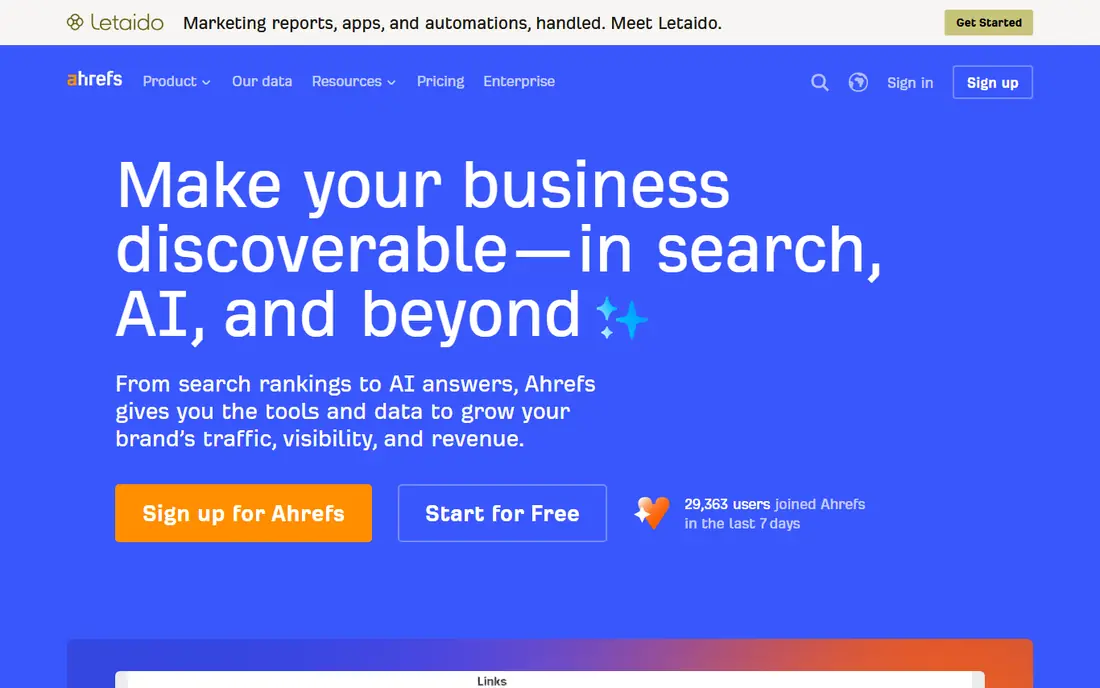
Ahrefs is the first tool many SaaS teams open when they want to understand a market. Its keyword explorer shows search demand and difficulty, its site explorer reveals which pages earn links for competitors, and its audit flags technical problems in order of importance. That combination helps a SaaS team decide which topics are worth writing about and which pages need fixing first.
The pricing structure needs attention. A low-cost Starter tier exists, but the fuller Lite plan costs more, and higher plans add credits for reports and tracked keywords. For a small SaaS team, Starter can be enough to start research, but a growing site will likely need Lite or Standard. If backlinks and competitor pages drive your strategy, Ahrefs is still the strongest single research tool on this list.
- Deep backlink and keyword data
- Clear site audit with prioritised fixes
- Useful free tools for a first check
- Full Lite plan costs much more than the Starter tier
- Credits and limits need careful reading
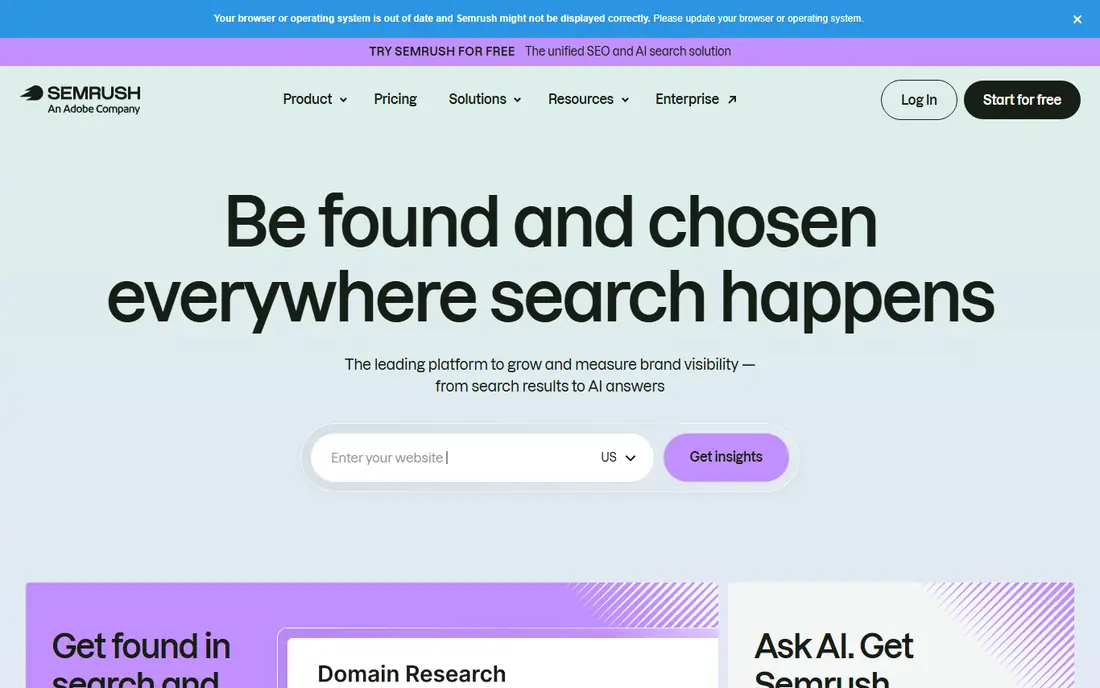
Semrush is the broadest platform here. It covers keyword research, rank tracking, site audits, backlink analysis, content ideas and paid search data, which suits a SaaS team that wants SEO and wider marketing data in one place. Its competitor reports show which keywords rivals rank for, which ads they run and which pages attract traffic, giving a fuller picture than a pure SEO tool.
That breadth comes at a higher entry price, and the interface has many sections to learn. A small team that only needs SEO may find Semrush more than it needs, while a team that also manages paid search and content marketing will get more value from the same subscription. Start with the limited free account to test the workflow before committing to a paid plan.
- Broad data across SEO, paid search, social and content
- Strong competitor and keyword tools
- Useful reporting for teams
- Higher entry price than rivals
- Dashboard can feel busy for new users
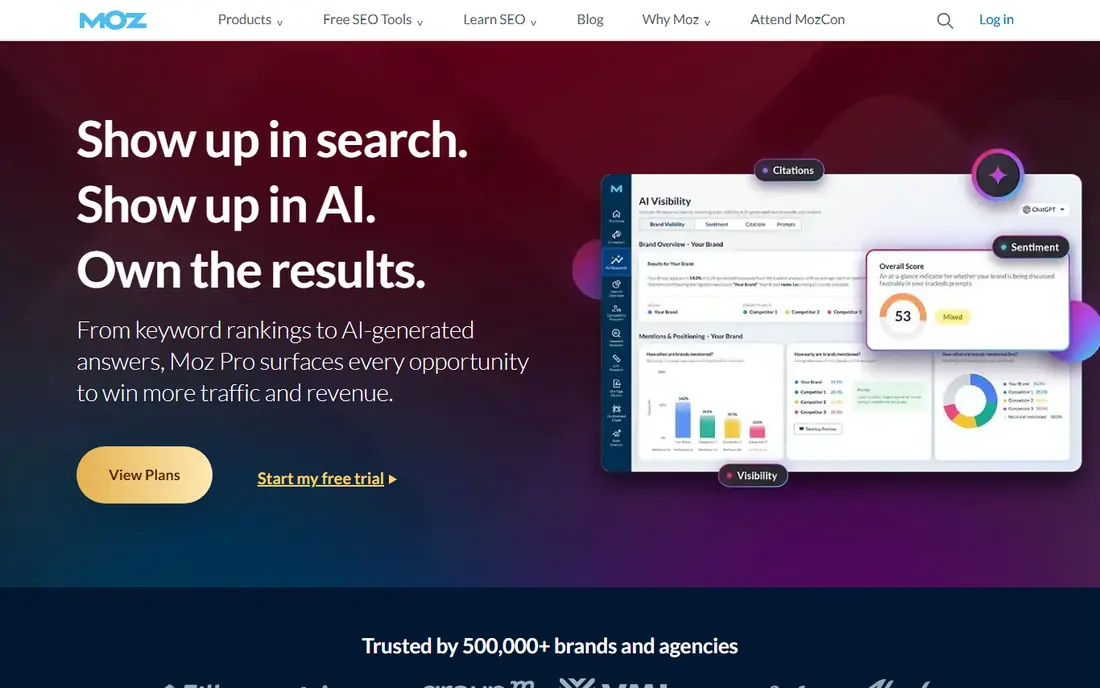
Moz Pro suits SaaS teams that want an all-in-one platform without a steep learning curve. Its keyword explorer, site crawl, rank tracker and link tools cover the core jobs, and its learning resources explain what each metric means and what to do next. For a founder or a small marketing team doing SEO alongside other work, that guidance matters.
Moz does not match Ahrefs for backlink depth, and its tracked keyword limits on lower plans can feel tight for a site with many pages. If your strategy depends heavily on link building, Ahrefs may serve you better. If you want a steady, understandable platform for research, audits and tracking, Moz Pro is a sensible, lower-stress choice.
- Clearer learning curve for smaller teams
- Useful keyword, audit and tracking tools
- Free tools for a first site check
- Backlink data is thinner than Ahrefs
- Higher plans cost more for larger sites
Surfer helps SaaS teams write pages that can rank. You enter a target keyword, and Surfer analyses top-ranking pages, then gives a brief with suggested terms, headings, word count and structure. As you write, a content score shows how closely your draft matches those patterns, which helps editors spot thin sections before publishing.
Surfer is not a replacement for Ahrefs or Semrush. It does not offer the same keyword database, backlink history or full site audit, and its plans meter articles per month. Use it alongside a research platform: find the keyword in Ahrefs or Semrush, then use Surfer to shape the article. For content-led SaaS teams, that pairing is very effective.
- Scores draft content against top-ranking pages
- Clear briefs with terms, headings and structure
- Integrates with common editors
- Not a full research or audit platform
- Article credits limit monthly output
Clearscope is a content optimisation tool focused on quality and relevance. Its reports list terms and topics that top-ranking pages cover, grade a draft and show which sections need more depth. Writers find the reports easy to follow, because they read as a checklist rather than a dense data table, and editors can compare drafts quickly.
The price is higher than Surfer or Frase for a similar job, and Clearscope does not replace a research platform. It earns its place for SaaS teams that publish long, expert articles and want a consistent editorial standard. If you publish only a few articles a month and need strict quality control, Clearscope is worth testing. If volume matters more, a lower-cost content tool may fit better.
- Clear, research-based content reports
- Easy grading for writers and editors
- Strong for long-form SaaS articles
- Higher price per report than some rivals
- No full SEO platform features
SE Ranking gives SaaS teams a full platform at a lower entry price than Semrush or Ahrefs Lite. It covers keyword research, competitor checks, site audits, rank tracking and reporting, with a clean interface that is easy to share with a team or a client. For a small SaaS company or an agency managing several sites, that value is hard to ignore.
Its backlink data is not as deep as Ahrefs, and its keyword database may feel thinner in some niches. Those limits matter less if your main jobs are tracking, audits and content planning, and more if link building is central to your growth. For many SaaS teams, SE Ranking is the best balance of price and coverage.
- All-in-one research, audit and tracking at a lower price
- Clear rank tracking and reporting
- Good for agencies and small SaaS teams
- Backlink database is smaller than Ahrefs
- Some advanced features need higher plans
Frase helps SaaS writers research a topic quickly. It pulls headings, questions and key points from top-ranking pages, builds a brief and scores a draft as you write. That speed helps small content teams that need to publish regularly without spending a day on research for every article.
Frase does not offer full keyword research, backlink analysis or site audits, so pair it with a research platform. Its briefs also depend on the quality of the pages ranking for a keyword, so an editor should still check facts and add original insight. For teams that want a lower-cost content tool with fast briefs, Frase is a practical pick.
- Fast research briefs from top-ranking pages
- Content scoring and question research
- Lower price than Clearscope
- Not a full SEO platform
- Brief quality varies by topic and search results
Screaming Frog SEO Spider is a desktop crawler, not a cloud platform, and it is the best technical tool on this list for SaaS sites with many pages. It crawls your site and reports broken links, redirect chains, missing titles, duplicate content, slow pages and other issues that can block rankings. The free version covers up to 500 URLs, which is enough for a small site or a first audit.
It does not do keyword research, backlink analysis or rank tracking, so it complements rather than replaces a platform such as Ahrefs, Semrush or SE Ranking. Technical teams like it because the data is detailed and exportable, and it works well for regular audits after site changes. Every SaaS team should run a crawl before a redesign or migration, even if it uses another platform day to day.
- Deep technical crawl of large sites
- Finds broken links, redirects, duplicate content and metadata issues
- Free version covers up to 500 URLs
- Desktop software, not a cloud dashboard
- No keyword research or rank tracking on its own
How we picked these
We compared official pricing pages, feature pages and public documentation, and we checked that each homepage loads and belongs to the product named. We favoured platforms that cover SaaS needs, meaning keyword research, competitor analysis, audits and tracking, plus content tools that help SaaS teams publish articles that rank. We also noted credit limits, keyword limits and whether a tool is a full platform or a content add-on, because that distinction decides the real cost of a stack.
How to build a SaaS SEO stack
Start with one research platform, not three. Pick Ahrefs if backlinks and competitor pages matter most, Semrush if you want broad marketing data, Moz Pro if you want a simpler platform, or SE Ranking if budget matters most. Add a crawler such as Screaming Frog for technical audits, because even the best cloud platform can miss site-specific crawl issues.
Then add a content tool only if content volume justifies it. Surfer, Clearscope or Frase can improve articles, but they do not replace research or technical fixes. Set a clear workflow: research a keyword, check search intent, audit the target page, write to a brief, then track the ranking and update the article after a few months. Finally, review limits each quarter, because tracked keywords, credits and seats grow with your site, and a plan that fit last year may not fit now.
A note on AI search
Search results now include AI summaries and answer features, so SaaS teams should track more than classic rankings. Check whether your platform reports visibility in AI overviews or answer features, and write pages that answer a question clearly in the first paragraphs. Original data, clear comparisons and honest limits help a page stand out in both classic results and AI summaries.
Frequently asked questions
What is the best platform for SEO for SaaS?
Ahrefs and Semrush are the strongest all-in-one platforms for SaaS, with Ahrefs leading on backlinks and competitor research and Semrush leading on breadth. SE Ranking is the best lower-cost all-in-one option, and Moz Pro is the simplest to learn. The best SEO platform for SaaS depends on your budget, team size and whether link building or content drives your growth.
What is the best SEO tool for SaaS on a budget?
SE Ranking offers the best value all-in-one platform for most small SaaS teams, with research, audits and tracking at a lower entry price. Ahrefs Starter is also worth checking for research, and Screaming Frog free covers small technical audits. Pair a budget platform with a content tool only when article volume justifies the extra cost.
What is the best SaaS SEO platform for content teams?
For content, pair a research platform with Surfer, Clearscope or Frase. Surfer offers clear scores and briefs at a mid-range price, Clearscope offers the most polished reports for long-form articles, and Frase offers fast briefs at a lower price. None of these replaces a research platform on its own.
How many keywords should a SaaS team track?
Track the keywords that map to real pages and real intent, not every variation you can think of. Start with core product, comparison, pricing and problem keywords, then add educational topics as you publish. A plan with 300 to 500 tracked keywords suits many small SaaS sites, while larger sites need higher limits and should review tracked terms each quarter.
Is Moz or Ahrefs better for SaaS SEO?
Ahrefs is better for backlink research and competitor page analysis, while Moz Pro is easier to learn and covers the core platform jobs at a lower entry price. If link building is central, choose Ahrefs. If you want a steady platform for a small team, Moz Pro is a good fit.
Do I need Screaming Frog if I already use Semrush or Ahrefs?
Not always, but it helps for deep technical audits, especially before a migration, redesign or large site change. Cloud audits are useful for routine checks, while Screaming Frog gives detailed, exportable crawl data that technical teams can act on. The free version covers small sites, so it is cheap to test.
Sources we checked (8)

Online Jobs is an independent blog about careers, online work, learning new skills and the tools that help people earn. More about us.
Keep reading
All posts
ZoomInfo Alternatives
The best ZoomInfo alternatives in 2026, compared on price, free plans, data coverage, and which tool fits small teams or large sales teams best in detail.

Workday Alternatives
We compared the best workday alternatives for HR, payroll, and global hiring, from BambooHR and Gusto to Rippling, Deel, and HiBob for growing teams in 2026.
Which SaaS Tools Have the Best Customer Support
Which SaaS tools have the best customer support? Compare eight popular tools on help centres, live help, response options and overall support quality.