Best Platform for Ecommerce Website in 2026: 9 Platforms Compared

How we put this together: we compare official feature and pricing pages, app store listings, privacy policies and public user reviews. Prices change, so check the provider's site before you pay.
Key takeaways
- Shopify is the best platform for ecommerce website sales for most new and growing stores, thanks to its hosted setup, checkout, and app ecosystem.
- WooCommerce is the best choice for WordPress users who want full control and no platform subscription, with hosting and maintenance as the trade-off.
- BigCommerce suits growing brands that want strong built-in features and no extra transaction fee on any payment gateway.
- Budget for more than the monthly plan: payment fees, apps, themes, and shipping tools often matter more than the headline price.
Quick comparison
| Name | Who it suits | Starting price | Free option | |
|---|---|---|---|---|
 Shopify | Most online stores | $39 per month | Free trial | Visit |
 WooCommerce | WordPress stores | Free | Yes | Visit |
 BigCommerce | Growing and mid-market brands | $39 per month | Free trial | Visit |
 Wix eCommerce | Small design-led stores | See website | No | Visit |
 Squarespace Commerce | Visual brands and content | See website | Free trial | Visit |
 Square Online | Retail with in-person sales | Free | Yes | Visit |
 Ecwid by Lightspeed | Adding a store to a site | Free | Yes | Visit |
 Adobe Commerce | Large complex catalogs | See website | No | Visit |
 PrestaShop | Self-hosted European stores | Free | Yes | Visit |
The best platforms for ecommerce websites
We compared official pricing pages and recent ecommerce guides, focusing on hosting, ease of setup, payment fees, built-in features, and scaling. Prices change, and monthly billing often costs more than annual billing, so check the vendor pricing page and the payment terms before you launch. This is general business information, not financial advice, and the right platform depends on your sales volume, products, and technical skills.

Shopify is our pick for most stores because it removes the hardest parts of starting: hosting, security, checkout, and payment setup are handled for you. You can launch with a theme, add products, connect a domain, and sell on your site, social channels, and marketplaces from one dashboard. The app store covers subscriptions, bundles, reviews, shipping, and marketing, which helps a small team add features without hiring a developer.
The cost needs a clear-eyed look. The Basic plan is listed at $39 per month in recent 2026 guides, and you pay payment processing fees on top. If you use a third-party gateway instead of Shopify Payments, Shopify adds a transaction fee as well. Keep apps to the ones you actually use, and test checkout on a phone before launch, since most shoppers will buy there first.
- Hosted setup with strong checkout
- Huge app and theme ecosystem
- 24/7 support
- Extra transaction fee if you do not use Shopify Payments
- Paid apps can raise the monthly cost quickly
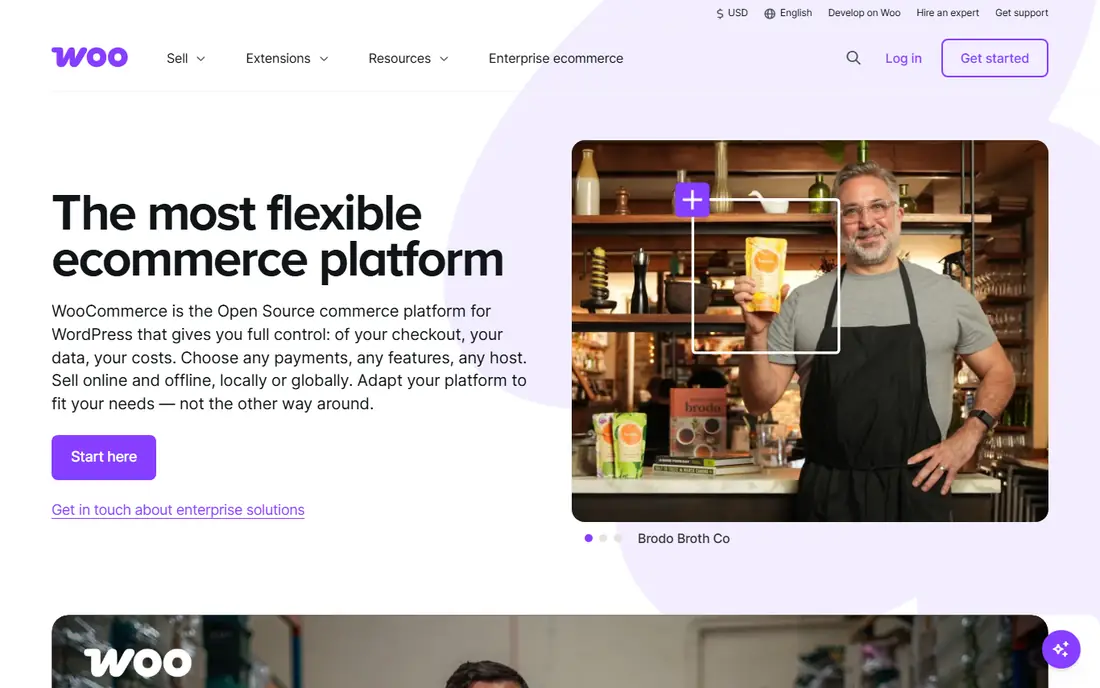
WooCommerce turns a WordPress site into a full store, and it is the best ecommerce website software for users who already run WordPress or who want complete control. There is no monthly platform fee for the plugin itself, and you own your data, design, and content in a way hosted platforms do not match. SEO control is also strong, since WordPress content and product pages live in the same system.
The trade-off is responsibility. Hosting, backups, security, updates, and plugin conflicts are yours to manage, and costs shift to hosting and paid extensions rather than disappearing. A small store on good hosting can still be cheaper than a hosted plan, but a store with no technical help should budget for support. Choose WooCommerce when control and content matter more than a hands-off setup.
- Free open-source plugin
- Full control over data, design, and SEO
- No platform subscription fee
- You pay for hosting, themes, and extensions
- You handle updates, security, and maintenance

BigCommerce suits brands that are outgrowing a basic store and want more built in from the start. Product options, discounts, customer groups, and multi-channel selling are stronger out of the box than on many rivals, which means fewer paid apps. It also charges no additional transaction fee whichever payment gateway you use, which helps at higher volumes.
The main watch point is sales thresholds. Plans include annual online sales limits, and crossing a threshold can move you to a higher plan. At $39 per month for the Standard plan in recent guides, the starting price matches Shopify, but the value case improves as volume grows. If you sell B2B, run a large catalog, or want fewer apps, BigCommerce deserves a trial.
- No extra transaction fee on any gateway
- Strong built-in features reduce app dependence
- Good for B2B and multi-channel selling
- Annual sales thresholds can force a plan upgrade
- Theme and app choice is smaller than Shopify
Wix eCommerce is a good fit for small stores where the website matters as much as the shop, such as makers, studios, and service businesses that also sell products. The drag-and-drop builder makes it easy to create a distinctive site without code, and built-in tools cover bookings, blogs, and email marketing. For a first store with a modest catalog, setup is fast.
Scale is the limit. Large catalogs, complex shipping rules, and advanced B2B features are harder on Wix than on Shopify or BigCommerce, and migration later can be work. Pricing also varies by region and billing period, so we list See website rather than a single figure. Choose Wix when design ease and a small catalog matter most.
- Very easy visual builder
- Good design freedom
- Business tools for bookings, blogs, and marketing
- Weaker at large scale than Shopify or BigCommerce
- App ecosystem is smaller
- Pricing varies by region and billing
Squarespace Commerce suits brands where visuals and storytelling sell the product, such as photographers, designers, food brands, and boutique shops. Templates look polished with little effort, blogging and content pages sit naturally beside products, and checkout setup is simple. For a content-heavy brand with a focused catalog, that polish is a real advantage.
Complex stores will feel the limits sooner, with fewer apps and less flexibility for advanced shipping, subscriptions, or B2B rules. Lower plans also carry transaction fees, so check the plan terms against your expected volume. Recent guides list commerce plans from around $25 per month, but pricing varies by billing, so confirm the current page before deciding.
- Beautiful templates
- Strong blogging and content tools
- Simple product and checkout setup
- Smaller app ecosystem
- Less flexible for complex stores
- Transaction fees on lower plans
Square Online is the natural pick for a shop, cafe, or market stall that already uses Square for in-person payments. The free plan lets you list products and take orders online, and inventory, payments, and in-person sales stay in one system. That single system saves time for small retailers who do not want to reconcile two tools.
For a large online-only brand, Square Online is less flexible than Shopify or BigCommerce, with fewer apps and design options. Paid plans add features such as a custom domain without Square branding, advanced shipping, and more design control. If in-person selling is half your business, Square Online is hard to beat for simplicity.
- Free plan for a basic store
- Tight link to Square point of sale and payments
- Easy for shops that also sell in person
- Less flexible for large online-only catalogs
- Design and app options are narrower than Shopify
Ecwid is different from the platforms above because it is built to add a shop to a site you already have, rather than replacing that site. You can embed products on WordPress, Wix, Squarespace, or a social page, and manage orders from one dashboard. That makes it ideal for a business with a strong existing site that only needs to sell a limited range.
As a full standalone store, Ecwid is less deep than Shopify or BigCommerce, and larger catalogs and advanced features require paid plans. Recent guides list paid plans from around $25 per month, with a free plan for a small number of products. Choose Ecwid when you want to keep your current site and add selling, not rebuild everything.
- Free plan to start
- Adds a store to an existing website, blog, or social page
- Simple product management
- Less powerful as a full standalone storefront
- Paid plans needed for larger catalogs and advanced features
Adobe Commerce, formerly Magento Commerce, is for large brands with complex needs: huge catalogs, multiple stores, custom pricing, B2B workflows, and deep integrations. It offers a level of customisation hosted platforms cannot match, and it suits teams with developers and a clear enterprise roadmap. For that audience, the flexibility justifies the cost and complexity.
Small and mid-size stores should not start here. Pricing is custom, implementation takes time, and ongoing developer support is a real budget line. Magento Open Source exists for developers who want a free base, but Adobe Commerce itself is an enterprise product. Choose it only when your catalog and workflow genuinely exceed what Shopify or BigCommerce can handle.
- Deep customisation for large catalogs, multi-site, and B2B
- Strong for enterprise workflows
- Open-source Magento roots
- Custom pricing
- Needs developer support
- Overkill and costly for small stores
PrestaShop is a free, open-source option with a strong base in Europe and a large marketplace of modules for payments, shipping, and marketing. Like WooCommerce, it gives you control over hosting, data, and design, without a monthly platform subscription. For a European store that wants a self-hosted shop and can manage technical setup, it is a credible alternative.
The costs are real, just in different places: hosting, paid modules, themes, and maintenance add up, and support quality depends on your host and module providers. A non-technical owner should budget for help. Choose PrestaShop when you want open-source control, sell mainly in Europe, and have technical support available.
- Free open-source software
- Strong in European markets
- Large module marketplace
- Hosting, modules, and maintenance cost money
- Setup needs technical skill
- Support depends on your provider
How we picked these
We compared official pricing pages and recent ecommerce guides, and we weighted hosted versus self-hosted setup, payment fees, built-in features, app ecosystems, and scaling limits. We included both hosted leaders and open-source options so WordPress and European sellers are covered. Where pricing varies by region or billing, or could not be confirmed on the vendor page, we wrote See website rather than guessing.
Choosing by store type
New store, small team
Shopify is the safest default, with Square Online as a strong free start for retailers and Wix or Squarespace for design-led small catalogs. Launch with a clean theme, a small product range, and a tested mobile checkout, then add apps only when a real customer problem appears.
Content site that needs a shop
WooCommerce is the natural choice for WordPress, and Ecwid is the simplest add-on for other existing sites. Both keep your content and your shop together without a full rebuild. Check SEO, site speed, and checkout friction before launch, since content traffic only helps if buying is easy.
Growing brand or B2B seller
BigCommerce and Adobe Commerce are the scaling picks, with BigCommerce as the practical hosted step up and Adobe Commerce for enterprise complexity. Check sales thresholds, payment fees at your volume, and integration needs for accounting, inventory, and shipping before you commit to a migration.
Frequently asked questions
What is the best platform for ecommerce website sales?
Shopify is the best platform for most new and growing stores, thanks to hosted setup, checkout quality, and apps. WooCommerce is best for WordPress users who want control, BigCommerce is best for growing brands that want built-in features, and Square Online is best for retailers who also sell in person. The best online shop software depends on your catalog, volume, and technical skills.
What is the best software for ecommerce website building on a budget?
WooCommerce and PrestaShop have no platform subscription, but hosting and extensions still cost money. Square Online and Ecwid offer free plans for small catalogs, which can be cheaper to start. Compare total cost, including hosting, payment fees, and essential apps, rather than the headline monthly price alone.
Is Shopify better than WooCommerce?
Shopify is easier and more hands-off, with hosting, security, and checkout handled for you. WooCommerce gives you more control, no platform fee, and stronger WordPress SEO, but you handle hosting and maintenance. Choose Shopify for speed and simplicity, and WooCommerce for control and content-led selling.
How much does an ecommerce platform cost per month?
Recent guides list Shopify and BigCommerce from $39 per month, while WooCommerce and PrestaShop are free as software but need paid hosting. Payment processing fees, usually around card network and gateway rates, apply on top, and apps can add more. Always check the vendor pricing page for monthly versus annual billing before budgeting.
Can I switch ecommerce platforms later?
Yes, but migration takes planning: products, customers, orders, URLs, and SEO redirects all need care. Export data early, test redirects, and keep old URLs working where possible. Choosing a platform that fits your next two years of growth is cheaper than migrating after one year.
Do I need a developer to run an online store?
Not for Shopify, Wix, Squarespace, or Square Online, which are built for non-technical owners. WooCommerce, PrestaShop, and Adobe Commerce benefit from technical help, especially for setup, security, and custom features. Budget for help if you choose a self-hosted or enterprise platform and do not have those skills in-house.
Sources we checked (9)

Online Jobs is an independent blog about careers, online work, learning new skills and the tools that help people earn. More about us.
Keep reading
All posts
n8n Alternatives
n8n alternatives compared for 2026, with Zapier, Make, Activepieces, and more, covering visual builders, code steps, self-hosting, and pricing models.

ZoomInfo Alternatives
The best ZoomInfo alternatives in 2026, compared on price, free plans, data coverage, and which tool fits small teams or large sales teams best in detail.

Zoom Alternatives for Webinars
Compare Zoom alternatives for webinars in 2026, from browser-based rooms to enterprise events, with prices, attendee limits, features and honest trade-offs.