Best Plant Identifier App in 2026: 8 Apps Compared

How we put this together: we compare official feature and pricing pages, app store listings, privacy policies and public user reviews. Prices change, so check the provider's site before you pay.
Key takeaways
- PictureThis is the best all-round plant identifier for common houseplants, with disease checks and care guides alongside photo identification.
- PlantNet and iNaturalist are the best free options, with PlantNet suited to wild plants and iNaturalist suited to community-verified nature records.
- Planta, Plant Parent, and PlantIn focus on ongoing care, with watering reminders, light checks, and personal plant collections.
- No app is perfect for every species, so check a second source before you eat, touch, or treat any plant, especially if pets or children are involved.
Quick comparison
| Name | Who it suits | Starting price | Free option | |
|---|---|---|---|---|
 PictureThis | All-round identification and care | Free | Yes | Visit |
 PlantNet | Free wild plant identification | Free | Yes | Visit |
 iNaturalist | Community-verified nature ID | Free | Yes | Visit |
 Seek | Outdoor learning for families | Free | Yes | Visit |
 Planta | Care schedules and reminders | Free | Yes | Visit |
 Plant Parent | Houseplant care and diagnosis | Free | Yes | Visit |
 PlantIn | Care plus botanist help | Free | Yes | Visit |
 PlantSnap | Large database and community | Free | Yes | Visit |
The best plant identifier app
A plant identifier app should do three things well: name the plant from a photo, tell you how to care for it, and warn you when it might be sick or unsafe. Some apps focus on identification alone. Others build a whole care system around your collection. The list below covers both, so you can pick an identifier for a walk, a houseplant shelf, or a garden.
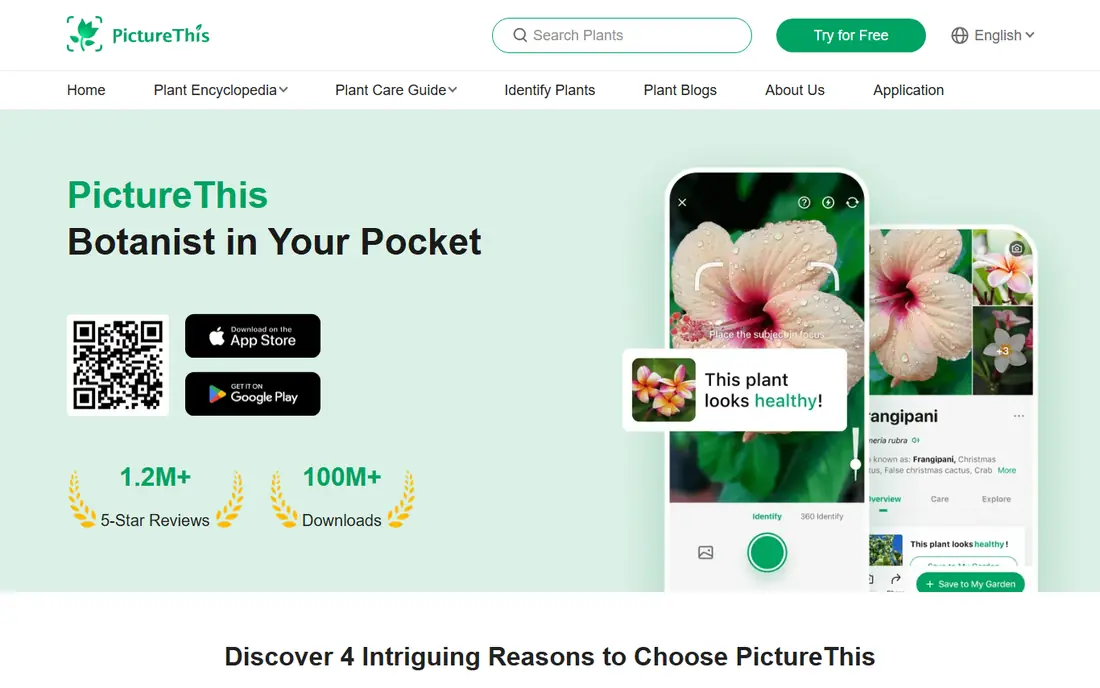
PictureThis is the easiest starting point for most plant owners. Snap a photo of a leaf, flower, or whole plant, and the app suggests a match with care details, watering needs, light needs, and toxicity notes. Disease diagnosis is a useful extra, because it can point to common problems from a photo of a damaged leaf.
The free version gives you identification, but many care features and unlimited use sit behind a subscription. That is worth knowing before you rely on it daily. For common houseplants and garden plants, PictureThis is usually fast and accurate enough to be your first check, with a second source for anything unusual.
- Fast photo identification
- Disease diagnosis and care guides
- Toxicity and watering advice
- Large plant library
- Full features need a paid plan
- Free use can include upsell prompts
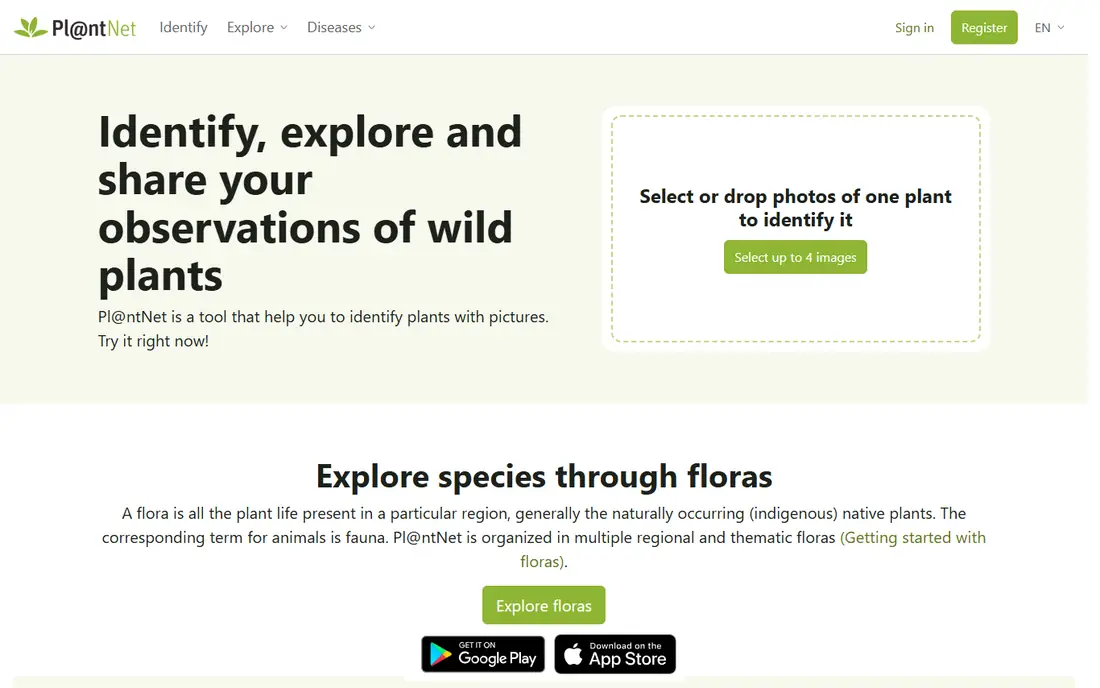
PlantNet is a free, research-backed identifier built for wild plants, trees, and flowers. You can photograph different parts of a plant, such as flower, leaf, fruit, and bark, and PlantNet compares them with its database. Your observations can also contribute to botanical research, which appeals to nature lovers and students.
Care advice is not the focus here. PlantNet will not build a watering schedule for your houseplants in the same way as Planta or Plant Parent. For a walk, a garden visit, or a nature project, though, PlantNet is one of the best free tools available, and it costs nothing to keep on your phone.
- Free to use
- Strong for wild and native plants
- Observations help botanical research
- No subscription needed for core ID
- Care advice is thinner than on paid houseplant apps
- Interface is more scientific than decorative
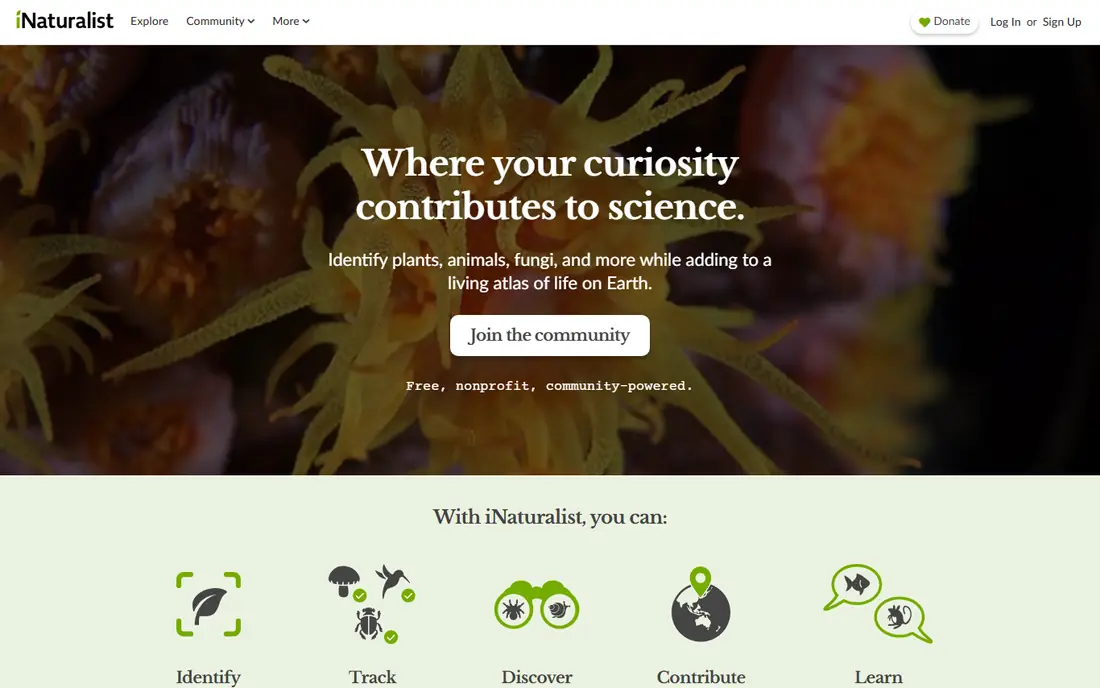
iNaturalist is a free nature platform where you upload observations of plants and other wildlife, and the community helps confirm what you found. Its automatic suggestions give you a starting point, and expert users can refine the identification over time. That community check makes iNaturalist especially useful for unusual or wild species.
It is not a houseplant care app. You will not get watering reminders or a personal care calendar in the same way as Planta. For outdoor identification, citizen science, and learning about local nature, iNaturalist is hard to beat, and it is completely free to use.
- Free
- Community experts can confirm identifications
- Records plants, animals, and fungi
- Useful for nature projects
- Identification can take time for community confirmation
- Less focused on houseplant care
Seek, from the iNaturalist team, turns outdoor identification into a simple challenge app. Point your camera at a plant, animal, or fungus, and Seek suggests a match and awards badges for new finds. That game-like approach suits families, school groups, and beginners who want to learn nature names without a complex interface.
Seek covers more than plants, so its plant database is broader rather than deeper than a plant-only app. It also offers little houseplant care help. For a walk with children, or for anyone starting out with nature identification, Seek is a friendly and free place to begin.
- Free
- Built by iNaturalist team
- Photo challenges and badges
- No account needed for basic use
- Identification is broader than plant-only apps
- Care features are minimal
Planta focuses on keeping the plants you already own alive, rather than just naming new ones. You add each plant to your collection, and Planta builds a watering schedule based on plant type, pot size, location, and season. A light meter uses your phone camera to check whether a spot is bright enough, which helps avoid one of the most common houseplant mistakes.
Identification exists in Planta, but it is not the headline strength. For tricky species, check the result in PictureThis or PlantNet as well. If your main problem is remembering to water, or knowing whether a corner is too dark, Planta is the best care-first choice in this list.
- Personalised watering schedules
- Light meter using your phone camera
- Care progress tracking
- Plant journal
- Identification is not as strong as PictureThis for some species
- Full features need a subscription
Plant Parent combines identification with a houseplant care system. After you identify a plant, you can add it to your collection, set watering reminders, and use a light meter and water calculator to check conditions. Disease diagnosis from photos helps when leaves yellow, spot, or wilt, with suggested next steps.
The app is geared to houseplants rather than wildflowers, so outdoor identification is thinner than on PlantNet or iNaturalist. A subscription opens up full features, while the free tier covers basic identification and care. For an indoor collection, Plant Parent gives you identification and daily care in one place.
- Plant identification plus care reminders
- Disease diagnosis
- Light and water calculators
- Plant collection tracking
- Full features need a subscription
- Identification can struggle with rare cultivars
PlantIn, also known as PlantIn, offers identification alongside a wide care toolkit. You get watering reminders, disease diagnosis, a light meter, and a water calculator, plus guides and a blog for learning. Botanist consultation is available on paid plans, which can help when a plant problem does not match a standard diagnosis.
That breadth comes with upsells. Many of the most useful features need a subscription, and the app can feel busy at first. For plant owners who want one app for identification, care, and occasional expert help, PlantIn is a strong option, especially if you also want mushroom identification.
- Identification, care reminders, and disease checks
- Botanist consultation options
- Mushroom identification
- Plant blog and guides
- Many features need a subscription
- Interface can feel busy with upsells
PlantSnap was an early plant identifier, and its database covers a large number of species, flowers, trees, and cacti. Community features let you explore what other users are finding nearby, and a journal helps you track your own collection with photos and notes. That social side appeals to plant lovers who enjoy sharing finds.
Accuracy is the honest catch. Independent tests have ranked PlantSnap below PictureThis and PlantNet for many species, especially for less common plants. Use PlantSnap as a second opinion or a community tool, and confirm important identifications, especially for toxic plants, with a more accurate source.
- Large species database
- Community features and explore map
- Plant journal and collections
- Accuracy has been weaker than rivals in independent tests
- Free version has identification limits
How we picked these
We started with web search for plant identifier apps, then checked each vendor's own site, app-store listing, help pages, and public reviews. We kept only apps that are working in October 2026 and that genuinely identify plants from photos. We included free research tools, all-round paid apps, and care-first apps, because readers use plant apps for different jobs.
We also weighed accuracy and safety. An app that names a plant quickly but often gets rare species wrong scored lower than a slower app with community verification. Where pricing varies by plan or store, we described the free tier in general terms and advise checking the current subscription price in your app store before paying.
How to get a better identification
Photograph more than one part
Take clear photos of leaves, flowers, bark, and the whole plant in natural light, without flash. A single blurry leaf photo is the most common reason for a wrong match. Several angles give the app more to work with.
Check the result against visible traits
Read the suggested plant description and compare leaf shape, flower colour, growth habit, and size. If the app says a plant needs constant moisture but yours survives drought, the identification may be wrong. Trust visible traits over a single app result.
Use two apps for important plants
For any plant you might eat, touch, or keep near pets or children, check a second app and a trusted botanical source. Apps can confuse look-alike species, and the stakes are higher for toxic plants than for a decorative houseplant. When in doubt, do not eat or handle the plant.
Record where and when you found it
Note location, season, and habitat for wild plants. That context helps community experts on iNaturalist confirm an identification, and it helps you learn which species grow near you over time.
Frequently asked questions
What is the best app to identify plants for free?
PlantNet and iNaturalist are the best free options. PlantNet suits wild and native plants with a research-backed database, while iNaturalist adds community verification. PictureThis also offers free identification, but full care features need a subscription.
What is the best plant app for houseplant care?
Planta and Plant Parent are the strongest care-first apps, with watering schedules, light meters, and collection tracking. PictureThis and PlantIn also cover care, but Planta is best if reminders and light checks are your main need.
Can plant identifier apps diagnose plant disease?
Yes, several apps including PictureThis, Plant Parent, and PlantIn offer disease diagnosis from photos. Results are a starting point, not a veterinary or botanical diagnosis, so check care guides and, for valuable or large plants, ask a local nursery or extension service if the problem persists.
Are plant identifier apps accurate?
Accuracy is good for common plants and weaker for rare cultivars, hybrids, and young plants. Genus-level identification is usually more reliable than exact species identification. Always confirm important identifications with a second app or a trusted botanical source.
Which app is best for identifying wild plants on a walk?
PlantNet is best for wild plants, with a free database built for native species. iNaturalist and Seek are also excellent for walks, because community verification and challenges help you learn as you go. Take photos of flowers and leaves, not just a distant whole plant.
Can I trust an app to tell me if a plant is safe for pets?
Use an app as a first check only, and confirm toxicity with a trusted source such as a veterinary toxicology database before letting a pet near a new plant. Apps can misidentify look-alike species, and a wrong identification for a toxic plant could be harmful.
Sources we checked (8)

Online Jobs is an independent blog about careers, online work, learning new skills and the tools that help people earn. More about us.
Keep reading
All posts
Zoom Alternatives
Zoom alternatives compared for 2026: Google Meet, Microsoft Teams, Webex, Jitsi and more for free calls, large meetings and webinars for teams and classrooms.

Which Software Is Best for Data Entry
Compare the best data entry software for forms, OCR scanning, and spreadsheets, with free plans, pricing, and honest limits for each tool before you commit.

What Is the Best Free Tool to Rotate a PDF
What is the best free tool to rotate a PDF? We compare eight free rotation tools on per-page control, limits, privacy and saved output quality in detail.