Best Phone Company to Switch To in 2026: 8 Carriers Compared

How we put this together: we compare official feature and pricing pages, app store listings, privacy policies and public user reviews. Prices change, so check the provider's site before you pay.
Key takeaways
- Visible at $25 per month and Mint Mobile at $30 per month on a 12 month plan are the lowest cost unlimited options for most single line switchers.
- US Mobile is the flexible pick, since it lets you choose between major networks and switch networks later without changing carrier.
- T-Mobile, Verizon and AT&T still make sense for families, heavy travellers and users who want stores, premium data and bundled perks.
- Check coverage at your home, work and commute addresses, not just a national map, since the same network can vary street by street.
- Port your number only after the new service is live, and do not cancel the old plan until the port completes, or you risk losing the number.
Quick comparison
| Name | Who it suits | Starting price | Free option | |
|---|---|---|---|---|
 Visible | Verizon network value | $25 per month | No | Visit |
 Mint Mobile | Low cost on T-Mobile network | $30 per month | Free trial | Visit |
 US Mobile | Network choice and flexibility | $10 per month | Free trial | Visit |
 T-Mobile | Premium 5G and perks | $55 per month | No | Visit |
 Verizon | Widest coverage | $65 per month | No | Visit |
 AT&T | AT&T network with stores | $50 per month | No | Visit |
 Cricket Wireless | AT&T network with stores | $35 per month | No | Visit |
 Google Fi | International travel | $20 per month | Free trial | Visit |
The best phone companies to switch to
Switching phone companies in 2026 usually means choosing between a low cost carrier that runs on a major network and a major carrier itself. Low cost carriers, known as MVNOs, buy network access wholesale and sell online with less overhead, so they can charge far less for similar coverage. Major carriers charge more, but they offer premium data priority, stores, device deals and perks. The carriers below cover both routes.
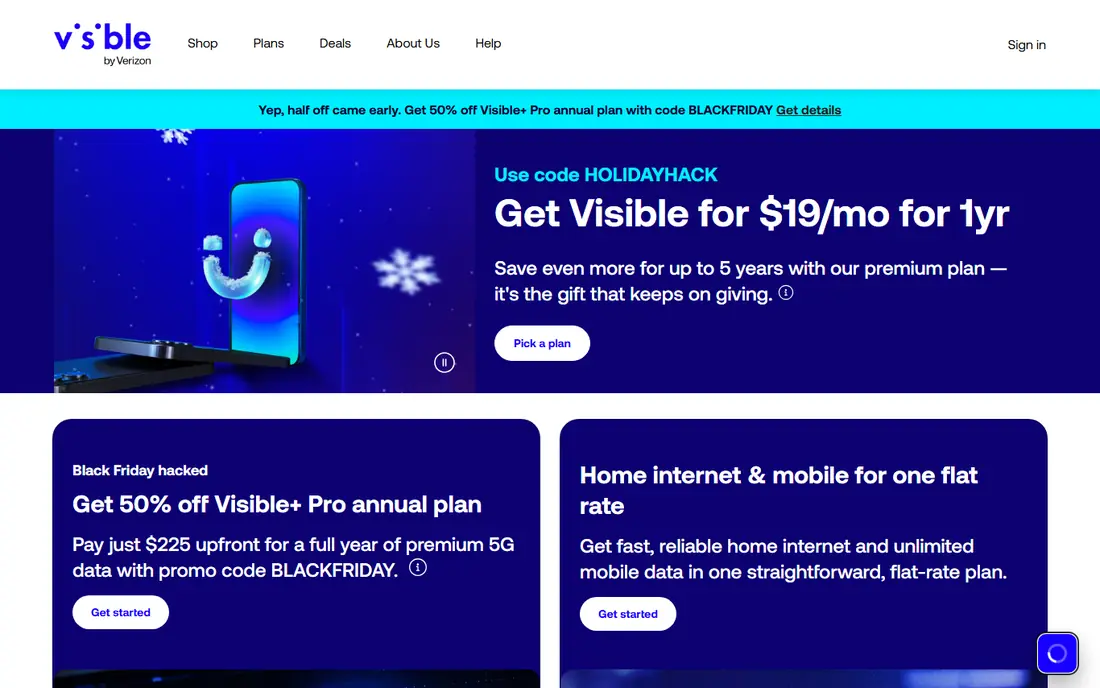
Visible is our first pick for most switchers who want Verizon coverage without a Verizon price. The base Visible plan costs $25 per month with taxes and fees included, and it offers unlimited data, talk and text on the Verizon network. That price, with no annual prepayment required, undercuts the major carrier entry unlimited plans by a wide margin, and the plan is simple to understand.
The trade-off is priority and support. Visible data can be slowed at busy times when the network is congested, since Verizon customers on premium plans get priority, and support runs mainly through the app and chat rather than a store. For most everyday use, including streaming, maps and browsing, Visible performs well. If you need the fastest data at a crowded stadium or you want in store help, a premium Verizon plan may suit you better.
- Unlimited data on Verizon network for $25 per month
- Taxes and fees included
- No annual contract
- Data can be deprioritised at busy times
- Support is mainly app and chat based
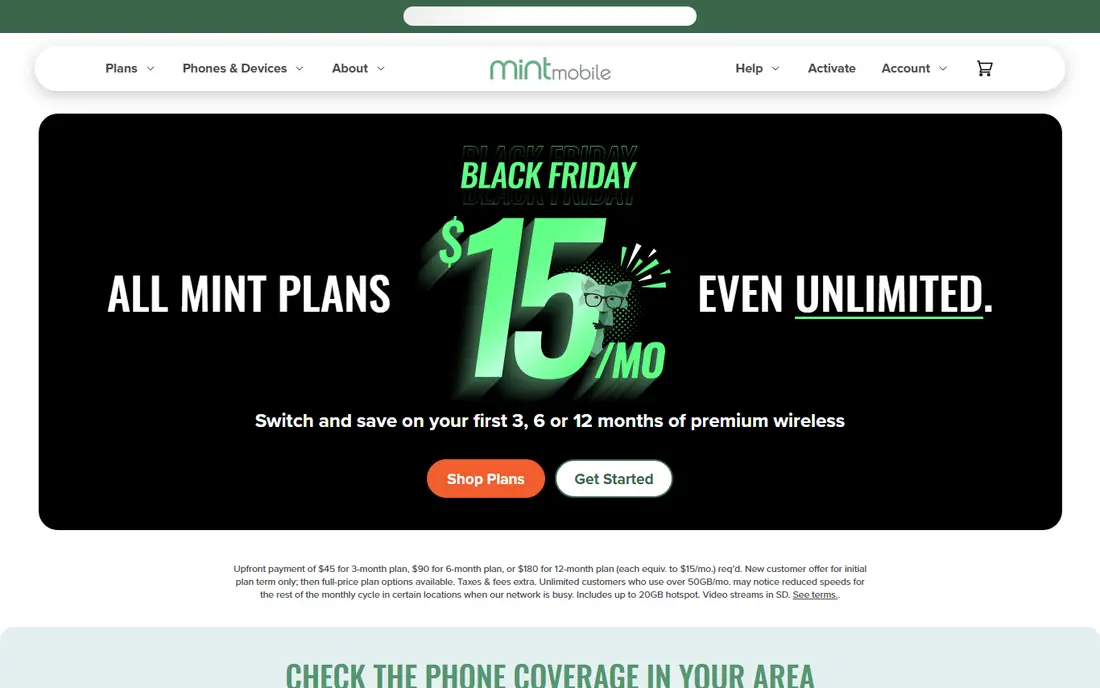
Mint Mobile, owned by T-Mobile, offers unlimited data on the T-Mobile network, with the unlimited plan listed at $30 per month when paid for 12 months. That structure rewards a longer commitment with a lower monthly rate, and Mint also offers smaller data plans from $15 per month on a 12 month plan for light users. Signup is online, with eSIM support on compatible phones, so switching can take minutes rather than days.
The catch is prepayment. The $30 rate needs a full year paid upfront, and shorter plans cost more per month, so the headline price is not the month to month price. Mint data can also be deprioritised at busy times. Mint fits switchers who are happy to commit for a year, use T-Mobile coverage, and want a low, predictable bill.
- Unlimited plan at $30 per month on a 12 month plan
- Runs on T-Mobile 5G network
- Simple online signup
- Best price needs a 12 month prepayment
- Monthly price is higher on shorter plans
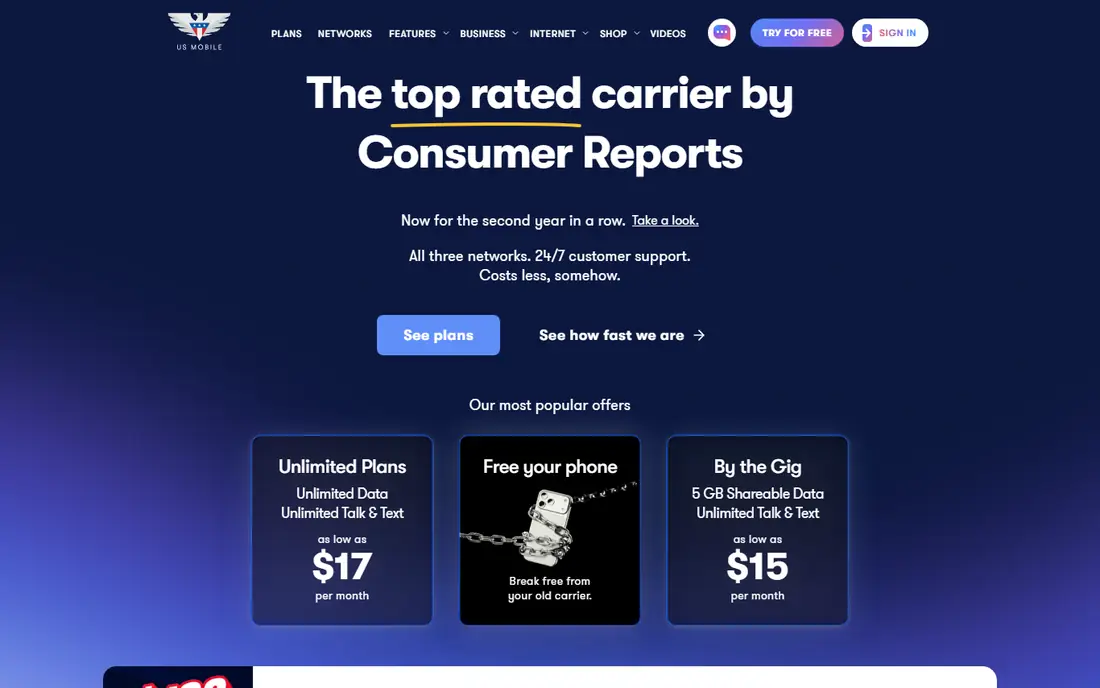
US Mobile is the flexible pick on this list, because it offers access to all three major networks and lets you choose the network that works best where you live. Light plans start at $10 per month, and unlimited plans are listed from $25 per month in recent comparisons, with higher tiers adding premium data and hotspot allowances. That flexibility is useful if you move, travel or find that one network is weak at home.
The downside is complexity. Choosing a network, a plan tier and a data amount takes more thought than picking a single Visible or Mint plan, and the best features sit on higher tiers. US Mobile suits switchers who want to test a network, switch networks later without changing carrier, or build a plan around a specific data need. For a simple switch, Visible or Mint may feel easier.
- Choice of all three major networks
- Plans from $10 per month
- Unlimited plans from $25 per month in recent comparisons
- Plan and network choices can confuse new users
- Premium features sit on higher tiers
T-Mobile remains a strong major carrier choice, with a broad 5G network and a range of plans from entry unlimited to premium tiers with streaming perks and large hotspot allowances. Recent comparisons list the entry Essentials plan from $55 per month, with top plans reaching $105 per month before autopay discounts. That range covers families, heavy data users and travellers who want premium data priority.
The price gap is the main reason to think twice. A T-Mobile entry plan costs roughly double a Mint unlimited plan on the same network, and the extra cost buys priority, perks and store support rather than different towers. T-Mobile fits users who value those extras, need a family plan with device deals, or travel often and want included international features. For a single line with modest needs, an MVNO on T-Mobile towers will usually save money.
- Strong 5G coverage and speeds
- Entry plan listed from $55 per month in recent comparisons
- Perks on higher plans
- Entry price is far above MVNO rivals
- Taxes and fees treatment varies by plan
Verizon is often cited for the widest and most reliable national coverage, especially in rural areas where other networks thin out. Entry unlimited plans are listed from $65 per month with autopay in recent comparisons, with top plans reaching $95 to $105 per month. Higher plans add premium data, hotspot allowances and perks, and Verizon stores offer in person help with devices and setup.
The cost is the trade-off, and it is large. A single line on Verizon can cost $40 more per month than Visible on the same network, which adds up to $480 over a year. Verizon makes sense for rural users, families who want device deals and premium priority, and businesses that need reliable coverage in many locations. For most urban and suburban switchers, Visible gives the same towers for far less.
- Wide national coverage, including rural areas
- Premium data priority on higher plans
- Large store network
- Entry unlimited listed from $65 per month in recent comparisons
- Top plans reach $95 to $105 per month
AT&T offers a middle path among major carriers, with entry unlimited listed from $50 per month with autopay in recent comparisons, below Verizon and T-Mobile entry prices in the same comparison. Coverage is strong nationally, stores are widely available, and higher plans add premium data, hotspot and perks for families and heavy users. AT&T also offers device financing and trade-in deals that can lower the cost of a new phone.
The top plans are still expensive, reaching $100 to $110 per month for a single line, and taxes and fees treatment varies by plan, so the bill can exceed the headline price. AT&T fits users who want AT&T coverage with store support and who value device deals, or families who can use multi-line discounts. For a single line on AT&T towers, Cricket or US Mobile on AT&T will usually cost less.
- Strong national coverage
- Entry plan listed from $50 per month with autopay
- Store and device support
- Top plans reach $100 to $110 per month
- Taxes and fees add to some plan prices
Cricket Wireless, owned by AT&T, gives AT&T network coverage with store support at a lower price than AT&T itself. Recent comparisons list a 10GB plan from $35 per month and unlimited plans from $40 per month, with taxes included, which makes the bill easier to predict. Stores are useful for switchers who want help porting a number, setting up a phone or choosing a plan in person.
The limits are speed and priority. Some Cricket plans cap data speeds, and Cricket data can be deprioritised behind AT&T customers at busy times. Cricket fits families and users who want a store, AT&T coverage and a lower bill, without needing the fastest premium data. If you stream heavily at peak times or you need the highest priority, check the plan speed cap before you switch.
- AT&T network coverage
- Taxes included
- Stores for in person help
- Unlimited from $40 per month in some comparisons
- Data speeds can be capped on some plans
- Premium features cost more
Google Fi suits travellers and flexible users. The Flexible plan starts at $20 per month for talk and text, plus $10 per gigabyte of data, which can be cheap for light users. Unlimited plans are listed from $50 to $65 per month in recent comparisons, with international data in many countries included on higher plans. Fi runs on the T-Mobile network in the United States, with network switching features on compatible phones.
The trade-off is price for heavy users. A heavy data user will pay more on Fi Unlimited than on Visible or Mint, and some Fi features work best on Pixel phones. Fi fits light users who want pay for what you use pricing, and travellers who want simple international data without buying local SIM cards. For a heavy domestic user who rarely travels, a cheaper unlimited MVNO is usually better value.
- Flexible plan from $20 per month plus data
- Strong international roaming
- Runs on T-Mobile network
- Unlimited plans cost more than Mint or Visible
- Best features need a Pixel or compatible phone
How we picked these
We compared carriers that are still operating in the United States in October 2026, publish a single line price, and offer unlimited or flexible plans for switchers. We used recent carrier comparisons and carrier pricing pages, and we ranked carriers on monthly price, network, data priority, hotspot allowance, store support and international features. We treated MVNOs and major carriers together, since both use the same towers in many cases, and the real difference is price, priority and support.
We did not test coverage in every location, since coverage varies by address, building and time of day. Prices in this guide are single line headline rates, often with autopay, and taxes treatment varies by carrier, so check the final bill estimate before you switch. Device financing, trade-in value and multi-line discounts can change the total cost, especially for families.
How to switch without losing your number or service
Check coverage first, using each carrier coverage map at your home, work and commute addresses, and ask neighbours or colleagues which network works well in your area. Confirm that your phone is carrier-free and compatible with the new carrier, since a locked phone cannot move until your old carrier releases it.
Port in the right order
Order the new SIM or eSIM, activate it, and start the port with your old account number and transfer PIN ready. Do not cancel the old plan until the number is live on the new carrier, since cancelling first can release the number. A port usually takes minutes to a day, though some ports take longer if account details do not match.
Compare the full bill, not just the plan price
Add taxes and fees, device payments, insurance and any add-ons to the plan price to get the true monthly cost. A $25 plan with taxes included can be cheaper in practice than a $30 plan that adds $8 in taxes and fees. For families, compare the total for all lines, since multi-line discounts can close the gap between a major carrier and an MVNO.
Test the new service before you commit long term
Use the trial or first month to test calls, data speeds and coverage at the places that matter most to you. Check data priority at busy times, such as a commute or a crowded event, since deprioritisation is the main hidden cost of a low price plan. If the service fails where you need it, switch networks within the same MVNO or move to a different carrier while you are still in the trial window.
Frequently asked questions
What is the best cell phone company to switch to for saving money?
Visible and Mint Mobile offer the lowest unlimited prices for most single line switchers, at $25 per month for Visible and $30 per month on a 12 month Mint plan. US Mobile is also strong for saving money, with light plans from $10 per month and unlimited from $25 per month in recent comparisons.
What is the best phone company to switch to for coverage?
Verizon is often cited for the widest national coverage, especially in rural areas, followed by AT&T and T-Mobile in different regions. For the same towers at a lower price, Visible uses Verizon, Cricket uses AT&T, and Mint uses T-Mobile, so check coverage by network rather than by brand alone.
Can I keep my phone number when I switch?
Yes, in most cases you can port your number if your old account is active and you provide the correct account number and transfer PIN. Do not cancel the old plan before the port completes, since cancelling can release the number and make it harder to recover.
Do I need a new phone to switch carriers?
No, if your phone is carrier-free and compatible with the new carrier network. Check compatibility on the new carrier site before you order, and ask your old carrier to release the phone if it is still locked. A locked phone, a very old phone or a carrier specific model may need replacing.
What is the best phone company to switch to for families?
T-Mobile, Verizon and AT&T offer the strongest family deals, with multi-line discounts, device financing and perks that can lower the per line cost. Cricket and US Mobile also offer family pricing, with four lines listed around $100 per month in some comparisons, so compare the family total, not just the single line price.
How long does switching take?
Activation with an eSIM can take minutes, while a physical SIM order takes a few days to arrive. Number porting usually takes minutes to a day once activation starts, though mismatched account details can delay it. Allow a week in total if you need a SIM shipped and a phone released.
Sources we checked (8)

Online Jobs is an independent blog about careers, online work, learning new skills and the tools that help people earn. More about us.
Keep reading
All posts
Best Robotics Companies
Compare the best robotics companies in 2026, from humanoids to factory robots, with focus areas, deployments, and honest limits for buyers and pilots.
Best Phone Company
Looking for the best phone company in 2026? We compared 9 US carriers on price, coverage, data and perks so you can pick the right plan for your line.

Best Online Tools to Measure Ping Time
Looking for the best online tools to measure ping time? We compare 9 free tools for latency, jitter, and global reach, so you can find slow connections fast.