Best Phone Company in 2026: 9 Carriers Compared


Widest store support and priority network · Starting price: $45 per month
How we put this together: we compare official feature and pricing pages, app store listings, privacy policies and public user reviews. Prices change, so check the provider's site before you pay.
Key takeaways
- The cheapest unlimited plans now come from carrier-owned budget brands, not the big three themselves, with Visible at $25 per month and Mint Mobile unlimited at $30 per month on a 12-month term.
- Verizon, T-Mobile and AT&T still win on store support, device deals and priority data, but their headline prices leave out taxes and fees.
- Coverage matters more than brand: the best carrier is the one whose network works well at your home, your workplace and on your commute.
- Prepaid and no-contract plans now match postpaid on 5G access, so a long contract is rarely needed to get a good network.
- Always compare the price after taxes and the cost at renewal, since several low headline prices are first-term offers.
Quick comparison
| Name | Who it suits | Starting price | Free option | |
|---|---|---|---|---|
| Verizon | Widest store support and priority network | $45 per month | No | Visit |
 T-Mobile | Families and frequent travelers | See website | No | Visit |
 AT&T | Rural coverage and mixed-tier families | See website | No | Visit |
 Mint Mobile | Light users who can prepay | $15 per month | No | Visit |
 Visible | Simple unlimited on Verizon network | $25 per month | Free trial | Visit |
 Google Fi | International travel and light data | See website | No | Visit |
 US Mobile | Picking your network | See website | No | Visit |
 Cricket Wireless | In-store help on AT&T network | See website | No | Visit |
 Boost Mobile | Budget plans with store support | See website | No | Visit |
The best phone companies
We compared the three national carriers with the budget brands that run on their networks, looking at starting prices, data allowances, hotspot rules and how you pay. Here are the nine that stood out.
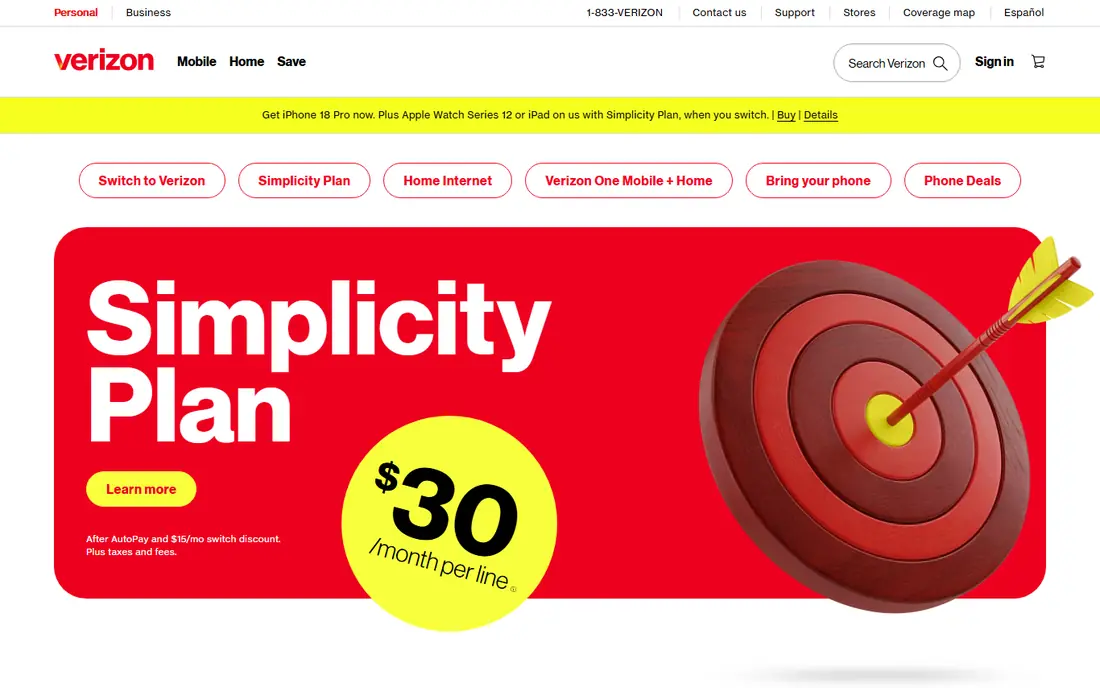
Verizon is the safe default for people who want a carrier with stores everywhere and a network that holds up in crowded places. Its flagship Simplicity Plan is a single flat-rate unlimited plan at $45 per month with Auto Pay and paper-free billing, and new customers who switch in can pay $30 per month with the current switch discount. That single-price approach is simpler than the tiered plans Verizon sold before, and every customer gets the same access to its 5G Ultra Wideband network.
The catch is the gap between the advertised price and the bill. Taxes, surcharges and a per-line administrative charge sit on top of the plan price, and device installments add more. Our pick here is for buyers who value in-person help and priority data and who are willing to pay for it.
- Large 5G network
- One flat-rate unlimited plan
- Stores across the country
- Taxes and fees are extra
- Switch discount is time limited
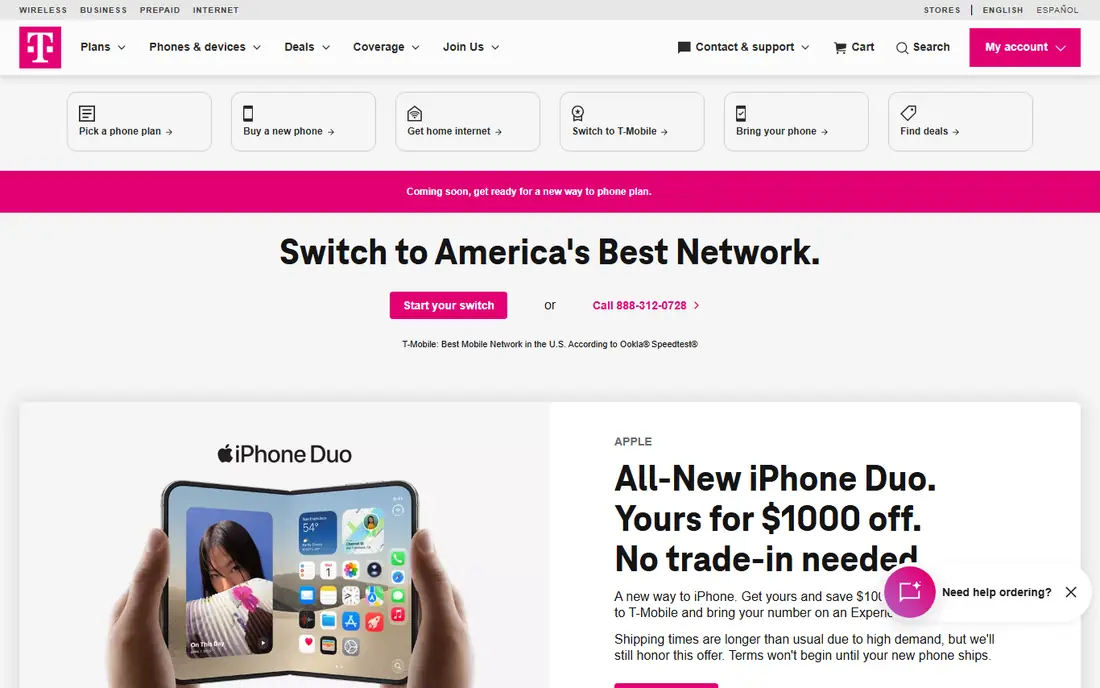
T-Mobile suits households that bundle several lines and people who travel, since its Experience plans include streaming perks and international benefits that budget brands do not match. Its five-year price guarantee on Experience plans gives families some protection against mid-contract price rises. Discounts for seniors, military members, veterans and first responders can also bring the bill down for eligible customers.
The downside is the single-line price, which sits well above the budget brands, and taxes and fees are charged separately. Plan names and lineups have also changed more than once in recent years, so it pays to confirm the exact plan and price on T-Mobile's site before you switch. This is a strong choice for a family that wants perks and phone deals, and a weaker one for a single line on a tight budget.
- Large 5G network
- Five-year price guarantee on Experience plans
- Strong travel perks
- Single-line prices are high
- Taxes and fees are extra
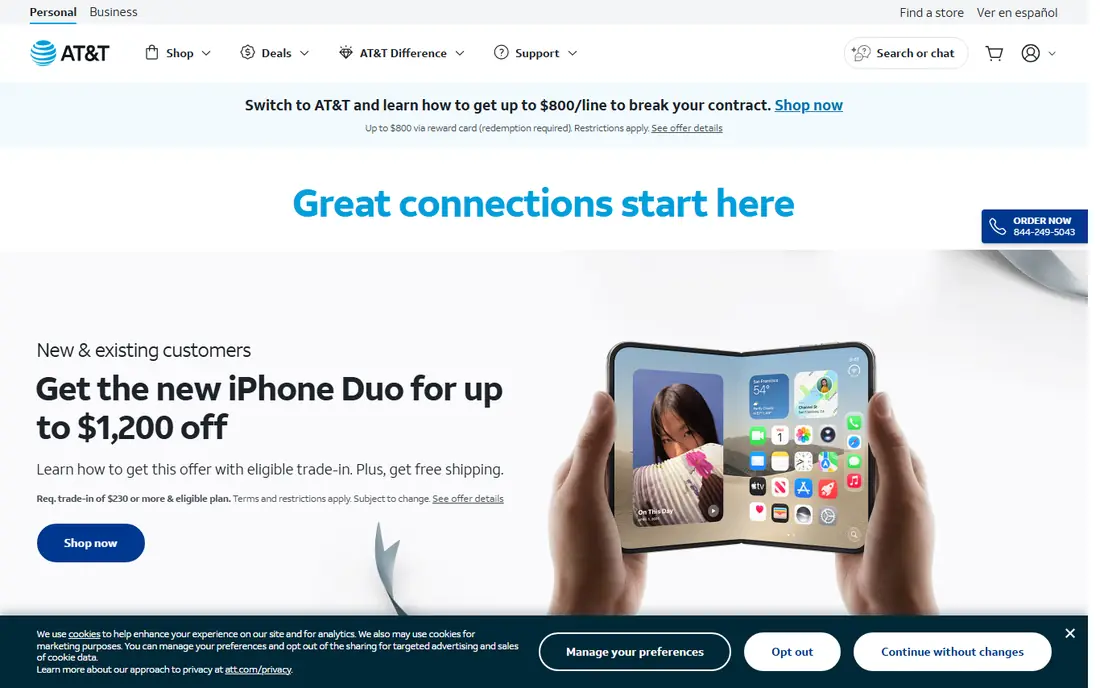
AT&T is the carrier we point to first for people who spend time outside cities, since its network has a long record in rural areas where smaller brands can struggle. Its postpaid lineup now runs from a lower-cost Value tier to a top Elite tier, and lines on the same account can sit on different tiers, so a heavy user and a light user do not have to buy the same plan. Security features such as spam and fraud call blocking come included,
The pricing needs a close read. The best Auto Pay discount needs a bank account or AT&T's own card, with a smaller discount for debit cards, and taxes and a per-line fee are extra. AT&T also sells prepaid plans starting at $25 per month for a single line, which can be a better fit than postpaid for a light user who does not need device financing. Check the plan page for the one-line price, since AT&T quotes some postpaid prices per line for a family of four.
- Strong rural coverage
- Different tiers per line
- Security features included
- Taxes and fees are extra
- Best prices need bank-account Auto Pay
Mint Mobile is the cheapest way onto T-Mobile's network for people who do not use much data. Its 6GB plan costs $15 per month on a 12-month term, and unlimited costs $30 per month on the same term, with 17GB and 23GB plans in between. Every plan includes unlimited talk and text, hotspot, and free calling to Mexico, Canada and the UK, and you can link 2 to 5 lines into a family group in the app.
The trade is prepayment. You pay for the whole term upfront, so the 12-month unlimited plan is $360 at checkout, and the low new-customer prices on 3-month plans rise at renewal. Taxes and fees are extra, video streams in standard definition, and unlimited users who pass 50GB in a month may see slower speeds when the network is busy. If T-Mobile covers you well and you can pay upfront, Mint is hard to beat on price.
- Lowest starting price here
- Runs on T-Mobile 5G
- Hotspot included
- Must prepay 3, 6 or 12 months
- Taxes and fees are extra
Visible is Verizon's own digital brand, and it is the simplest unlimited deal in this roundup. The base plan costs $25 per month with taxes and fees included, and there are two higher tiers at $35 and $45 that add premium data, faster hotspot and international benefits. There is no contract, no credit check and no separate tax calculation, so the price you see is the price you pay, and a 15-day free trial lets you test the service before you port your number.
Support is app and chat only, with no retail stores and no phone line, The base plan is also deprioritized, so speeds can dip when a tower is busy, and its hotspot runs at up to 5 Mbps. For a single line that wants Verizon coverage at a budget price and can manage the account online, Visible is our pick for most people.
- Taxes and fees included
- No contract
- Unlimited hotspot
- No stores
- Base plan data can slow when busy
Google Fi is built for people who travel abroad or use very little data. Its Flexible plan pairs a base charge with a per-gigabyte data rate, so a light user can pay far less than a flat unlimited plan, and its unlimited tiers add larger high-speed allowances and hotspot data. The top tier includes high-speed data in more than 200 destinations, which is the standout feature in this group for frequent international travelers.
Fi runs on T-Mobile's network in the US, and it works best with Pixel phones and other fully compatible devices, Taxes and fees are extra, and the unlimited plans cost more than Mint or Visible for a domestic-only user. Pick Fi if you travel internationally or your data use swings a lot month to month, and pick a budget brand instead if you stay in the US and want the lowest flat price.
- Flexible pay-for-data plan
- Strong international roaming
- Pixel integration
- Taxes and fees are extra
- Top plans cost more than budget brands
US Mobile stands out because it lets you choose which of the major networks your line runs on, which solves the most common switching problem: not knowing whether a new carrier will work where you live. Its Unlimited Starter plan is priced around $25 per month, and annual billing brings the cost down further on some tiers. Taxes and fees are included on several plans, which makes the bill easier to predict than the big three.
Starter, premium and flex tiers differ on premium data and hotspot allowances, and the cheapest tiers slow sooner when networks are busy. Support is online and by chat, with no store network of its own. For a buyer who knows which network covers their area and wants a budget price with network choice, US Mobile is a strong option.
- Choice of networks
- Low-cost unlimited starter plan
- Taxes included on some plans
- Plan lineup can confuse
- Premium data limits on cheaper tiers
Cricket Wireless is AT&T's prepaid brand, and it is the budget pick for people who want to walk into a store. Its plans run on AT&T's network, and an annual plan option brings the effective monthly cost down for customers willing to pay for a year upfront. Prepaid means no credit check and no contract, and the plan menu is short enough to compare in a few minutes.
Cheaper Cricket plans cap speeds, and taxes and fees are extra, Hotspot allowances are also smaller than on postpaid AT&T plans. Cricket fits a buyer who wants AT&T coverage with in-person help and a simple prepaid bill, and it is less appealing for a heavy hotspot user or someone chasing the lowest possible price.
- AT&T network
- Stores across the country
- Simple prepaid plans
- Speed caps on cheaper plans
- Taxes and fees are extra
Boost Mobile rounds out this list as a low-cost prepaid option with stores, which sets it apart from the app-only budget brands. Its prepaid plans cover the basics at prices below the big three, with no annual contract and no credit check, and its store network gives new customers a place to get help with activation and device setup.
Boost's network experience depends on where you live and which network your line uses in your area, so coverage checks matter more here than with a single-network brand. Taxes and fees are extra, and its cheapest plans come with smaller data allowances. Boost is worth a look if you want a cheap prepaid plan plus a store nearby, but check coverage at your address before you commit.
- Low-cost prepaid plans
- Store presence
- No annual contract
- Network experience varies by area
- Taxes and fees are extra
How we picked these
We compared official plan pages, pricing pages, app store listings, privacy policies and public reviews for each carrier, and we checked that each homepage loads and belongs to that carrier. We focused on single-line cost, cost after any first-term offer ends, high-speed and hotspot allowances, and whether taxes and fees are included. Where a vendor's current price could not be verified on its own site, we wrote "See website" rather than repeating a third-party figure.
What to check before you switch
Start with coverage, not price. Ask friends on different networks how service holds up at your address, or use a carrier's trial or prepaid month to test it yourself before you port your main number. A cheap plan on a network that drops calls at your home is not a bargain.
Read the price at renewal
Several budget prices in this list are first-term or annual-prepay rates. Mint's new-customer prices rise at renewal, and annual plans from several brands ask for hundreds of dollars upfront. Work out the second-year cost before you compare, and check whether taxes and fees are included, since that alone can move a plan by several dollars a month.
Match the plan to your real data use
Most people use far less mobile data than they think, since phones spend much of the day on home and work Wi-Fi. Check your current usage in your phone's settings over two or three months. If you sit under 10GB, a capped plan from Mint or a light prepaid plan will save real money over unlimited. If you tether a laptop often, hotspot speed and allowance matter more than the headline data figure.
Keep your number safe when you port
Porting needs your account number and a transfer PIN from your old carrier, and a mismatch on either can stall the move. Generate a fresh PIN on the day you switch and keep your old line active until the port completes.
Frequently asked questions
Which cell phone company is the best overall?
There is no single winner, since the best phone company depends on coverage where you live and how much data you use. Visible is our pick for most single lines because it pairs Verizon coverage with a $25 per month all-in price, while Verizon itself suits buyers who want stores and priority data. Check coverage at your address first, then pick the cheapest plan on the network that works there.
What is the best phone service for a single line?
For one line, Visible at $25 per month with taxes included and Mint Mobile unlimited at $30 per month on a 12-month term are the strongest values in this list. Both give unlimited data on a major network without a contract. Mint wins for light users with its $15 per month 6GB plan, while Visible wins for heavy users who want a simple monthly bill.
Which cell service has the best coverage?
Verizon and AT&T have the strongest reputations for rural coverage, while T-Mobile has built one of the largest 5G networks in cities and suburbs. Coverage still varies street by street, so national rankings matter less than signal at your home and workplace. A free trial or a prepaid month is the most reliable way to test a network before you commit.
Is Mint Mobile really cheaper than the big carriers?
Yes, for most single lines, because Mint sells in prepaid blocks and spends little on stores. Its 12-month unlimited plan costs $360 upfront, which works out to $30 per month before taxes, against $45 or more per month for a big-carrier unlimited plan before taxes. The saving shrinks if you cannot prepay a full term, since shorter terms cost more per month.
Can I keep my phone and number when I switch?
In most cases yes. If your phone is paid off and compatible with the new network, you can bring it, and your number ports over with your old account number and a transfer PIN. Keep the old line active until the port finishes, and test calls, texts and two-factor codes on the new line before you cancel the old account.
What is the best mobile phone service for families?
Families usually do best on T-Mobile or AT&T, where per-line prices fall as you add lines and plans can mix tiers across family members. Budget brands also offer family groups, such as Mint's linked lines, but the big carriers add device deals and perks that can outweigh the higher plan price for a household buying several phones. Compare the total household bill, not the single-line price.
Sources we checked (9)
- https://www.verizon.com/plans/
- https://www.t-mobile.com/cell-phone-plans
- https://www.att.com/wireless/
- https://www.mintmobile.com/big-box/
- https://www.visible.com/m/plans
- https://fi.google.com/about/plans/
- https://www.usmobile.com/plans
- https://www.cricketwireless.com/cell-phone-plans
- https://www.boostmobile.com/plans

Online Jobs is an independent blog about careers, online work, learning new skills and the tools that help people earn. More about us.
Keep reading
All posts
Surfshark Alternatives
Looking for Surfshark alternatives? We compare 8 VPN services on price, privacy, streaming, and device limits to help you find a VPN that fits your needs.

Spotify Alternatives
Looking for Spotify alternatives? We compare 8 music services on price, sound quality, free tiers, and catalogs to help you find a good alternative to Spotify.
NordPass Alternatives
We compared NordPass alternatives for families, solo users and teams, checking pricing, free plans, passkeys and sharing, so you can switch safely today.