Best NPS Software in 2026: 8 Products Compared

How we put this together: we compare official feature and pricing pages, app store listings, privacy policies and public user reviews. Prices change, so check the provider's site before you pay.
Key takeaways
- NPS tools differ mainly by survey channel, analytics depth and price, not by the basic 0 to 10 question itself.
- Qualaroo, Retently and Zonka Feedback suit small and mid-size teams with clear starting prices, while Qualtrics suits large enterprises.
- In-app and website surveys capture feedback at the moment of use, while email surveys suit post-purchase and lifecycle checks.
- Closed-loop follow-up matters more than score tracking alone, so check alerts, assignments and reply tools before buying.
- Avoid tools that are shutting down or shifting to enterprise-only plans without a clear migration path for small teams.
Quick comparison
| Name | Who it suits | Starting price | Free option | |
|---|---|---|---|---|
 Qualaroo | In-app and website NPS | $19.99 per month | Yes | Visit |
 Retently | Lightweight lifecycle NPS | $99 per month | Free trial | Visit |
 Zonka Feedback | Operational and employee NPS | $49 per month | Free trial | Visit |
 SurveyMonkey | Flexible survey creation | $30 per month | Free trial | Visit |
 Typeform | Conversational surveys | $25 per month | Free trial | Visit |
 Survicate | In-app and website feedback | See website | Free trial | Visit |
 Nicereply | Support team feedback | $59 per month | Free trial | Visit |
 Qualtrics | Enterprise experience management | See website | Free trial | Visit |
The best NPS software
We compared NPS tools on survey channels, targeting, analytics, closed-loop workflows, integrations and pricing clarity. The list covers simple NPS tools, survey platforms with strong NPS features, and one enterprise platform, so teams can match the tool to survey volume and analysis needs.
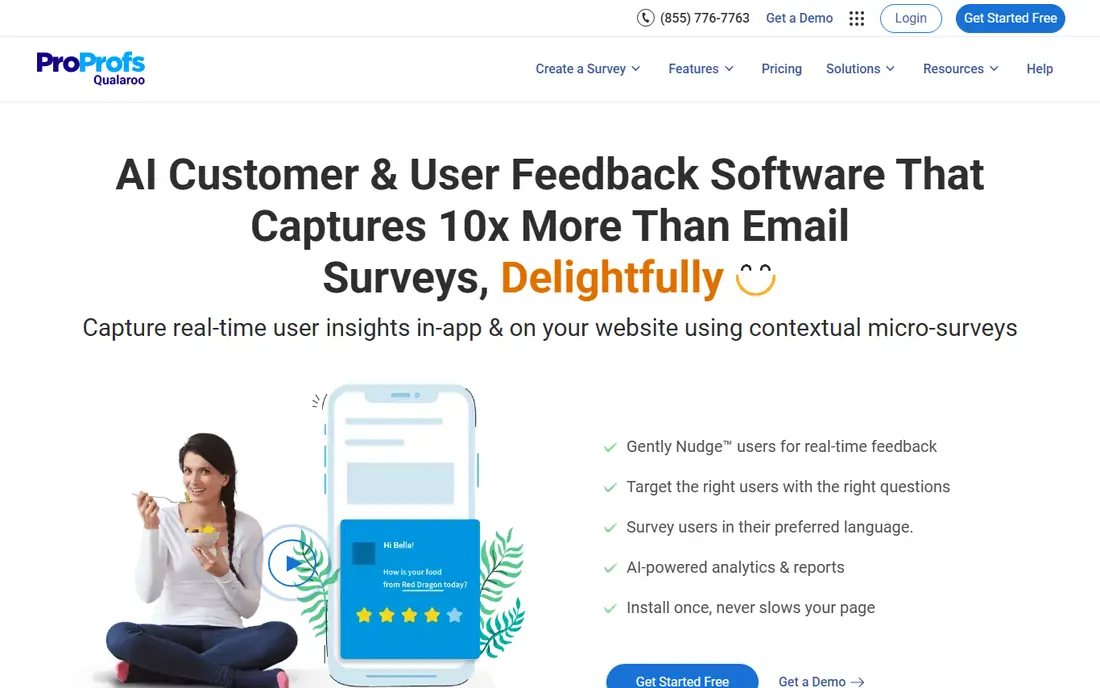
Qualaroo suits product and website teams that want feedback inside the product, not only by email. Surveys can target users by page, behaviour or segment, and NPS scores can be paired with open-text follow-ups that explain the score. Paid plans start at $19.99 per month in recent listings, with a free plan for basic use.
The main risk is survey fatigue. In-app surveys are easy to overuse, so teams should set frequency caps and clear targeting rules. For SaaS and website teams that want contextual NPS data alongside other feedback, Qualaroo offers a focused and affordable starting point.
- In-app, website and targeted surveys
- NPS plus CSAT and other feedback types
- AI feedback analysis on paid plans
- Enterprise features need higher tiers
- Survey design needs care to avoid over-surveying
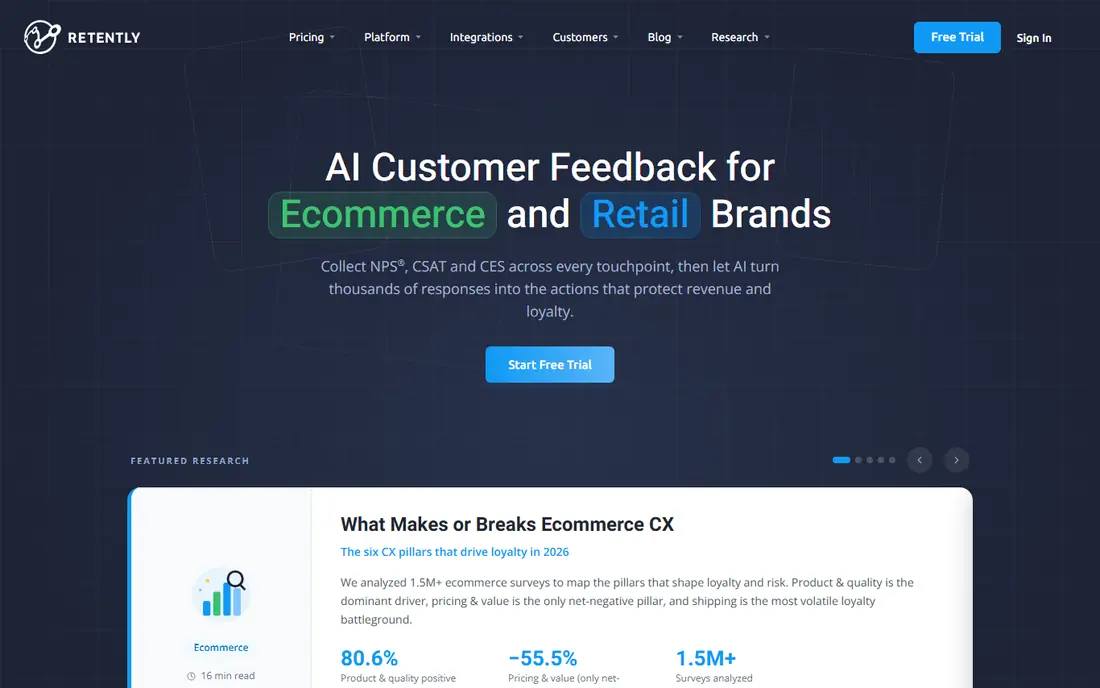
Retently is built for teams that want a straightforward NPS programme without enterprise complexity. It supports email, web and link surveys, tracks scores across the customer lifecycle, and offers segmentation and reporting for growing brands. Plans start at $99 per month in recent listings, which suits e-commerce and subscription businesses that survey regularly.
Retently lacks the advanced journey analytics of Qualtrics or Medallia, but that is also its appeal: setup is faster and pricing is clearer. For small and mid-size teams that need reliable NPS tracking, alerts for detractors and basic lifecycle views, Retently is a practical choice, especially as a replacement for simpler tools.
- Simple NPS, CSAT and CES surveys
- Lifecycle tracking
- Clear pricing for small teams
- Analytics depth is thinner than enterprise tools
- Larger programmes need higher tiers
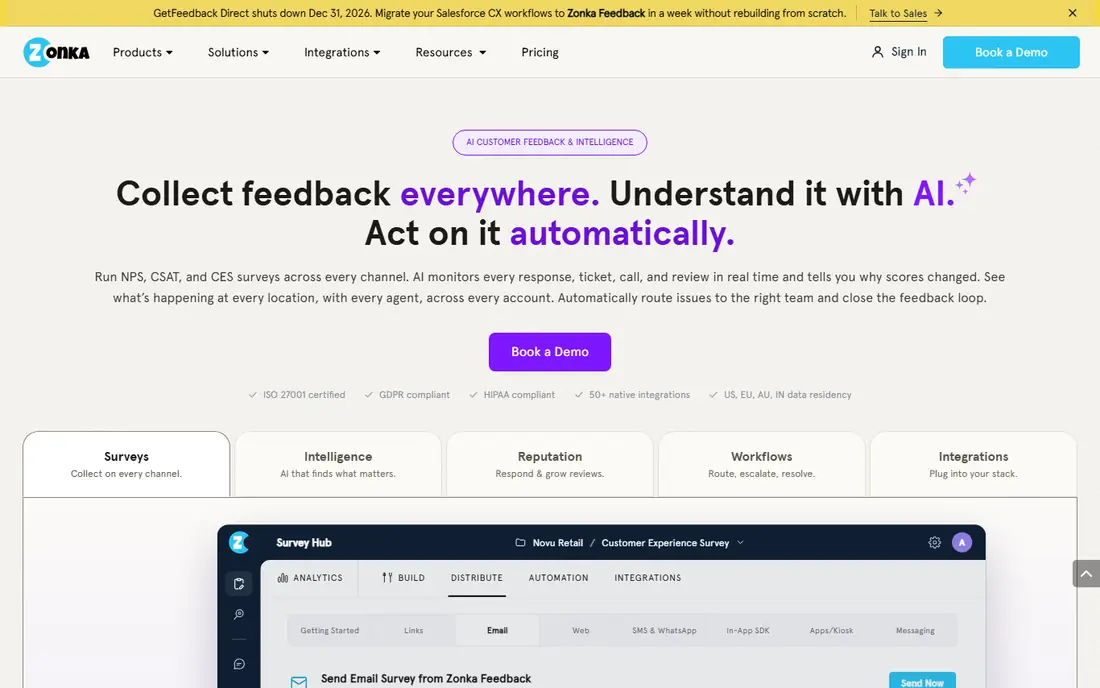
Zonka Feedback suits operational teams in retail, hospitality, healthcare and services, where feedback comes from many touchpoints. It supports email, website, QR code and in-person surveys, plus employee NPS for internal teams. Alerts can route low scores to managers for fast follow-up, which supports service recovery.
Pricing starts at $49 per month in recent listings, with higher tiers for larger survey volumes and advanced reporting. Teams that only need simple email NPS may find Zonka more than they need, but operational teams that survey across locations will value its channel range and alert tools.
- Email, web, QR and kiosk surveys
- Employee NPS options
- Alerts and service recovery workflows
- Interface takes time to learn at full depth
- Some features need higher tiers
SurveyMonkey is a general survey platform with strong NPS support, rather than a dedicated NPS tool. Teams can build NPS surveys by email, web link or embedded form, add follow-up questions, and analyse results with filters, trends and exports. Plans start at $30 per month in recent listings, with a free trial for testing.
The trade-off is focus. SurveyMonkey lacks some closed-loop NPS workflows found in Retently or AskNicely, such as coaching and frontline follow-up tools. For teams that already use SurveyMonkey for other research, adding NPS there is efficient. For teams that need a dedicated NPS programme, a focused tool may fit better.
- Wide survey templates and question types
- NPS question built in
- Strong reporting and exports
- NPS is one feature among many
- Advanced analytics need higher plans
Typeform suits teams that want surveys people actually finish. Its conversational format shows one question at a time, with a clean design that works well on mobile. NPS surveys can include follow-up questions, logic jumps and branding, and results appear in real time with links to common tools.
The limit is analysis depth. Typeform reports NPS scores clearly, but it lacks the lifecycle, coaching and closed-loop depth of dedicated NPS platforms. Plans start at $25 per month in recent listings. For marketing and product teams that prioritise response rates and design, Typeform is a strong NPS survey option.
- Engaging one-question-at-a-time surveys
- Clean design
- Real-time results and integrations
- NPS analytics are thinner than dedicated tools
- Higher response volumes need higher plans
Survicate helps SaaS and e-commerce teams collect NPS and other feedback inside websites and apps, as well as by email. Surveys can target users by behaviour, plan or page, which helps teams ask at the right moment rather than sending the same survey to everyone. Integrations with CRM, analytics and support tools help teams act on feedback.
Pricing depends on survey volume and features, so teams should check the tier that covers their expected responses. Survicate is less focused on frontline coaching than AskNicely, but it offers a strong mix of in-product surveys and reporting for product-led teams.
- Website, in-app and email surveys
- Targeting by behaviour
- Integrations with CRM and analytics tools
- Pricing is tiered by responses
- Advanced features need higher plans
Nicereply suits support teams that want feedback after each ticket or chat. It sends NPS, CSAT and CES surveys linked to support interactions, then reports scores by agent, team and channel. That view helps managers spot coaching needs and service gaps that a company-wide NPS score would hide.
The limit is scope. Nicereply is strongest for support feedback, not for product or lifecycle NPS across a whole customer base. Plans start at $59 per month in recent listings. For support-led teams that want per-agent feedback and helpdesk links, Nicereply is a focused and useful choice.
- NPS, CSAT and CES after support tickets
- Links to helpdesk tools
- Per-agent reporting
- Best fit is support teams, not whole-company NPS
- Pricing starts higher than simple tools
Qualtrics is the enterprise option on this list, covering NPS alongside customer, employee and brand experience programmes. It offers advanced analytics, text analysis, journey mapping and governance controls for large, global teams. That depth suits firms with many brands, regions and survey programmes that need one governed platform.
The drawback is cost and complexity. Pricing is quote-based and aimed at enterprise budgets, and setup often needs dedicated staff or partner help. Small teams will usually find Retently, Qualaroo or Zonka faster and cheaper. For large firms that need scale, governance and deep analysis, Qualtrics remains a leading NPS and experience platform.
- Advanced analytics and segmentation
- Global survey deployment
- Wide enterprise integrations
- Quote-based pricing
- Setup and training needs are high for small teams
How we picked these
We checked official pricing pages, feature pages and public comparisons to confirm each tool still offers NPS surveys in 2026 and to note starting prices where published. We favoured tools with clear survey channels, NPS calculation, follow-up workflows and integrations, rather than general form tools with only a rating question. We left out Delighted from the main list, because recent listings note that Delighted is shutting down, which makes it a poor choice for a new programme in 2026.
Choosing NPS software for your team
Start with channel. Email NPS suits post-purchase and lifecycle surveys, while in-app and website NPS suit product feedback at the moment of use. Support teams need ticket-linked surveys, while operational teams need QR and kiosk options. Matching channel to the moment you want feedback about improves both response rates and score quality.
Plan closed-loop follow-up before launch
Decide who replies to detractors, how fast, and what happens to passives and promoters. Check alerts, assignments, reply templates and reporting by team or location. A tool with strong follow-up tools will deliver more value than a tool that only tracks a score over time.
Watch response volume and survey fatigue
Check how pricing scales with responses, contacts or surveys per month, and set frequency caps so customers are not surveyed too often. Test survey length and mobile design, because long surveys lower completion rates. A short NPS question plus one open follow-up often gives the best balance of score and insight.
Frequently asked questions
What is the best NPS software?
Qualaroo and Retently suit small and mid-size teams, Zonka Feedback suits operational teams, and Qualtrics suits large enterprises. Typeform suits conversational surveys, while Nicereply suits support teams. The best tool depends on survey channel, volume and whether closed-loop follow-up or deep analytics matters most.
What is the best NPS tool for small business?
Retently, Qualaroo and Zonka Feedback are strong small-business options, with clear starting prices and straightforward setup. SurveyMonkey and Typeform also work well for smaller survey volumes. Start with a trial, test one real survey, and check follow-up workflows before committing.
What is the best app for NPS surveys in a product?
Qualaroo and Survicate suit in-app and website NPS, because they target users by behaviour and page. That timing gives feedback tied to a specific feature or journey step. Email tools can miss that context, so product teams should favour in-product survey options.
How is NPS calculated?
NPS is calculated by asking customers how likely they are to recommend a company on a 0 to 10 scale, then subtracting the percentage of detractors, who score 0 to 6, from the percentage of promoters, who score 9 to 10. Scores of 7 to 8 are passives and do not count toward the score, though their feedback still matters for improvement.
How often should I send NPS surveys?
It depends on your business, but most teams survey customers every few months or after key events such as purchase, onboarding or support resolution. Avoid surveying the same customer too often, because fatigue lowers response rates and skews scores. Set a clear cadence and stick to it across teams.
Sources we checked (8)

Online Jobs is an independent blog about careers, online work, learning new skills and the tools that help people earn. More about us.
Keep reading
All posts
DocuSign Alternatives
We compared the best DocuSign alternatives on price, free plans, templates, audit trails and ease of use, including free DocuSign alternatives for small teams.
Best subscription billing software
Looking for the best subscription billing software? We compare 9 platforms for billing, dunning, tax, revenue recognition, and team workflows in 2026.
Best Workforce Management Software
Looking for the best workforce management software? We compare 8 tools for scheduling, time tracking, payroll, and compliance for hourly teams and managers.