Best Music Streaming Service Comparison in 2026: 9 Services Compared

How we put this together: we compare official feature and pricing pages, app store listings, privacy policies and public user reviews. Prices change, so check the provider's site before you pay.
Key takeaways
- Spotify is our pick for most listeners, because discovery, playlists and social sharing remain its strongest combination.
- Apple Music suits listeners who want lossless audio included in the standard price and who already use Apple devices.
- TIDAL and Qobuz suit listeners who prioritise high-resolution audio and artist payout, if they accept smaller catalogues of extras.
- YouTube Music offers the widest range of rare, live and user-uploaded tracks, though its top audio quality trails the audiophile services.
- Free plans help you test a service, but offline listening, higher quality and ad-free play sit behind paid plans on every service here.
Quick comparison
| Name | Who it suits | Starting price | Free option | |
|---|---|---|---|---|
 Spotify | Discovery and social listening | Free | Yes | Visit |
 Apple Music | Lossless audio on Apple devices | See website | No | Visit |
 YouTube Music | Rare tracks and video | Free | Yes | Visit |
 TIDAL | High-resolution audio | See website | No | Visit |
 Amazon Music Unlimited | Prime members and Alexa homes | See website | No | Visit |
 Deezer | Personalised Flow playlists | Free | Yes | Visit |
 Qobuz | Audiophile downloads and streaming | See website | No | Visit |
 Pandora | Radio-style listening | Free | Yes | Visit |
 SoundCloud | Independent and new artists | Free | Yes | Visit |
The best music streaming service comparison
Music services now look similar on price, yet they differ sharply on discovery, audio quality and device fit. We compared official feature pages, pricing pages, app store listings and public reviews, and we weighted catalogue breadth, audio quality, offline support and how well each service fits the devices you already own.
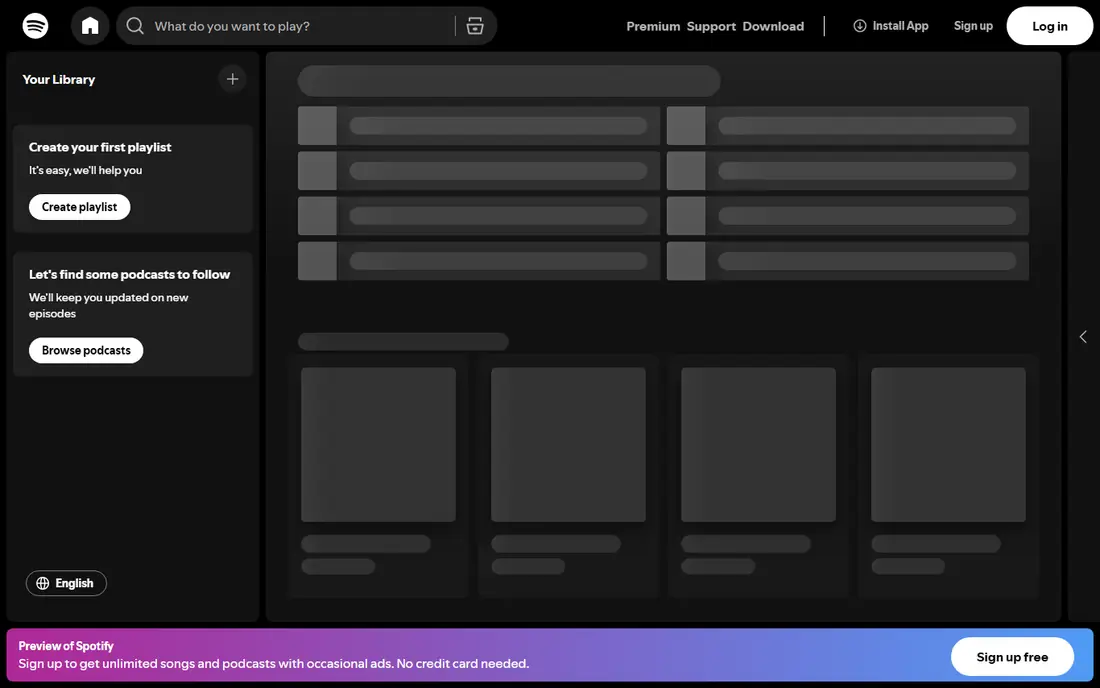
Spotify remains the default choice for a reason that has little to do with catalogue size. Its daily mixes, discovery playlists and year-end summaries surface music you actually keep, and sharing a playlist or listening together feels built in rather than bolted on. Podcasts sit in the same app, which suits listeners who switch between music and spoken word during a day.
Audio quality is the honest weakness. While rivals include lossless audio in standard plans, Spotify's top quality remains below that level for most listeners, and its free plan limits mobile skips and blocks offline play. If discovery and social features matter more than bit-perfect audio, Spotify still leads.
- Strong personalised playlists and discovery tools
- Large social layer for sharing and collaborative playlists
- Wide device support, from phones to cars and speakers
- Top audio quality trails lossless rivals
- Free plan limits skips and offline play on mobile
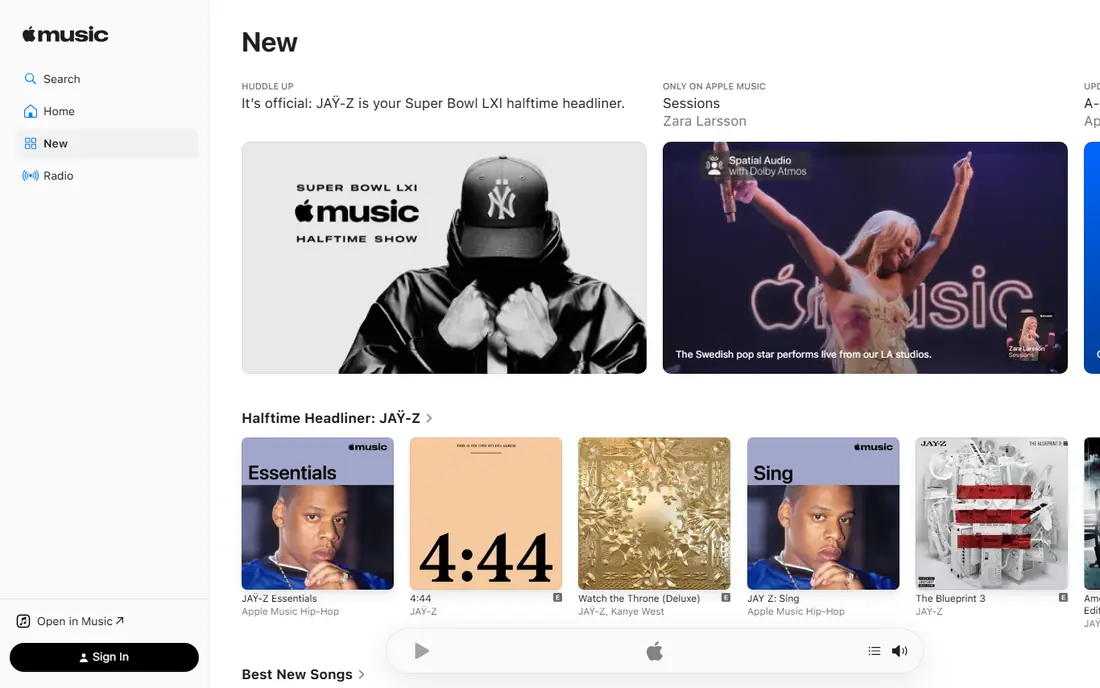
Apple Music makes the strongest case for listeners who care about sound quality without paying an audiophile premium. Lossless audio and spatial audio come included, and the service feels native on Apple devices, from Siri requests to Watch playback without a phone nearby. Curated playlists and live radio stations also give it a human editorial layer that pure algorithms miss.
There is no free tier to test it long term, though trials appear regularly, and social features lag behind Spotify for collaborative playlists and friend activity. For Apple households that value audio quality and device fit, it is the natural pick, and for Android users it still works well as a standalone app.
- Lossless and spatial audio included in the standard plan
- Deep integration with iPhone, Watch, HomePod and CarPlay
- Large catalogue with curated radio stations
- No permanent free tier
- Social sharing is thinner than Spotify
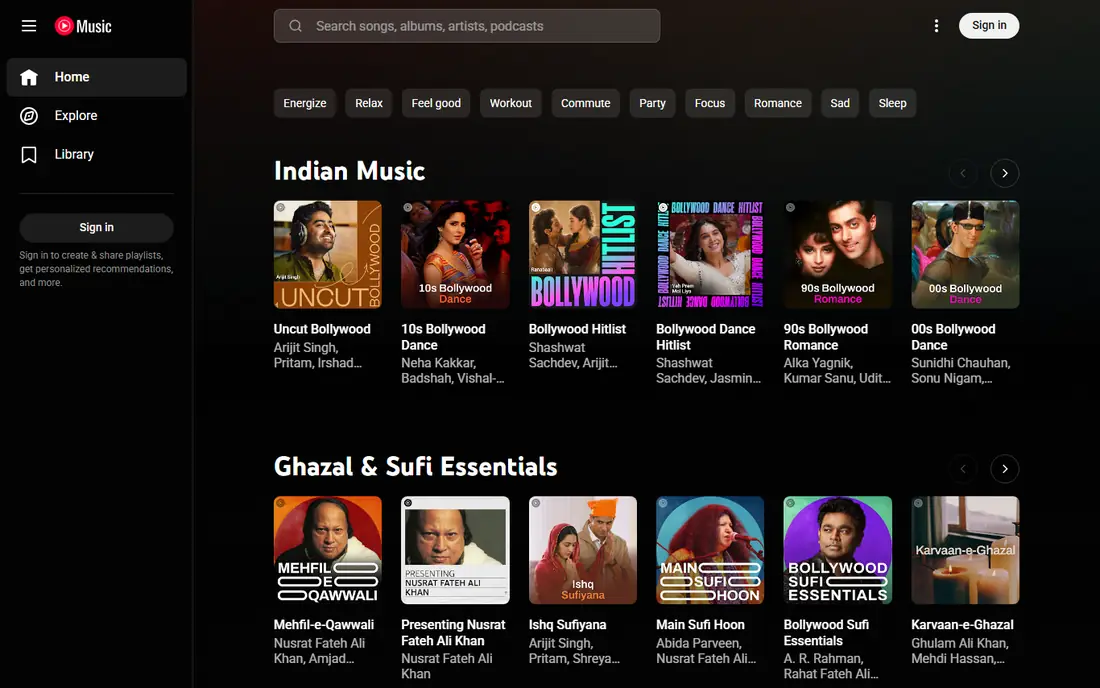
YouTube Music wins on range. Official albums sit beside live recordings, covers, remixes and tracks that never reached other services, which makes it a favourite for listeners with eclectic taste. The ability to switch a song to its video without losing your place is a small feature that gets used a lot once you try it.
Audio quality tops out below lossless rivals, and the free mobile experience is limited, with ads and no background play. For listeners who already pay for YouTube Premium, the bundle value is hard to beat, since music comes included. For pure audio quality, look at Apple Music, TIDAL or Qobuz instead.
- Huge range of official tracks, live versions and user uploads
- Easy switch between audio and music video
- Bundled value for YouTube Premium subscribers
- Top audio quality is lower than lossless rivals
- Free plan includes ads and no background play on mobile
TIDAL pitches itself to listeners who want studio-quality sound and artists who want a larger share of streaming revenue. High-resolution tiers deliver detail that good headphones reveal, especially on acoustic, jazz and classical recordings, and editorial playlists give the service a human voice beyond algorithms. Offline listening works well for travel and commutes.
The trade-off is breadth of extras. Podcasts, social features and discovery tools are thinner than Spotify, and high-resolution audio only matters if your headphones, speakers and connection can carry it. For serious listeners with good gear, TIDAL earns its price. For casual phone-speaker listening, the difference is harder to hear.
- High-resolution and lossless audio options
- Artist-focused features and editorial content
- Offline listening and wide device support
- Smaller extras catalogue than Spotify
- Higher-tier audio needs good headphones and a stable connection to shine
Amazon Music Unlimited makes most sense in a home already full of Echo speakers. Asking Alexa to play a song, album or playlist works smoothly, and Ultra HD tracks give audiophile listeners a reason to stay. Prime members get a basic music tier included, with Unlimited opening the full catalogue and higher quality.
Discovery and playlist curation lag behind Spotify and Apple Music, and the gap between Prime Music and Unlimited confuses new users, since the basic tier covers only a subset of tracks. If you already pay for Prime and use Alexa daily, Unlimited is convenient value. If you do not, another service will feel more polished.
- Strong value for Prime members on some plans
- Ultra HD audio on supported tracks
- Voice control through Alexa devices
- Interface and discovery trail Spotify
- Full catalogue requires Unlimited, not the basic Prime tier
Deezer's Flow feature deserves more attention than it gets. It blends songs you love with new tracks matched to your taste, creating a personal radio station that stays fresh without constant playlist building. That suits listeners who want music on in the background without choosing every track, and the free plan lets you test Flow before paying.
Regional availability and social features are thinner than the leaders, and standard audio quality does not match Apple Music or TIDAL. For listeners who like radio-style discovery and want a free tier to start with, Deezer is a credible alternative that too many comparisons skip.
- Flow feature mixes favourites with new discoveries
- Free plan for testing the service
- SongCatcher identifies songs playing nearby
- Smaller presence in some regions than Spotify or Apple Music
- Top audio quality trails lossless leaders on standard plans
Qobuz serves listeners who want to own music as well as stream it. The download store sells high-resolution files you keep, while streaming covers the same catalogue in high quality, and classical and jazz sections include detailed notes that other services skip. That editorial depth matters for listeners who read about music as much as they hear it.
Mainstream discovery, social sharing and podcast extras are thin, and the price sits above Spotify and Apple Music for a standard plan. For audiophiles and collectors, Qobuz is a specialist worth paying for. For general listeners, a mainstream service will feel broader and cheaper.
- High-resolution streaming and a download store for owned files
- Strong classical and jazz catalogues with rich liner notes
- No reliance on compressed-only tiers for top quality
- No free tier and higher price than mainstream rivals
- Smaller mainstream playlist and social layer
Pandora built its name on radio, and that remains its strength. Start with a song or artist, rate tracks as they play, and the station gradually learns your taste without you building playlists. That hands-off style suits driving, working and background listening, where choosing every track would break focus.
Availability is mainly limited to the United States, which rules it out for many readers, and on-demand album playback is less central than on Spotify or Apple Music. For US listeners who prefer radio to playlists, Pandora still does that one job very well.
- Long-running personalised radio stations
- Simple thumbs-up and thumbs-down tuning
- Free plan for casual listening
- Mainly available in the United States
- On-demand features are thinner than Spotify or Apple Music
SoundCloud is where new music appears first. Independent artists, DJs and producers upload demos, remixes and sets that never reach major services, so listeners who follow scenes rather than charts find material here they cannot find elsewhere. The free plan covers a vast range of uploads, and following an artist feels direct in a way major services rarely match.
Mainstream catalogue coverage is patchier, and audio quality varies because uploads come from many sources. Treat SoundCloud as a complement to a mainstream service, not a replacement, unless independent music is your main listening. Paired with Spotify or Apple Music, it covers both charts and underground scenes.
- Huge library of independent, demo and DJ tracks
- Direct support for emerging artists
- Free plan with a vast catalogue of uploads
- Mainstream catalogue gaps compared with major services
- Audio quality varies across user uploads
How we picked these
We compared official feature pages, pricing pages, app store listings and public reviews, and we weighted catalogue breadth, audio quality, free plan limits, offline support and device coverage. Prices change often and vary by country, term and student or family plan, so we used starting prices only where they were clear, and marked others as See website. We treated artist payout claims with caution, since per-stream rates vary by country, plan and listener mix.
How to choose the right service
Start with your devices
Check which service works best on the phone, speaker, watch and car system you use most. Apple Music shines on Apple devices, Amazon Music on Echo speakers, and Spotify on the widest range of third-party hardware. A service that sounds great on paper but stutters on your speaker will lose to one that simply works everywhere you listen.
Test discovery for a week
Use the free plan or trial for a full week, including commutes, workouts and background listening, and note how often you skip, save or share tracks. Discovery quality shows up fast, and it matters more than catalogue size, since every major service now carries most popular albums. Keep the service whose playlists you actually finish.
Check family, student and bundle value
Family plans, student discounts and bundles with video or shopping services change the value calculation sharply. A service that looks pricey alone may be cheapest inside a bundle you already pay for, while a family plan can cut per-person cost well below an individual plan. Compare the total household cost, not just the headline individual price, before you commit.
Frequently asked questions
What is the best music streaming service?
Spotify is our pick for most listeners, because discovery, playlists and social sharing work together better than on rivals. Apple Music suits listeners who want lossless audio and use Apple devices, while YouTube Music suits listeners who want rare and live tracks. Test free plans for a week and keep the service you open most.
What is the best music streaming app for audio quality?
Apple Music, TIDAL and Qobuz lead on audio quality, with lossless and high-resolution options included or available on higher tiers. Qobuz also sells high-resolution downloads you can keep. Spotify trails these three on top quality, though most listeners on phone speakers or basic earbuds will hear little difference.
What is the best free music streaming service?
Spotify offers the strongest free plan for general listening, with personalised playlists and a large catalogue, though mobile skips are limited and offline play is paid. YouTube Music and Deezer also offer free plans, and SoundCloud offers a vast free catalogue of independent uploads. For ad-free, offline listening, a paid plan is needed on every service.
Which music streaming service is best for families?
Spotify, Apple Music and YouTube Music all offer family plans with separate accounts and personalised recommendations per member, and Amazon Music offers family options for Prime households. Compare the total family price and check parental controls and explicit content filters before choosing, since these vary by service and region.
Can I transfer playlists between music services?
Yes, third-party tools can move playlists between major services, though matches are not always exact, especially for rare, live or user-uploaded tracks. Check the tool's privacy policy before connecting your accounts, and review transferred playlists after the move, since some tracks may be missing or replaced with different versions.
What is the best quality music streaming service for classical music?
Qobuz suits classical listeners best, with high-resolution audio, rich liner notes and strong classical catalogue organisation. Apple Music also offers a dedicated classical app in many regions, with lossless audio and detailed work metadata. TIDAL covers classical in high quality too, but Qobuz's editorial notes give it an edge for serious listeners.
Sources we checked (9)

Online Jobs is an independent blog about careers, online work, learning new skills and the tools that help people earn. More about us.
Keep reading
All posts
Discord Alternatives
We compared the best Discord alternatives for gaming, communities and teams, checking official pricing, free plans and honest limits before ranking nine apps.

Best Twitter Alternatives
Looking for the best Twitter alternatives? We compared 9 platforms for short posts, from Bluesky and Threads to Mastodon, so you can find your new home.
Best Social Media Management Tools
Compare the best social media management tools for small teams, creators and agencies, with pricing, free plans, features and honest trade-offs. in 2026.