Best Twitter Alternatives in 2026: 9 Platforms Compared

How we put this together: we compare official feature and pricing pages, app store listings, privacy policies and public user reviews. Prices change, so check the provider's site before you pay.
Key takeaways
- Bluesky is the closest thing to early Twitter, with custom feeds and an open protocol that lets you move your identity.
- Threads has the largest built-in audience of any alternative, thanks to its link with Instagram.
- Mastodon offers the most control over moderation and feeds, but picking a server takes a little learning.
- Most alternatives are free, so the real cost is rebuilding your follow list, not a subscription.
- No single platform has replaced Twitter for everyone, so many people now keep two homes: one big and one small.
Quick comparison
| Name | Who it suits | Starting price | Free option | |
|---|---|---|---|---|
 Bluesky | Closest to early Twitter | Free | Yes | Visit |
 Threads | Largest built-in audience | Free | Yes | Visit |
 Mastodon | Community-run servers | Free | Yes | Visit |
 Hive Social | Chronological photo and text posts | Free | Yes | Visit |
 Tumblr | Short posts plus long blogs | Free | Yes | Visit |
 Micro.blog | Blogging at your own domain | See website | No | Visit |
 Minds | Creator rewards | Free | Yes | Visit |
 CounterSocial | Tightly moderated community | Free | Yes | Visit |
 Pillowfort | Fandom and hobby communities | Free | Yes | Visit |
The best Twitter alternatives
We compared official feature pages, app store listings, privacy policies and public reviews, focusing on how each platform handles posts, feeds, moderation and moving your account. All of the platforms here are free to join, and we note where paid options exist. Here are the nine that stood out.
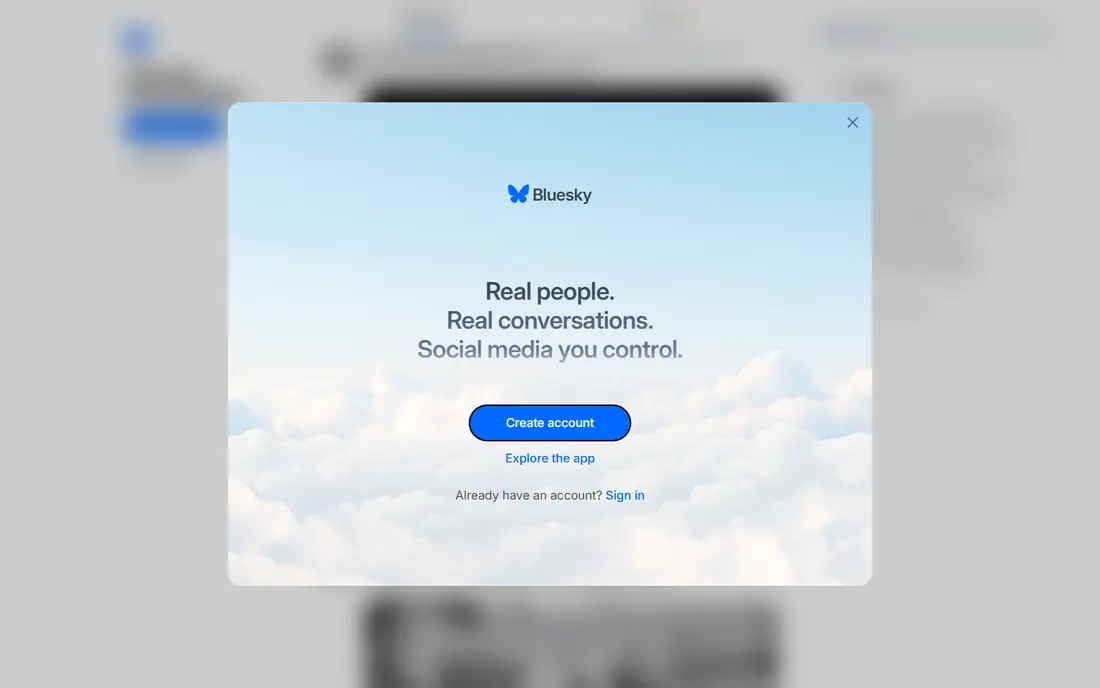
Bluesky is the alternative most former Twitter users settle on first, because it feels familiar: short posts, replies, reposts and a simple timeline, without the algorithmic feed dominating everything. Its standout feature is custom feeds, which are community-built timelines you subscribe to, so you can follow a topic, a profession or a hobby without relying on one company's algorithm. Starter packs, which are curated follow lists, help you rebuild a feed in an afternoon.
Bluesky runs on an open protocol, which means your handle can live on your own domain and your identity is not locked to one company's servers in the way it is elsewhere. The audience is still smaller than Threads or X, so breaking news and niche communities can feel quieter. For a user who misses the old Twitter experience and wants control over what they see, Bluesky is our pick for most people.
- Custom feeds you choose
- Portable identity
- Familiar short-post format
- Smaller audience than Threads
- Finding old contacts takes work
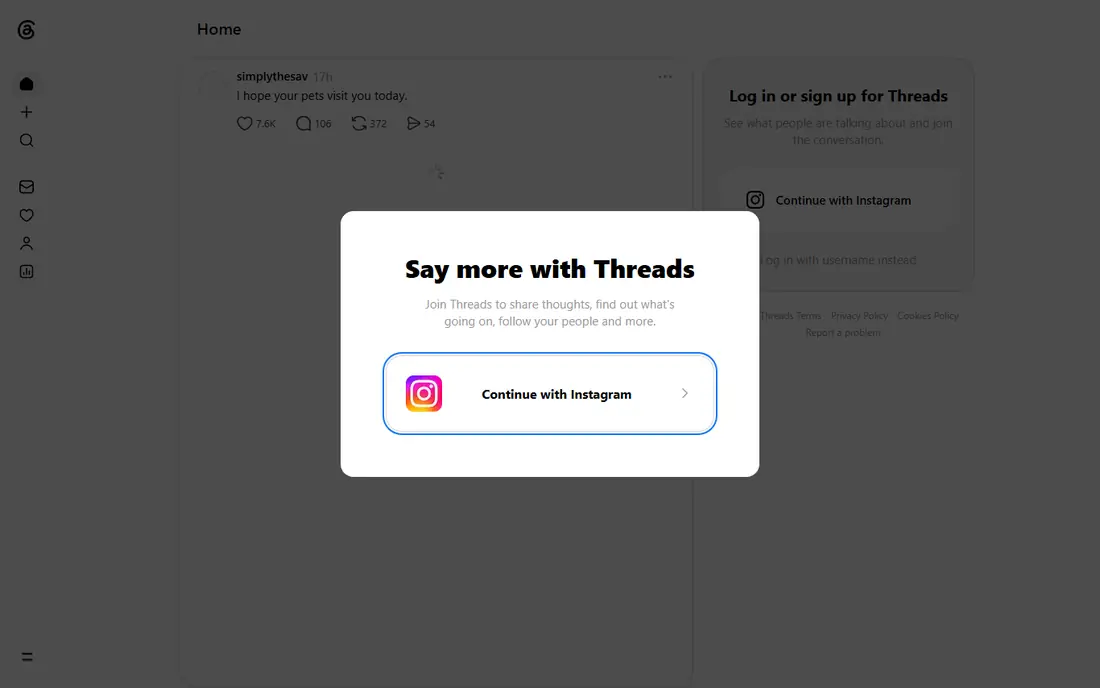
Threads is Meta's text-first app, and its advantage is simple: it is the largest alternative by audience, because signing up through Instagram brings your existing follows with you. Posts run up to 500 characters, with photos, videos and polls, and the app rewards regular posting, so creators who post consistently tend to grow faster here than on smaller networks.
The trade is control. Threads leans on an algorithmic feed, and your account is tied to Meta's ecosystem, which will put off users who left Twitter over exactly that kind of corporate control. Moderation follows Meta's rules, which some users welcome and others resent. Threads fits anyone who wants reach first and is comfortable inside Meta's world.
- Huge audience through Instagram
- Easy sign-up
- Posts up to 500 characters
- Algorithmic feed
- Tied to a Meta account
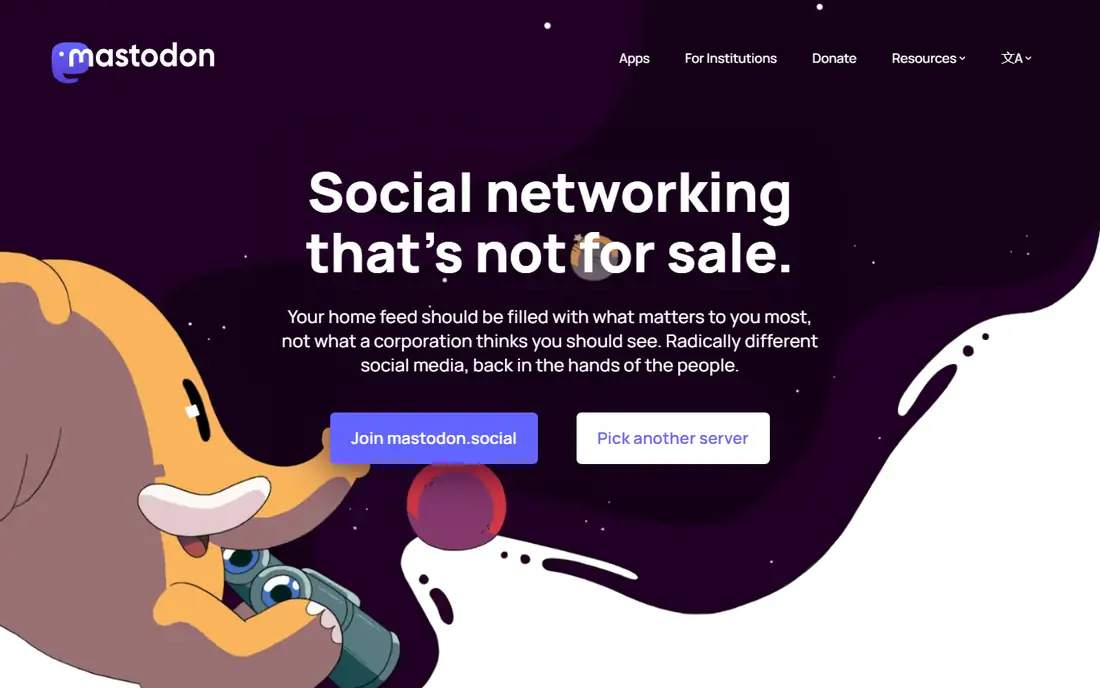
Mastodon is the original decentralized alternative: thousands of independent servers, run by communities, companies or hobbyists, all talking to each other through an open protocol. There are no ads and no company-wide algorithm, and each server sets its own moderation rules, so a journalism server, an art server and a tech server can feel quite different. General servers are fine to start with, while topic servers give you a better local timeline.
The learning curve is real. Newcomers must pick a server, learn federation etiquette and accept that the audience is split across servers rather than gathered in one place. Moving servers later is possible but takes effort. Mastodon suits users who care most about how a platform is run, and who value community moderation over raw reach.
- No ads
- Chronological feeds
- Servers set their own rules
- Choosing a server confuses newcomers
- Audience is fragmented
Hive Social blends Twitter-style text posts with Instagram-style image posts, plus polls and a question-and-answer feature, all in a chronological feed with no ads. That mix appeals to users who post photos as often as words and who are tired of algorithmic timelines deciding what they see. The app is free and straightforward to use, with a profile layout that will feel familiar within minutes.
The community is much smaller than Bluesky's or Threads', so posts can sit quietly and trending topics are thin. Third-party app support is also limited compared with Mastodon. Hive fits a casual poster who wants a calm, chronological timeline and does not need a huge audience or breaking news.
- Chronological feed
- Text, image, polls and Q and A
- No ads
- Smaller community
- Fewer third-party apps
Tumblr has outlasted several waves of social platforms, and it remains the best alternative for people whose posts are not only text. Short posts sit alongside art, GIFs, photo sets and long-form blogs, and its creative communities around fandom, art and hobbies are still active. Reblogging works like a gentler version of retweeting, spreading posts through follower networks without quote-post pile-ons.
The dashboard can feel chaotic to a newcomer, and search and discovery are weaker than on Bluesky or Threads, so finding new people takes more work. Tumblr's culture is also distinct, with its own humor and norms that can confuse outsiders. Tumblr fits creative users who want one home for short posts and longer work, and who value community over news speed.
- Mixes short posts, art, GIFs and long blogs
- Strong creative communities
- Free
- Dashboard can feel chaotic
- Search and discovery are weak
Micro.blog is the alternative for users who want to own their words. Short posts live on your own blog, optionally at your own domain, and the social timeline pulls together posts from across the independent web. There are no ads, no algorithmic feed and no company that can change the rules under you, since the content is yours in a standard blog format.
The trade is cost and company. Hosting is paid, the social graph is far smaller than the big platforms, and real-time conversation is thinner, since Micro.blog is closer to blogging than to a live news feed. It also asks a little more technical comfort than Threads or Bluesky. Micro.blog fits writers and bloggers who value ownership above audience size.
- Your posts live on your own blog
- No ads
- Open web standards
- Paid hosting
- Smaller social graph
- Less real-time conversation
Minds is an open source social network that rewards creators with tokens for engagement, which they can use to boost posts or exchange within the platform. The feed mixes short posts, images and video, and the platform's free-speech stance attracts users who felt restricted elsewhere. Signing up is free, and the interface will feel familiar to anyone coming from Twitter.
The audience is smaller and more political than the mainstream alternatives, so a user looking for general conversation may find the culture narrow. Token economics also add complexity that casual users may not want. Minds fits creators who want to earn from engagement and users who prioritize minimal content restriction.
- Creators earn tokens for engagement
- Open source
- Free to join
- Smaller mainstream audience
- Content mix skews political
CounterSocial is a small, tightly moderated alternative built around one promise: no abuse, no bots and no disinformation in your timeline. Moderation is strict and proactive, which makes it one of the calmer places in this list, and the feed offers chronological options alongside curated views. The platform is free and funded by its community rather than advertising.
The strictness cuts both ways. Some users find the rules comforting, while others find them restrictive, and the community is small, so conversations can feel quiet. CounterSocial also lacks the third-party app ecosystem of Mastodon. It fits users who left Twitter because of harassment and who will trade audience size for a timeline they can trust.
- Strict moderation against abuse
- No ads
- Chronological options
- Smaller community
- Stricter rules exclude some content
Pillowfort is a community blogging platform that has become a home for fandom, art and hobby communities, mixing short posts with longer community blogs. Its audience is the smallest in this list, but its communities are tight-knit, and its tools suit artists and writers who want to share work and talk about it in one place. Registration has sometimes been limited during growth spurts, so check whether sign-ups are open before you commit.
Pillowfort will not replace Twitter for news or broad conversation, and its discovery tools are modest. It fits a user whose main reason for social media is a specific hobby community rather than a general audience, and who is happy to trade reach for belonging.
- Strong fandom and art communities
- Community blogging
- Free
- Smallest audience here
- Registration has sometimes been limited
How we picked these
We compared official feature pages, app store listings, privacy policies and public reviews for each platform, and we checked that each platform's homepage loads and belongs to that platform. We focused on post formats, feed control, moderation approach, audience size and whether you can move your account or content elsewhere. We left out platforms that have shut down or stopped accepting new users, since they cannot help a reader looking for a new home today.
Moving without losing your people
Rebuilding a follow list is the real work of switching, and each platform has a shortcut. On Bluesky, subscribe to a few starter packs in your niche and your feed fills up in an afternoon. On Threads, follow the same accounts you follow on Instagram and let the existing graph do the work. On Mastodon, pick a topic server and introduce yourself with an introduction post, which genuinely helps strangers find you.
Keep two homes for a while
Give a new platform a month of real posting before you judge it, since a fresh account always feels empty at first. Many people now keep two homes: a big platform for reach and a smaller one for community, posting natively on each rather than cross-posting everything. Cross-posting tools exist, but platforms reward native posts, so pick one primary home and treat the others as outposts.
Protect your account as you move
Use a unique password and turn on two-factor authentication on every new account, since a new platform is a tempting target for impersonators. Watch for copycat accounts using your old handle, and tell your followers on the old platform where to find you before you go quiet there. If you used Twitter for work contacts, export your follow list and any important direct messages before you stop logging in.
Frequently asked questions
What is the best alternative to Twitter?
Bluesky is our pick for most people, since it feels closest to early Twitter, offers custom feeds and lets you carry your identity on your own domain. Threads wins on audience size, and Mastodon wins on control over moderation and feeds. The best choice depends on whether you value familiarity, reach or control most, so try two for a month and keep the one whose feed you actually enjoy opening.
Is Bluesky really better than Threads?
Bluesky gives you more control over feeds and identity, while Threads gives you a much larger audience through Instagram. Bluesky suits users who want a chronological, community-shaped timeline, and Threads suits creators and casual posters who want reach with minimal setup. Neither is clearly better for everyone, which is why many users keep accounts on both.
Can I use Mastodon without picking a server?
You have to pick a server to create an account, but the choice is less permanent than it looks: general servers are fine to start with, and you can move your follows to another server later. Think of a server as a neighborhood rather than a separate network, since servers talk to each other and you can follow people anywhere. Start general, then move to a topic server once you know what you want.
Are Twitter alternatives free?
Yes, all of the platforms in this list are free to join and use, including Bluesky, Threads, Mastodon, Hive Social, Tumblr, Minds, CounterSocial and Pillowfort. Micro.blog is the exception, since its hosted blogs are paid. Some platforms offer optional paid extras, such as larger storage or verification-style features, but none of the core posting features in this list require payment.
What happened to Twitter?
Twitter was bought in 2022 and rebranded as X, with changes to verification, moderation, the algorithm and API access that pushed many users to look elsewhere. The platform still operates as X and remains the largest short-post network, but the alternatives in this list grew from users who wanted chronological feeds, community moderation or open protocols. You can keep an X account alongside a new home if your audience still lives there.
Which Twitter alternative is best for news?
Threads and Bluesky are the strongest for news among the alternatives, since they have the largest audiences and the fastest-moving conversations. Mastodon works well for specialist news through topic servers, such as journalism or science communities, but breaking news travels slower across a fragmented network. For urgent news, keep a mainstream source alongside any alternative, since no single alternative matches X for speed yet.
Sources we checked (9)

Online Jobs is an independent blog about careers, online work, learning new skills and the tools that help people earn. More about us.
Keep reading
All posts
Discord Alternatives
We compared the best Discord alternatives for gaming, communities and teams, checking official pricing, free plans and honest limits before ranking nine apps.
Best Social Media Management Tools
Compare the best social media management tools for small teams, creators and agencies, with pricing, free plans, features and honest trade-offs. in 2026.
Best Music Streaming Service Comparison
Our best music streaming service comparison covers 9 platforms on price, audio quality, free plans, discovery, offline play and device support in 2026.