Best Media Monitoring Tools in 2026: 8 Tools Compared

How we put this together: we compare official feature and pricing pages, app store listings, privacy policies and public user reviews. Prices change, so check the provider's site before you pay.
Key takeaways
- Brand24 and Mention suit smaller teams that want fast alerts without an enterprise contract.
- Meltwater and Brandwatch suit large PR and marketing teams that need broad news, broadcast and social coverage.
- Google Alerts is still useful as a free safety net, but it is not a full monitoring platform.
- Custom pricing is common at the top end, so ask for a written quote tied to mentions, users and sources before you sign.
Quick comparison
| Name | Who it suits | Starting price | Free option | |
|---|---|---|---|---|
 Brand24 | Small and mid-size brand tracking | See website | Free trial | Visit |
 Mention | Fast real-time alerts | See website | Free trial | Visit |
 Meltwater | Enterprise PR and media coverage | See website | No | Visit |
 Brandwatch | Large-scale consumer insight | See website | No | Visit |
 Sprout Social | Social monitoring plus publishing | See website | Free trial | Visit |
 Awario | Budget web and social monitoring | See website | Free trial | Visit |
 Talkwalker | Global enterprise monitoring | See website | No | Visit |
 Google Alerts | Free basic mention alerts | Free | Yes | Visit |
The best media monitoring tools
We compared official product pages, pricing pages and public comparison material for the tools below. Media monitoring is a broad label, so we focused on what each tool actually tracks: news, social posts, blogs, forums, reviews and, for larger tools, broadcast and print.
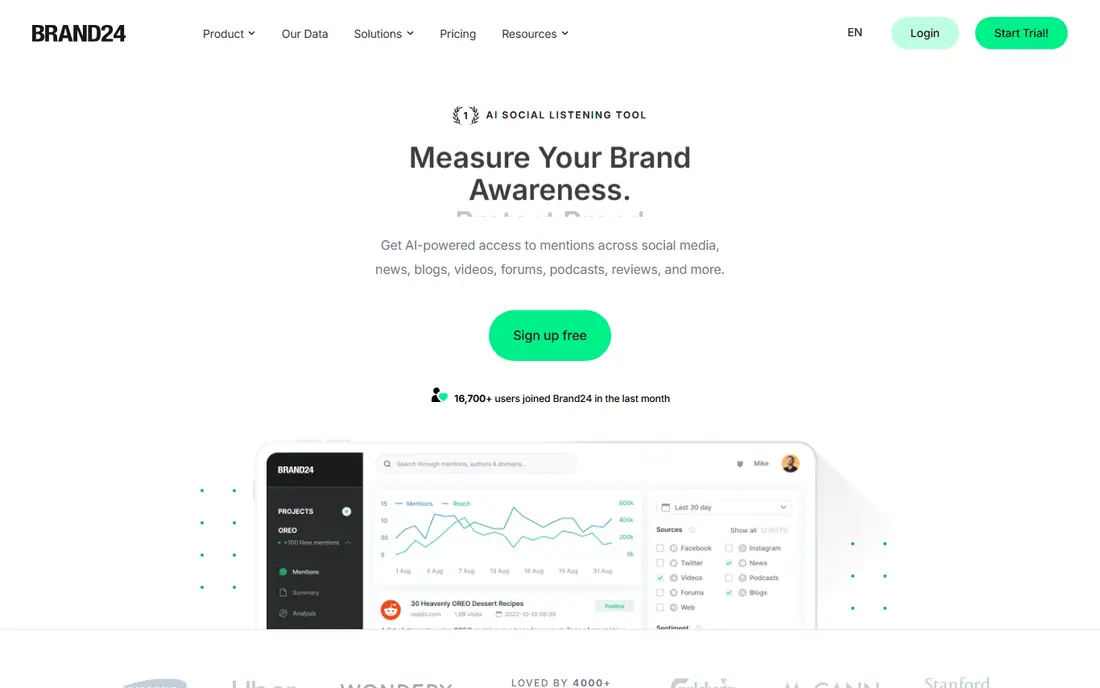
Brand24 is a good starting point for a business that wants to know when people talk about it, without hiring an analyst to run the tool. Mentions arrive in one dashboard, sentiment gives a quick read on tone, and alerts can flag a sudden rise in volume. That mix suits marketing managers who need answers, not raw data dumps.
The limit to watch is volume. A brand with a common name, or a topic that spikes during a crisis, can burn through a mention allowance faster than expected. Start with tight keywords, exclude noisy terms early, and check how historical data and exports are handled on the plan you choose.
- Clear dashboards for mentions and sentiment
- AI summaries help small teams
- Covers social, news, blogs and forums
- Enterprise depth is limited compared with Meltwater or Brandwatch
- Mention limits matter on busy topics
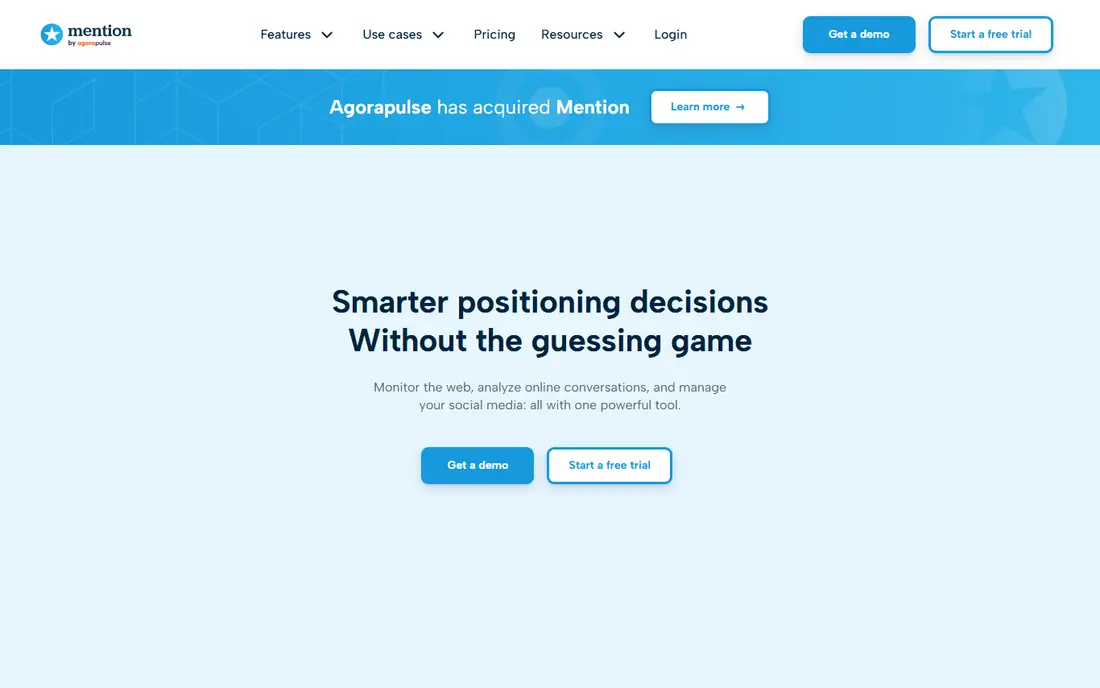
Mention earns its place for speed. When a story, review or social post appears, a team that learns about it in minutes can reply, correct a fact or prepare a statement while the conversation is still small. Boolean search helps here, because it lets you build queries that separate your brand from lookalike names.
The trade-off is depth at the entry level. Sentiment, reporting and team workflows improve on higher plans, so a small team should test the alert quality on a trial before judging the whole product. If alerts are noisy, tighten the query before you upgrade.
- Fast alerts for web and social mentions
- Boolean search for tighter queries
- Simple setup
- Published pricing has changed over time, so confirm the current plan
- Advanced analysis needs higher tiers
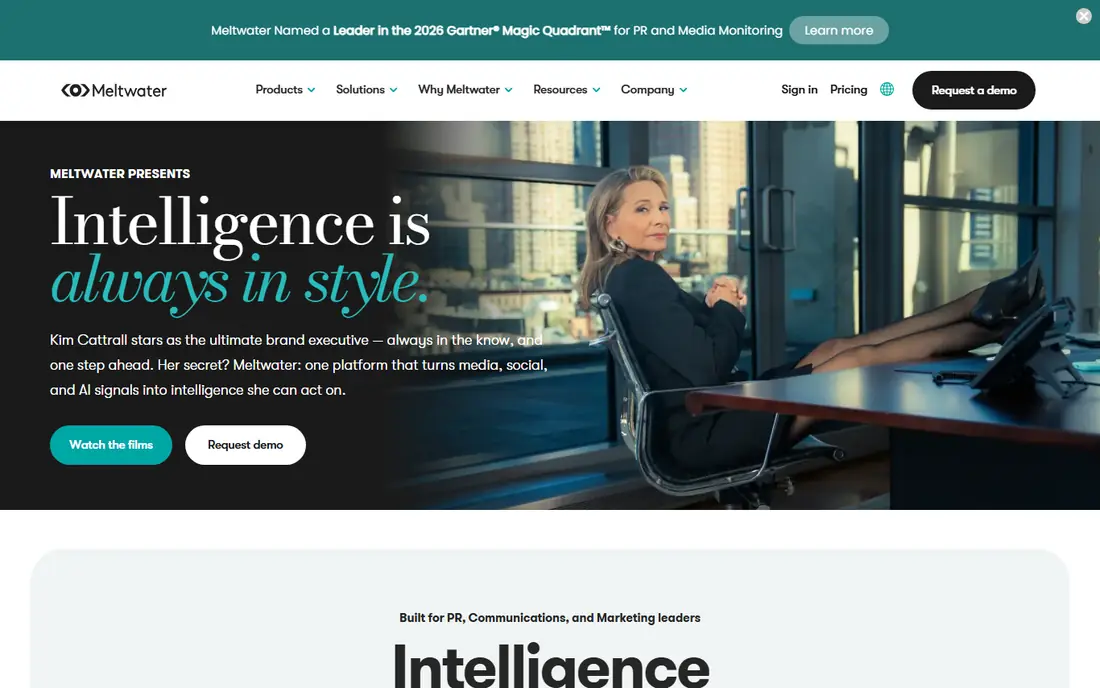
Meltwater is built for communications teams that need the full picture, not just social posts. News, premium publications, broadcast, podcasts and social sources can sit in one system, which helps when a story moves from a forum to a news site to television. Reporting tools then turn that trail into material a leadership team can read.
The cost and complexity are real. Pricing is custom, contracts are often annual, and a small business will pay for coverage it rarely uses. Meltwater fits when media relations, reputation risk and multi-market coverage are daily work, not occasional checks.
- Broad news, social, broadcast and print coverage
- PR workflows and reporting
- Journalist and influencer data on some plans
- Custom pricing only
- Setup and onboarding take time
- Overkill for a one-person brand
Brandwatch suits teams that ask bigger questions than “who mentioned us today”. It can track trends, compare competitors, study audience language and spot image or logo use across social and web sources. That depth helps product, research and insight teams, not just PR.
That depth is also the catch. A team without someone to build queries, clean data and interpret results will get less value for a high price. Ask for a demo on your own keywords, not a polished sample dataset, and confirm what historical access and user seats are included.
- Very broad source coverage
- Strong consumer insight and image analysis
- Long historical data on some plans
- Custom pricing only
- Needs skilled users to get full value
- Onboarding can be slow
Sprout Social is the practical pick for a social team that also has to publish, reply and report. Listening sits beside the inbox and calendar, so a mention can move from alert to reply without switching tools. Approval workflows help when more than one person touches a brand account.
It is not a direct replacement for a full media intelligence platform. If print, broadcast or paywalled news matter to you, check coverage before you choose Sprout alone. For social-first brands, the combined workflow often matters more than that extra coverage.
- Monitoring, publishing and inbox in one tool
- Clear social reports
- Team roles and approvals
- News and broadcast coverage is narrower than Meltwater
- Per-seat pricing adds up
Awario is worth shortlisting when budget is tight but Google Alerts is not enough. It tracks mentions across the web and social channels, offers sentiment and reach estimates, and includes tools for finding leads and influencers tied to a topic. That makes it useful for a small agency or a growing brand.
Expect some rough edges. Coverage and data quality will not match the largest platforms on every query, and support material can feel thinner. Run the same keywords in Awario and in a free tool during a trial, and compare alert relevance rather than raw mention counts.
- Lower entry price than enterprise tools
- Web, social, news and blog coverage
- Lead and influencer discovery features
- Smaller source set than the largest platforms
- Interface feels less polished in places
Talkwalker fits large teams that monitor many markets, languages and media types at once. Visual recognition can surface a logo in an image or video even when no brand name appears in text, which matters for sponsorship, product launches and crisis work. Trend tools help a team see a story forming, not just reacting after it peaks.
As with other enterprise tools, price and skill are the barriers. Confirm whether Hootsuite bundling changes your contract, seats or support route, and ask how data retention, exports and API access work on the plan you are quoted.
- Wide global and multilingual coverage
- Image and video recognition
- Strong crisis and trend analysis
- Custom pricing only
- Best value needs a trained team
- Now closely tied to Hootsuite
Google Alerts is not a monitoring platform, but it is still a useful safety net. Set alerts for your brand, product names, key people and main competitors, and you will catch many news and web mentions at no cost. For a freelancer or a tiny business, that may be enough to start.
The gaps are clear. Social posts, broadcast, print and many forums fall outside its reach, and there is no sentiment scoring, shared dashboard or serious reporting. Use it alongside a paid tool, or as a bridge while you test one, rather than as your only source of truth.
- Free
- Very easy to set up
- Useful for names, products and competitors
- Limited to Google-indexed pages
- No social depth, sentiment or team workflows
How we picked these
We compared official product and pricing pages, public comparison material and each tool's stated coverage. We favoured tools that are actively sold, clearly state what they monitor, and fit a distinct team size or use case. We did not invent prices, source counts or ratings, so enterprise tools with custom pricing are listed as “See website” rather than given a guessed figure.
What to check before you choose
Start with sources, not dashboards. List the places that matter to you: local news, national press, TikTok, Reddit, review sites, podcasts or broadcast, and ask each vendor to show coverage for your exact keywords. A tool that looks strong in a demo can miss the one forum or publication your customers actually read.
Then check query quality, alert speed, sentiment accuracy and export options. Test with a common brand name, a misspelling and a competitor, and see how much noise each tool returns. Finally, pin down the contract: mention limits, user seats, historical data, API access and renewal terms. The cheapest monthly figure can become expensive once overage or extra seats are added.
Frequently asked questions
Which media monitoring platform is the best for a small business?
Brand24 or Mention are sensible starting points for a small business, because they offer fast alerts and clear dashboards without an enterprise contract. Google Alerts can cover basic web mentions for free while you test a paid tool.
Which media monitoring tool is best for PR teams?
Meltwater is a strong PR pick because it covers news, broadcast, print and social sources in one system, with reporting built for leadership. Brandwatch and Talkwalker suit larger teams that also need consumer insight or global trend analysis.
What is the best media monitoring software for social media only?
Sprout Social suits social-first teams that want monitoring beside publishing and replies. Mention and Awario are cheaper options when social and web mentions matter more than broadcast or print coverage.
Are there free media monitoring tools?
Google Alerts is free and useful for basic web and news mentions. Most full platforms offer a free trial rather than a free plan, so use the trial to test alert quality on your own keywords before paying.
How are the best media monitoring tools ranked in practice?
Rank them by coverage for your keywords, alert relevance, sentiment accuracy and total contract cost, not by mention count alone. A tool that returns fewer, more relevant mentions is usually more useful than one that floods an inbox.
Sources we checked (8)

Online Jobs is an independent blog about careers, online work, learning new skills and the tools that help people earn. More about us.
Keep reading
All posts
n8n Alternatives
n8n alternatives compared for 2026, with Zapier, Make, Activepieces, and more, covering visual builders, code steps, self-hosting, and pricing models.

ZoomInfo Alternatives
The best ZoomInfo alternatives in 2026, compared on price, free plans, data coverage, and which tool fits small teams or large sales teams best in detail.

Workday Alternatives
We compared the best workday alternatives for HR, payroll, and global hiring, from BambooHR and Gusto to Rippling, Deel, and HiBob for growing teams in 2026.