Best Marketplace Apps in 2026: 8 Apps Compared


Local furniture and general goods · Starting price: Free
How we put this together: we compare official feature and pricing pages, app store listings, privacy policies and public user reviews. Prices change, so check the provider's site before you pay.
Key takeaways
- Facebook Marketplace is the best starting point for local sales, because local pickup avoids shipping and seller fees on in-person deals.
- eBay gives the widest reach for collectibles, electronics and unusual items, with auctions and fixed-price listings.
- Poshmark, Depop and Vinted each fit a different kind of clothing seller, so category fit matters more than app size alone.
- Mercari suits casual sellers who want fast mobile listings across many categories.
- Etsy remains the strongest marketplace for handmade and vintage goods, despite its listing and transaction fees.
Quick comparison
| Name | Who it suits | Starting price | Free option | |
|---|---|---|---|---|
| Facebook Marketplace | Local furniture and general goods | Free | Yes | Visit |
 eBay | Almost anything, especially collectibles | Free | Yes | Visit |
 Mercari | Casual sellers with mixed items | Free | Yes | Visit |
 Poshmark | Brand-name and designer fashion | Free | Yes | Visit |
 Depop | Vintage and streetwear fashion | Free | Yes | Visit |
 Vinted | Everyday clothes at low cost | Free | Yes | Visit |
 Etsy | Handmade and vintage goods | See website | No | Visit |
 OfferUp | Fast local sales | Free | Yes | Visit |
The best marketplace apps
The best app to sell things depends on what you are selling and how much work you want to do. A local buyer who collects a sofa is a different sale from a shipped vintage jacket, and the fee, shipping and audience all change with that choice. The apps below cover both paths.

Facebook Marketplace works because it meets buyers where they already spend time. Listing a sofa, a bike or a set of tools takes a few photos and a short description, and local buyers can collect the item, which removes packing and shipping from the deal. For bulky items, that alone makes it the first app to try.
Shipped sales are a different matter, with a selling fee applied, so check the current fee in the app before you list for shipping. Messages also need filtering, since local marketplaces attract low offers and no-shows. Even with that noise, the reach and the free local route make it hard to beat for household clear-outs.
- Huge local audience
- No fee for local in-person sales
- Simple listing from a phone
- Shipped sales carry a fee
- Buyer messages can be time-consuming
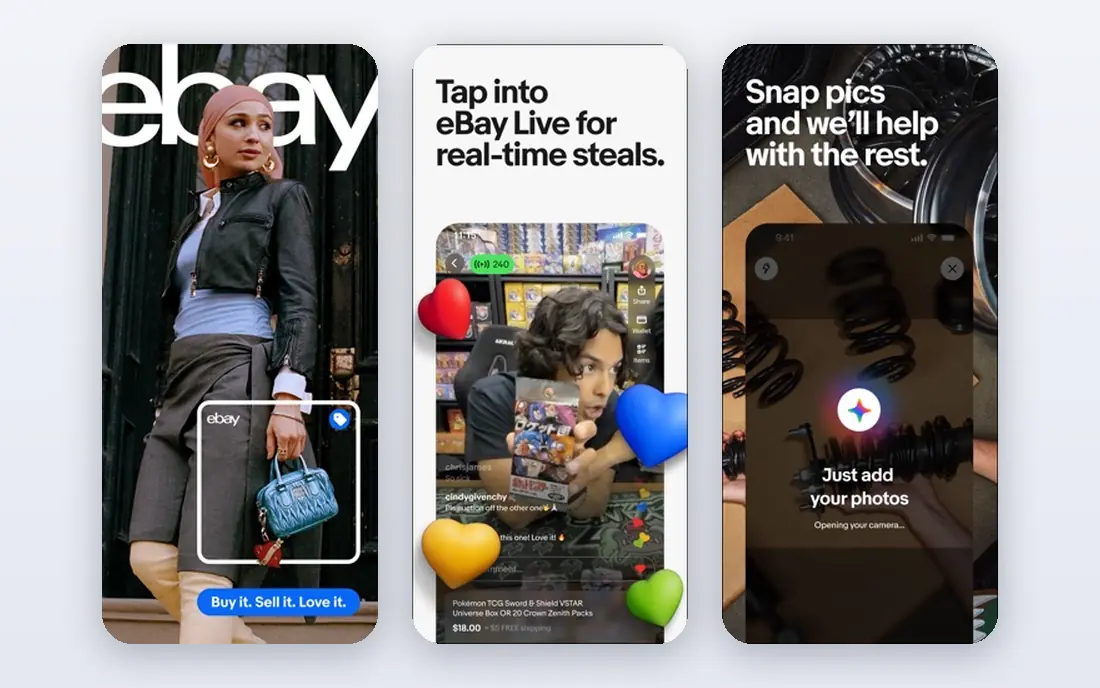
eBay is the general marketplace that handles the widest range of items, from phone parts to rare records. Auctions help when demand is uncertain, because buyers set the price, while fixed-price listings suit items with a clear market value. Private sellers get a monthly allowance of free listings, which keeps casual selling cheap to start.
Fees are the catch. Final value fees vary by category, plus a per-order amount, so work out the fee on your actual sale price before you list. Shipping, returns and buyer protection rules also take time to learn. For unusual, valuable or niche items, the size of the buyer pool usually justifies that effort.
- Very large buyer pool
- Auctions and fixed-price listings
- Seller tools for volume sellers
- Final value fees vary by category
- Learning curve for new sellers
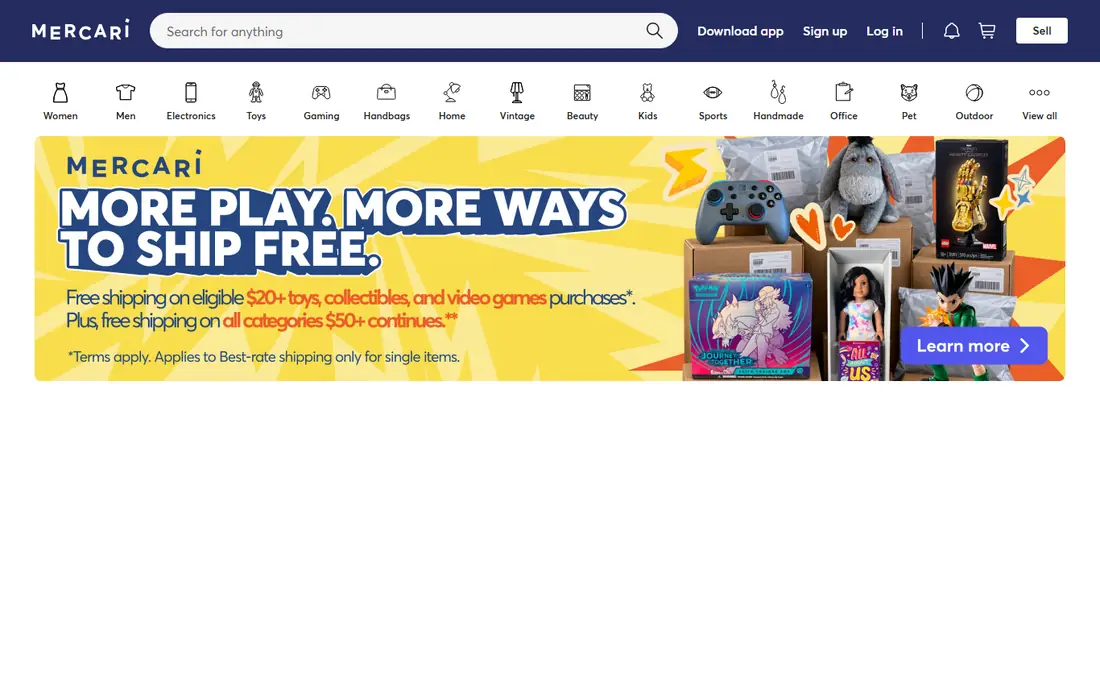
Mercari is built for the mixed box of items most people actually have: toys, small electronics, home goods and clothes in one place. Listings are quick to create on a phone, and prepaid labels remove the guesswork from shipping for many sellers. That simplicity is why casual sellers often finish a clear-out here faster than on a more specialised app.
Check the current fee terms before you rely on an old guide, because Mercari has changed how it charges buyers and sellers in recent years. It also lacks the social shopping community that drives fashion sales elsewhere. For general household items, though, it remains one of the easiest shipped options.
- Fast mobile listings
- Prepaid shipping labels
- Broad categories
- Fee structure has changed over time, so check it before listing
- Less fashion community than Poshmark
Poshmark turns selling clothes into a social activity, with sharing, following and closet browsing that help buyers find items they were not searching for. That community matters for brand-name and designer pieces, where trust and presentation drive the sale. Prepaid shipping labels keep the post-sale work simple.
The fee is steep and simple to state: a flat fee under 15 dollars, and 20 percent on sales of 15 dollars and over. That means low-value items need volume or bundling to make sense. If your closet holds recognisable brands in good condition, the audience often makes up for the fee. For unbranded basics, Vinted usually costs less.
- Active fashion community
- Prepaid shipping label
- Social sharing drives discovery
- 20 percent fee on sales of 15 dollars and over
- No local pickup focus
Depop is where vintage, Y2K and streetwear sellers find buyers who care about style rather than just a bargain. A shop feed that looks like a curated feed, rather than a classified list, helps a seller build a following and repeat buyers. US sellers pay no seller commission, though a payment processing fee still applies to each sale.
That audience is also a limit. Plain, unbranded basics can sit unsold while a distinctive jacket moves in a day, so Depop rewards sellers who can source and photograph with a clear style. If your stock is everyday clothing, pair it with Vinted or Poshmark rather than relying on Depop alone.
- Strong audience for vintage and streetwear
- Visual shop feed
- No seller commission for US sellers, with payment processing fees
- Style-led audience, so ordinary basics sell slowly
- Payment processing fee applies
Vinted appeals to sellers who want to move everyday clothes without losing a fifth of each sale to fees. Sellers pay no selling fee, while buyers pay a protection fee, which keeps more of the sale price with the seller. Listing is straightforward, and the app suits a closet clear-out where volume matters more than a single high-value sale.
The trade-off is price level. Vinted buyers expect bargains, so premium pricing rarely works here. It is the app for items you want gone at a fair price, not for maximising a designer piece. Use it alongside Poshmark: Vinted for the everyday pile, Poshmark for the brands.
- No seller fees
- Simple listing flow
- Good for clearing everyday clothes
- Buyer protection fee can put some buyers off
- Prices tend to be low
Etsy is the marketplace for things made by hand, customised or vintage, and for digital downloads such as patterns and templates. Buyers arrive looking for something distinct, which gives a small maker a chance that a general marketplace does not. Shop pages, reviews and search filters help a new shop look credible from the first listing.
Costs add up, with a small listing fee plus a transaction fee and a payment processing fee on each sale, so price your work with all three in mind. Competition in popular categories is also intense, and good photos and clear titles matter as much as the product itself. For makers, though, no other marketplace matches the intent of its buyers.
- Huge audience for handmade and vintage items
- Shop branding and search tools
- Digital products also sell well
- Listing fee plus transaction and payment fees
- Competition is intense in popular categories
OfferUp focuses on fast local deals, with in-person sales free within its listing limits. It suits furniture, appliances, bikes and other items where a local buyer collecting the item is the simplest deal. The mobile experience is plain and quick, which helps sellers who want to list in minutes.
Shipped sales exist but carry fees, and the shipped audience is smaller than eBay, so reserve OfferUp mainly for local stock. Like any local app, it needs care with meetups: choose a public place, bring help for heavy items, and confirm payment before handing anything over. For a quick local sale, it is a solid second option beside Facebook Marketplace.
- Local-first listings
- Free in-person sales within listing limits
- Simple mobile experience
- Shipped sales carry fees
- Smaller shipped audience than eBay
How we picked these
We compared official app pages, fee pages and seller help pages, plus current guides to selling apps, and we kept only apps that are live in the US in 2026 with a real buyer audience. We favoured apps that cover distinct seller needs, local sales, general shipped goods, fashion and handmade, rather than listing eight near-identical general marketplaces. Where fees have changed recently, we flag that sellers should confirm the fee in the app, rather than repeating an outdated figure as fact. We did not claim hands-on testing.
How to choose and sell well
Match the app to the item first, then to the fee. Furniture and bulky goods belong on a local app, designer fashion belongs where fashion buyers browse, and handmade goods belong on Etsy. Listing the same item everywhere sounds efficient, but it creates double-sale risk and extra messages, so start with one or two apps that fit the item and cross-list only if it sits unsold.
Photos and honest condition notes do more than any app feature. Use daylight, a plain background, and close-ups of flaws, and state measurements for clothes and furniture. Price by checking sold listings for the same item, not asking prices, and leave room for offers if you want a fast sale. Finally, read the payout and return terms before your first sale, because payout timing and return rules vary widely.
Stay safe on local sales
Meet in a public, well-lit place, preferably during the day, and tell someone where you are going. For higher-value items, many police stations offer safe exchange zones. Take payment through the app or in a form you can verify on the spot, and do not hand over an item on a promise of payment later. For shipped sales, use the app's payment and shipping system so both sides keep buyer and seller protection.
Frequently asked questions
What is the best marketplace app to sell things?
It depends on the item. Facebook Marketplace leads for local goods, eBay leads for general and collectible items, and Poshmark or Depop lead for fashion. Start with the app whose buyers already want your category.
What is the best app to sell used items online?
For shipped used items, Mercari and eBay cover the most categories, while Vinted is cheapest for everyday clothes. Check the current fee in the app, since several apps have changed their fee terms in the last two years.
Which marketplace platform has the lowest seller fees?
Local in-person sales on Facebook Marketplace and OfferUp carry no seller fee, and Vinted charges sellers no fee on clothing sales. Shipped sales usually carry a fee, so the cheapest option depends on whether you ship or meet locally.
Is Etsy worth it for handmade sellers?
Etsy is worth it if your products are handmade, custom or vintage and you can price in the listing, transaction and payment fees. The buyer intent is the advantage, but you still need strong photos and titles to stand out in crowded categories.
How do I avoid scams when selling?
Use the app's own payment system, never accept overpayment with a request to refund the difference, and be wary of buyers who push you off the app to another payment method. For local sales, meet in public and verify payment before handing over the item.
Sources we checked (8)

Online Jobs is an independent blog about careers, online work, learning new skills and the tools that help people earn. More about us.
Keep reading
All posts
n8n Alternatives
n8n alternatives compared for 2026, with Zapier, Make, Activepieces, and more, covering visual builders, code steps, self-hosting, and pricing models.

ZoomInfo Alternatives
The best ZoomInfo alternatives in 2026, compared on price, free plans, data coverage, and which tool fits small teams or large sales teams best in detail.

Zoom Alternatives for Webinars
Compare Zoom alternatives for webinars in 2026, from browser-based rooms to enterprise events, with prices, attendee limits, features and honest trade-offs.