Best Machine Learning Platform in 2026: 8 Platforms Compared


End-to-end ML on AWS · Starting price: See website
How we put this together: we compare official feature and pricing pages, app store listings, privacy policies and public user reviews. Prices change, so check the provider's site before you pay.
Key takeaways
- AWS SageMaker, Google Vertex AI and Azure Machine Learning lead for cloud teams, and the best choice usually matches the cloud you already use.
- Databricks is the strongest pick when data engineering and machine learning already live in one workspace.
- DataRobot and H2O.ai suit teams that want AutoML to speed up model building without deep coding for every step.
- Cloud ML pricing is mostly usage-based, so a small pilot with billing alerts is safer than a price comparison on paper alone.
Quick comparison
| Name | Who it suits | Starting price | Free option | |
|---|---|---|---|---|
| Amazon SageMaker AI | End-to-end ML on AWS | See website | Free trial | Visit |
 Google Vertex AI | End-to-end ML on Google Cloud | See website | Free trial | Visit |
 Azure Machine Learning | End-to-end ML on Azure | See website | Free trial | Visit |
 Databricks | Data plus ML in one workspace | See website | Free trial | Visit |
 DataRobot | Enterprise AutoML | See website | No | Visit |
 H2O.ai | Open source and AutoML tools | See website | Yes | Visit |
 Dataiku | Collaborative data science | See website | Free trial | Visit |
 Domino Data Lab | Team ML workflows and governance | See website | No | Visit |
The best machine learning platform
We compared official product pages, pricing pages and public comparisons for the platforms below. A machine learning platform is not one product in most cases. It is a set of tools for preparing data, training models, deploying them and watching them in production, so we judged each option on that full workflow, not on a single feature.
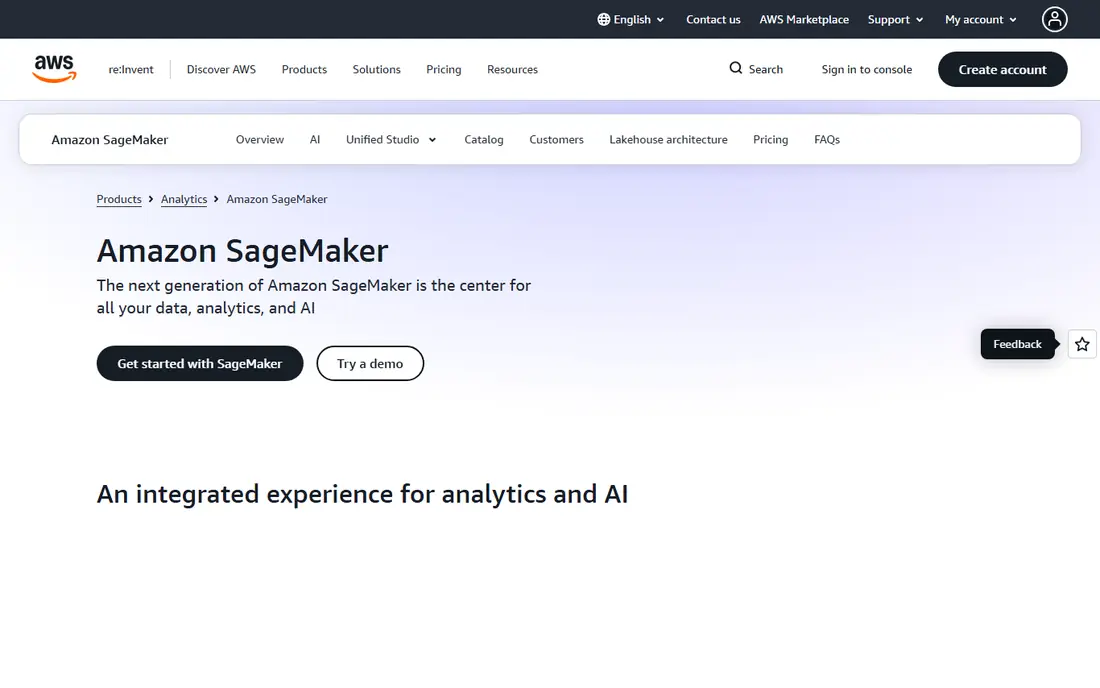
SageMaker AI is the natural pick for teams already on AWS. Notebooks, data preparation, training, model registry, deployment and monitoring sit inside one managed system, with storage, identity and networking handled by AWS services around it. That control helps engineering-heavy teams that need to tune infrastructure, not just train a model.
Complexity is the price of that control. Pricing is usage-based across compute, storage and related services, and a forgotten endpoint can keep charging. Set billing alerts, test with a small workload, and use managed endpoints and autoscaling settings deliberately rather than leaving a large instance running by default.
- Deep AWS integration
- Managed training, hosting and MLOps
- Wide instance and chip choices
- Complex pricing and many services to learn
- Costs can rise if endpoints stay running
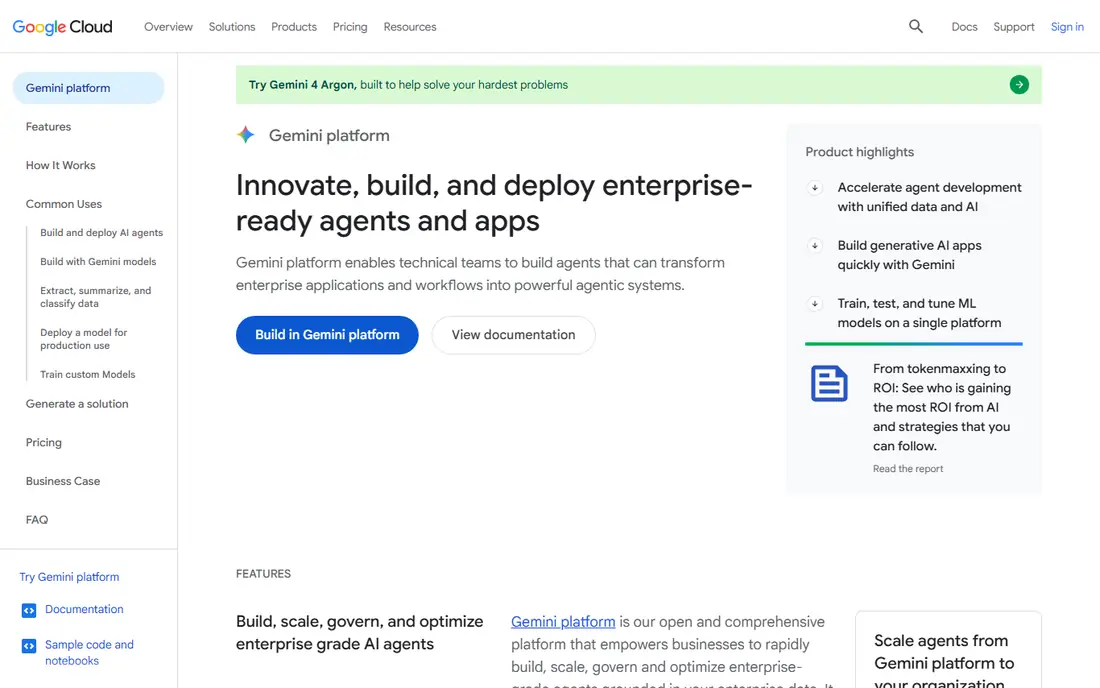
Vertex AI suits teams that already store and analyse data in Google Cloud. BigQuery, Dataflow and storage tools connect closely to training and serving, and AutoML options help teams build a first model without writing every step by hand. Managed pipelines and model monitoring then cover the move from experiment to production.
Pricing needs care, because training, serving, AutoML and managed AI services are billed in different ways. Run a representative workload, compare batch and online serving costs, and check which features are included in a free trial or credit offer. For Google-centred teams, the integration often outweighs that pricing complexity.
- Unified training, deployment and MLOps
- Strong AutoML
- Close BigQuery and data tool integration
- Pricing varies by service and workload
- Google Cloud lock-in can complicate a move
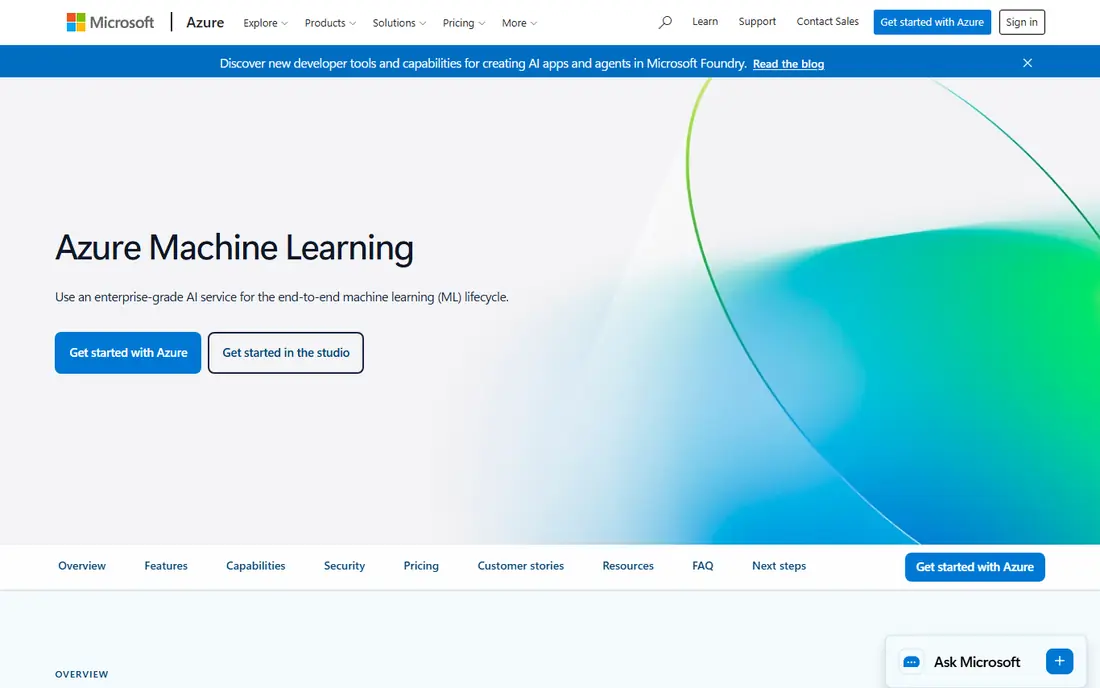
Azure Machine Learning is the logical choice for companies standardised on Microsoft tools. Data, identity, security and spending controls sit inside Azure, and the platform supports notebooks, automated ML, pipelines and deployment in one workspace. Responsible AI tools and governance features also help larger organisations that need audit trails.
Region differences are worth checking early, since some features and instance types are not available everywhere. As with other clouds, cost depends on compute, storage and serving choices, so pilot with real data and set spending alerts before a production rollout. Teams already on Azure will find the learning curve shorter than starting on a new cloud.
- Strong Microsoft 365 and Teams ecosystem fit
- Managed MLOps and responsible AI tools
- Visual designer options
- Feature availability varies by region
- Azure pricing needs careful workload testing
Databricks is best when machine learning grows out of data work, not as a separate project. Teams can clean data, build features, train models and track experiments in the same workspace, using Spark for large datasets and MLflow for experiment tracking and model registry. That closeness to data is a real advantage for companies with large, messy datasets.
Cost is the catch to model carefully. Databricks usage charges sit alongside underlying cloud resource charges, so a quote that looks simple can hide a second bill. Databricks also rewards teams that already know Spark and data engineering. If your data is small and tidy, a simpler cloud ML service may be enough.
- Notebooks, Spark and MLflow in one place
- Strong data governance options
- Multi-cloud availability
- Total cost combines Databricks charges and cloud charges
- Needs data engineering skill to get full value
DataRobot suits organisations that want many models built, compared and governed without a large data science team writing each one. AutoML can test model types, tune settings and rank results, while governance tools track versions, approvals and performance. That structure helps regulated teams that need to explain a model choice later.
The trade-off is control and cost. Pricing is custom, and teams that want full control over training code may find AutoML constraints frustrating. Ask for a demo on your own data, confirm deployment and monitoring costs, and check how easily a model can be exported or moved if you later change platforms.
- Automated model building and comparison
- Governance and deployment tools
- Strong enterprise support
- Custom pricing only
- Less control for teams that want hand-built models at every step
H2O.ai is a good pick for learners, researchers and teams that want open source flexibility. H2O AutoML can build and rank models quickly, and the wider H2O ecosystem covers data preparation, model explainability and deployment options. Open source access also makes it easier to study how a model was built.
Production use needs more work than a fully managed cloud platform. You will handle infrastructure, monitoring and scaling yourself unless you pay for enterprise products and support. For teaching, prototyping and cost-sensitive projects, that trade-off is often worth it. For a large production system, budget engineering time alongside any licence cost.
- Open source H2O and AutoML options
- Strong community and documentation
- Good for learning and prototyping
- Enterprise features and support are paid
- Production setup needs more engineering than a fully managed cloud
Dataiku suits mixed teams where analysts, data scientists and business users need to work on the same project. Visual recipes help non-coders follow a data flow, while code notebooks give data scientists full control where needed. Shared projects, versioning and deployment tools then help a team move from analysis to a product a business can use.
Pricing is custom for many plans, so ask for a quote tied to users, compute and deployment needs. Dataiku is strongest when collaboration is the bottleneck, not raw training speed. If one data scientist works alone on a single model, a simpler notebook or cloud service may be faster to start.
- Visual and code workflows in one platform
- Strong collaboration for mixed teams
- Governance and deployment tools
- Custom pricing for many plans
- Learning curve for advanced governance features
Domino Data Lab, also known as Domino, focuses on how a team runs machine learning work, not just how one model is trained. Experiments, code, data and models are tracked together, which helps reproducibility and audit work. Governance controls suit regulated industries where a team must show who built a model, on what data, and with what result.
That focus makes Domino a poor fit for a solo learner. Custom pricing and enterprise setup assume a team with real governance needs and a budget to match. For a larger data science organisation, though, that structure can save time that would otherwise go to tracking work by hand.
- Central workspace for experiments and models
- Reproducibility and governance controls
- Multi-cloud and on-prem options
- Custom pricing only
- Overkill for a solo learner or a tiny project
How we picked these
We compared official product and pricing pages and public comparisons that checked vendor sites in 2026. We favoured platforms that cover the full workflow from data preparation to deployment and monitoring, and we included cloud, AutoML, collaborative and open source options so different team types can compare fairly. We did not claim hands-on testing, and we did not invent prices, since most enterprise ML pricing is usage-based or custom.
What to check before you choose
Start with where your data already lives. Moving large datasets between clouds is slow and costly, so the cloud you already use is usually the right starting point. Then check team skills: a visual or AutoML tool suits a mixed team, while a code-first platform suits an engineering-heavy team that wants infrastructure control.
Next, run a pilot on a real workload. Measure training time, serving cost, data preparation effort and monitoring needs, and set billing alerts from day one. Check governance too: model versioning, access controls, audit logs and retraining pipelines matter once a model affects customers. A platform that is easy to start but hard to govern can become a liability after launch.
Frequently asked questions
What is the best software for machine learning for beginners?
H2O.ai and Google Vertex AI are good beginner-friendly starting points, with H2O.ai offering open source AutoML for learning and Vertex AI offering managed AutoML inside Google Cloud. Start with a small dataset and a clear question, rather than a large production project.
What is the best machine learning platform for a small team?
Databricks suits a small team that already works with data at scale, while Vertex AI, SageMaker AI or Azure Machine Learning suit a small team already on that cloud. Dataiku suits a mixed team that needs visual and code workflows together.
What is the best open source machine learning software?
H2O.ai is a strong open source choice for AutoML and model building, and it pairs well with open libraries for data work and deployment. Open source gives control and lower licence cost, but production setup needs more engineering time.
What is the best ML platform for enterprise use?
SageMaker AI, Vertex AI, Azure Machine Learning, Databricks and DataRobot all serve enterprises, with the best choice depending on cloud, governance needs and AutoML preference. Ask each vendor for a workload-based quote, not a generic price list.
How much does a machine learning platform cost?
Most cloud ML pricing is usage-based across compute, storage and API or serving use, so total cost depends on workload size and how long models stay deployed. Run a representative pilot, set billing alerts, and compare total cost for the same job across platforms.
Sources we checked (8)

Online Jobs is an independent blog about careers, online work, learning new skills and the tools that help people earn. More about us.
Keep reading
All posts
Best Phone Company
Looking for the best phone company in 2026? We compared 9 US carriers on price, coverage, data and perks so you can pick the right plan for your line.
Best Online Tools to Measure Ping Time
Looking for the best online tools to measure ping time? We compare 9 free tools for latency, jitter, and global reach, so you can find slow connections fast.

Best Internet Service
Which internet service is the best for your address? We compare eight US providers on starting price, speed, connection type and availability limits in 2026.