Best LLM Rank Tracking Tool in 2026: 9 Tools Compared


Small brands that need mention tracking · Starting price: $79 per month
How we put this together: we compare official feature and pricing pages, app store listings, privacy policies and public user reviews. Prices change, so check the provider's site before you pay.
Key takeaways
- LLM rank tracking measures how often AI answers mention, cite, or recommend a brand, which is different from a classic search ranking.
- LLMrefs and Otterly give the clearest low cost entry points, while Peec AI and Profound suit teams that need multi-engine, multi-country tracking.
- AI answers change from run to run, so judge trends over weeks, not single results, and track a fixed prompt set for fair comparisons.
- Teams already inside Semrush, Ahrefs, or SE Ranking should trial the AI tracking inside that suite before buying a dedicated tool.
Quick comparison
| Name | Who it suits | Starting price | Free option | |
|---|---|---|---|---|
| LLMrefs | Small brands that need mention tracking | $79 per month | No | Visit |
 Peec AI | Multi-engine visibility reports | $95 per month | No | Visit |
 Profound | Enterprise AI search analytics | $99 per month | No | Visit |
 Otterly | Low cost AI visibility checks | $29 per month | No | Visit |
 SE Ranking | Agencies with SEO plus AI tracking | See website | No | Visit |
 Semrush | SEO teams that want AI data in one suite | $99 per month per domain | No | Visit |
 Ahrefs Brand Radar | Ahrefs users tracking AI mentions | See website | No | Visit |
 Nightwatch | Agencies that live in rank reports | See website | No | Visit |
 Rankscale | Simple AI visibility scoring | See website | No | Visit |
The best LLM rank tracking tool
Classic rank trackers tell you where a page sits in a list of links. LLM trackers answer a different question, which is how often an AI system names your brand, cites your pages, or suggests a competitor instead. The tools below cover that job at prices from budget to enterprise.
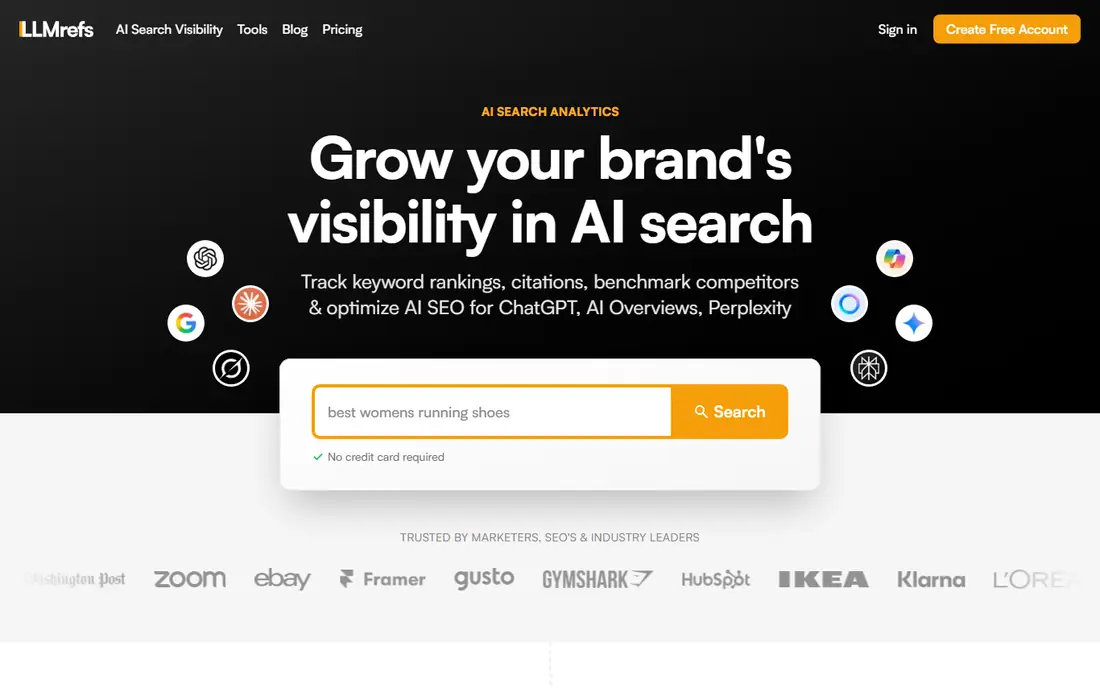
LLMrefs is a good fit for a small brand that wants one clear answer, which is whether AI answers mention it and for which questions. The platform builds prompt sets around keywords, so a team can track buyer questions rather than guessing at prompts one by one. Share of voice reports then show how that brand stands against competitors over time.
The limit is breadth. LLMrefs is a specialist tracker, not a full SEO platform, so teams that also need audits, backlinks, and classic rankings will still need another tool. For a focused AI visibility job, that focus is a strength, since the reports stay readable.
- Focused on LLM mention and referral tracking
- Builds keyword based prompt sets
- Clear share of voice reporting
- Less suited to teams that need full SEO suites
- Prompt limits need checking for large sites
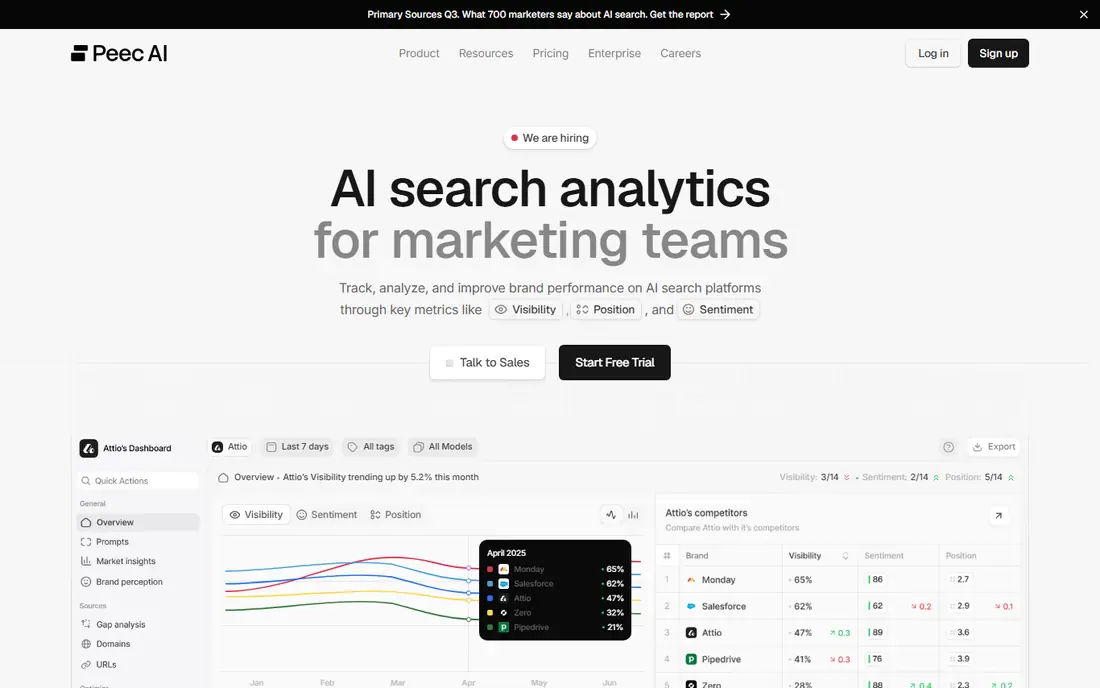
Peec AI suits teams that need to compare visibility across engines and regions without building their own tracking system. You pick the models that matter for your audience, and the reports show brand mentions, citation sources, and competitor standing in one view. Language coverage also helps brands that sell outside English speaking markets.
Cost control needs care. Adding models beyond the included set raises the monthly bill, so start with the engines your customers actually use, such as ChatGPT and Google AI Overviews, and add others only when the data shows a gap. That discipline keeps a mid-market tool at a mid-market price.
- Choice of AI models to track
- Readable competitor comparisons
- Wide language coverage
- Extra models add cost
- Small teams may use only part of the reporting
Profound is built as a dedicated AI search platform, and its reporting reflects that focus. Teams can track brand exposure, see how AI systems frame the brand, and follow which sources get cited alongside it. For a large brand or an agency reporting to clients, that depth supports decisions about content, PR, and product pages.
Smaller teams should check the entry limits first. The starter plan may cover only one engine or a modest prompt set, which is fine for a test but not for a full catalog. Profound earns its place for teams that need steady, comparable AI search data at scale.
- Dedicated AI search analytics platform
- Citation and perception reporting
- Suits large brands and agencies
- Entry plan covers limited engines
- Enterprise features sit on higher tiers
Otterly is the low friction way to start LLM tracking. A team can set up a small prompt set, get regular snapshots, and learn whether AI answers mention the brand at all, without committing to an enterprise contract. The reports are plain enough for a founder or a small marketing team to use without analyst training.
Depth is the trade-off. Large prompt sets, many engines, and deep citation analysis sit beyond the cheapest plan, so a growing team may graduate to Peec AI or Profound later. That path is fine, since Otterly proves the value of tracking before a bigger spend.
- Cheapest entry in this list
- Simple reports and weekly snapshots
- Fast setup
- Fewer prompts on the entry plan
- Extra engines cost more
SE Ranking appeals to agencies that already track classic rankings for clients and now need AI data in the same reports. Keeping both in one account avoids duplicate logins and makes client reporting simpler, since a ranking change and an AI mention change can be read side by side. The plan structure is also easier to explain to a client than a custom enterprise quote.
The main work is prompt design. SE Ranking will track what you tell it to track, so prompts must mirror real buyer questions, not just brand names. Agencies that invest an hour in prompt design get far more useful data than those that copy a keyword list.
- Classic rank tracking plus AI search tracking
- Site audits in the same account
- Clear plan structure for agencies
- AI features may need a higher plan or add-on
- Prompt setup takes thought for good data
Semrush is the practical choice for teams already paying for its SEO suite. The AI Visibility Toolkit adds prompt level mention and citation tracking for a domain, and that data sits next to rankings, backlinks, and content gaps that help explain it. A team can see, for example, that a page ranks well in classic search but is rarely cited by AI answers, which points to a content fix.
The cost warning is per-domain pricing. A company with several brands should add up the toolkit cost for each domain before deciding. For a single brand inside Semrush, though, it is often the simplest and cheapest path to LLM tracking.
- AI visibility toolkit sits next to SEO, PPC, and content data
- Tracks major engines
- Familiar interface for Semrush users
- Priced per domain
- Add-on cost on top of a Semrush plan
- Multi-brand costs add up
Ahrefs Brand Radar fits SEO teams that already use Ahrefs for research. AI mentions gain context when you can also see which pages link to a brand and which content earns citations, and Brand Radar puts those views in one workflow. That helps a team decide if a visibility gap is a content problem, an authority problem, or both.
Pricing needs a live check, since Brand Radar pricing depends on the Ahrefs plan and the add-on chosen. Trial it on one category first, and compare its mention data with a dedicated tracker before rolling it out across all clients or products.
- AI mention data next to a large link and content index
- Useful for citation research
- Strong reporting tools
- Total cost depends on base plan and add-ons
- AI product is newer than dedicated trackers
Nightwatch has a long record in classic rank tracking, and its AI tracking extends that strength to chat and AI search engines. Agencies that already build client reports in Nightwatch can add AI visibility without retraining the team on a new platform, and the reporting formats suit regular client updates.
Newer users may find the setup less guided than Otterly or Peec AI, since Nightwatch assumes some rank tracking knowledge. Pricing also varies, so check the live page for the plan that includes the engines you need. For rank focused agencies, it is a natural extension.
- Long history in rank tracking
- AI tracking across several engines
- Reporting suits client work
- Pricing varies by plan and currency
- Interface favors experienced rank tracking users
Rankscale appeals to teams that want one headline number for AI visibility, plus a trend line that shows whether it is rising or falling. That simplicity helps in meetings where leaders want a quick read, and it suits small teams that do not need a full prompt level breakdown every week.
The limit is detail. A single score will not tell you which prompts changed or which competitor took a citation, so teams that need diagnostic data should pair Rankscale with prompt level reporting or choose a deeper tool. As a simple trend tracker, though, it does its job well.
- Single visibility score that is easy to explain
- Tracks visibility over time
- Suits teams that want a headline metric
- A single score hides detail that prompt level tools show
- Pricing is not always published clearly
How we picked these
We compared official feature and pricing pages, plus recent public roundups, for tools that track brand mentions, citations, or recommendations across large language models and AI search engines. We kept tools with a clear LLM tracking function and a current product, and we left out classic rank trackers with no AI tracking, content writers with no tracking, and tools that had closed or changed focus. Where pricing was unclear, we wrote See website.
How to set up LLM tracking that gives useful answers
Start with a fixed prompt set built from real buyer language. Include brand questions, category questions, comparison questions, and problem questions, and keep the set stable for at least a month so trends mean something. Changing prompts every week makes the data hard to read.
Next, track competitors on the same prompts. A brand mention rate means little alone, but a share of voice view shows whether you are gaining or losing ground in the same answers. Also record which pages get cited, since citation data points to the content that AI systems trust in your category.
Finally, act on the data in small steps. Add missing facts to product and category pages, publish a comparison page for a prompt where a competitor always wins, and earn links from sources that AI answers already cite. Then wait for the next tracking cycle and check whether the trend moved.
Frequently asked questions
What does an LLM rank tracking tool actually track?
It tracks how often AI answers mention your brand, cite your pages, recommend your products, or name competitors instead, for a set of prompts you choose. That is different from a classic ranking, which tracks a page position in a list of links.
How is LLM tracking different from SEO rank tracking?
Classic tracking measures position in search results, while LLM tracking measures presence and framing inside AI generated answers. A page can rank well in classic search and still be absent from AI answers, which is why teams now track both.
How many prompts do I need to start?
Start with 25 to 50 prompts covering your main categories, comparisons, and buyer questions. That range gives a readable trend without exhausting prompt limits or creating noise from prompts nobody asks.
Why do AI answers change from run to run?
AI systems generate answers fresh each time, so wording, order, and cited sources can shift. That is why good tools report mention rates and trends over time rather than a single answer as a fixed rank.
Can I track LLM visibility for free?
Free options are limited, and most dedicated trackers here are paid. You can start with manual checks and free audits from some vendors, but steady tracking across engines and prompts needs a paid plan.
Sources we checked (9)

Online Jobs is an independent blog about careers, online work, learning new skills and the tools that help people earn. More about us.
Keep reading
All posts
n8n Alternatives
n8n alternatives compared for 2026, with Zapier, Make, Activepieces, and more, covering visual builders, code steps, self-hosting, and pricing models.

ZoomInfo Alternatives
The best ZoomInfo alternatives in 2026, compared on price, free plans, data coverage, and which tool fits small teams or large sales teams best in detail.
Zoom Alternatives for Webinars
Compare Zoom alternatives for webinars in 2026, from browser-based rooms to enterprise events, with prices, attendee limits, features and honest trade-offs.