Best Legal Document Automation Software in 2026: 9 Tools Compared


Clio Manage firms and court forms · Starting price: See website
How we put this together: we compare official feature and pricing pages, app store listings, privacy policies and public user reviews. Prices change, so check the provider's site before you pay.
Key takeaways
- Clio Draft is the natural pick for firms already running Clio Manage, because matter data flows into templates without retyping.
- Gavel suits small and mid sized firms that want intake plus document generation in a modern cloud tool.
- HotDocs and Docusign CLM suit larger or contract heavy teams, but expect a sales led process and setup work.
- Automated output still needs lawyer review where it affects rights, deadlines, or court filings, and templates must be checked for your jurisdiction.
Quick comparison
| Name | Who it suits | Starting price | Free option | |
|---|---|---|---|---|
| Clio Draft | Clio Manage firms and court forms | See website | Free trial | Visit |
 Gavel | Small firms wanting intake plus documents | See website | Free trial | Visit |
 HotDocs | Complex conditional templates | See website | No | Visit |
 Docusign CLM | Contract lifecycle and signatures | See website | Free trial | Visit |
 Legito | Multi office template standardisation | See website | Free trial | Visit |
 PandaDoc | Client facing documents and approvals | Free | Yes | Visit |
 Spellbook | Contract drafting inside Word | See website | Free trial | Visit |
 LEAP | Practice management with automation built in | See website | Free trial | Visit |
 Pathagoras | Word based automation on a one time purchase | See website | No | Visit |
The best best legal document automation tools
We compared the current options for best legal document automation software by checking vendor sites, plan limits, and core features, then ranked them by fit for common users rather than by marketing claims. Our pick for most readers is Clio Draft, but the right choice depends on your budget, audience, and the workflow you will actually use every week.
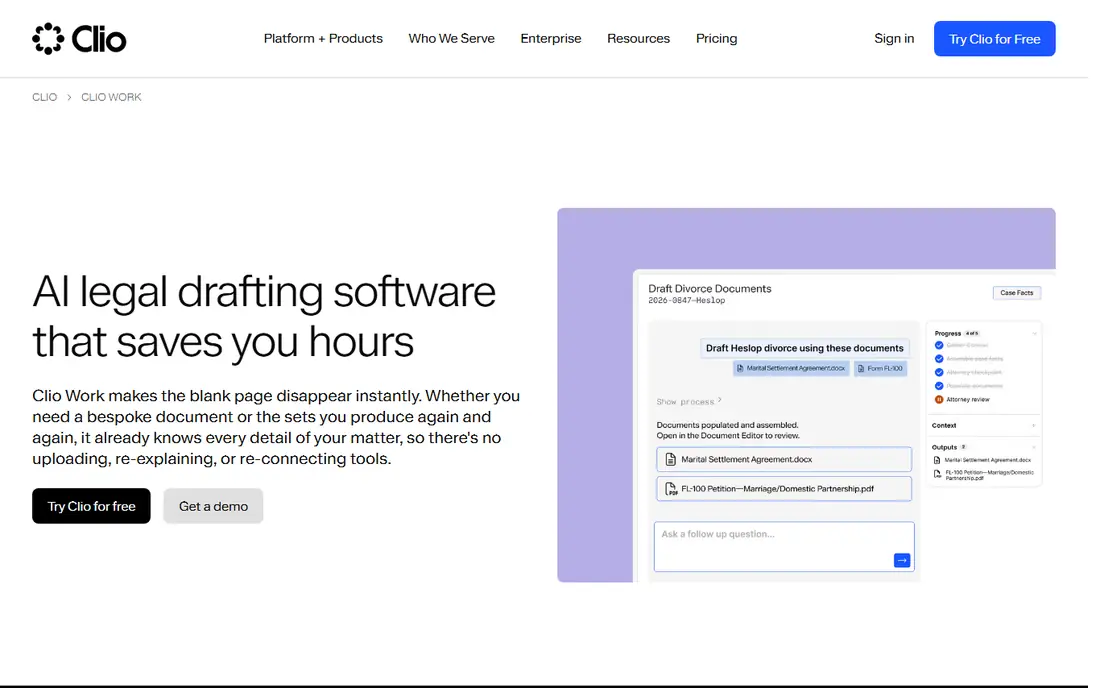
Start with Clio Draft when clio Manage firms and court forms matters most. Its strengths include court form libraries for many states, matter data sync with clio manage, and word add-in for template building. In practice, that means less time spent on setup and more time on the work itself, provided the plan you choose covers the features you will use most often.
The honest catch is that pricing varies by plan and form library, while template logic takes learning can also frustrate. Before committing, trial the core workflow with your own data, confirm the plan limits in writing, and compare the total cost at your real team or list size rather than the headline starter price.
- Court form libraries for many states
- Matter data sync with Clio Manage
- Word add-in for template building
- Pricing varies by plan and form library
- Template logic takes learning
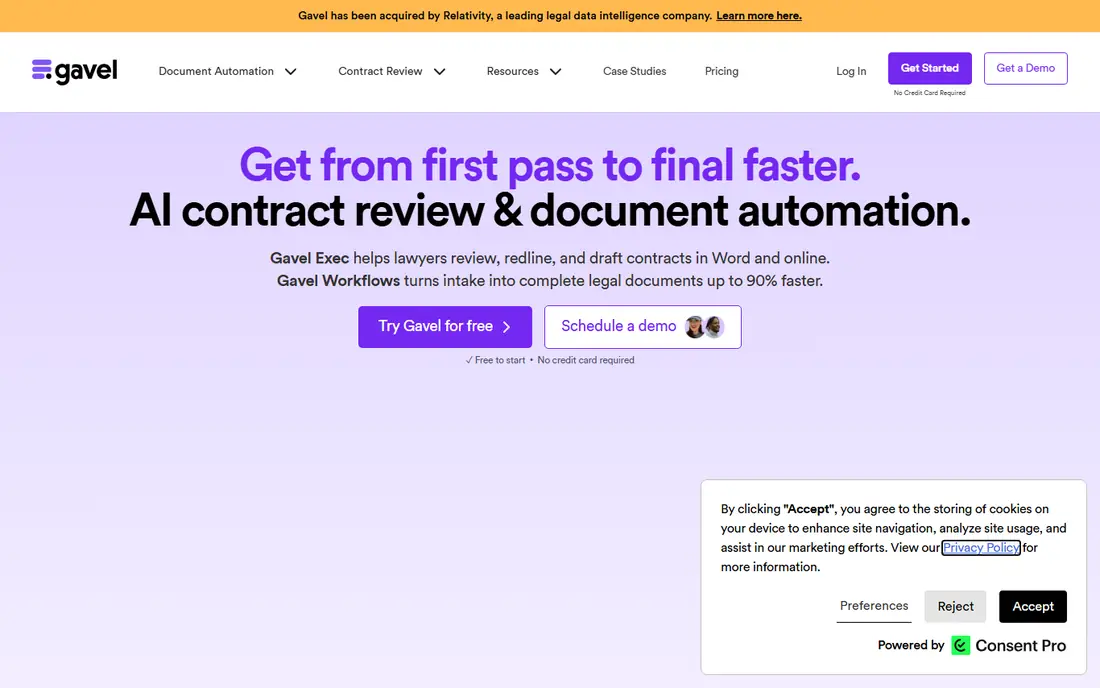
Gavel suits small firms wanting intake plus documents better than most rivals in this list. Its strengths include no code template building, client intake feeds document generation, and modern cloud interface for staff. In practice, that means less time spent on setup and more time on the work itself, provided the plan you choose covers the features you will use most often.
No product here is perfect, and Gavel is no exception: higher cost than simple word tools, while court form depth varies by state can also frustrate. Before committing, trial the core workflow with your own data, confirm the plan limits in writing, and compare the total cost at your real team or list size rather than the headline starter price.
- No code template building
- Client intake feeds document generation
- Modern cloud interface for staff
- Higher cost than simple Word tools
- Court form depth varies by state
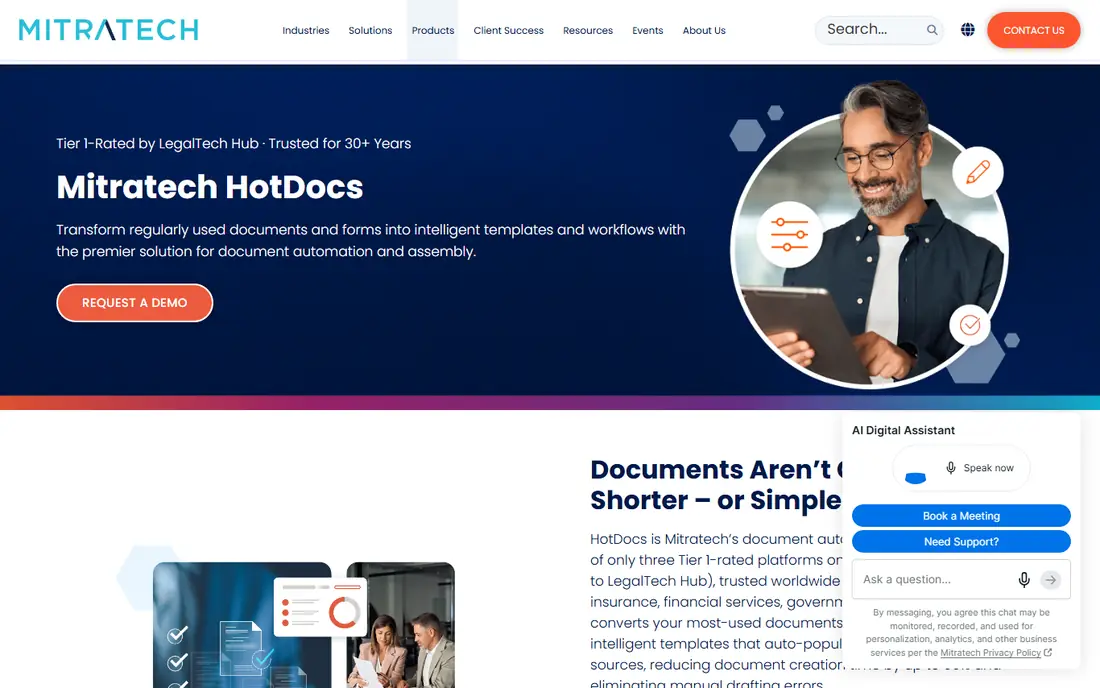
If complex conditional templates is the priority, HotDocs deserves a close look. Its strengths include deep conditional logic for complex documents, high volume generation for large teams, and cloud and on premises options. In practice, that means less time spent on setup and more time on the work itself, provided the plan you choose covers the features you will use most often.
The main trade-off with HotDocs is that quote based pricing, while setup needs skilled template builders can also frustrate. Before committing, trial the core workflow with your own data, confirm the plan limits in writing, and compare the total cost at your real team or list size rather than the headline starter price.
- Deep conditional logic for complex documents
- High volume generation for large teams
- Cloud and on premises options
- Quote based pricing
- Setup needs skilled template builders
Teams looking for contract lifecycle and signatures will find Docusign CLM a practical choice. Its strengths include contract generation plus e-signature, approval routing and collaboration, and good for legal departments at scale. In practice, that means less time spent on setup and more time on the work itself, provided the plan you choose covers the features you will use most often.
Before you commit, note that quote based pricing for many teams, while heavier than a simple template tool can also frustrate. Before committing, trial the core workflow with your own data, confirm the plan limits in writing, and compare the total cost at your real team or list size rather than the headline starter price.
- Contract generation plus e-signature
- Approval routing and collaboration
- Good for legal departments at scale
- Quote based pricing for many teams
- Heavier than a simple template tool
Legito earns its place here by serving multi office template standardisation well. Its strengths include clause libraries and granular permissions, workflow controls for template approval, and good for multi jurisdiction teams. In practice, that means less time spent on setup and more time on the work itself, provided the plan you choose covers the features you will use most often.
The catch worth knowing is that team pricing can be high for small firms, while learning curve for template design can also frustrate. Before committing, trial the core workflow with your own data, confirm the plan limits in writing, and compare the total cost at your real team or list size rather than the headline starter price.
- Clause libraries and granular permissions
- Workflow controls for template approval
- Good for multi jurisdiction teams
- Team pricing can be high for small firms
- Learning curve for template design
For client facing documents and approvals, PandaDoc offers a clear and workable route. Its strengths include drag and drop document editor, templates with tracking and signatures, and free tier for basic use. In practice, that means less time spent on setup and more time on the work itself, provided the plan you choose covers the features you will use most often.
A fair warning is that less legal specific than rivals, while advanced features need paid plans can also frustrate. Before committing, trial the core workflow with your own data, confirm the plan limits in writing, and compare the total cost at your real team or list size rather than the headline starter price.
- Drag and drop document editor
- Templates with tracking and signatures
- Free tier for basic use
- Less legal specific than rivals
- Advanced features need paid plans
Consider Spellbook first when contract drafting inside Word shapes the decision. Its strengths include ai drafting help inside microsoft word, clause generation and risk review, and playbooks for consistent contract terms. In practice, that means less time spent on setup and more time on the work itself, provided the plan you choose covers the features you will use most often.
The downside to weigh is that per seat pricing is quote based, while focus is drafting, not full automation can also frustrate. Before committing, trial the core workflow with your own data, confirm the plan limits in writing, and compare the total cost at your real team or list size rather than the headline starter price.
- AI drafting help inside Microsoft Word
- Clause generation and risk review
- Playbooks for consistent contract terms
- Per seat pricing is quote based
- Focus is drafting, not full automation
LEAP is built around practice management with automation built in, and that focus shows in daily use. Its strengths include automation inside full practice management, matter, billing, and documents together, and good for firms wanting one system. In practice, that means less time spent on setup and more time on the work itself, provided the plan you choose covers the features you will use most often.
One limit to plan around is that per user cost adds up for teams, while migration from another system takes time can also frustrate. Before committing, trial the core workflow with your own data, confirm the plan limits in writing, and compare the total cost at your real team or list size rather than the headline starter price.
- Automation inside full practice management
- Matter, billing, and documents together
- Good for firms wanting one system
- Per user cost adds up for teams
- Migration from another system takes time
When the job is word based automation on a one time purchase, Pathagoras is worth shortlisting early. Its strengths include one time purchase rather than subscription, word based document assembly, and good for firms that dislike monthly fees. In practice, that means less time spent on setup and more time on the work itself, provided the plan you choose covers the features you will use most often.
The weaker side of Pathagoras is that word centred, less cloud workflow, while interface feels older than cloud rivals can also frustrate. Before committing, trial the core workflow with your own data, confirm the plan limits in writing, and compare the total cost at your real team or list size rather than the headline starter price.
- One time purchase rather than subscription
- Word based document assembly
- Good for firms that dislike monthly fees
- Word centred, less cloud workflow
- Interface feels older than cloud rivals
How we picked these
We compared tools that are still sold for legal document automation in October 2026, checking vendor pages for template building, conditional logic, court forms, signatures, and practice management links. We kept tools that serve law firms directly, not only general document tools, and we noted where pricing is quote based. This article is general information only, not legal advice, and any template that affects a client matter should be reviewed by a qualified lawyer in the relevant jurisdiction.
We did not claim hands-on testing we did not do, and we did not invent ratings, user counts, or awards. Where a vendor uses quote based pricing, we say so, because a guessed price would be worse than no price for a reader planning a budget.
Choose by document type, volume, and review risk
Sort documents by risk before you automate
Standard client letters and intake forms are safer to automate first. Court filings, settlement terms, and contracts with unusual clauses need closer review and tighter template controls. Automate the low risk volume first, then extend to higher risk documents once review steps are proven.
Test conditional logic with real matters
Build one template with real matter data, including edge cases such as multiple parties, missing fields, and jurisdiction differences. Check pronouns, dates, amounts, and clause selection carefully, because a small logic error can repeat across hundreds of documents.
Plan template ownership and updates
Assign one owner per template family, set a review date for law changes, and log who approved each change. A template library without ownership drifts fast, and outdated forms create more risk than the time automation saves.
Frequently asked questions
What is the best document automation software for law firms?
Clio Draft suits firms already on Clio, Gavel suits small firms wanting intake plus documents, and HotDocs suits complex high volume templates. The best pick depends on whether court forms, contracts, or client intake drives most of your document work.
What are the best legal document automation tools for small firms?
Gavel and PandaDoc are accessible starting points for small firms, while Clio Draft adds value for Clio users. Small firms should start with one document family, prove the review workflow, and only then expand the template library.
Does automated legal output need lawyer review?
Yes, where the output affects rights, deadlines, filings, or client advice, a qualified lawyer should review the template and the finished document. Automation reduces typing and copy errors, but it does not replace professional judgement or jurisdiction checks.
How much does legal document automation cost?
Costs range from a free basic tier to quote based enterprise pricing, with several mid market tools charging per user per month. Add template building time, training, and any court form library fees to the subscription price before you compare totals.
Can document automation replace a lawyer?
No. It can speed drafting, improve consistency, and reduce routine errors, but it cannot give legal advice or judge whether a clause fits a specific client. Firms should keep a clear review step for any document that leaves the firm.
Sources we checked (5)

Online Jobs is an independent blog about careers, online work, learning new skills and the tools that help people earn. More about us.
Keep reading
All posts
n8n Alternatives
n8n alternatives compared for 2026, with Zapier, Make, Activepieces, and more, covering visual builders, code steps, self-hosting, and pricing models.

ZoomInfo Alternatives
The best ZoomInfo alternatives in 2026, compared on price, free plans, data coverage, and which tool fits small teams or large sales teams best in detail.

Workday Alternatives
We compared the best workday alternatives for HR, payroll, and global hiring, from BambooHR and Gusto to Rippling, Deel, and HiBob for growing teams in 2026.