Best Learn to Read Apps Free in 2026: 9 Apps Compared


Fully free early reading and learning for young children · Starting price: Free
How we put this together: we compare official feature and pricing pages, app store listings, privacy policies and public user reviews. Prices change, so check the provider's site before you pay.
Key takeaways
- Khan Academy Kids is the strongest fully free pick for early reading, with no ads in the core app experience described by the maker.
- Starfall and Duolingo ABC offer strong free phonics practice for kindergarten and early primary ages.
- Teach Your Monster to Read suits children who learn best through games and structured phonics steps.
- Always check parental controls, ad settings, and in-app purchase locks before handing an app to a child.
- Short, regular reading sessions with an adult nearby work better than long solo screen time for young learners.
Quick comparison
| Name | Who it suits | Starting price | Free option | |
|---|---|---|---|---|
| Khan Academy Kids | Fully free early reading and learning for young children | Free | Yes | Visit |
 Starfall | Phonics basics and first reading steps | Free | Yes | Visit |
 Duolingo ABC | Free phonics games for preschool and kindergarten children | Free | Yes | Visit |
 Teach Your Monster to Read | Game-based phonics for children who love play | See website | Yes | Visit |
 Reading Eggs | Structured reading lessons with placement and progress tracking | See website | No | Visit |
 ABCmouse | Broad early learning with reading at its core | See website | No | Visit |
 Homer | Personalized reading paths based on a child interests | See website | No | Visit |
 Epic | Free digital library access for young readers, especially through schools | Free | Yes | Visit |
 PBS Kids Games | Free games with familiar PBS characters | Free | Yes | Visit |
The best learn to read apps free
Learning to read starts with sounds, letters, and simple words, then builds toward sentences and stories. The best apps for learning to read keep sessions short, celebrate small wins, and give children clear next steps. We compared phonics coverage, reading levels, game design, progress tracking, and free access, with a focus on apps that families can try without paying first.
Khan Academy Kids
Who it suits: Fully free early reading and learning for young children
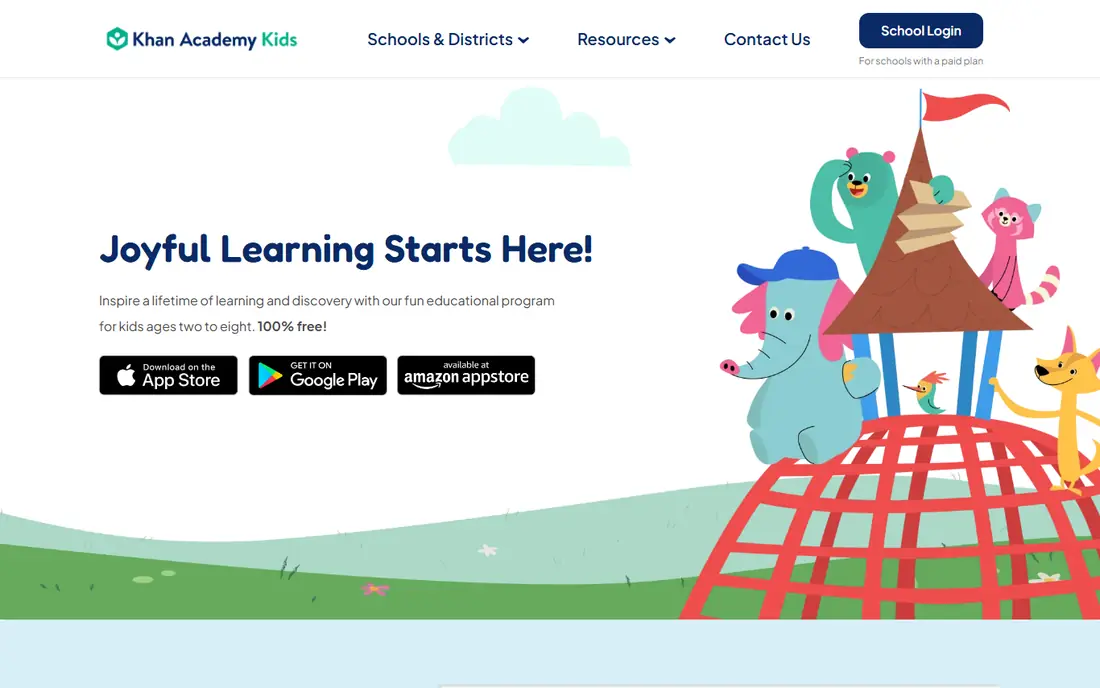
Khan Academy Kids is our top free pick because it offers a full early learning program without a subscription for its core content. Reading activities cover letters, sounds, sight words, and simple stories, alongside math and social learning. The friendly characters and short activities suit preschool and kindergarten children who are just starting to read.
Parents should still set up the app themselves, check device settings, and sit with younger children during early sessions. The app is broader than reading alone, so families focused only on phonics may also want a second, more focused app. For free, safe, and structured early reading, Khan Academy Kids is hard to beat.
- Free, no ads in the core experience as described by the maker, phonics and stories, parent progress view
- Less game depth than some rivals, needs adult setup, library is broader than reading alone
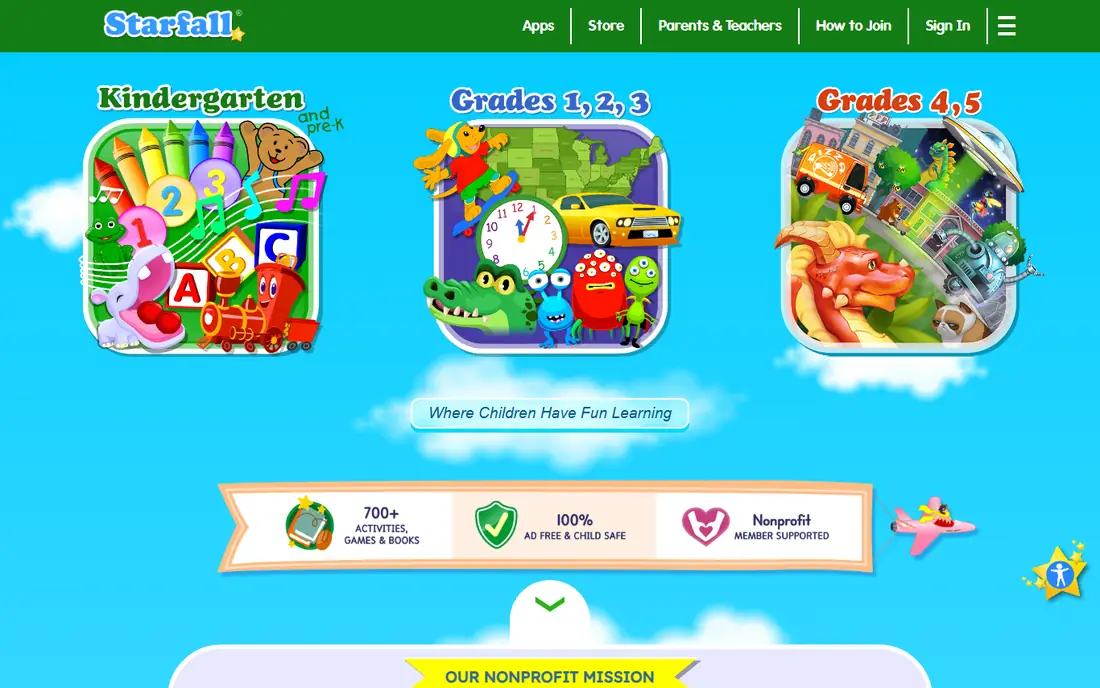
Starfall has taught early reading online for years, and its strength is clarity. Children learn letter sounds, blend simple words, and read short stories in a calm, step-by-step order. Navigation is simple enough for young children to use with light adult help, and the free content covers the early stages well.
The design is plainer than newer game apps, which may matter for children who need strong game motivation. Some expanded content sits behind a membership. For families who want clear phonics teaching without a busy game layer, Starfall remains one of the best reading apps for kindergarten learners.
- Free core phonics content, clear letter-sound teaching, simple stories, easy navigation
- Design looks simple, some content needs a paid membership, fewer game rewards than rivals
Duolingo ABC
Who it suits: Free phonics games for preschool and kindergarten children
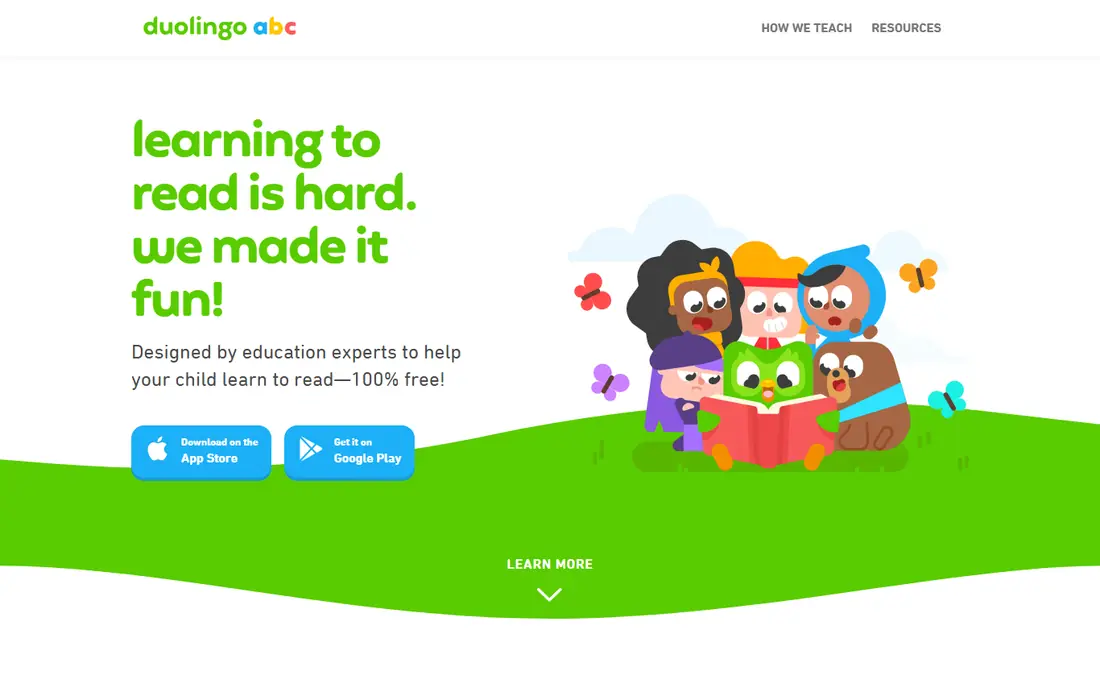
Duolingo ABC brings the short-lesson style of Duolingo to early reading. Children practice letter sounds, sight words, and simple sentences through quick games and stories. Lessons are short, which suits young attention spans and fits well into a daily routine of ten to fifteen minutes.
The app focuses on early reading, so older children who already read sentences will outgrow it quickly. Parents should check progress in the app and pair it with real books as children advance. For a free, friendly start to phonics, Duolingo ABC is one of the best learn to read apps for young children.
- Free, short game lessons, phonics and sight words, cheerful design
- Limited to early levels, less depth for older readers, needs adult guidance for progress
Teach Your Monster to Read
Who it suits: Game-based phonics for children who love play
Teach Your Monster to Read turns phonics into an adventure. Children create a monster, complete letter and sound games, and move through levels that build reading skill in order. That game structure motivates children who resist plain drills, and the phonics progression is well thought out.
Free access depends on how you reach the app, such as through a school route or a web version, so check the current free option on the official site. Parents should also watch session length, since the game can hold attention longer than a short lesson. For game-loving learners, this is one of the best apps for learning to read through play.
- Structured phonics game, engaging monster character, clear levels, classroom use available
- Free access varies by route, game focus may distract some children, needs device supervision
Reading Eggs
Who it suits: Structured reading lessons with placement and progress tracking
Reading Eggs offers a structured path from first sounds to early chapter reading. A placement test sets the starting level, lessons build skills in order, and e-books give practice at the right level. Parent reports show lessons completed and skills practiced, which helps adults follow progress.
The app is paid after a trial, so it is not a fully free pick, but the trial lets families test the fit. Some children find the lesson format repetitive over time. For families who want a clear, lesson-based path and are willing to pay after testing, Reading Eggs is a strong choice among the best learning to read apps.
- Placement test, structured lessons, e-books for practice, detailed parent reports
- Paid after trial, lessons can feel repetitive, needs regular use for best results
ABCmouse covers reading, math, science, art, and music for young children, with a step-by-step learning path. Reading activities include phonics, sight words, books, and songs, which suits children who enjoy variety. Parent tools track progress across subjects.
Because the curriculum is broad, reading time can get lost among other activities unless parents guide the path. The subscription cost also matters for families seeking only free apps. For a full early learning program with strong reading content, ABCmouse remains a popular and well-structured option.
- Large curriculum, step-by-step learning path, many books and songs, parent tracking
- Paid subscription, broad focus beyond reading, ticket rewards need adult monitoring
Homer builds a reading path around a child age, level, and interests. That personal touch helps children stay engaged, since stories and activities match topics they already like. Phonics, vocabulary, and comprehension activities sit alongside stories, giving a rounded early reading program.
Accurate setup matters, since the path depends on the answers parents provide. The app is paid after a trial, so families should test it during the trial period. For children who engage best when reading feels personal, Homer is a thoughtful pick among the best kids reading app options.
- Personalized path, interest-based stories, phonics and comprehension, parent dashboard
- Paid after trial, personalization needs accurate setup, library depth varies by age
Epic
Who it suits: Free digital library access for young readers, especially through schools
Epic is a digital library with thousands of books, videos, and read-to-me titles for children. Young readers can listen to a story, follow along with highlighted text, and then try reading alone. Educator access makes it free for many school users, which is why it appears on many free lists.
Home access outside school is paid, so families should check the current free route on the official site. Parents should also set up profiles and check content filters before independent use. For building a reading habit with real books, Epic is a valuable companion to a phonics app.
- Large book library, read-to-me options, educator access, varied levels
- Free access mainly through educators, home plans are paid, parental controls need checking
PBS Kids Games offers free games featuring characters children already know from PBS shows. Early literacy games cover letters, sounds, and simple words in a friendly, low-pressure style. The free access and trusted brand make it an easy first app for families who want no subscription.
Reading depth is lighter than Starfall or Reading Eggs, so it works best as a supplement rather than a sole reading program. Parents should still check settings and guide younger children to literacy games rather than general play. For free, gentle practice alongside books, PBS Kids Games is a useful addition.
- Free, familiar characters, varied early learning games, no subscription for core games
- Reading focus is lighter than specialist apps, game variety can distract, web and app mix varies
How we picked these
We focused on apps that teach early reading skills, not just general games or video apps. We compared phonics coverage, reading levels, lesson structure, progress tracking, and free access. Apps that only offered videos, or that required payment before any reading content could be tried, did not make the final list.
We also weighed safety and adult control. Young children need apps with clear parental controls, limited ads, and locked purchase areas. That is why the parental-controls note appears in every recommendation here: check settings first, even on a free app, before a child uses it alone.
Buying guide: how to choose a learn to read app
Start with your child reading level. A child learning letter sounds needs phonics basics from Starfall, Duolingo ABC, or Khan Academy Kids. A child who already blends simple words needs stories and sentence practice from Reading Eggs, Homer, or Epic. A placement test, where offered, helps avoid lessons that are too easy or too hard.
Next, check parental controls and safety settings in detail. Look for ad controls, purchase locks, profile settings, and screen-time limits on the device itself. Turn off in-app purchases or require a password for every purchase. Sit with your child for the first sessions, then allow independent use only when you are comfortable with the content and settings.
Finally, keep sessions short and pair app time with real books. Ten to twenty minutes of focused app practice, plus reading a paper book together, usually beats a long solo session. Praise effort and progress, not just scores, and let the child choose some books and games so reading stays enjoyable rather than a chore.
Frequently asked questions
What is the best learn to read app free?
Khan Academy Kids is the best fully free pick for early reading, with phonics, stories, and parent progress tools. Starfall and Duolingo ABC are also strong free options for phonics basics and early kindergarten reading.
What is the best reading app for kindergarten?
Starfall and Duolingo ABC suit kindergarten phonics well, while Khan Academy Kids covers a broader early learning range. Teach Your Monster to Read suits kindergarten children who learn best through games and structured levels.
Are these reading apps safe for children?
Safety depends on settings as well as the app itself. Check parental controls, ad settings, purchase locks, and profiles before independent use. Sit with younger children at first, and use device screen-time controls to limit session length.
How long should a child use a reading app each day?
Short daily sessions of ten to twenty minutes usually work best for young children. Pair app time with reading paper books together. Longer sessions can tire young learners and reduce the benefit of focused practice.
Do children still need real books if they use a reading app?
Yes. Apps teach sounds and words well, but paper books build page-turning habits, shared reading time, and a love of stories. Use apps for practice and books for shared reading, discussion, and bedtime stories.
What is the best app to learn to read for older struggling readers?
Reading Eggs and Epic suit older early readers better than preschool-only apps, since they offer leveled books and structured lessons. If a child struggles persistently, speak to a teacher or reading specialist for advice tailored to that child.
Sources we checked (9)

Online Jobs is an independent blog about careers, online work, learning new skills and the tools that help people earn. More about us.
Keep reading
All posts
n8n Alternatives
n8n alternatives compared for 2026, with Zapier, Make, Activepieces, and more, covering visual builders, code steps, self-hosting, and pricing models.

eBay Alternatives
Looking for ebay alternatives? We compared 9 marketplaces for sellers on fees, buyer reach, categories and ease of listing, to help you sell with confidence.

ZoomInfo Alternatives
The best ZoomInfo alternatives in 2026, compared on price, free plans, data coverage, and which tool fits small teams or large sales teams best in detail.